Chopin-Schaum, Book One: Based on Events and Episodes of Chopin's Life Sheet Music Preview

Chopin-Schaum, Book One: Based on Events and Episodes of Chopin's Life: Piano

Based on Events and Episodes of Chopin's Life

By Frédéric Chopin / arr. John W. Schaum

Item: 00-PB-0001891

Digital Download
$8.99
Description
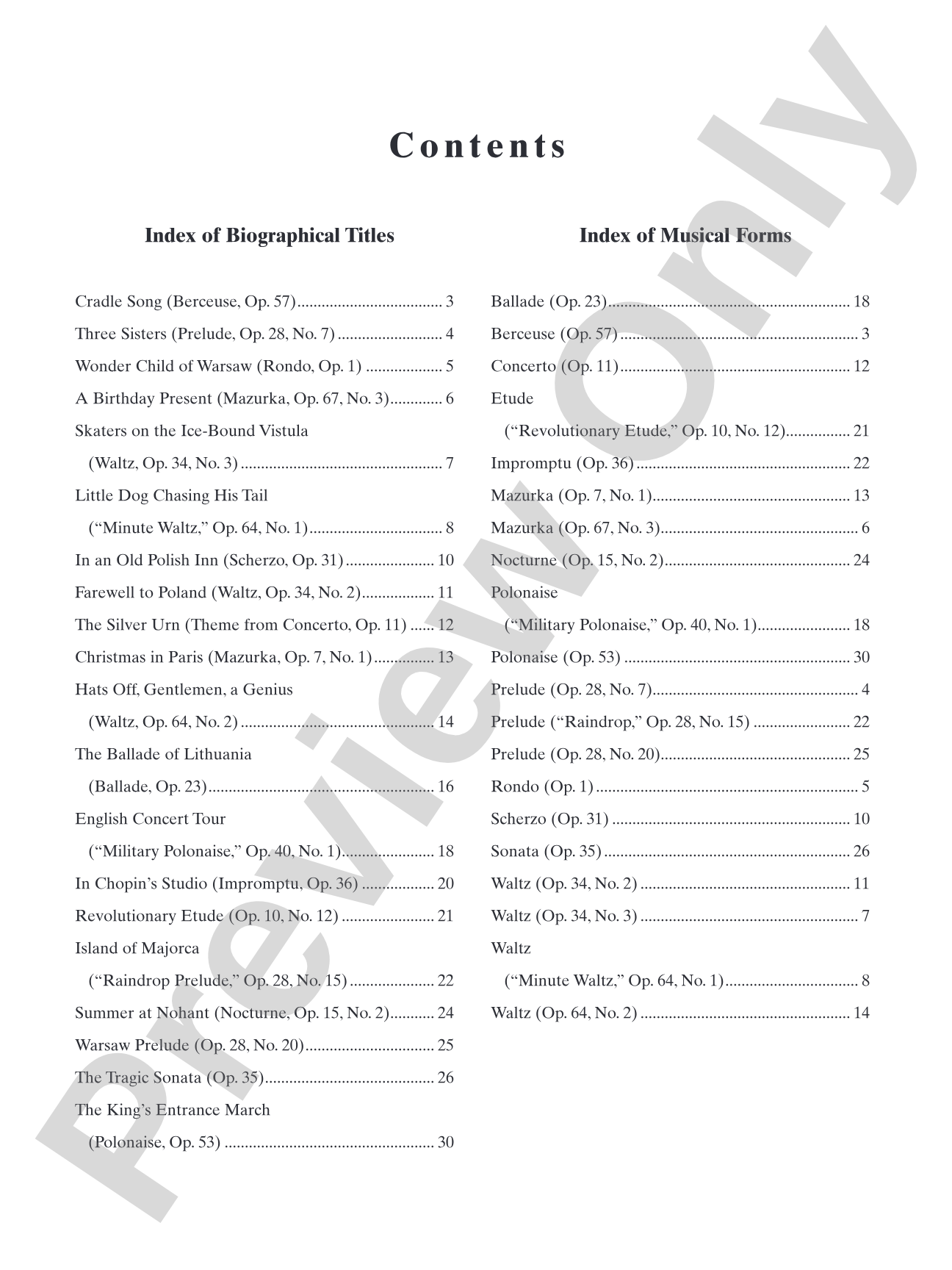
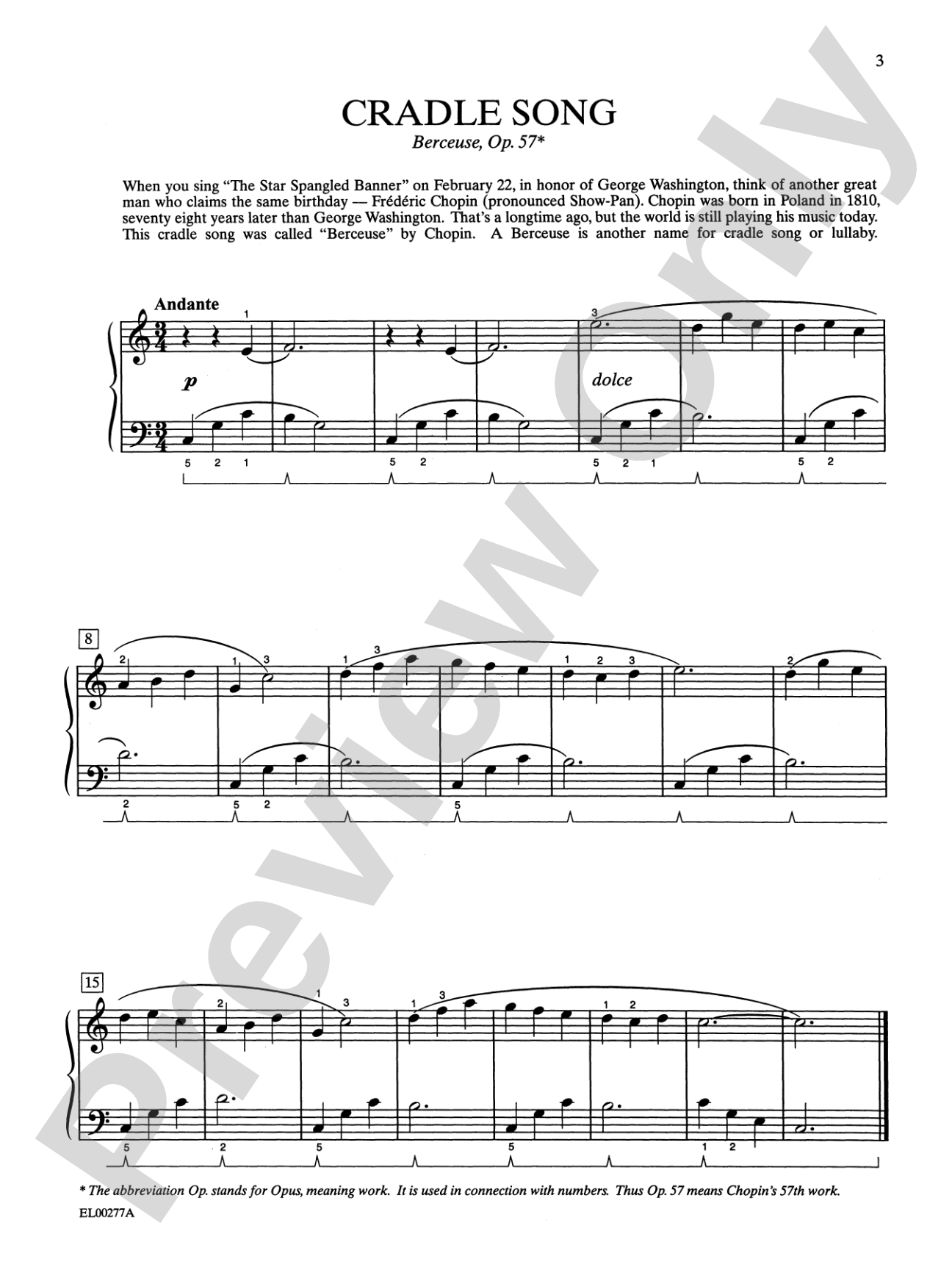
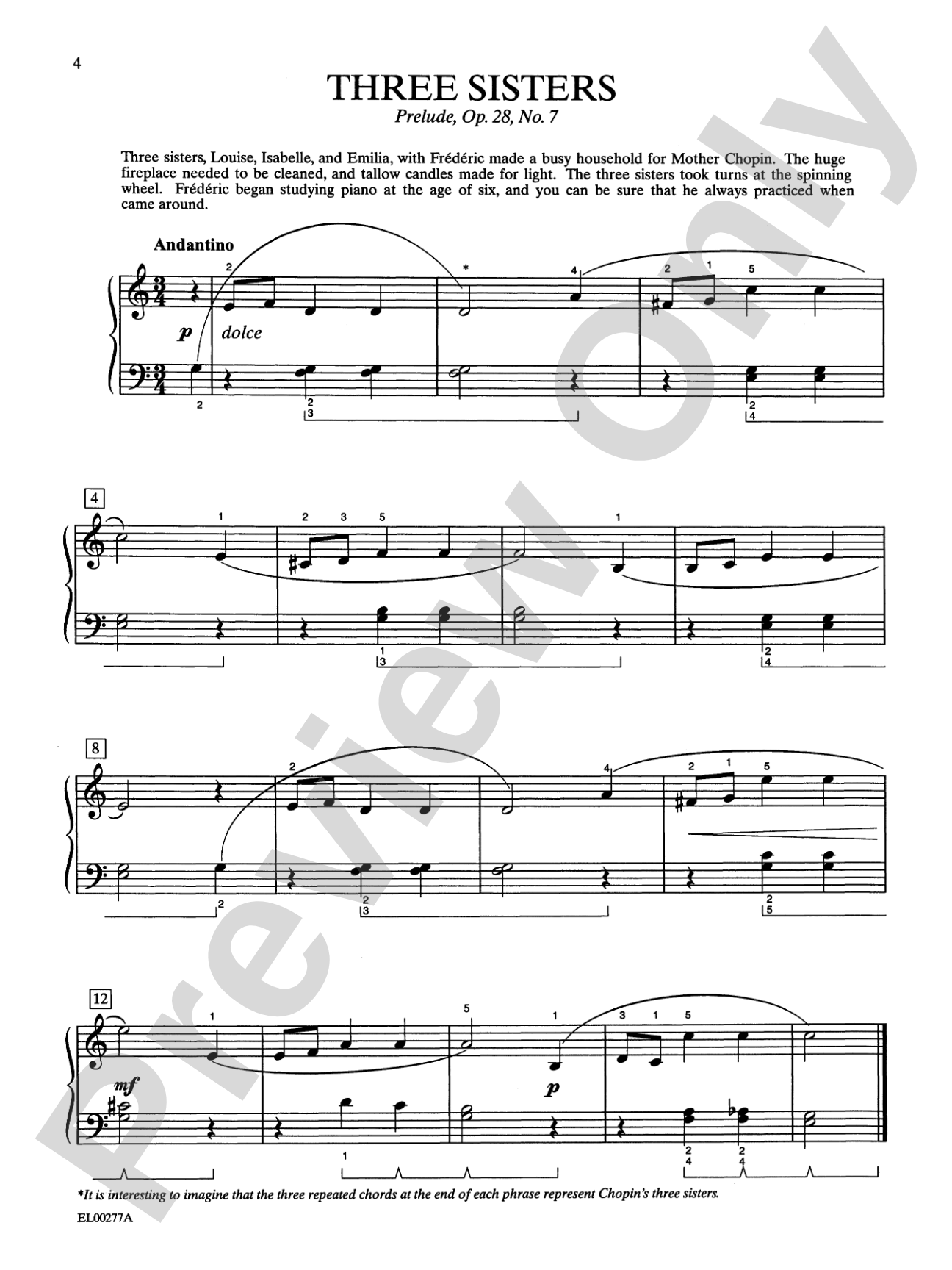
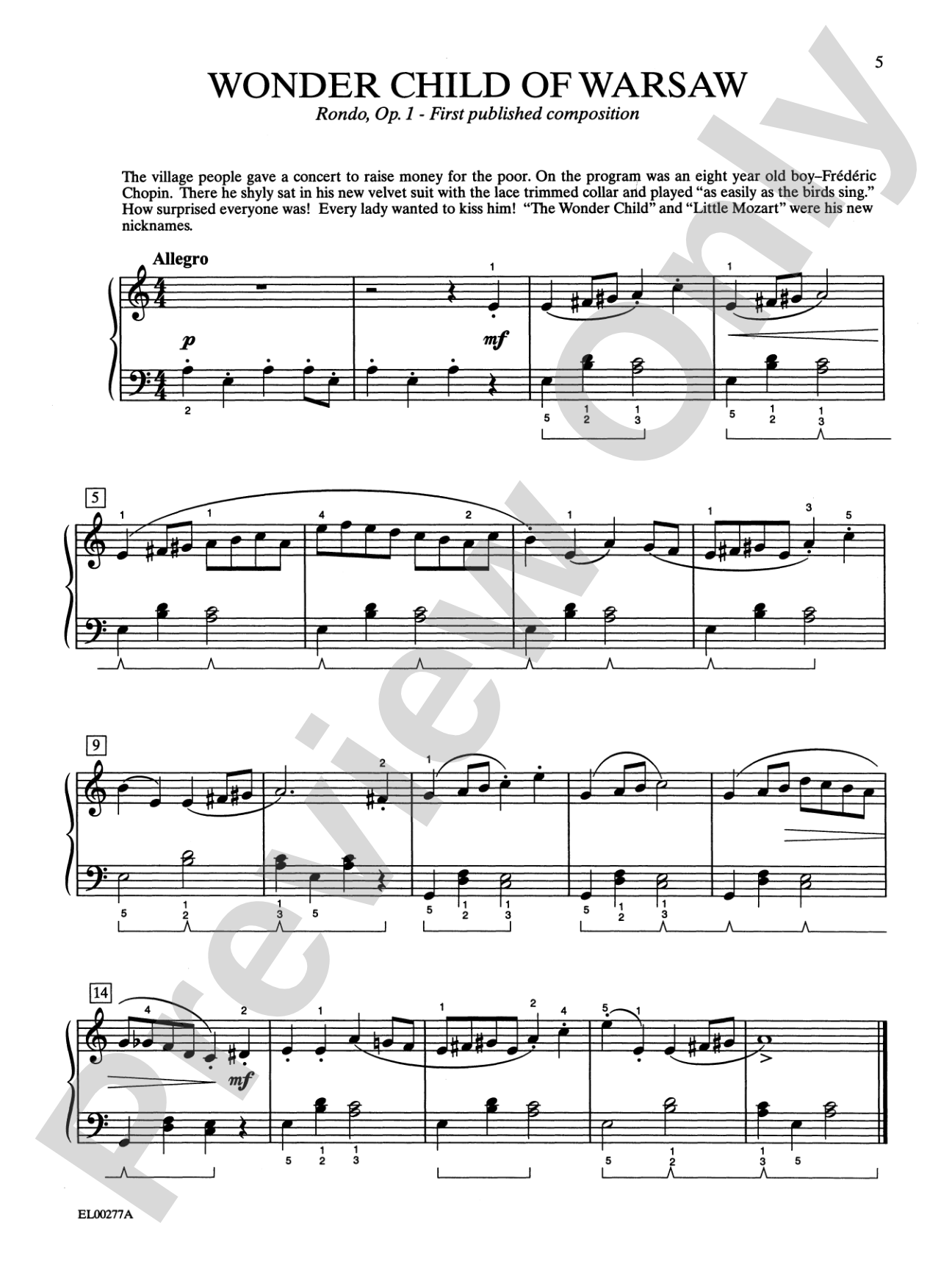
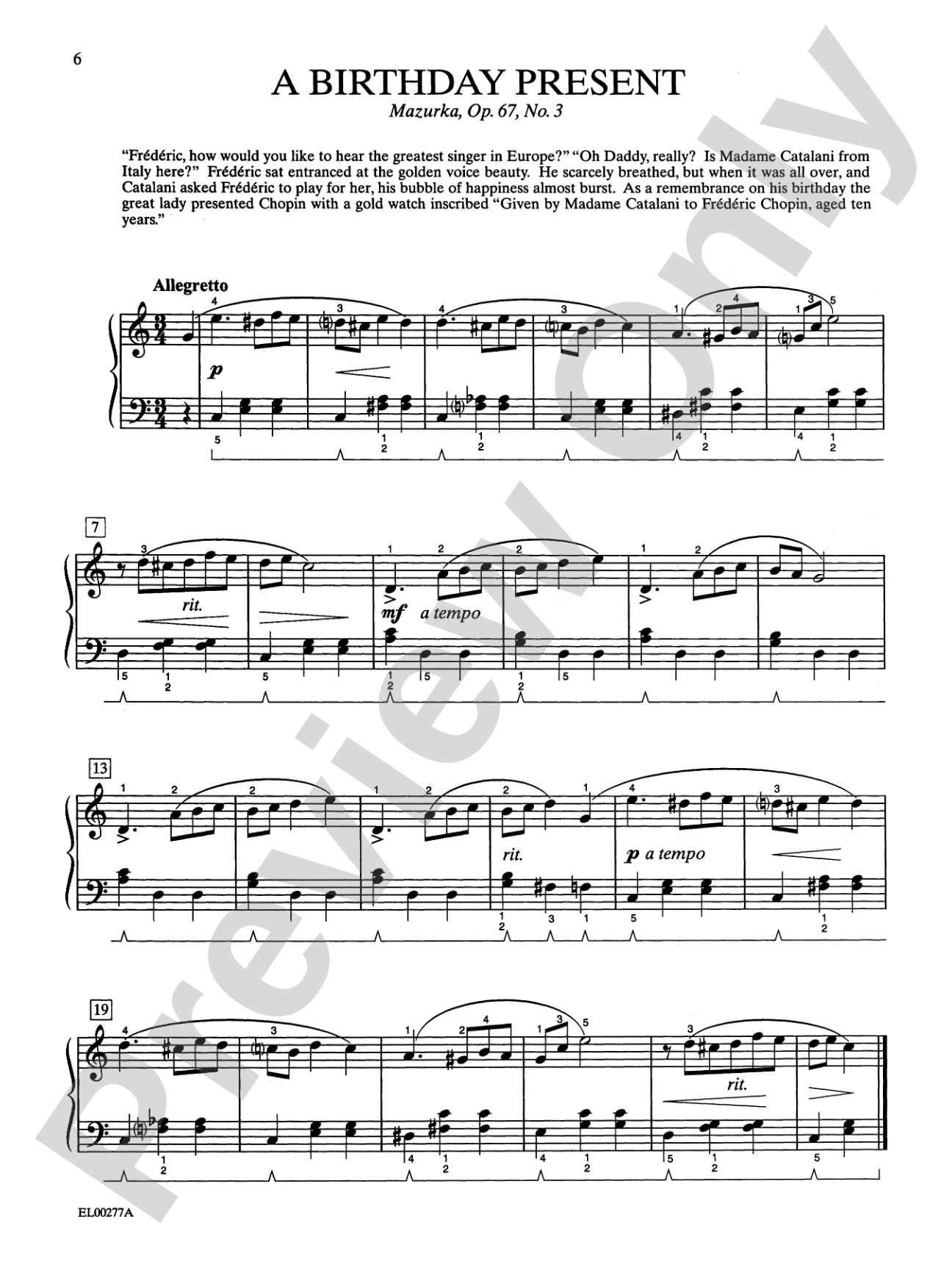
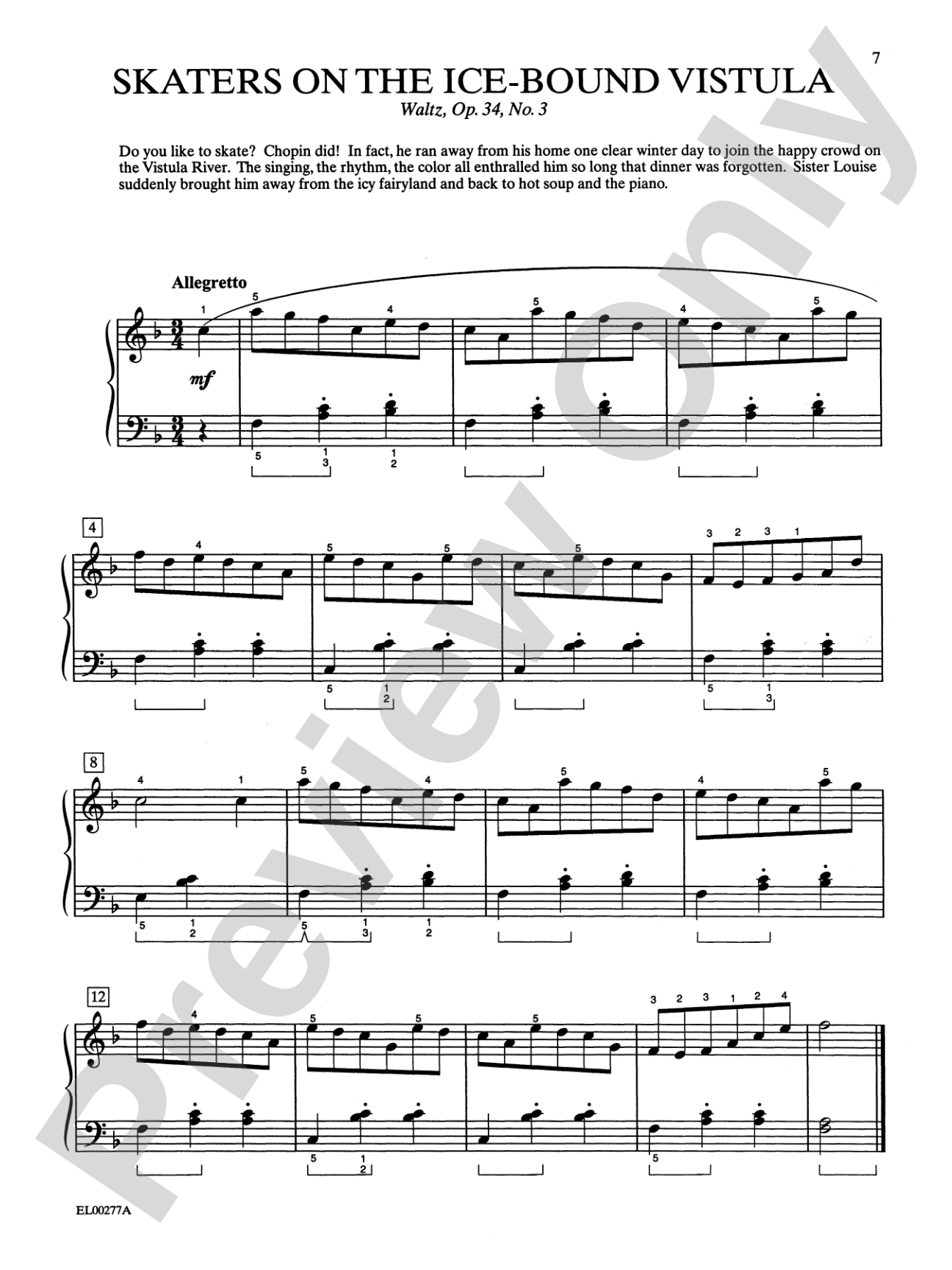
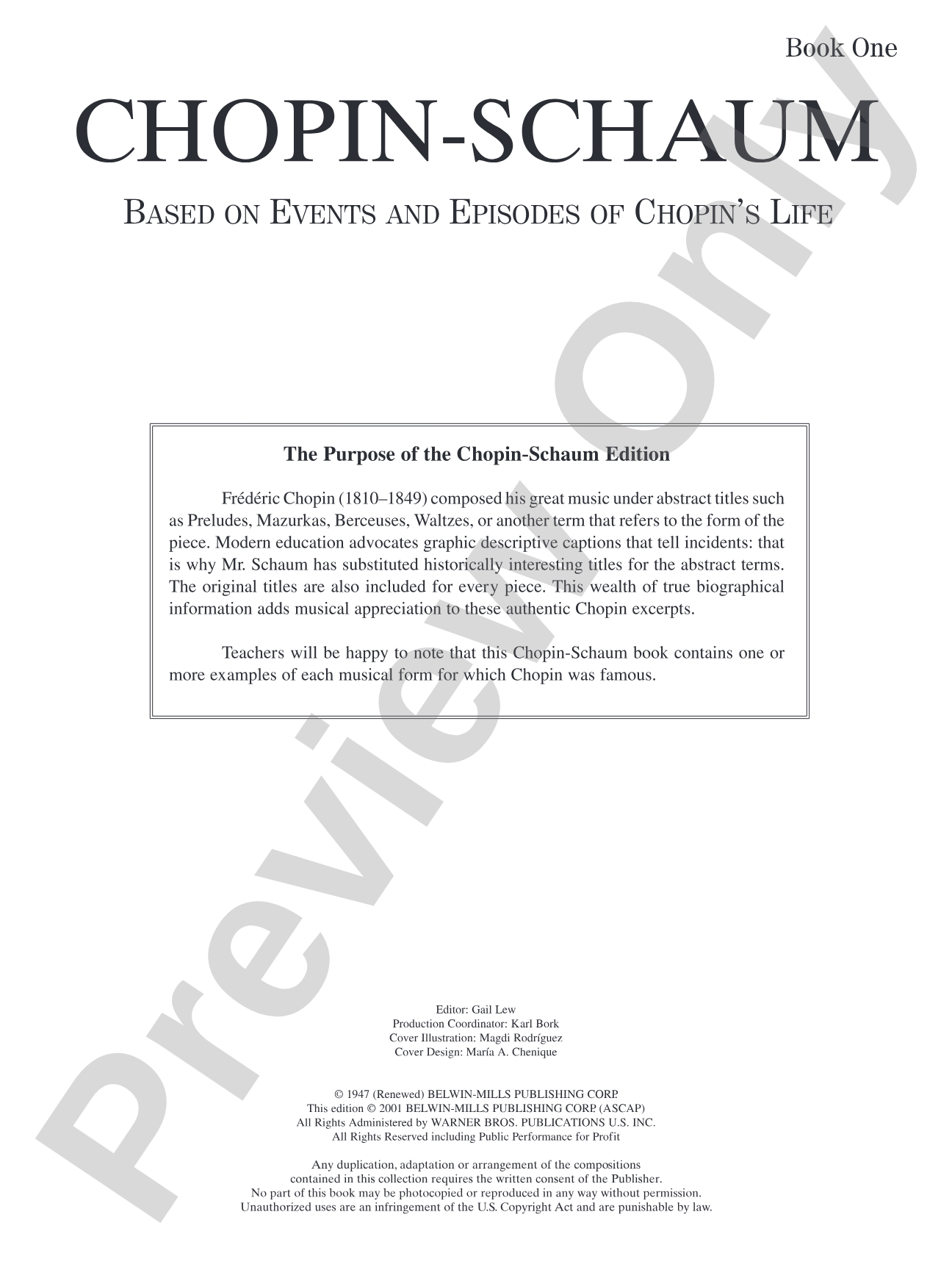
Frederic Chopin (1810-1849) composed his great music under abstract titles such as: Preludes, Mazurkas, Berceuses, and Waltzes. Modern education advocates graphic descriptive captions that tell incidents: that is why Mr. Schaum has substituted historically interesting titles for the abstract terms. The original titles are always in parentheses. This wealth of true biographical information adds musical appreciation to these authentic Chopin excerpts.This newly engraved edition will be welcomed by teachers and students.

Chopin-Schaum, Book One: Based on Events and Episodes of Chopin's Life: Piano isn't in MakeMusic Cloud just yet...but it could be. Let us know you'd like to see it, and you'll help shape what comes next. In the meantime, start a free trial and dive into thousands of interactive titles your students can play along with today.

Sample Audio
No sample audio found.
Sample Video
Additional Details
Series: Schaum Master Composer Series
Publisher: Alfred Music
Page Count: 32
SKU: 00-PB-0001891

More about this title

About the Composer: Frédéric Chopin

Frédéric Chopin (1810–1849) stands as one of the most influential pianists and composers of the Romantic era, revolutionizing keyboard writing through his intimate, lyrical voice. Working primarily in Paris after leaving Poland as a young man, he developed a compositional language that prized elegance and emotional depth over grandeur, creating works that demanded both technical sophistication and interpretive maturity from performers.

Chopin's legacy in music education is profound. His Preludes, Mazurkas, Nocturnes, and other small forms became the standard repertoire for serious piano students precisely because they distill complex musical ideas into manageable time frames. Teachers and students continually return to his work because it teaches genuine musicianship: how to shape a phrase with intention, how to listen to the inner voices of the piano, how to balance technical demands with expressive restraint.

Why we love this

John W. Schaum's biographical framing transforms these Chopin excerpts into small narratives, making them memorable for young pianists who are still building their connection to classical music. Rather than presenting abstract formal categories, students learn that a prelude might capture a moment from Chopin's life, which deepens their investment in the musical choices they're making. The newly engraved presentation keeps the focus on the music itself while the contextual titles anchor students' growing understanding of the Romantic era.

What to expect

These pieces carry the unmistakable elegance and introspection of Chopin's voice: lyrical, sometimes melancholic, always refined. The biographical titles invite pianists to discover personal moments within the music, transforming technical study into something that feels like storytelling at the piano.

Who it's for

Intermediate pianists (late elementary through early intermediate levels) who are ready to encounter authentic Chopin and benefit from narrative scaffolding. Teachers seeking a bridge between method books and standard Romantic repertoire will find this series ideal for students who respond well to storytelling and historical context.

How to get the most out of it

  • Attend closely to Chopin's harmonic language in these excerpts. He frequently moves through unexpected key areas, and clarity of voice leading (rather than heavy pedaling) will reveal the sophistication beneath what may look simple on the page.
  • Shape the melodic line with the same care you'd give to singing. Chopin's piano writing imitates vocal phrasing, which means breath and direction matter more than strict metronomic regularity.
  • Use the biographical context to inform your interpretive choices. Ask yourself what emotional or narrative content the title suggests, then listen for which musical details reinforce that sense.

How to use it

Feature individual pieces or small groupings in student recitals as stepping stones toward fuller Chopin repertoire. The collection works equally well as supplementary material within a piano curriculum, allowing students to explore Romantic sensibilities without the demands of Chopin's more virtuosic works. Consider pairing selections with a short presentation on Chopin's life to deepen the concert experience for audiences.

Skills your students will build

  • Interpreting Romantic era harmonic language and voice leading
  • Shaping lyrical melodic lines with vocal phrasing principles
  • Reading and performing authentic Chopin textures at an accessible level
  • Connecting historical and biographical context to musical interpretation
  • Developing sensitivity to piano color and pedal coordination

You May Also Like