
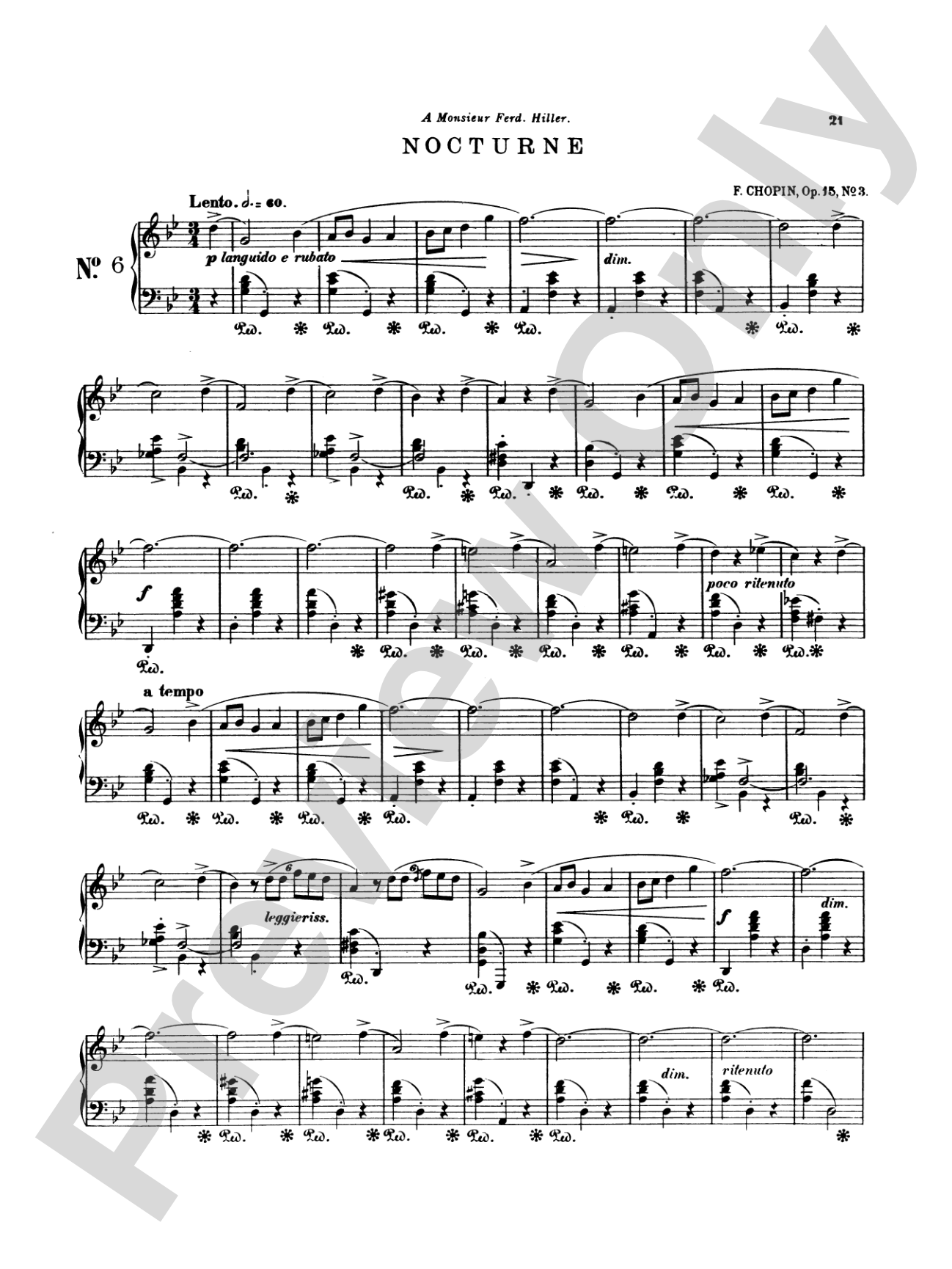

Chopin: Nineteen Nocturnes (Ed. Franz Liszt)
From the First Critically Revised Complete Edition
By Frédéric Chopin / ed. Franz Liszt
Item: 00-PC-0006502
$0.99
Pickup currently not available
Description
Chopin wrote the nocturnes, short pieces for solo piano, between 1827 and 1846. They are considered among the finest short solo works for piano. Although Chopin did not invent the nocturne, he popularized and expanded on it, building on the form developed by Irish composer John Field. This volume is "from the first, critically revised, complete edition."


Don't just read it, hear it, play along with it, and watch your students grow with it. In MakeMusic Cloud, Chopin: Nineteen Nocturnes (Ed. Franz Liszt) comes alive with professional accompaniment, adjustable tempo, and built-in practice tools that turn solo practice into real progress.
Open in the Player
Jump straight in and assign it today.
Start Your Free Trial
Open this title and explore the full library in minutes.
Sample Audio
No sample audio found.
Sample Video
No sample videos found.
Additional Details
Series:
Kalmus Edition
Publisher:
Alfred Music
Page Count:
76
SKU:
00-PC-0006502
More about this title
About the Composer: Frédéric Chopin
Frédéric Chopin (1810-1849) was a Polish composer and pianist who fundamentally shaped Romantic keyboard music. He lived much of his creative life in Paris, where he composed prolifically for solo piano while also working as a sought-after teacher and performer. His influence on pianists and composers extends far beyond his lifetime; his innovations in harmony, pedal technique, and melodic writing remain central to piano pedagogy and repertoire today.
Chopin's output was remarkably focused. Nearly all his compositions feature the piano, either as soloist or collaborator. This concentrated vision meant that every piece he wrote contributed to expanding what was possible at the keyboard. His nocturnes, études, preludes, and sonatas represent some of the most rewarding and challenging material in the solo piano literature.
Why we love this
This Liszt edition of the complete nocturnes provides pianists with critically revised texts based on the original sources, offering reliable access to nineteen works that span the full arc of Chopin's stylistic development. The nocturne genre sits at the heart of Romantic piano literature, and this collection rewards repeated study for its harmonic sophistication, technical variety, and emotional depth. Students encounter genuine masterworks here, not teaching pieces, which makes the interpretive challenges genuine and the payoff substantial.
What to expect
The nocturnes inhabit a reflective, intimate space. Each piece unfolds like a sustained meditation, balancing virtuosity with restraint. Chopin's melodies sing with a distinctly vocal quality that makes listeners feel they are hearing words without sound, while the harmonies shift in unexpected directions, deepening the emotional pull. There is elegance and vulnerability in equal measure.
Who it's for
Advanced pianists and serious students working toward recital repertoire will find these nocturnes essential. Teachers seeking substantial material for upper-level students—whether preparing for competitions, festivals, or formal recitals—will value having all nineteen works in a single, editorially sound edition. This collection also serves pianists interested in the historical development of the nocturne form and Chopin's evolving compositional voice.
How to get the most out of it
- Approach each nocturne as a vocal melody first. Sing the primary theme before playing it, attending to phrase shape and breathing. The left hand accompaniment should support this singing line without overwhelming it.
- Experiment with the sustain pedal across different passages. Chopin's harmonic ambiguity and voice-leading often depend on careful pedal changes; trial different points of release to clarify rather than muddy the texture.
- Notice the relationship between written tempo markings and the actual character of the piece. Some nocturnes marked Andante require more rhythmic flexibility than a literal reading suggests; others need restraint despite expressive potential.
- Pay attention to the ornamental figuration in the accompaniment. These are not decorative; they often contain inner voices or harmonic information that shapes the overall sonority. Clarity here supports the melody above.
How to use it
Nocturnes work beautifully in recital settings when programmed in small groups of 2-3 pieces, creating moments of lyrical contrast within a larger program. Teachers might assign individual nocturnes throughout a student's year of study, working on one at a time alongside other repertoire to build interpretive maturity. This collection also serves as a historical resource for students studying Romantic era composition and the evolution of piano technique.
Skills your students will build
- Sustain pedal control and strategic pedal changes in passages with complex harmonies
- Voicing and balance between a singing melodic line and accompaniment patterns
- Interpretive flexibility within marked tempo ranges
- Reading and performing Romantic-era ornamentation and figuration
- Understanding formal clarity in lyrical, slower movements
- Right-hand legato technique and cantabile phrasing over longer phrases