

Chiri Biri Bim: SAB Choral Octavo
Israeli Folk Song / arr. Sally K. Albrecht
Item: 00-PO-0007962
$1.65
Minimum order quantity: 20 copies
Pickup currently not available
Related Items
Chiri Biri Bim: SoundTrax Digital Audio Download |
$27.99
|
View | |
Chiri Biri Bim: 2-Part Choral Octavo |
$2.25
|
View | |
Chiri Biri Bim: TB Choral Octavo |
$1.65
|
View | |
Chiri Biri Bim: SAB Choral Octavo |
$1.65
|
View | |
Chiri Biri Bim: 2-Part Choral Octavo |
$2.25
|
View | |
Chiri Biri Bim: TB Choral Octavo |
$1.65
|
View | |
Chiri Biri Bim: Choral Octavo SoundTrax CD |
$27.99
|
View |
Description
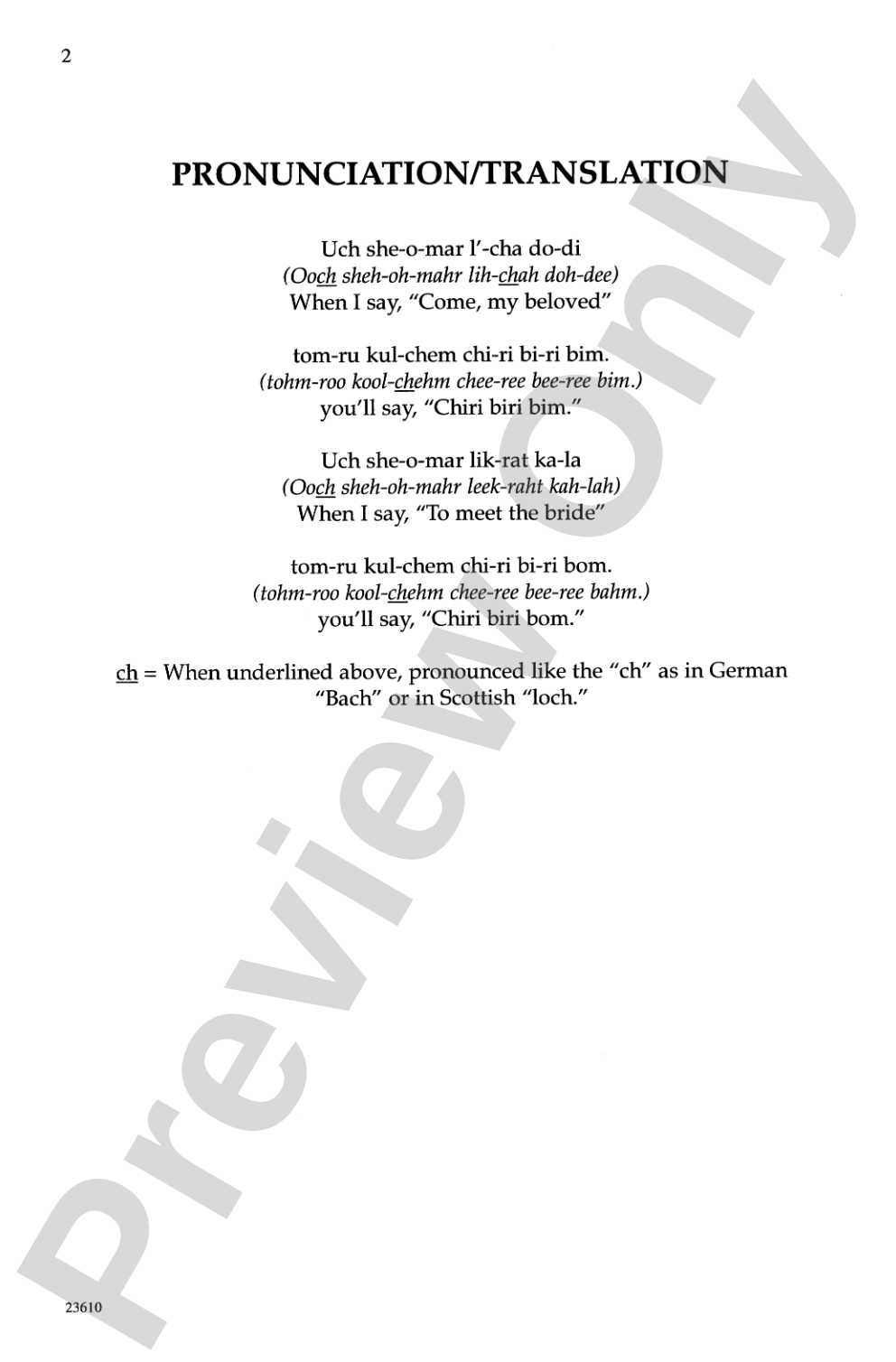
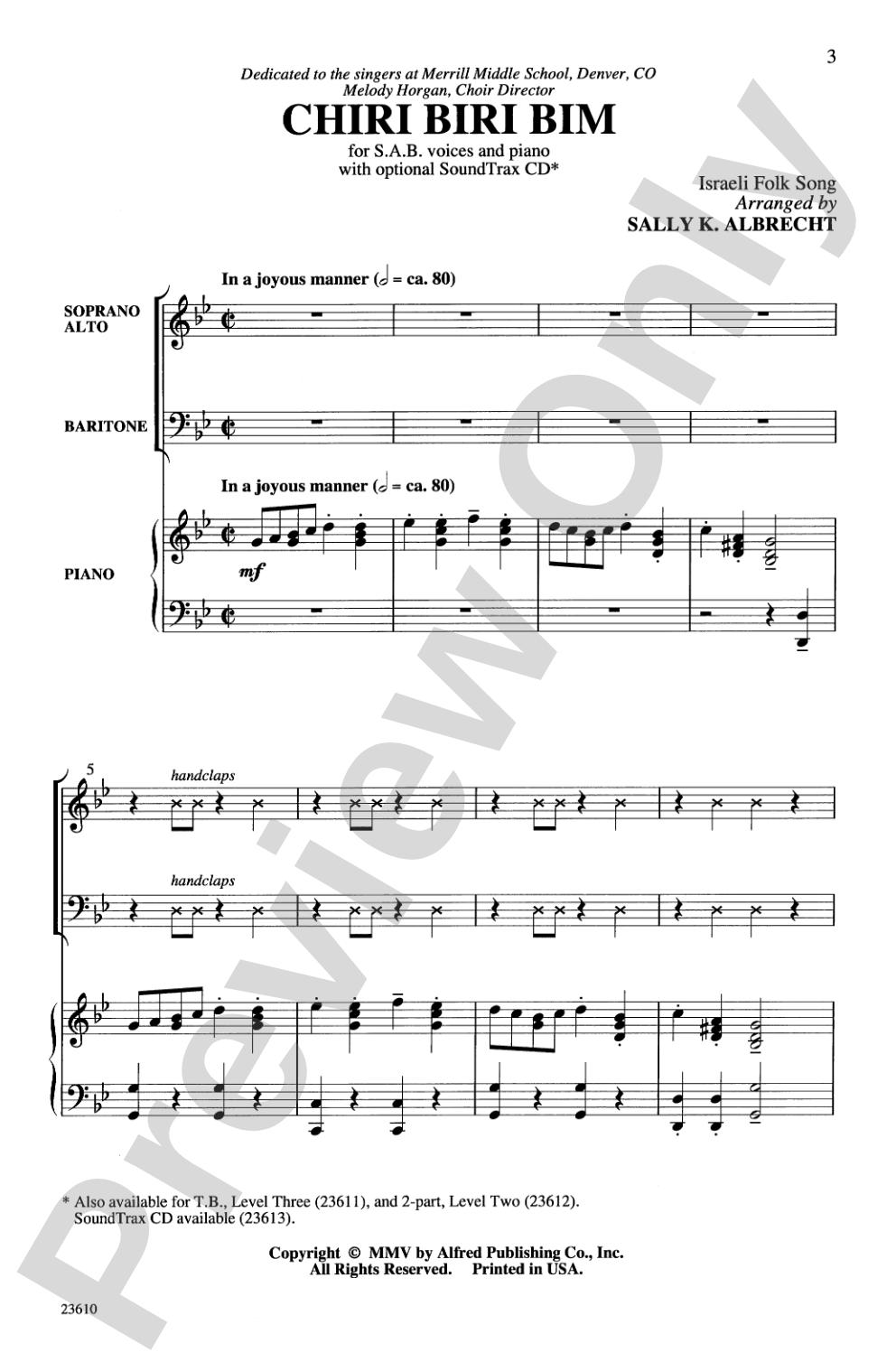
Energy and handclaps abound in this joyful arrangement of an Israeli folk song. The fun-to-say Hebrew words are translated in the second verse as opposing sections of the choir play a call-and-response game, "When I say l'cha dodi, then you answer chiri biri bim." Perfect for 2-part choirs and equally appropriate for SAB and men's voices. An optional SoundTrax CD adds ethnic authenticity with its jaunty clarinet duet and a dance-like tambourine. Staging is featured on "Follow Me to the Top!" DVD #23853, VHS #23855.


Chiri Biri Bim: SAB Choral Octavo isn't in MakeMusic Cloud just yet...but it could be. Let us know you'd like to see it, and you'll help shape what comes next. In the meantime, start a free trial and dive into thousands of interactive titles your students can play along with today.
Request This Title
Tell us you want it.
Start Your Free Trial
Explore everything that's ready to play right now.
Sample Audio
1
Audio File
--:--
0:00
0:00
Sample Video
No sample videos found.
Additional Details
Series:
Alfred Choral Designs
Publisher:
Alfred Music
Page Count:
12
SKU:
00-PO-0007962
More about this title
About the Arranger: Sally K. Albrecht

Sally K. Albrecht has shaped American choral music for over three decades, first as Director of School Choral, Vocal, and Elementary Publications at major educational publishers, then as a prolific composer and arranger with more than 600 published works. Her reputation rests on deep expertise in choral movement and staging; she has conducted festival choirs at Lincoln Center, Carnegie Hall, and The Kennedy Center, and she has been recognized by ASCAP with its Special Music Award annually since 1987.
Albrecht earned degrees from Rollins College (B.A. in Music and Theater, 1976) and the University of Miami (M.A. in Drama, 1977; M.M. in Accompanying, 1979). She has taught at Oakland University, Jersey City State College, and Meredith College. In recent years, she has received the Distinguished Alumna Award from both the University of Miami Frost School of Music and Rollins College, where she serves on the Board of Trustees.
Why we love this
Albrecht knows how to write music that makes young singers want to move. The call-and-response structure here creates natural opportunities for staging without forcing it, and the Hebrew text with English translation gives students a genuine cultural entry point rather than a decorative one. The optional clarinet duet and tambourine accompaniment bring real textural color that lifts what could be a simple folk song into something memorable.
What to expect
Joyful and kinetic, with the buoyancy of a folk dance that invites participation. The handclaps and call-and-response create momentum that carries singers through the piece without heaviness. There is warmth in the Hebrew text and playfulness in the interaction between choir sections; the overall effect is celebratory rather than solemn.
Who it's for
This arrangement suits 2-part, SAB, and men's choirs equally well, making it flexible across a range of ensemble levels and voice classifications. It works best for groups that enjoy movement and aren't intimidated by a lively, participatory style. Directors seeking material that energizes singers and audiences alike will find reliable material here.
How to get the most out of it
- Establish the handclap pattern early in rehearsal as a rhythmic anchor. Once singers feel secure with the percussion layer, their parts settle more naturally.
- Let the opposing sections hear each other during the call-and-response passage. Staging them face-to-face, even in a small rehearsal room, sharpens the musical dialogue.
- Pronounce the Hebrew text clearly without over-enunciating. The joy comes from the rhythm and phrasing of the words, not from making them sound foreign.
- If using the SoundTrax accompaniment, rehearse with it from the beginning. The clarinet duet and tambourine groove set a specific energy that shapes the singers' approach.
How to use it
Pair this with other world music selections for a program that celebrates cultural traditions, or use it as an opener to reset the audience energy after a more serious work. It also serves as strong concert material for spring concerts or end-of-year celebrations where staging and movement are expected. The piece is short enough to appear alongside larger choral works without compromising concert pacing.
Skills your students will build
- Call-and-response singing and listening
- Basic Hebrew pronunciation and text clarity
- Coordination of singing with handclaps and body percussion
- Ensemble blend when singing homophonic passages
- Performing with movement and spatial awareness
- Following a recorded accompaniment with distinct instrumental colors