

Children, Go Where I Send Thee: SATB Choral Octavo
Arr. Ruth Elaine Schram
Level: Moderate
Item: 00-PO-0002794
$2.25
Minimum order quantity: 20 copies
Pickup currently not available
Description
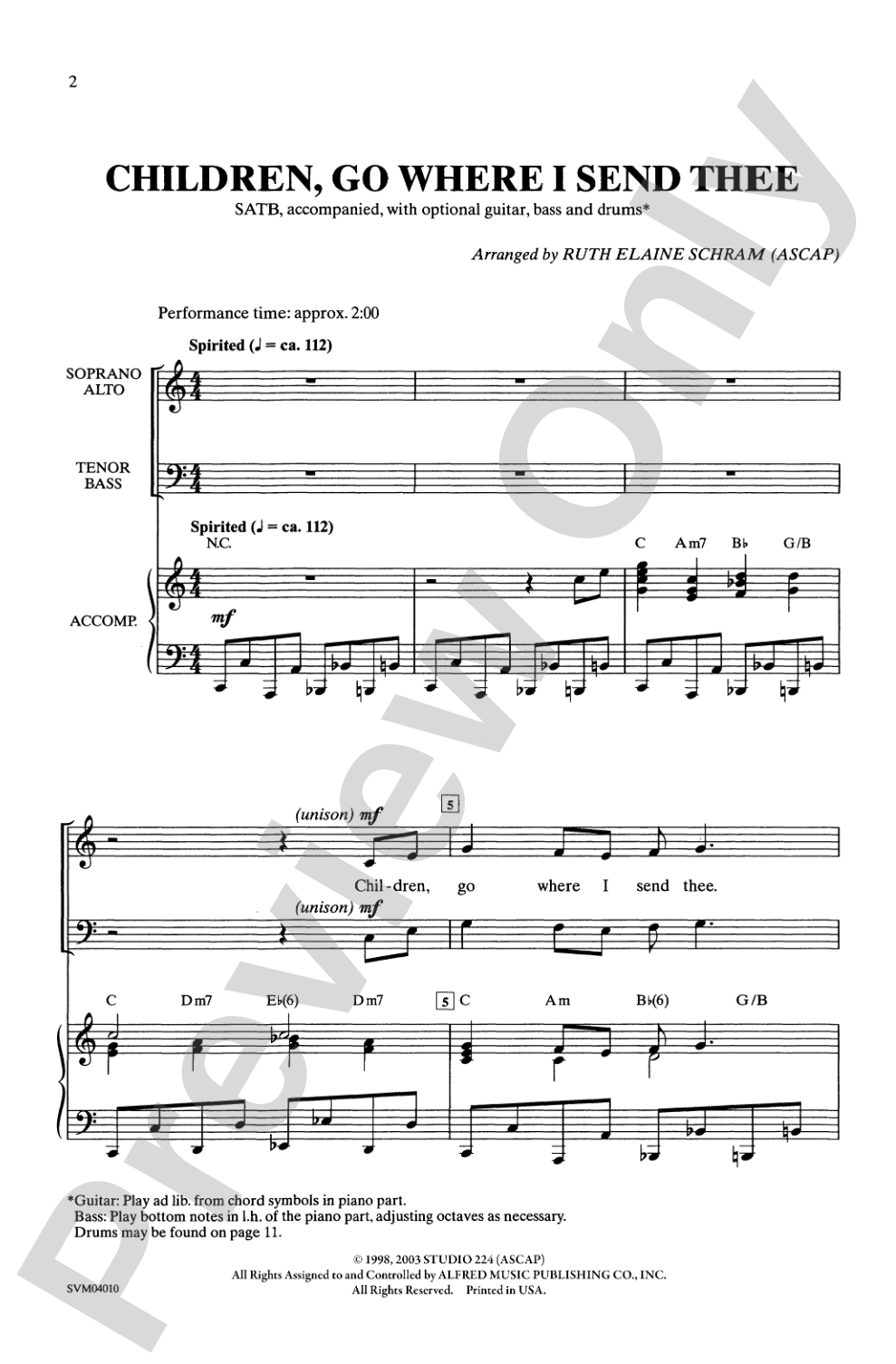
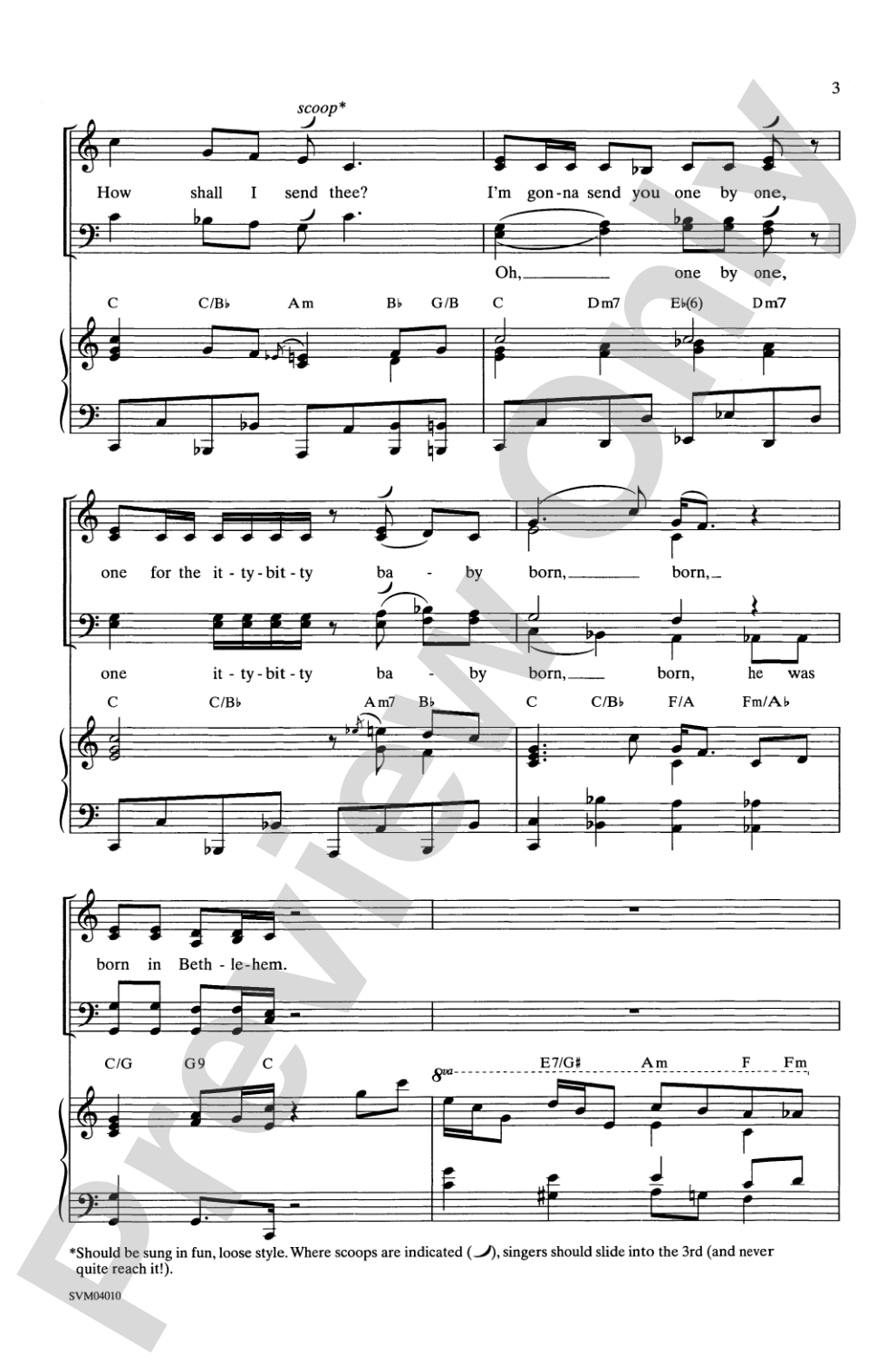
Ruth Elaine Schram brings us this SATB voicing of her exceptional setting of the traditional Christmas spiritual "Children, Go Where I Send Thee." You'll want to perform this one for years to come.


Children, Go Where I Send Thee: SATB Choral Octavo isn't in MakeMusic Cloud just yet...but it could be. Let us know you'd like to see it, and you'll help shape what comes next. In the meantime, start a free trial and dive into thousands of interactive titles your students can play along with today.
Request This Title
Tell us you want it.
Start Your Free Trial
Explore everything that's ready to play right now.
Sample Audio
1
Audio File
--:--
0:00
0:00
Sample Video
No sample videos found.
Additional Details
Series:
Alfred Archive Edition: Studio PR Catalog
Publisher:
Alfred Music
Page Count:
12
SKU:
00-PO-0002794
More about this title
About the Arranger: Ruth Elaine Schram
Ruth Elaine Schram has established herself as a composer and arranger with a gift for bringing traditional spirituals and folk melodies into fresh, singable arrangements for choirs at all levels. Her work appears regularly in school and community choral programs, where directors value both her musical craftsmanship and her understanding of what makes repertoire endure in the rehearsal room.
Schram's arrangements honor the spiritual traditions they draw from while creating accessible pathways for modern ensembles. Her settings balance musical substance with practical voicing, ensuring that even younger or developing choirs can achieve performances with genuine depth and character.
Why we love this
Schram's take on this spiritual avoids the trap of oversimplifying a profound text. The SATB voicing sits comfortably for Grade 3 choirs, yet the arrangement retains enough musical interest that stronger ensembles will find it genuinely rewarding to sing. You'll return to this year after year because it performs beautifully whether your singers are eleven or fifty.
What to expect
There's an inviting warmth to this arrangement. The melody carries a familiar spiritual grace while the harmonic support gives singers security without drowning out the essential simplicity of the tune. Singing this feels like being welcomed into a tradition rather than performing a technical exercise.
Who it's for
This octavo is designed for developing SATB choirs at the Grade 3 level, including middle school ensembles, high school choirs building fundamentals, and community groups seeking accessible sacred repertoire. It works equally well for directors introducing spirituals to singers who may have little prior experience with the genre.
How to get the most out of it
- Balance the text clarity with the spiritual's natural call-and-response character; don't let block chords erase the call's immediacy or the response's warmth.
- If using the recorded accompaniment, listen through the piece as an ensemble first without trying to lock in. Let singers absorb the harmonic shape and tempo before rehearsing with the track.
- Shape phrases toward the text's most important words rather than toward cadences. The spiritual's message carries the emotional weight, not the harmonic punctuation.
- Attend to dynamic contrast between sections. A modest pull-back into a more intimate register for responses creates the spiritual's natural question-answer tension.
How to use it
This sits naturally in a Christmas concert program as either a concert opener (its directness and joy can set a warm tone) or as part of a spiritual-focused set. It also programs well in a winter concert mixing sacred and secular material, where its earnestness can anchor a more eclectic program. The moderate difficulty means you can rehearse it without sacrificing time for more challenging work.
Skills your students will build
- Singing with unified vowel production across parts
- Interpreting spiritual style and emotional nuance
- Balancing part independence in homophonic texture
- Responding to text accent and phrasing within traditional harmonic structures
- Singing sustained tones with warmth and resonance