
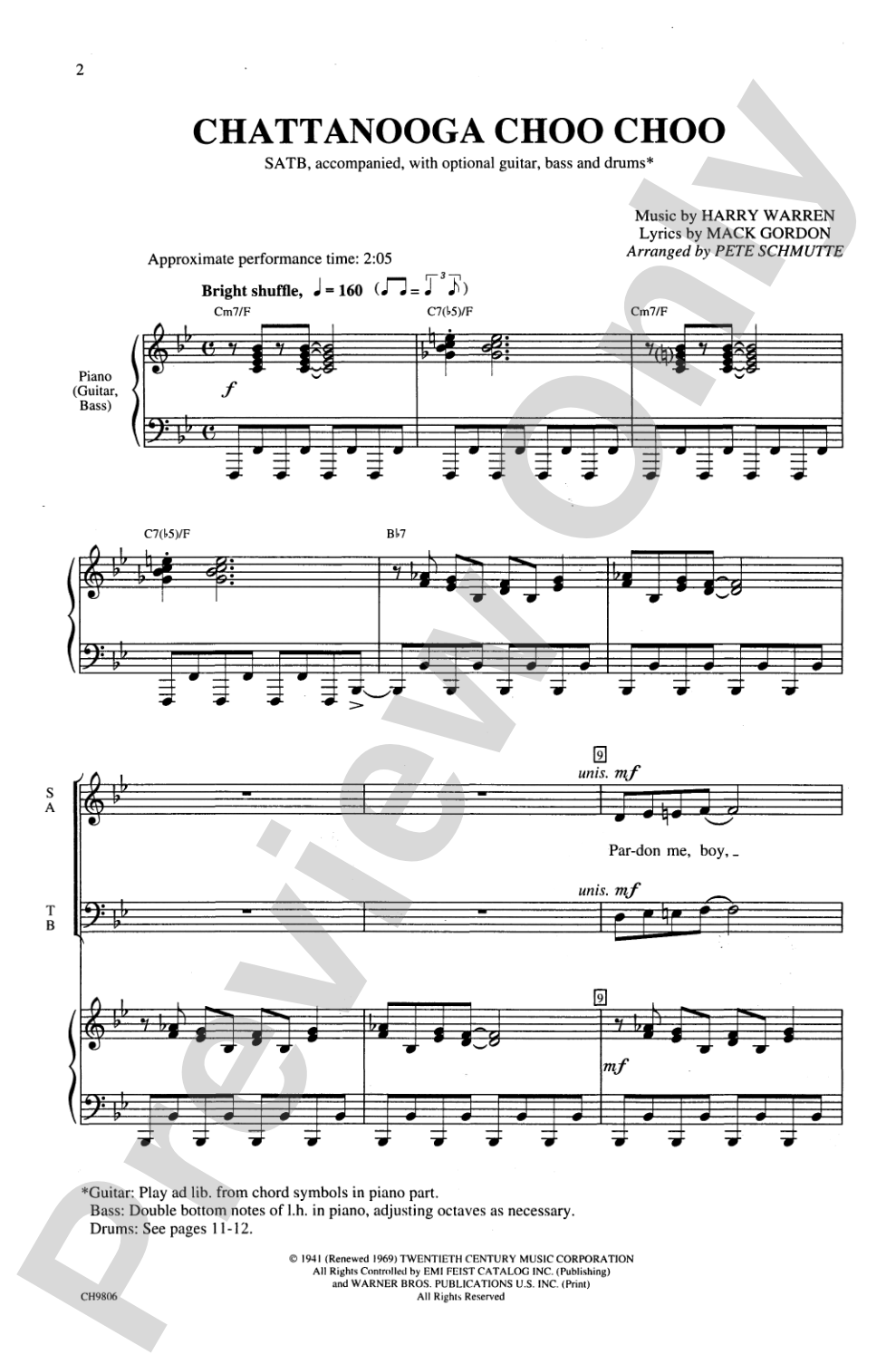
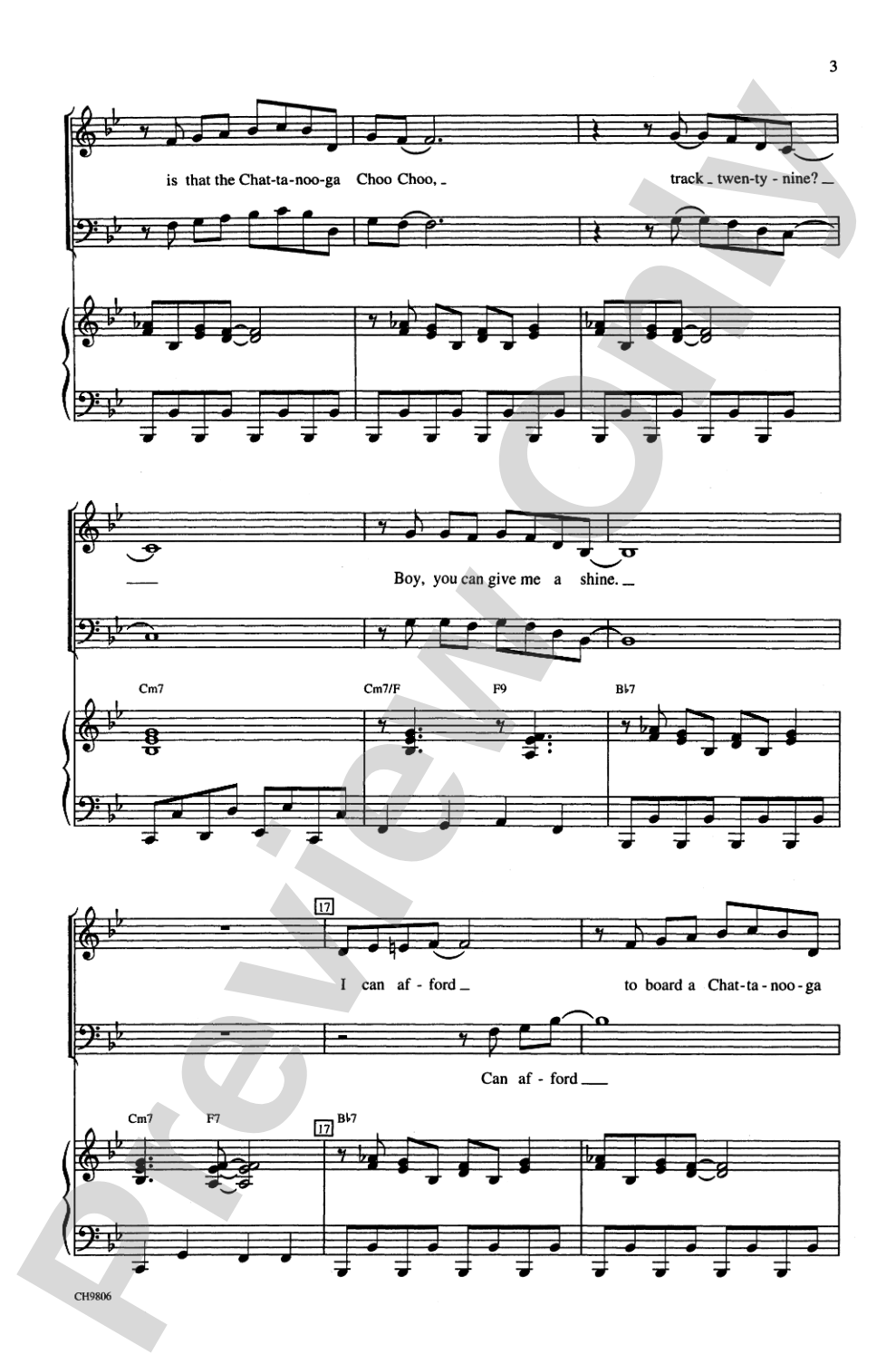
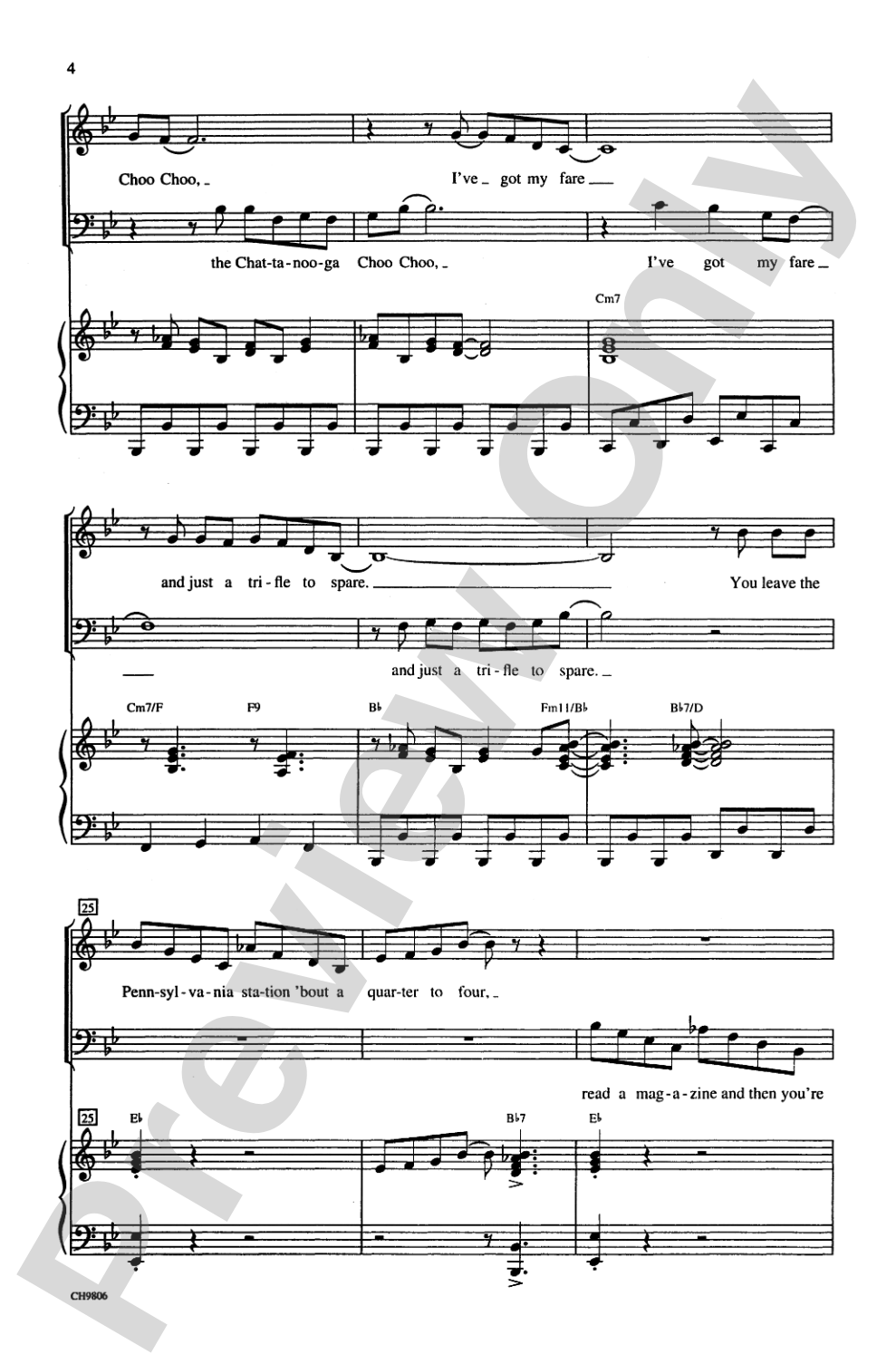

Chattanooga Choo Choo: SATB Choral Octavo
Music by Harry Warren, lyrics by Mack Gordon / arr. Pete Schmutte
Item: 00-PO-0002517
$2.25
Minimum order quantity: 20 copies
One moment…
Related Items
Chattanooga Choo Choo: 2-Part Choral Octavo |
$2.25
|
View | |
Chattanooga Choo Choo: SAB Choral Octavo |
$2.25
|
View | |
Chattanooga Choo Choo: SSA Choral Octavo |
$2.25
|
View | |
Chattanooga Choo Choo: Choral Instrumental Parts |
$15.00
|
View | |
Chattanooga Choo Choo: 2-Part Choral Octavo |
$2.25
|
View | |
Chattanooga Choo Choo: SATB Choral Octavo |
$2.25
|
View | |
Chattanooga Choo Choo: SAB Choral Octavo |
$2.25
|
View | |
Chattanooga Choo Choo: SSA Choral Octavo |
$2.25
|
View | |
Chattanooga Choo Choo: Choral Instrumental Parts |
$15.00
|
View | |
Chattanooga Choo Choo: Choral Octavo SoundTrax CD |
$27.99
|
View |
Description
Pete Schmutte's exceptional arrangement of "Chattanooga Choo Choo" was a huge hit in other voicings when they were released in 1999. Now your younger choirs can enjoy this new version in our Spotlight On Kids series.


Chattanooga Choo Choo: SATB Choral Octavo isn't in MakeMusic Cloud just yet...but it could be. Let us know you'd like to see it, and you'll help shape what comes next. In the meantime, start a free trial and dive into thousands of interactive titles your students can play along with today.
Request This Title
Tell us you want it.
Start Your Free Trial
Explore everything that's ready to play right now.
Sample Audio
No sample audio found.
Sample Video
No sample videos found.
Additional Details
Series:
Alfred Archive Edition: Alfred Pop Choral Series
Publisher:
Alfred Music
Page Count:
12
SKU:
00-PO-0002517
More about this title
About the Composer: Harry Warren
Harry Warren (1893–1981) composed some of the most enduring standards of the American songbook, with a gift for memorable melodies that bridged Broadway, film, and popular music. His prolific output includes over 800 published songs, many written for Hollywood musicals during the 1930s and 1940s, and his work earned him multiple Academy Award nominations. Warren's music remains a staple of jazz repertoire and choral arrangements because of its inherent singability and harmonic sophistication.
Warren's "Chattanooga Choo Choo," written with lyricist Mack Gordon in 1941, became a phenomenon through the Glenn Miller Orchestra's recording and has since become a cultural touchstone of the swing era. The song's infectious energy and narrative charm make it as appealing to modern singers as it was to audiences over eight decades ago.
Why we love this
Pete Schmutte's arrangement captures the infectious momentum of this swing standard while keeping the writing accessible for younger singers. The voicing sits comfortably and lets the story of the song shine through, making it a crowd-pleaser that builds confidence and joy in rehearsals and performances alike.
What to expect
This is pure vintage swing with a modern edge. The energy snaps and swings, the melody sits in your voice like an old friend, and the harmonies sparkle with the sophisticated warmth that made 1940s American songwriting legendary. Singing this feels like stepping into a train station during the golden age of travel and radio.
Who it's for
Young SATB choirs tackling swing and jazz repertoire for the first time will find this arrangement welcoming and rewarding. It works equally well for middle school, high school, or youth choir singers who want to experience authentic American popular music with a fresh energy that feels accessible, not dumbed down.
How to get the most out of it
- Keep the rhythm section locked on the backbeat. The swing feel depends on precision in the percussion and piano; use the recorded accompaniment as your metronome during early rehearsals to establish the groove.
- Shape the text with conversational energy. This song tells a story about heading south on a train, so treat each phrase like you're chatting with the audience rather than singing from a distance.
- Balance the parts so soloists (if any) pop through the texture without the choir dropping underneath them. The arrangement is designed to showcase individual voices, so rehearse sections separately to build confidence.
- Nail the rhythmic hits together. Swing music lives in the crisp articulation of ensemble moments, so spend time on unison passages and the final climactic sections to make them land with clarity.
How to use it
This arrangement is ideal for a jazz or American standards concert, where it can anchor a set alongside other swing-era repertoire. It also shines as a high-energy closer on a more traditional concert program, giving audiences a familiar favorite and leaving them with infectious rhythm in their ears.
Skills your students will build
- Swing rhythm and syncopation specific to jazz phrasing
- Balancing SATB parts when one voice carries the primary melody
- Narrative phrasing and text painting
- Ensemble precision on rhythmic unisons and hits
- Confidence singing in a non-classical genre