

Chantons (from Armide): SSA Choral Octavo
From Armide
French words by Philippe Quinault, music by Jean-Baptiste Lully / ed. and arr., with English words, by Patrick M. Liebergen
Item: 00-PO-0003238
$1.90
Minimum order quantity: 20 copies
Pickup currently not available
Description
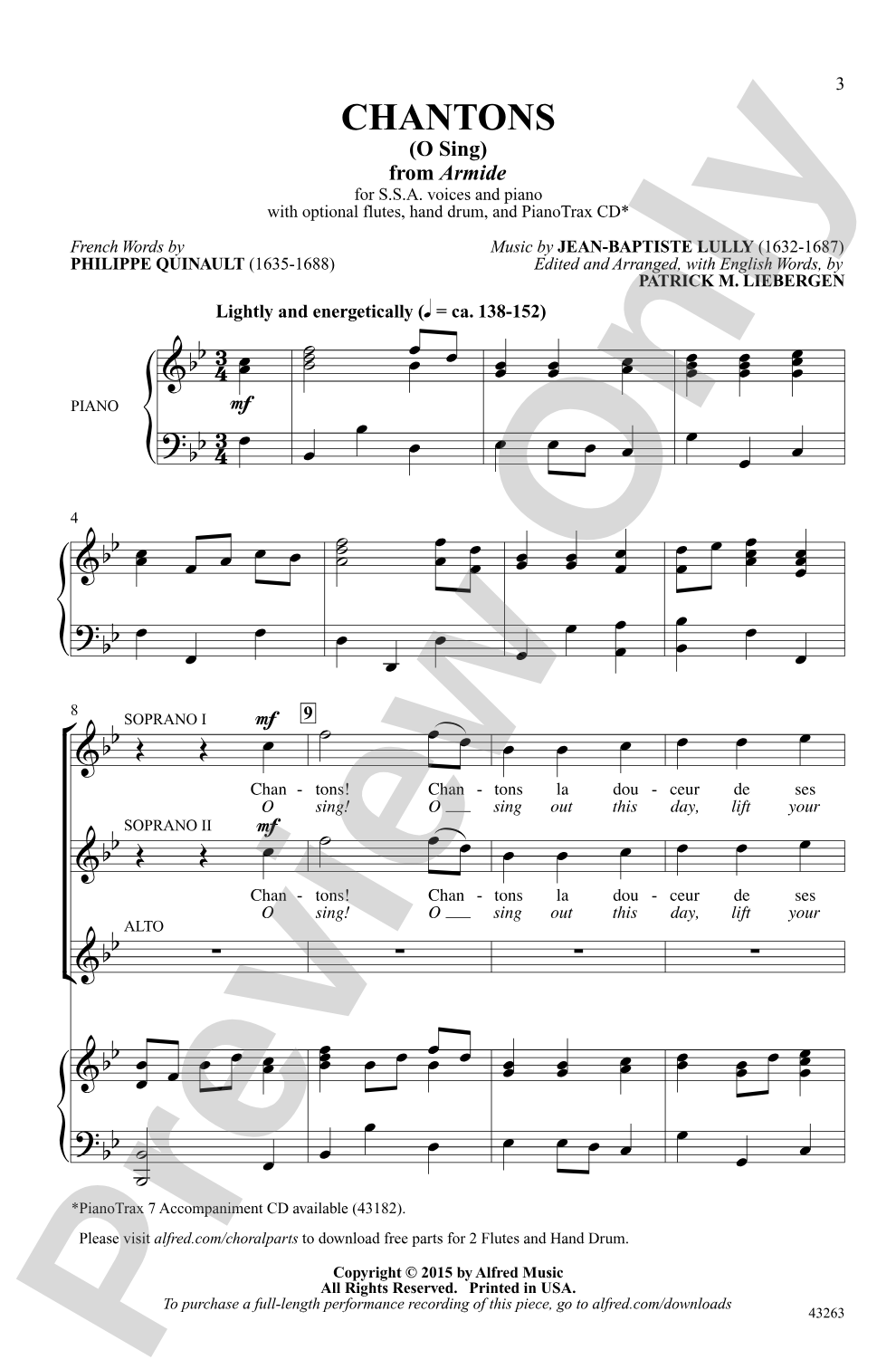
From the French opera Armide comes this joyous chorus for women's voices. Distinctly Baroque, Dr. Liebergen's SSA arrangement includes a brief instrumental introduction, optional parts for two flutes and hand drum (available at alfred.com/choralparts), and tempo and dynamic indications. A lovely work for concerts and festivals.


Chantons (from Armide): SSA Choral Octavo isn't in MakeMusic Cloud just yet...but it could be. Let us know you'd like to see it, and you'll help shape what comes next. In the meantime, start a free trial and dive into thousands of interactive titles your students can play along with today.
Request This Title
Tell us you want it.
Start Your Free Trial
Explore everything that's ready to play right now.
Sample Audio
1
Audio File
--:--
0:00
0:00
Sample Video
No sample videos found.
Additional Details
Series:
Alfred Choral Designs
Publisher:
Alfred Music
Page Count:
12
SKU:
00-PO-0003238
More about this title
About the Composer: Jean-Baptiste Lully
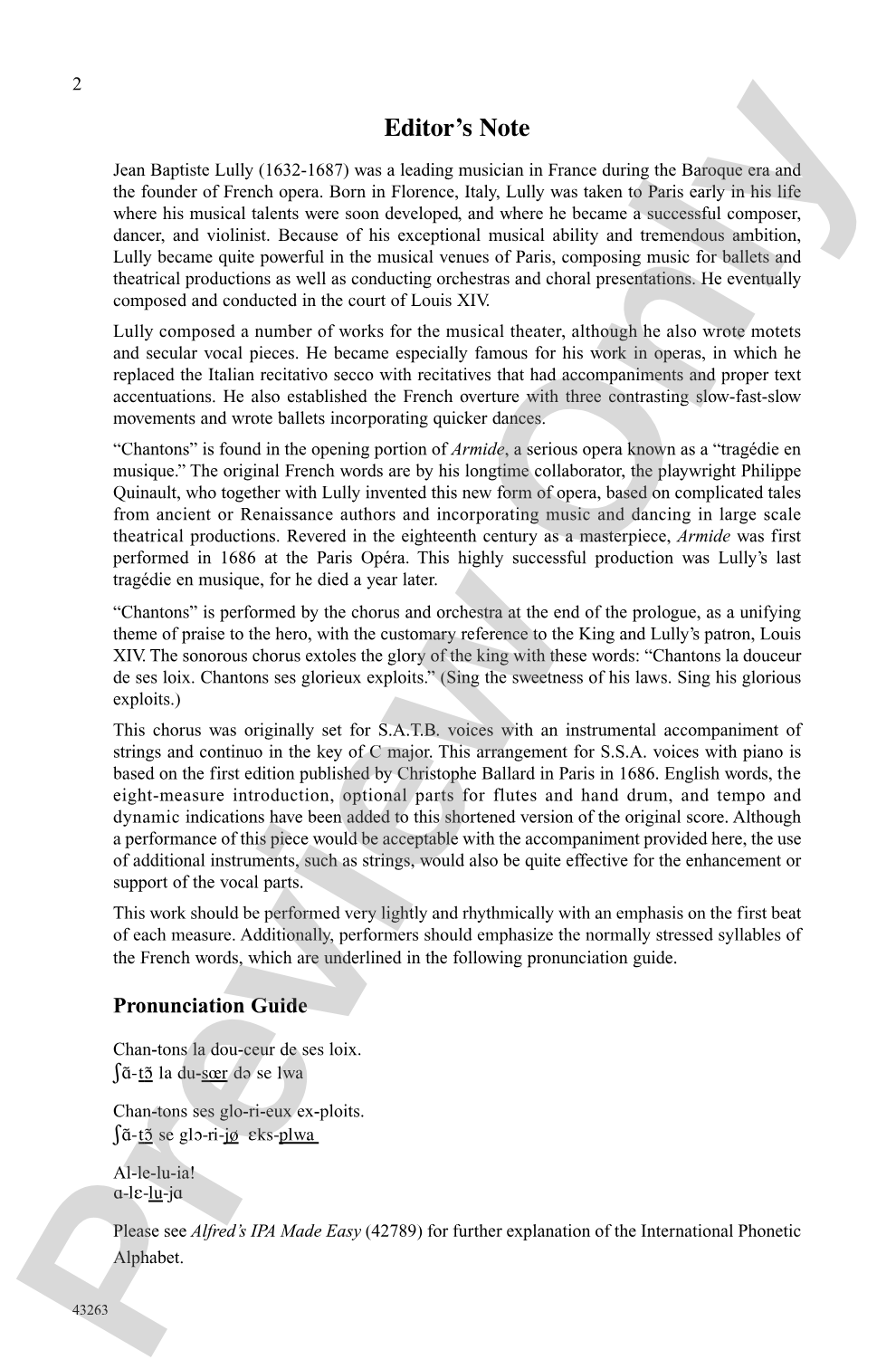
Jean-Baptiste Lully (1632-1687) was the dominant musical figure of the French Baroque, serving as court composer to Louis XIV and establishing French opera as a distinct genre. His mastery of orchestration, dance rhythms, and theatrical grandeur shaped musical taste across Europe for generations.
Lully's works remain central to choral and instrumental pedagogy because they balance accessibility with genuine sophistication. His melodies are singable and memorable, yet they embed the harmonic language and formal clarity that define Baroque mastery. For students, performing his music builds understanding of period style in direct, rewarding ways.
Why we love this
Liebergen's SSA arrangement captures the theatrical vitality of this chorus while fitting it perfectly into women's choral contexts. The inclusion of optional flute and hand drum parts gives directors real flexibility: perform it as pure voices for intimacy, or add instruments for the festive energy the text deserves. This is the kind of Baroque literature that reminds singers why this music still matters.
What to expect
Bright, elegant, and propulsive. The Baroque rhythmic drive and French melodic grace create a sense of ceremony and celebration. This is music that feels both courtly and genuinely joyful, never heavy or overly formal.
Who it's for
This octavo suits treble choirs at the intermediate level and above. It works equally well in school choral programs, community choirs, and church settings where directors want to program recognized masterworks without the demands of large SATB literature.
How to get the most out of it
- Observe the tempo and dynamic markings carefully; they are essential to shape the phrases idiomatically rather than letting them sit at a single dynamic level.
- Balance the three parts so that no voice disappears into the middle. In SSA voicing, the second soprano line often needs conscious attention to stay audible.
- If using the optional flute and hand drum parts, establish clear communication with instrumentalists about how they anchor the pulse without overwhelming the voices.
- Approach the French text with attention to natural syllable stress and clarity of vowels; crisp diction brings out the charm of Lully's melodic lines.
How to use it
Place this as a contrasting moment in a concert of mixed eras, or build a entire program around Baroque choral literature. Its reasonable length and accessibility make it an excellent choice for spring festivals or competitions. The text's secular joy works beautifully as a concert closer or as a bridge between more serious repertoire.
Skills your students will build
- Reading and performing French text with accurate syllable stress
- Sustaining melodic lines in Baroque style (shaped phrasing, appropriate vibrato control)
- Balancing three independent SSA parts without one voice dominating
- Understanding period-appropriate tempo and dynamic interpretation
- Coordinating with optional instrumental parts (flute and percussion)