
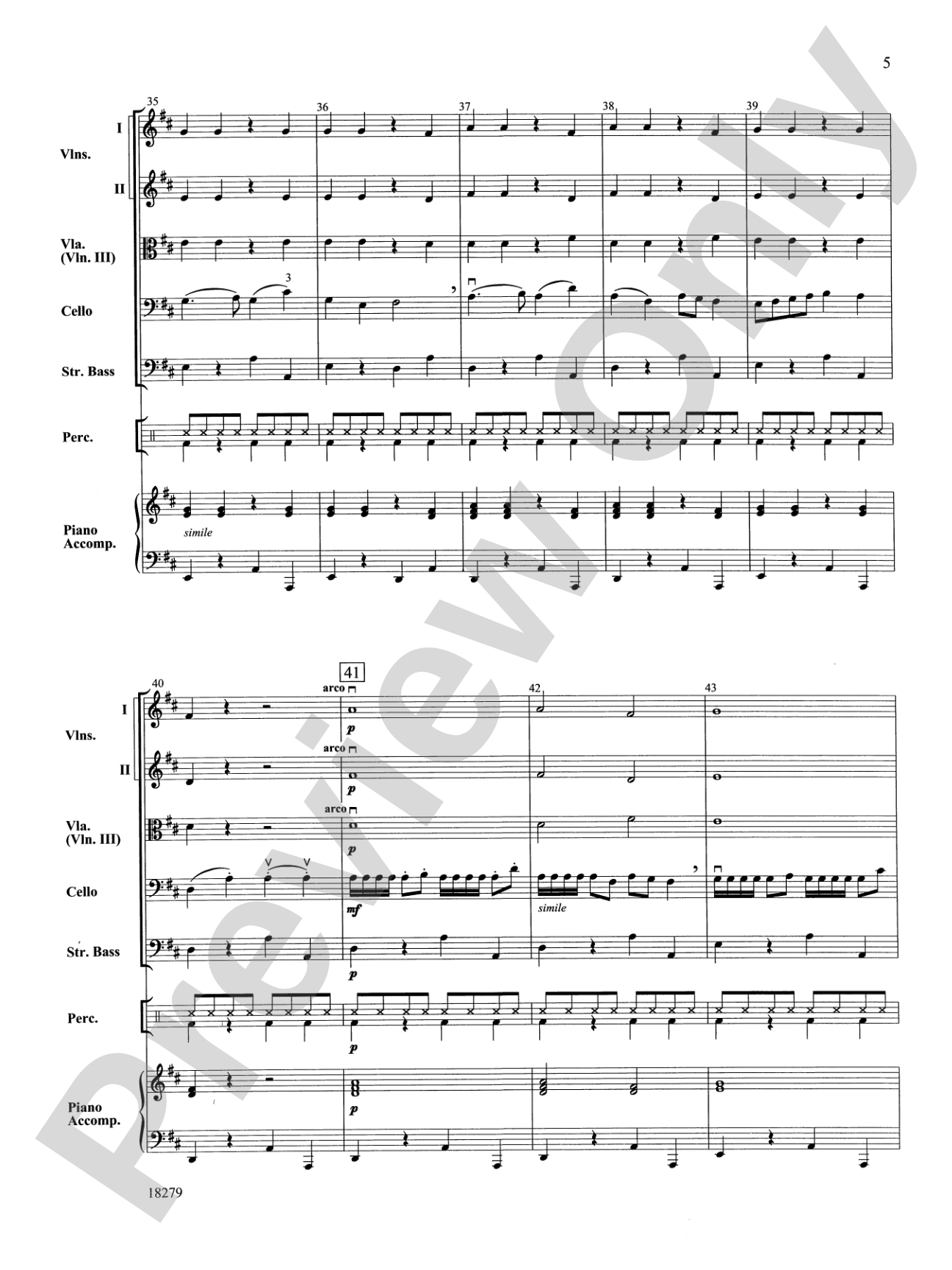
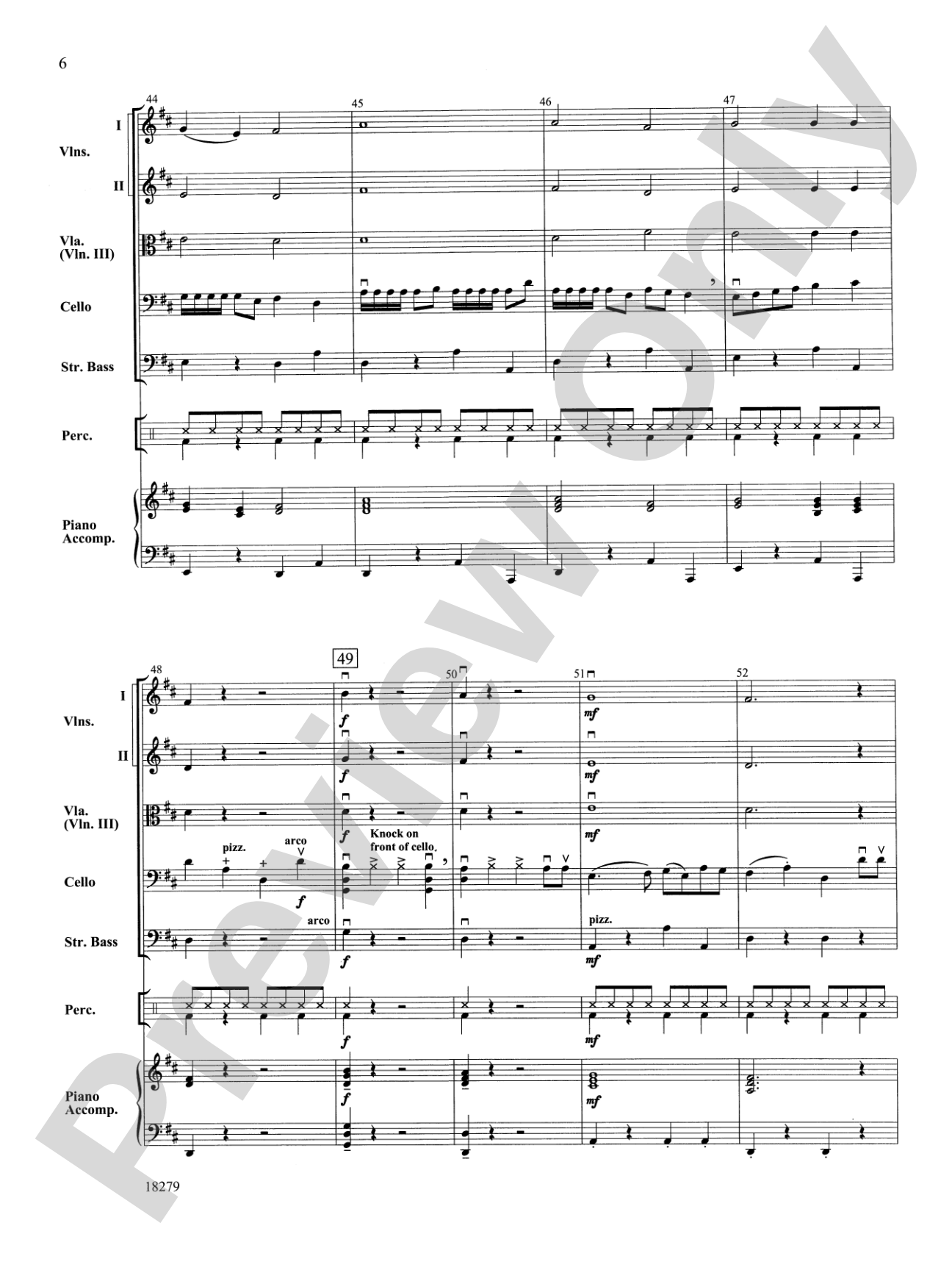
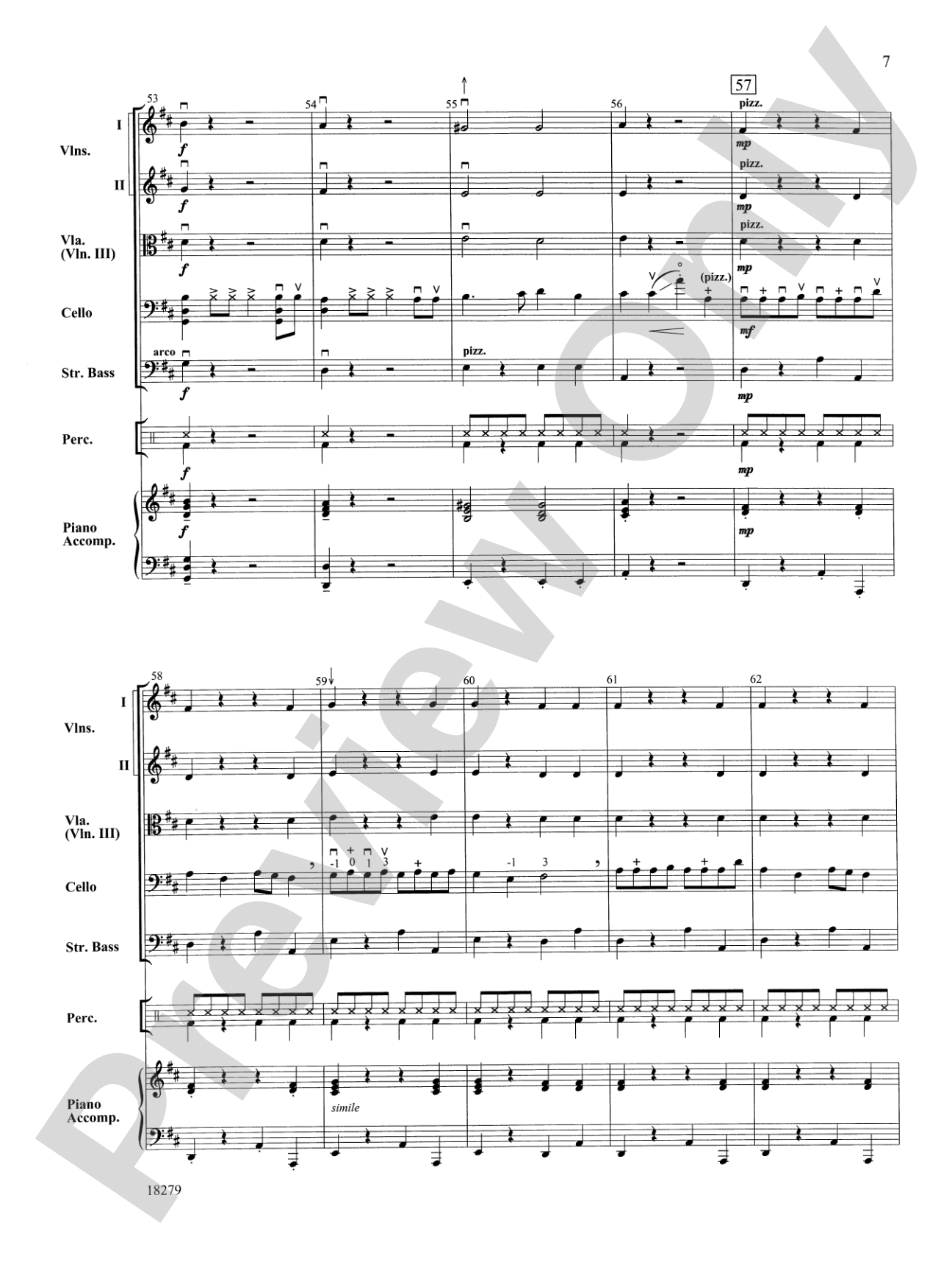
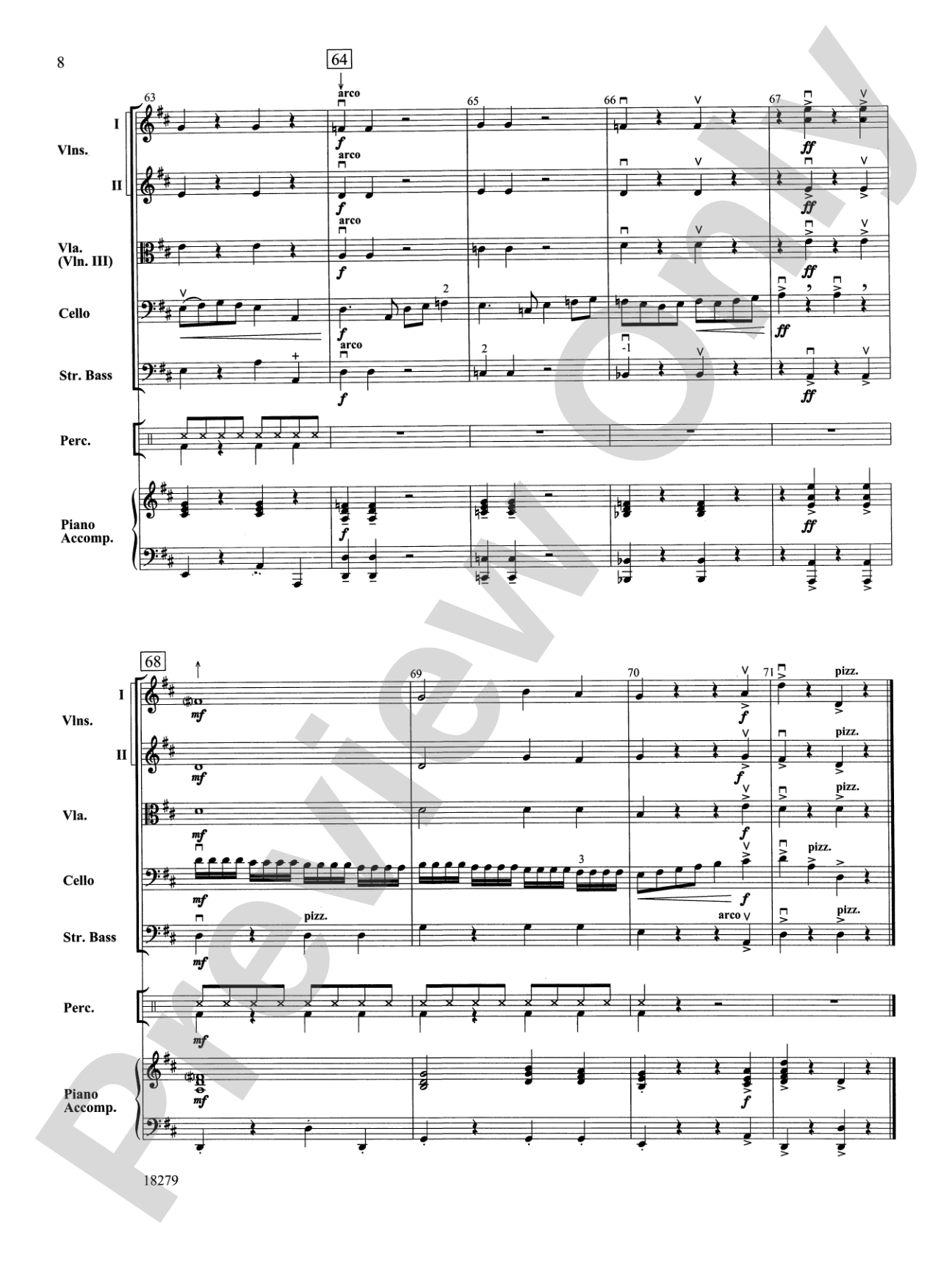

Cellos Ole!: String Orchestra Conductor Score & Parts
Cello Section Feature
By Richard Meyer
Grade: 1
Item: 00-PK-0000263

$46.00
Pickup currently not available
Buy Extra Parts (Digital PDF Download)
| Product | Price | Quantity |
|---|---|---|
| Cellos Ole!: Score | $8.00 | |
| Cellos Ole!: 1st Violin | $5.99 | |
| Cellos Ole!: 2nd Violin | $5.99 | |
| Cellos Ole!: 3rd Violin (Viola [TC]) | $5.99 | |
| Cellos Ole!: Viola | $5.99 | |
| Cellos Ole!: Cello | $5.99 | |
| Cellos Ole!: String Bass | $5.99 | |
| Cellos Ole!: 1st Percussion | $5.99 | |
| Cellos Ole!: Piano Accompaniment | $5.99 |
Parts Added to Cart!
Description
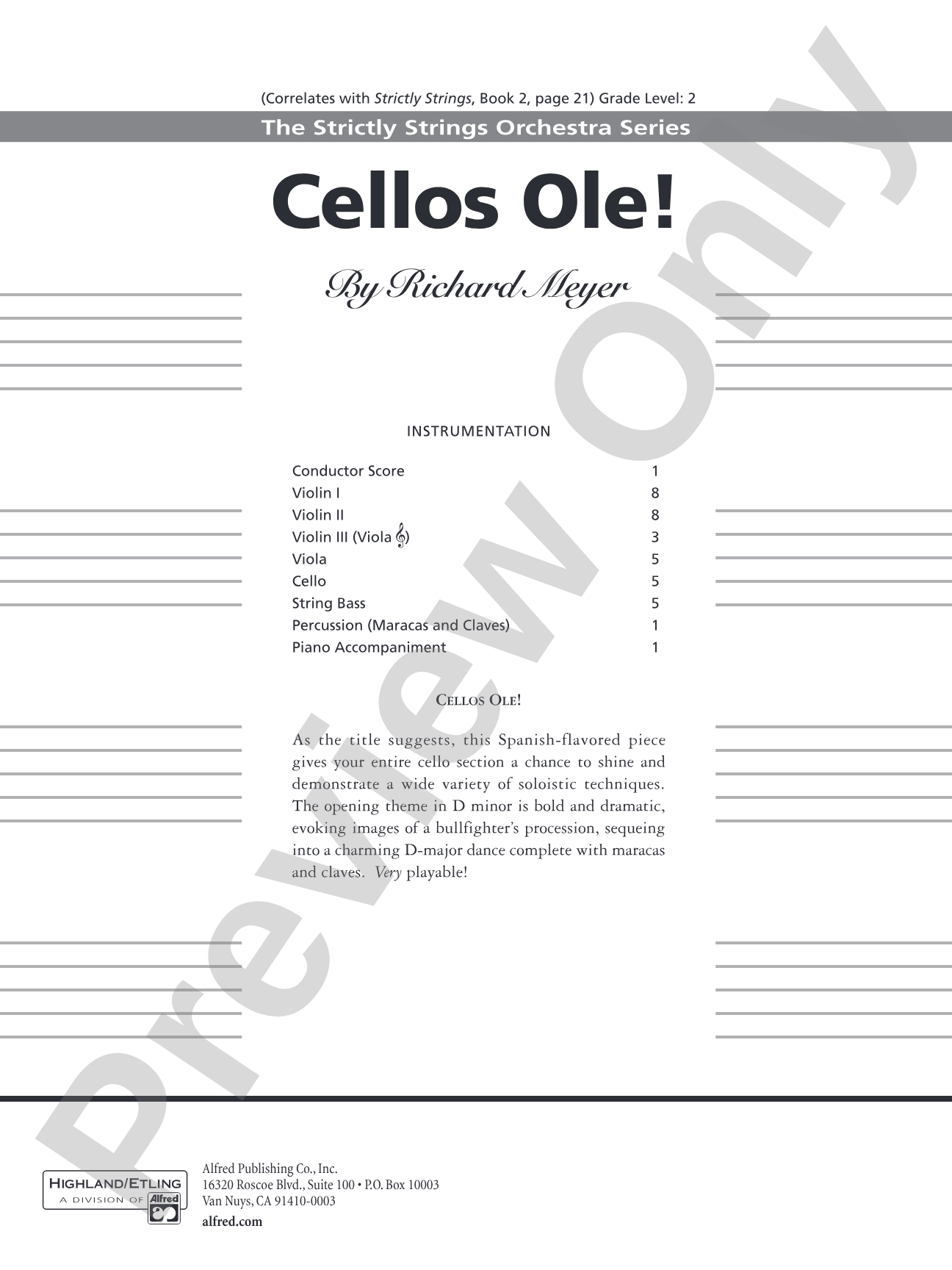
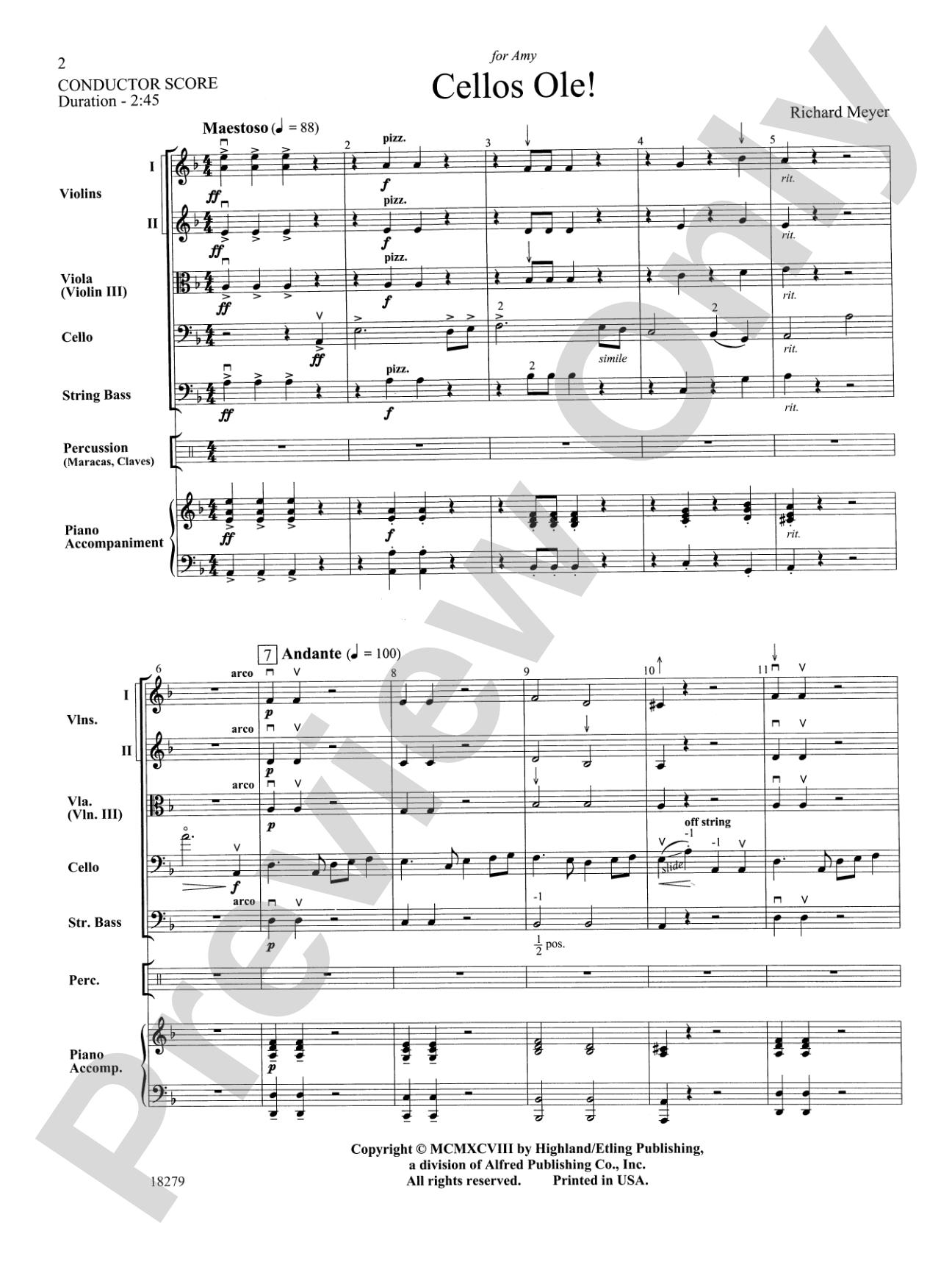
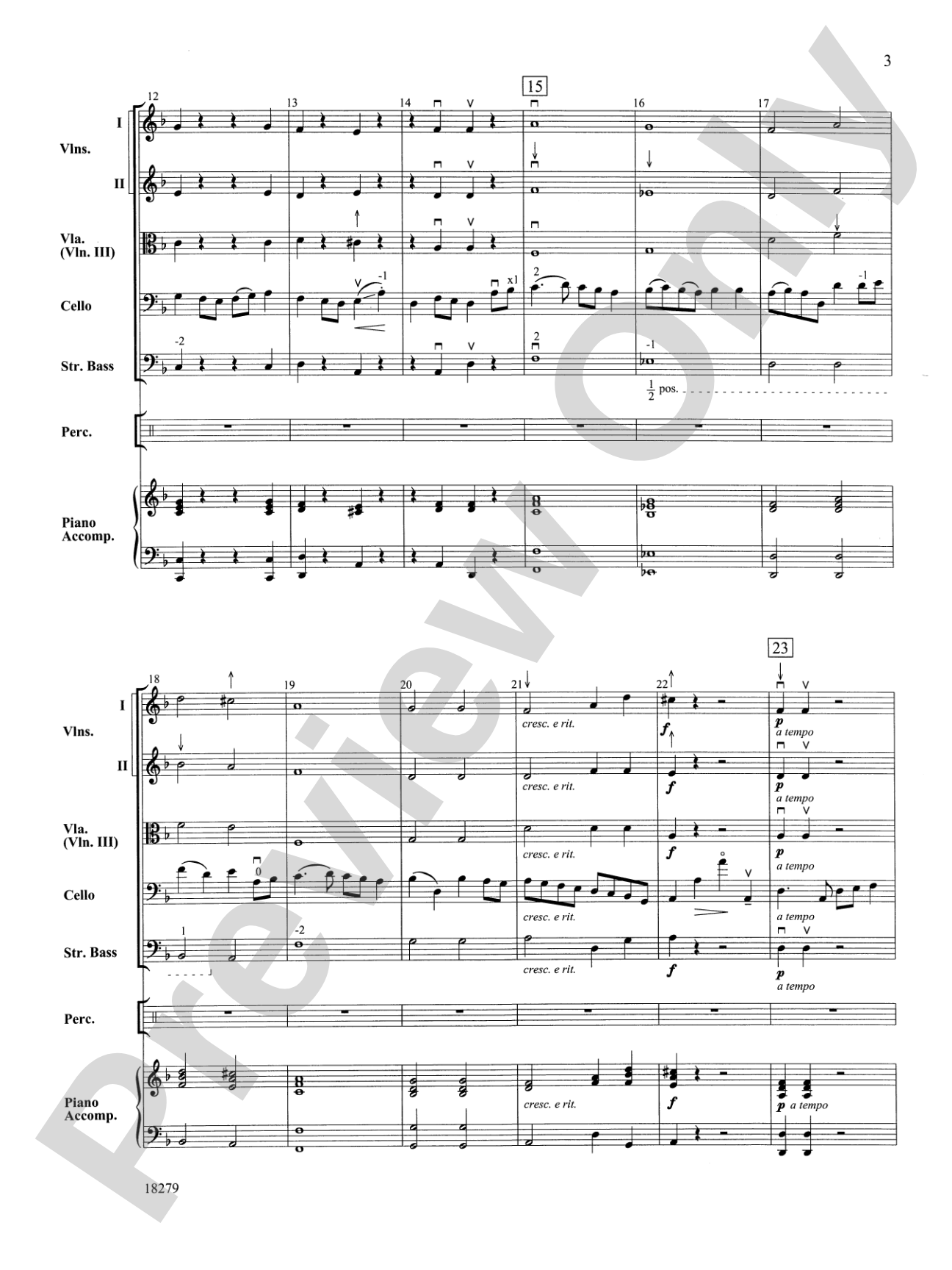
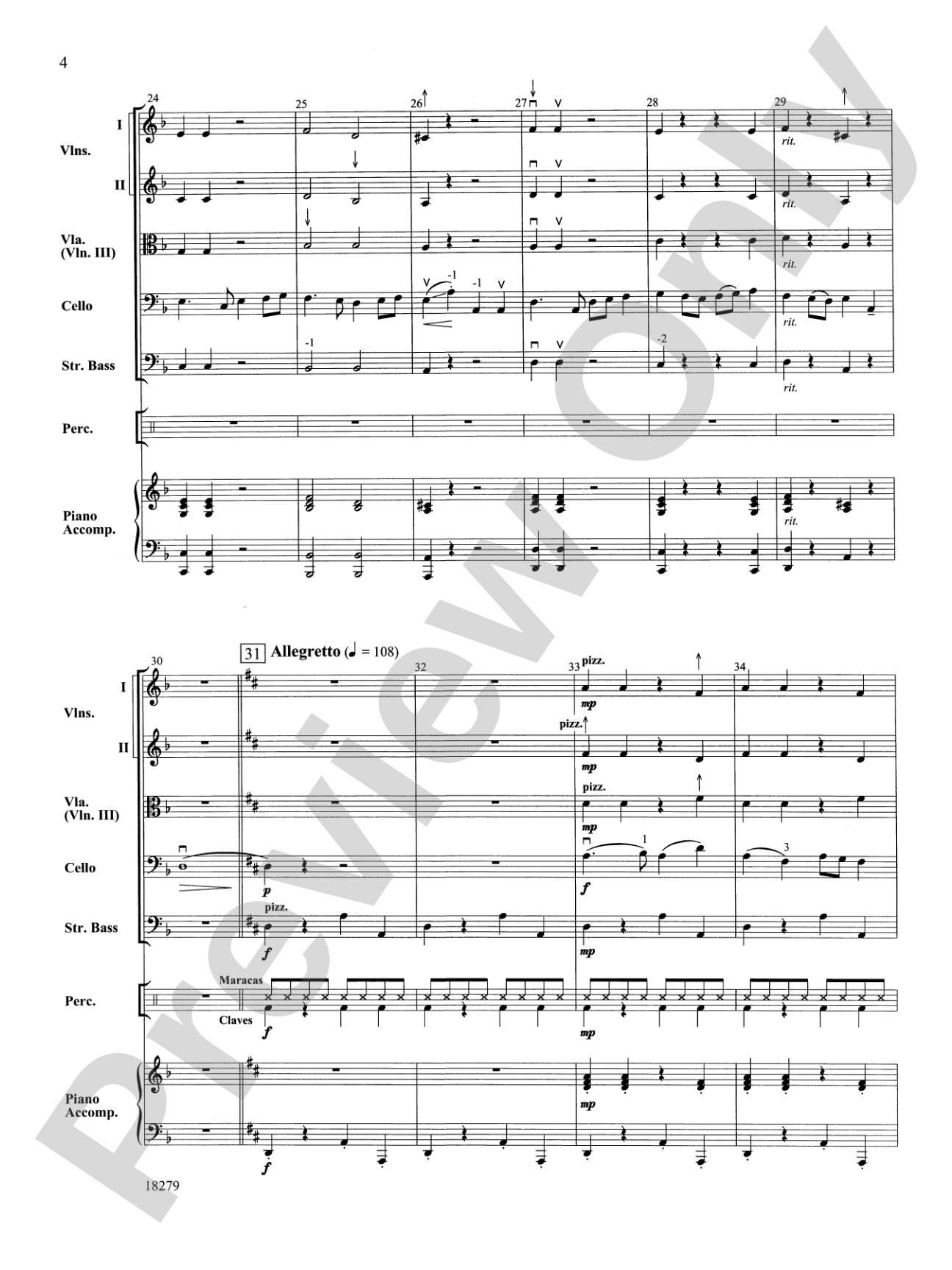
Feature your cello section in this fun, Spanish-flavored original by Richard Meyer. This piece is a great motivator for those up-and-coming young cellists and is a great change of pace for any concert program. May also be performed as a recruiting tool for your future beginning string class!


Don't just read it, hear it, play along with it, and watch your students grow with it. In MakeMusic Cloud, Cellos Ole!: String Orchestra Conductor Score & Parts comes alive with professional accompaniment, adjustable tempo, and built-in practice tools that turn solo practice into real progress.
Open in the Player
Jump straight in and assign it today.
Start Your Free Trial
Open this title and explore the full library in minutes.
Sample Audio
1
Audio File
--:--
0:00
0:00
Sample Video
No sample videos found.
Additional Details
Series:
Highland/Etling Strictly Strings
Publisher:
Alfred Music
Page Count:
84
SKU:
00-PK-0000263
More about this title
About the Composer: Richard Meyer

Richard Meyer brings three decades of string teaching experience to his composing and conducting work. He transformed the orchestra program at Oak Avenue Intermediate School in Temple City, California, from 29 students to 200 over 22 years, and directed the Pasadena Youth Symphony Orchestra for 16 years, taking ensembles to perform internationally in Vienna, Australia, and Canada. Beyond the podium, he founded the "Giving Bach" program, an initiative that uses interactive concerts to reach special needs and underserved students across Southern California.
Meyer has established himself as a prolific composer with nearly 200 published works and arrangements in circulation. He served as string editor for Alfred Publishing Company for 16 years and co-authored the String Explorer Series and Sight-read It for Strings method resources. His work as a featured clinician at the A.S.T.A. National Conference, the Texas Orchestra Directors' Association Conference, and various state honor orchestra workshops reflects his ongoing commitment to string music education.
Why we love this
Cellos Ole! captures what makes Meyer's writing so effective with young orchestras: immediate energy, accessible harmony, and a spotlight that actually energizes rather than intimidates developing cellists. The Spanish flavor adds cultural variety to your concert without demanding advanced technique, and the section feature structure gives your cello players genuine ownership of the piece while keeping rehearsal demands realistic for Grade 1 ensembles.
What to expect
Cellos Ole! captures the rhythmic warmth and celebratory spirit of Spanish music without pretense. Bright, accessible, and genuinely fun, it gives young cellists the chance to feel like soloists within the ensemble context.
Who it's for
String orchestras at the beginning level, especially those with developing cello sections that need confidence and visibility. This works equally well as a main-stage feature for a concert or as a recruitment showcase if you're building your beginning string class.
How to get the most out of it
- Establish a steady Latin pulse in rehearsal before worrying about articulation or dynamics; young cellists need the rhythmic foundation locked in first.
- Let the cello section lead the character work. Once they commit to the Spanish flavor, the rest of the orchestra will follow naturally.
- Consider asking cellists to listen to recordings of Spanish guitar or flamenco to internalize the style, even if only for two or three rehearsals.
How to use it
Program this alongside more lyrical or traditional pieces to create contrast and keep your audience engaged. The motivational effect on cellists makes it ideal for mid-concert placement when energy might dip, and its accessibility means it works as a bridge piece between rehearsal-focused repertoire and technical showpieces.
Skills your students will build
- Reading and performing Latin rhythmic patterns in 4/4
- Executing consistent articulation within a section feature
- Responding to stylistic character cues (Spanish flavor and tempo)
- Balancing as a featured section while maintaining ensemble awareness