

Celebrate the Seasons: 2-Part Choral Octavo
Words and music by Andy Beck
Item: 00-PO-0000539
$1.75
Minimum order quantity: 20 copies
Pickup currently not available
Related Items
Celebrate the Seasons: SoundTrax Digital Audio Download |
$24.95
|
View | |
Celebrate the Seasons: SATB Choral Octavo |
$1.75
|
View | |
Celebrate the Seasons: SAB Choral Octavo |
$1.75
|
View | |
Celebrate the Seasons: SSAA Choral Octavo |
$1.75
|
View | |
Celebrate the Seasons: Choral SoundPax |
$15.00
|
View | |
Celebrate the Seasons: SATB Choral Octavo |
$1.75
|
View | |
Celebrate the Seasons: SAB Choral Octavo |
$1.75
|
View | |
Celebrate the Seasons: SSAA Choral Octavo |
$1.75
|
View | |
Celebrate the Seasons: 2-Part Choral Octavo |
$1.75
|
View | |
Celebrate the Seasons: Choral Octavo SoundTrax CD |
$24.95
|
View | |
Celebrate the Seasons: Choral SoundPax |
$15.00
|
View |
Description
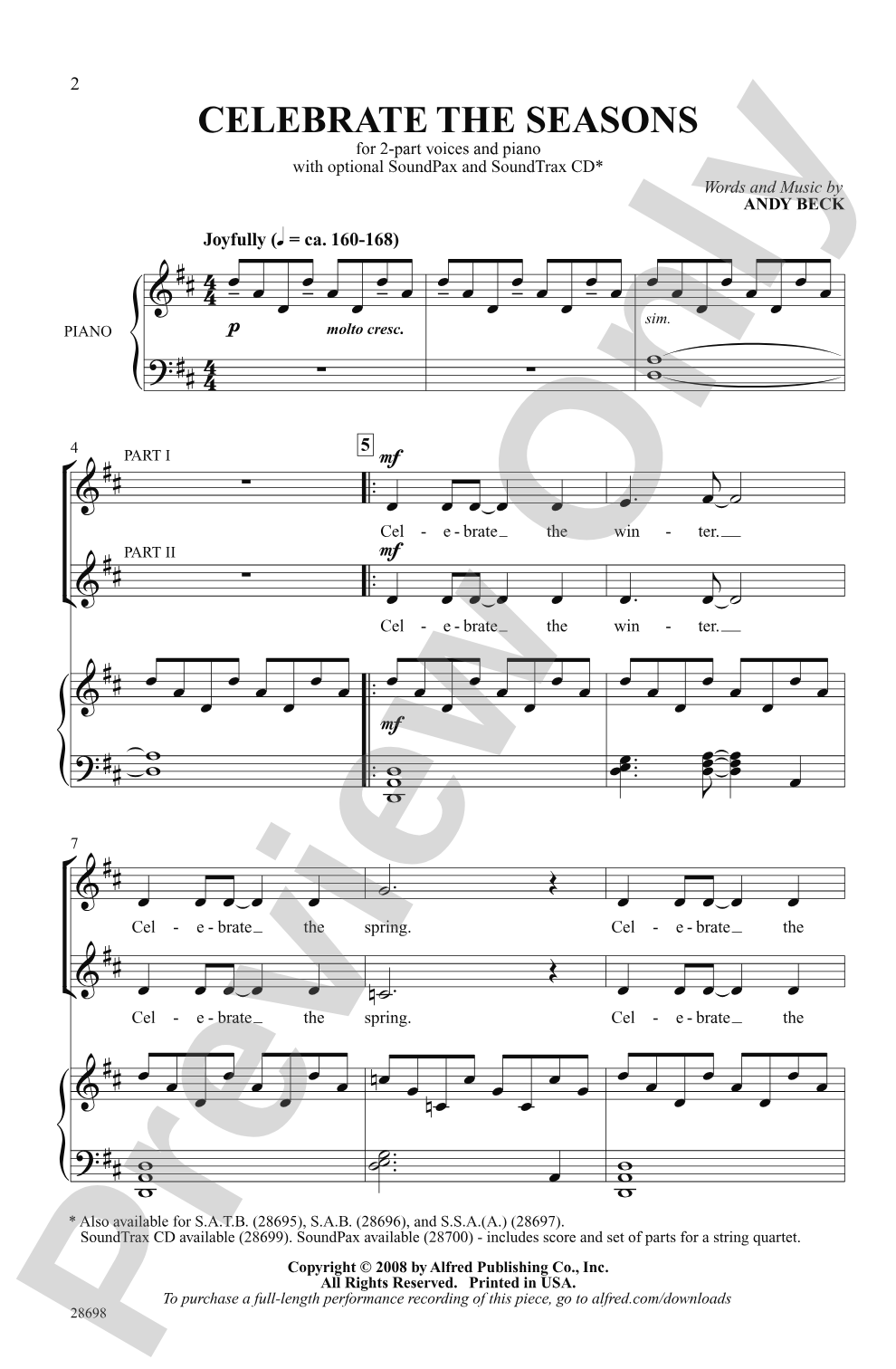
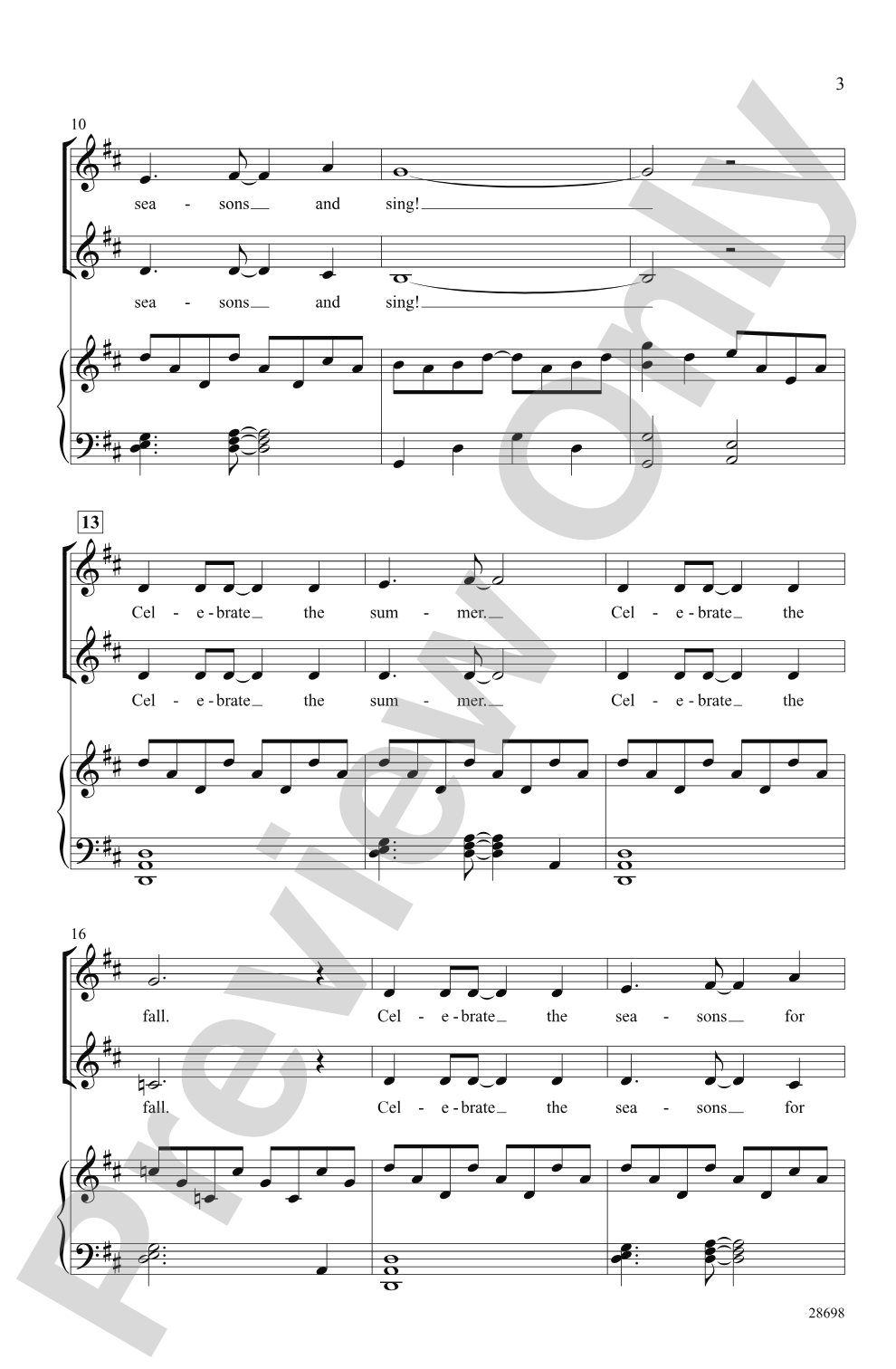
A rhythmic piano ostinato grows into an exciting choral celebration for the changing seasons of the year. Modal harmonies and accented rhythms contribute to the contemporary sounds of this joyful fanfare and tribute to nature. Program with other Andy Beck "seasons" songs to create a choral song cycle.


Celebrate the Seasons: 2-Part Choral Octavo isn't in MakeMusic Cloud just yet...but it could be. Let us know you'd like to see it, and you'll help shape what comes next. In the meantime, start a free trial and dive into thousands of interactive titles your students can play along with today.
Request This Title
Tell us you want it.
Start Your Free Trial
Explore everything that's ready to play right now.
Sample Audio
No sample audio found.
Sample Video
No sample videos found.
Additional Details
Series:
Alfred Choral Designs
Publisher:
Alfred Music
Page Count:
8
SKU:
00-PO-0000539
More about this title
About the Composer: Andy Beck

Andy Beck directs choral publications at Alfred Music and has composed and arranged more than 450 works for choirs, vocalists, and young singers. His instructional resources, including Sing at First Sight, Foundations in Choral Sight Singing, and Vocalize! 45 Vocal Warm-Ups That Teach Technique, are standard references in music education. Beck holds degrees in Music Education from Ithaca College and Northwest Missouri State University.
An active conductor, clinician, and adjudicator across the United States and internationally, Beck brings direct classroom and rehearsal experience to every piece he writes. He has served as guest conductor for honor choirs of all ages, including all-state ensembles throughout the Southeast, and continues to perform as a tenor with the North Carolina Master Chorale Chamber Choir. His work as an Alfred Music studio singer since 1992 keeps him connected to the practical demands of performance and the voices that sing his music.
Why we love this
Beck writes for singers with genuine joy in the writing itself. The modal harmonies and rhythmic drive feel fresh without losing accessibility, and the piece works equally well as a standalone concert moment or as part of a larger thematic program. Two-part voicing opens doors for mixed-age or mixed-ability choirs without sacrificing musical substance.
What to expect
A bright, propulsive meditation on nature's cycles. The modal harmonies create a thoughtful, almost timeless quality, while the rhythmic ostinato and accented figures drive the piece forward with genuine festivity. It feels like organized exuberance.
Who it's for
Choirs of all ages and experience levels with two-part resources. The piece works for middle school choirs developing rhythmic confidence, high school singers exploring contemporary harmony, or any ensemble seeking celebration repertoire that sounds current and energetic without excessive technical demands.
How to get the most out of it
- Lock the rhythm section into the piano ostinato early; once your singers feel that foundation under them, the accented choral rhythms will land with precision and energy.
- Shape the opening as a gradual build, letting the piano establish the pattern before voices enter so the accumulation feels intentional rather than sudden.
- Bring out the modal color by listening carefully to how each voice part sits within the harmony; Beck's contemporary sound depends on voices hearing their specific pitch relationships, not just singing on top of the accompaniment.
- If using instrumental parts, balance them so the piano ostinato remains the anchor but never overpowers the voices.
How to use it
Program alongside other Beck seasonal works to create a focused song cycle that celebrates the year in miniature, or place it as a concert opener to establish an uplifting, contemporary tone for the evening. Its rhythmic energy and joyful character make it ideal for spring or end-of-year concerts where you want to leave the audience with forward momentum.
Skills your students will build
- Reading and executing accented rhythmic figures in a choral context
- Hearing and singing modal harmonies (non-traditional major/minor sound)
- Maintaining rhythmic independence while listening to a driving accompaniment pattern
- Balancing two-part voicing with piano ostinato without doubling or losing individual line integrity