

Celebrate the Feast of Lights: 3-Part Mixed Choral Octavo
Music by Sally K. Albrecht and Lois Brownsey
Item: 00-PO-0003886
$2.25
Minimum order quantity: 20 copies
Pickup currently not available
Description
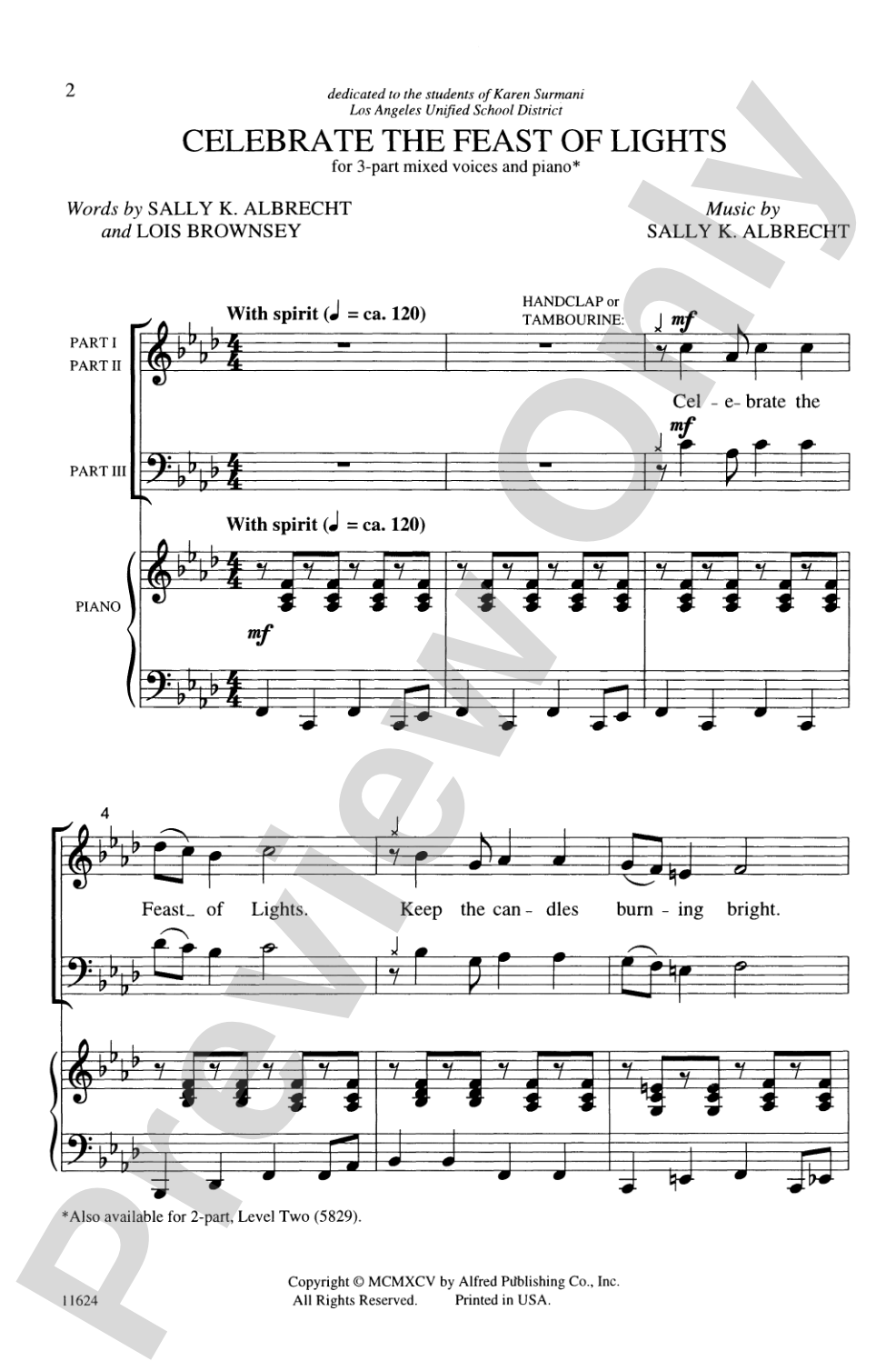
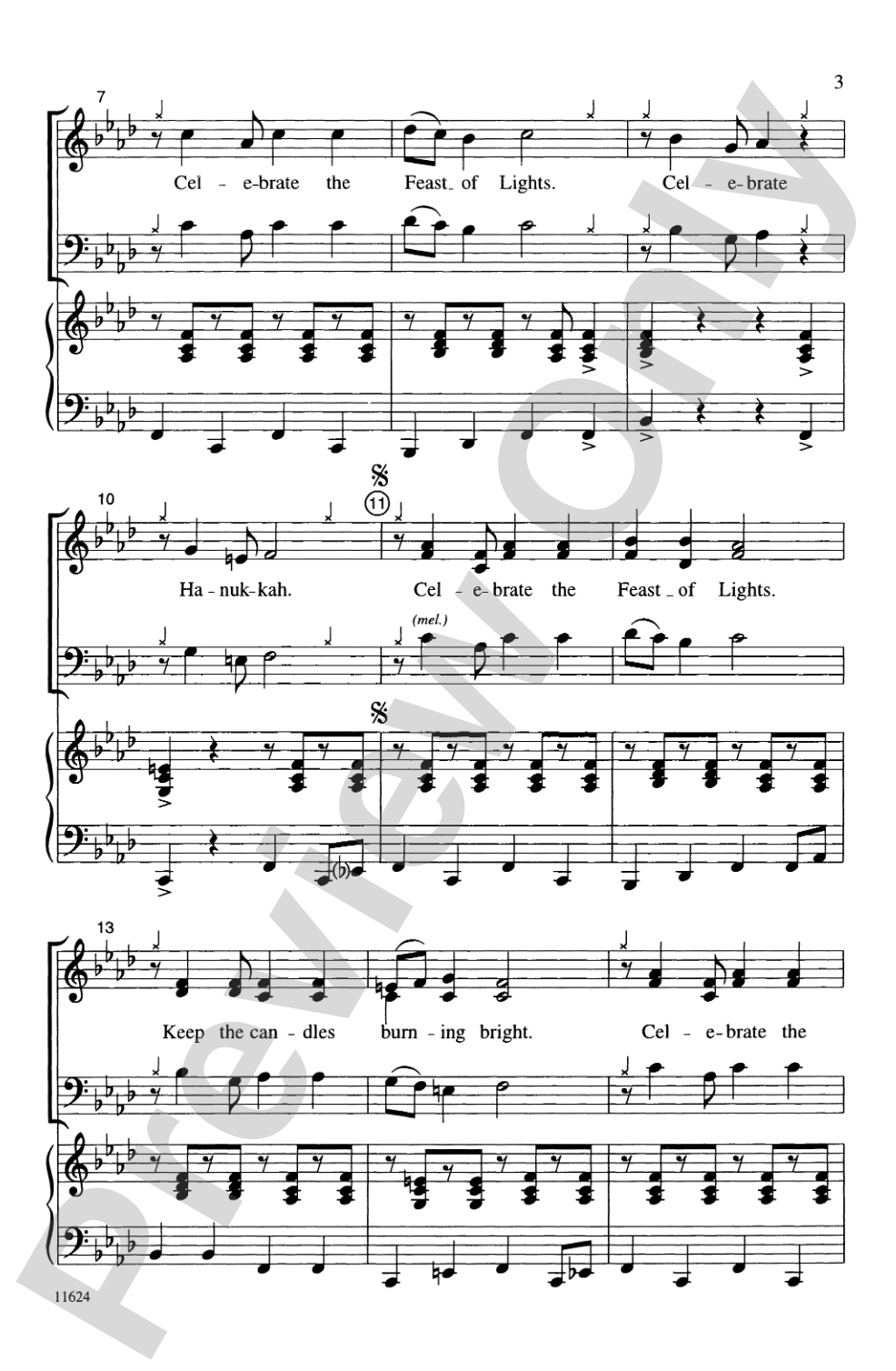
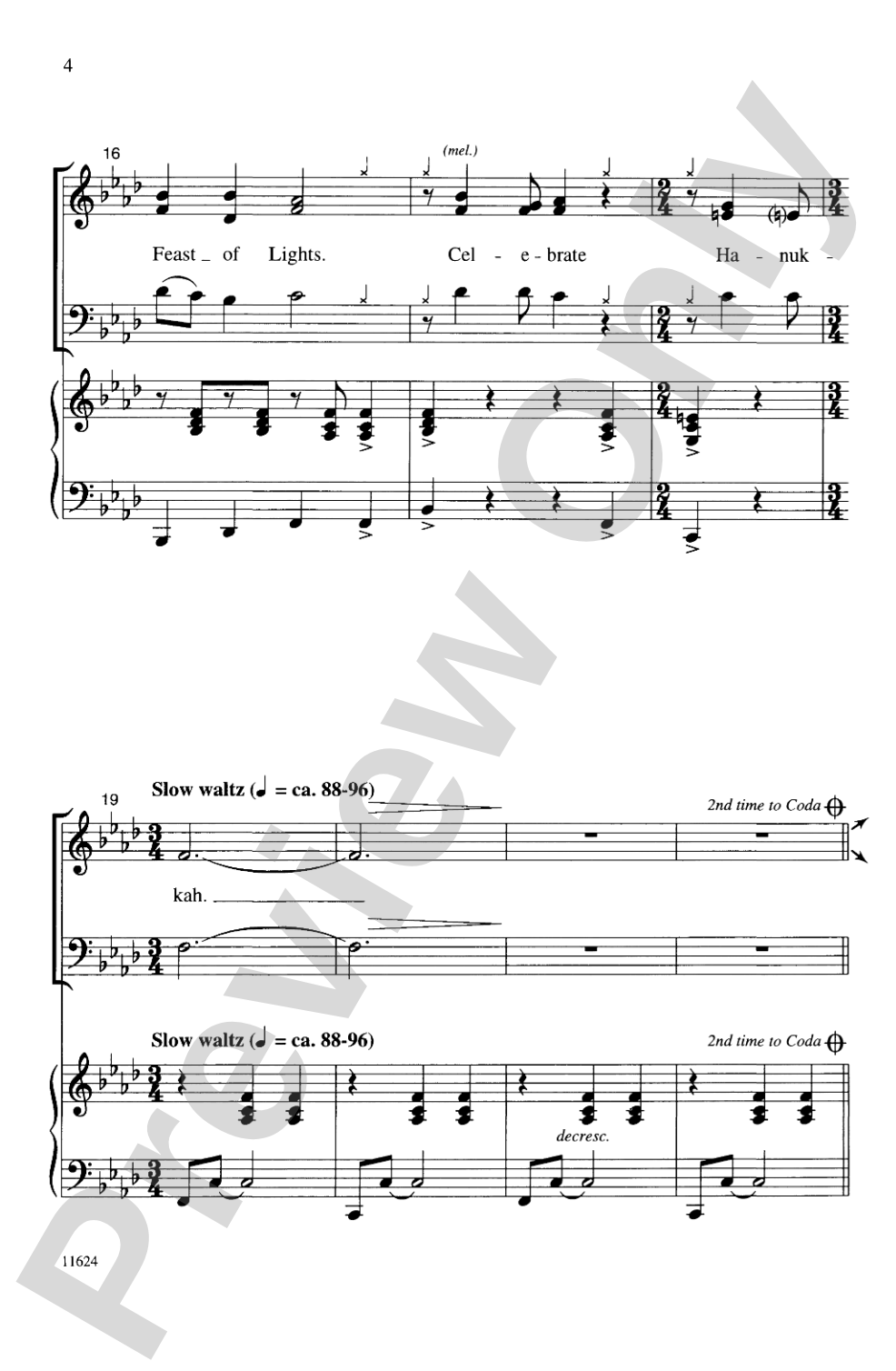
This top selling 2-Part Hanukkah piece is now available for 3-Part voices. A wonderful seasonal piece which actually describes the traditions of Hanukkah. "Round the world families are gathering from near and far" to celebrate the feast of lights. A bright opening section contrasts with a slow middle section before a return to main theme. Everyone gets a chance to sing the melody.


Celebrate the Feast of Lights: 3-Part Mixed Choral Octavo isn't in MakeMusic Cloud just yet...but it could be. Let us know you'd like to see it, and you'll help shape what comes next. In the meantime, start a free trial and dive into thousands of interactive titles your students can play along with today.
Request This Title
Tell us you want it.
Start Your Free Trial
Explore everything that's ready to play right now.
Sample Audio
No sample audio found.
Sample Video
No sample videos found.
Additional Details
Series:
Alfred Archive Edition: Alfred Choral Designs
Publisher:
Alfred Music
Page Count:
12
SKU:
00-PO-0003886
More about this title
About the Composer: Sally K. Albrecht
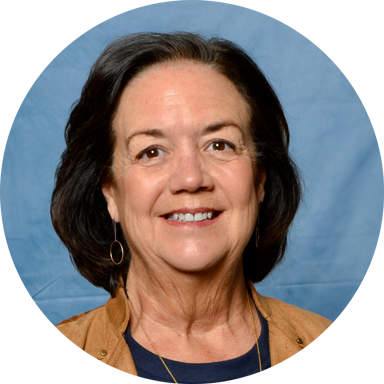
Sally K. Albrecht has shaped choral music education for over three decades, first as Director of School Choral, Vocal, and Elementary Publications at major educational publishers and later as a prolific composer with more than 600 published works in active performance. Her compositions and larger works (75 songbooks and musicals) reach choirs across the country, and she has earned ASCAP Special Music Awards annually since 1987 for her contributions to the field.
Beyond the page, Albrecht conducts honor choirs at prestigious venues including Lincoln Center, Carnegie Hall, and The Kennedy Center, and has held faculty positions at Oakland University, Jersey City State College, and Meredith College. Her academic training spans music and drama, earned through degrees from Rollins College, the University of Miami (both M.A. in Drama and M.M. in Accompanying), and she has been recognized with Distinguished Alumna Awards from both institutions. She currently resides in North Carolina with her husband, composer and arranger Jay Althouse.
Why we love this
Albrecht writes seasonal music that actually teaches something about the holiday itself rather than treating it as an afterthought. The structural arc here is smart: a bright, energetic opening that builds community feeling, followed by a reflective moment that lets singers breathe, then a confident return to the main theme that gives every voice part time with the melody. That accessibility matters enormously when you're introducing Hanukkah traditions to singers who may not know them.
What to expect
Bright and gathering at the start, with the warm feeling of families coming together from many places. The middle section settles into something more introspective and reverent, honoring the spiritual significance of the feast of lights, before the opening energy returns with renewed purpose and clarity.
Who it's for
Middle and high school choirs seeking genuine Hanukkah repertoire that speaks to the holiday's meaning rather than generic winter fare. The 3-part voicing makes it accessible to developing choirs while still offering musical substance, and the narrative arc keeps singers engaged throughout the piece.
How to get the most out of it
- Shape the bright opening section with rhythmic clarity and forward motion; this is where the text establishes the gathering of families, so let the energy match that sense of gathering and celebration.
- Find the emotional center of the slow middle section by encouraging singers to connect with the text about the feast of lights; this contrast will feel earned because of what came before it.
- Distribute the melody strategically across the three parts during returns to the main theme so that each section experiences ownership of the tune, which builds ensemble cohesion and individual confidence.
How to use it
Program this in a December concert specifically featuring sacred or seasonal music from diverse traditions, or use it as an anchor piece in a multi-faith holiday celebration. The descriptive text makes it an excellent teaching moment about Hanukkah customs, so consider pairing it with a brief program note or student presentation about the holiday's traditions.
Skills your students will build
- Singing in three-part mixed voicing with independent melodic lines
- Text painting and connecting musical character to lyrical meaning
- Part independence through sections where each voice part carries the melody
- Interpretation of slow, sustained singing in contrast to rhythmic passage work