
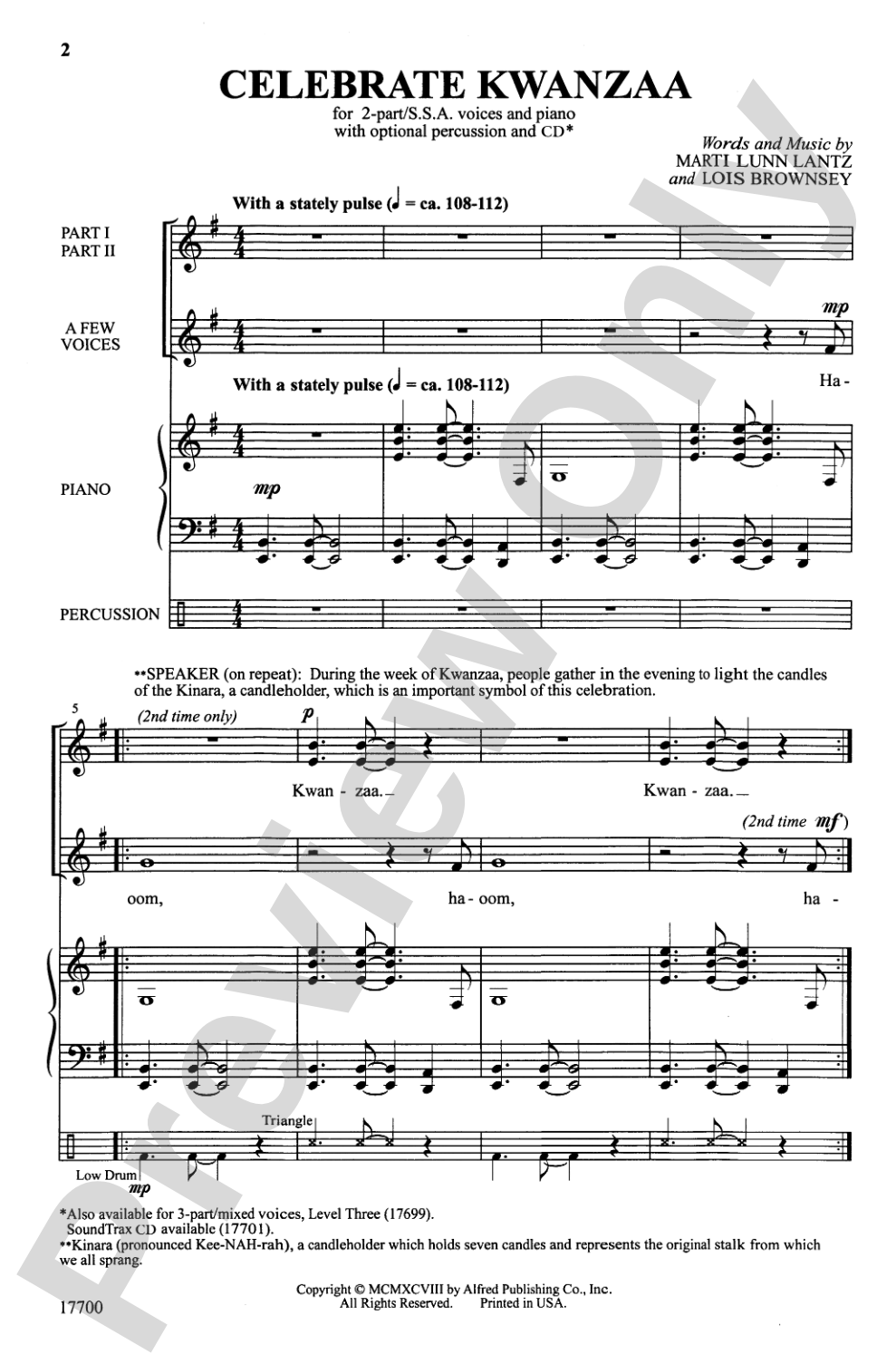
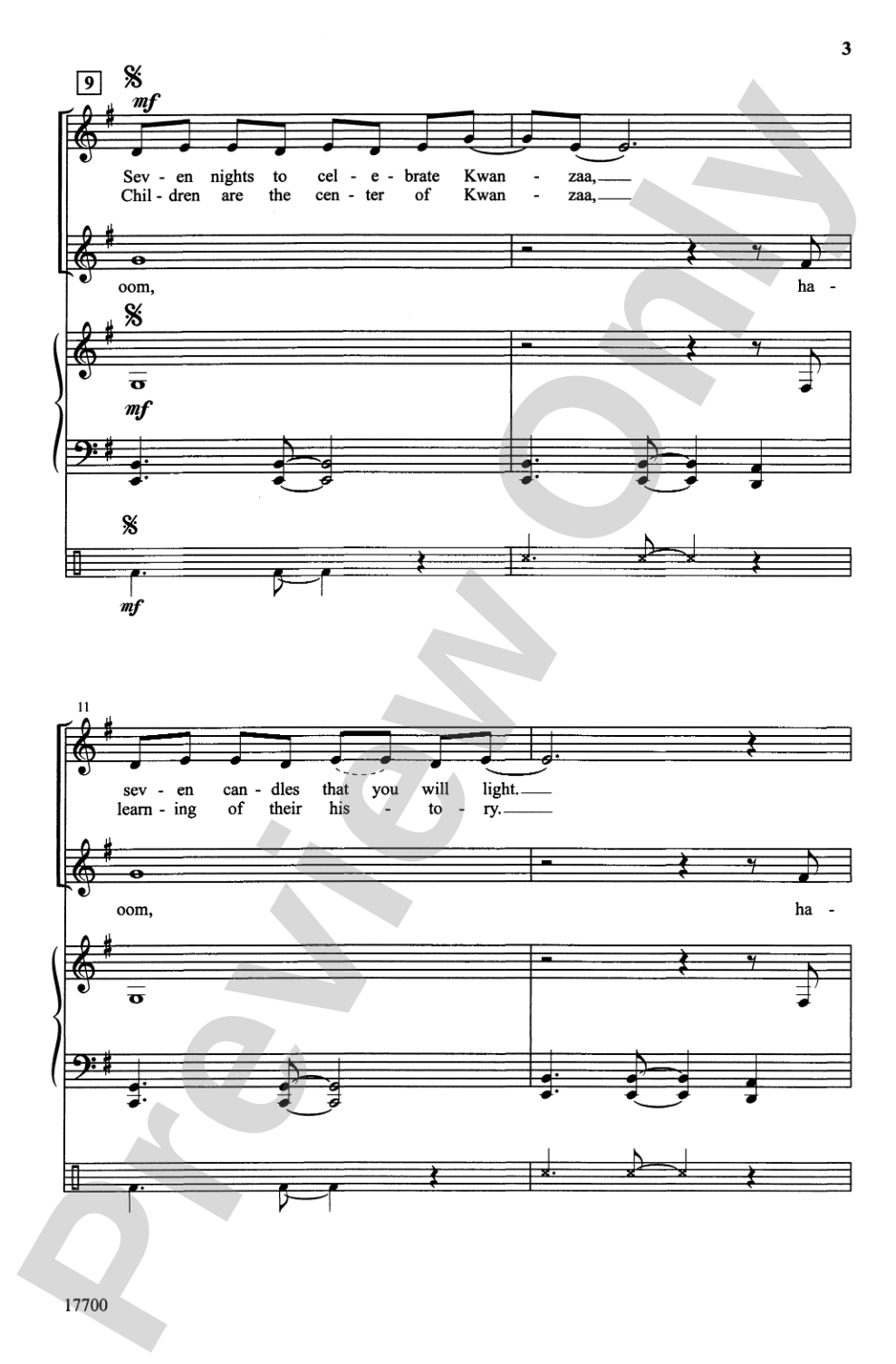
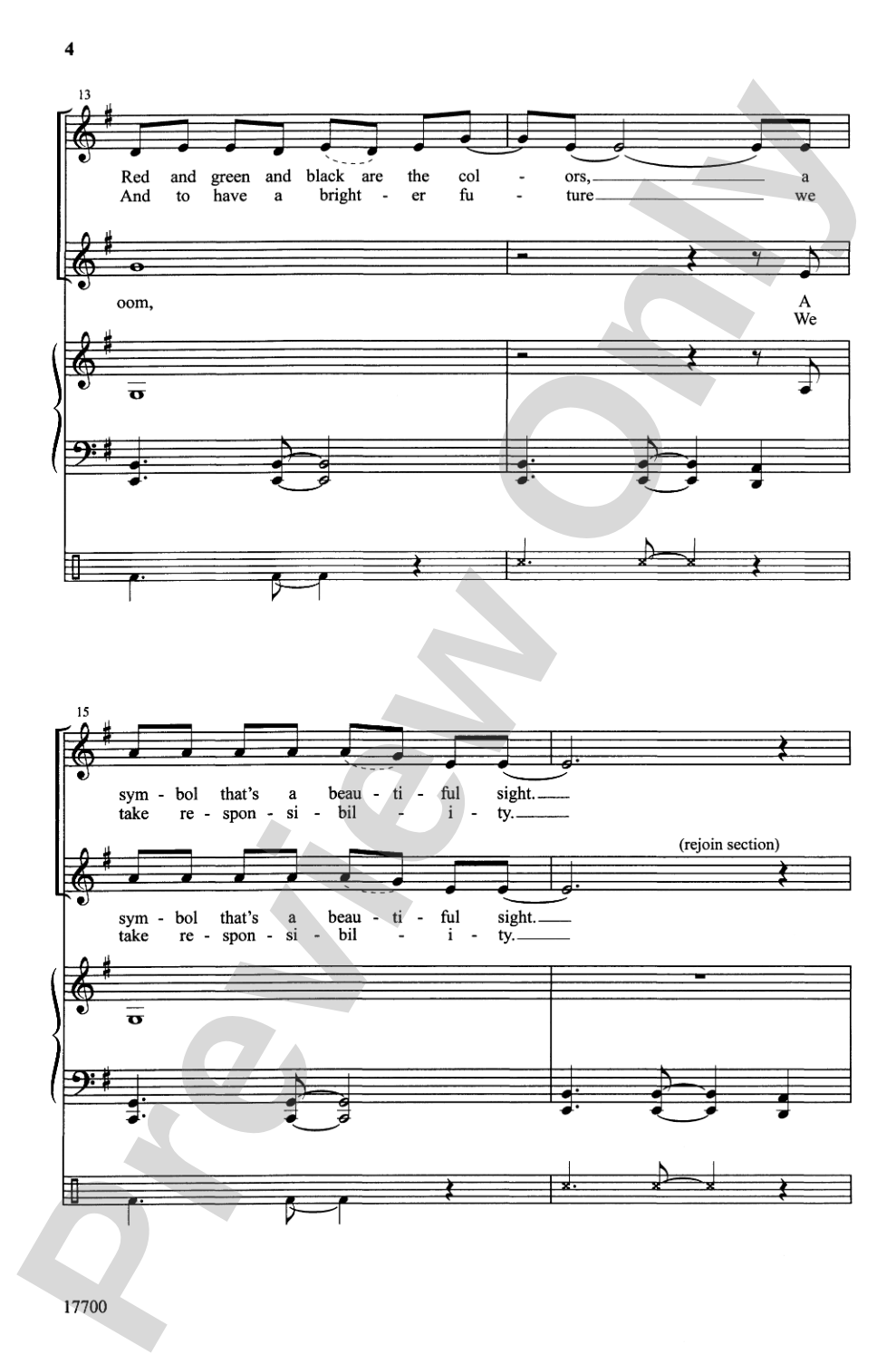

Celebrate Kwanzaa: 2-Part/SSA Choral Octavo
Music by Lois Brownsey and Marti Lunn Lantz
Item: 00-PO-0004008
$2.25
Minimum order quantity: 20 copies
Pickup currently not available
Description
Tells the story of Kwanzaa in the text and with three brief narrations. It has an African feel but the part writing is easy and homophonic.


Celebrate Kwanzaa: 2-Part/SSA Choral Octavo isn't in MakeMusic Cloud just yet...but it could be. Let us know you'd like to see it, and you'll help shape what comes next. In the meantime, start a free trial and dive into thousands of interactive titles your students can play along with today.
Request This Title
Tell us you want it.
Start Your Free Trial
Explore everything that's ready to play right now.
Sample Audio
1
Audio File
--:--
0:00
0:00
Sample Video
No sample videos found.
Additional Details
Series:
Alfred Archive Edition: Alfred Choral Designs
Publisher:
Alfred Music
Page Count:
12
SKU:
00-PO-0004008
Instrumentation:
Opt. Percussion
More about this title
About the Composer: Lois Brownsey

Lois Brownsey studied music at Temple University in Philadelphia and trained at the Guitar Workshop while performing actively in musical theatre. Her long partnership with Marti Lunn Lantz has produced numerous published choral works through Alfred, ranging from seasonal pieces to multicultural compositions and song collections. Beyond choral writing, Brownsey has composed commercial jingles for major clients and collaborated with other writers including Sally K. Albrecht on holiday-themed pieces.
Brownsey performed professionally in pop, rock, and blues bands across the United States and internationally from 1973 until 1997. She now resides in the Pocono Mountains of Pennsylvania, where she serves as a Celebrant and remains active in her community's political and arts circles. She and her husband Kent Heckman, a recording engineer, operate Red Rock Recording Studios, which has hosted the production of many Alfred music projects.
Why we love this
This piece gives your singers a culturally affirming performance experience without demanding complex part writing. The homophonic texture keeps rehearsal focused on storytelling and African musical character rather than technical vocal challenges, and the three narrations provide engaging opportunities for non-singers or reluctant performers to participate meaningfully in the concert.
What to expect
The arrangement channels African musical traditions through melody and rhythmic vitality while keeping harmonic movement straightforward and singable. The piece has a celebratory, inclusive warmth that honors Kwanzaa's meaning without exoticizing it.
Who it's for
This piece is ideal for middle school, high school, or community choirs seeking culturally diverse winter programming. It welcomes singers of varying ability levels because the homophonic writing and optional percussion part create accessibility without sacrificing musical substance.
How to get the most out of it
- Emphasize the rhythmic character in percussion parts (when used) to anchor the African musical style; even light hand drum or shaker work will shape the ensemble's sense of pulse and accent.
- Let the narrations breathe as spoken interludes rather than rushing them; they connect the sung sections and deserve clear diction and intentional pacing.
- Adjust part assignments flexibly between 2-Part and SSA depending on your ensemble's makeup; younger singers or those building confidence will benefit from the unison clarity of 2-Part sections.
- Work with soloists or small groups on the text's cultural context so singers understand what they're celebrating; this deepens their commitment to the music and message alike.
How to use it
Pair this with other winter or holiday selections to create a concert that genuinely represents your community's celebrations. Its 12-page length and straightforward part writing make it manageable even in a busy rehearsal calendar, and the optional instrumental parts offer flexibility for ensembles with or without musicians available.
Skills your students will build
- Reading and performing in both 2-Part and SSA voicing
- Singing homophonic texture with clear harmonic support
- Interpreting text that reflects cultural traditions and values
- Responding to percussion accompaniment and maintaining rhythmic accuracy
- Spoken narration and stage presence in a choral context