
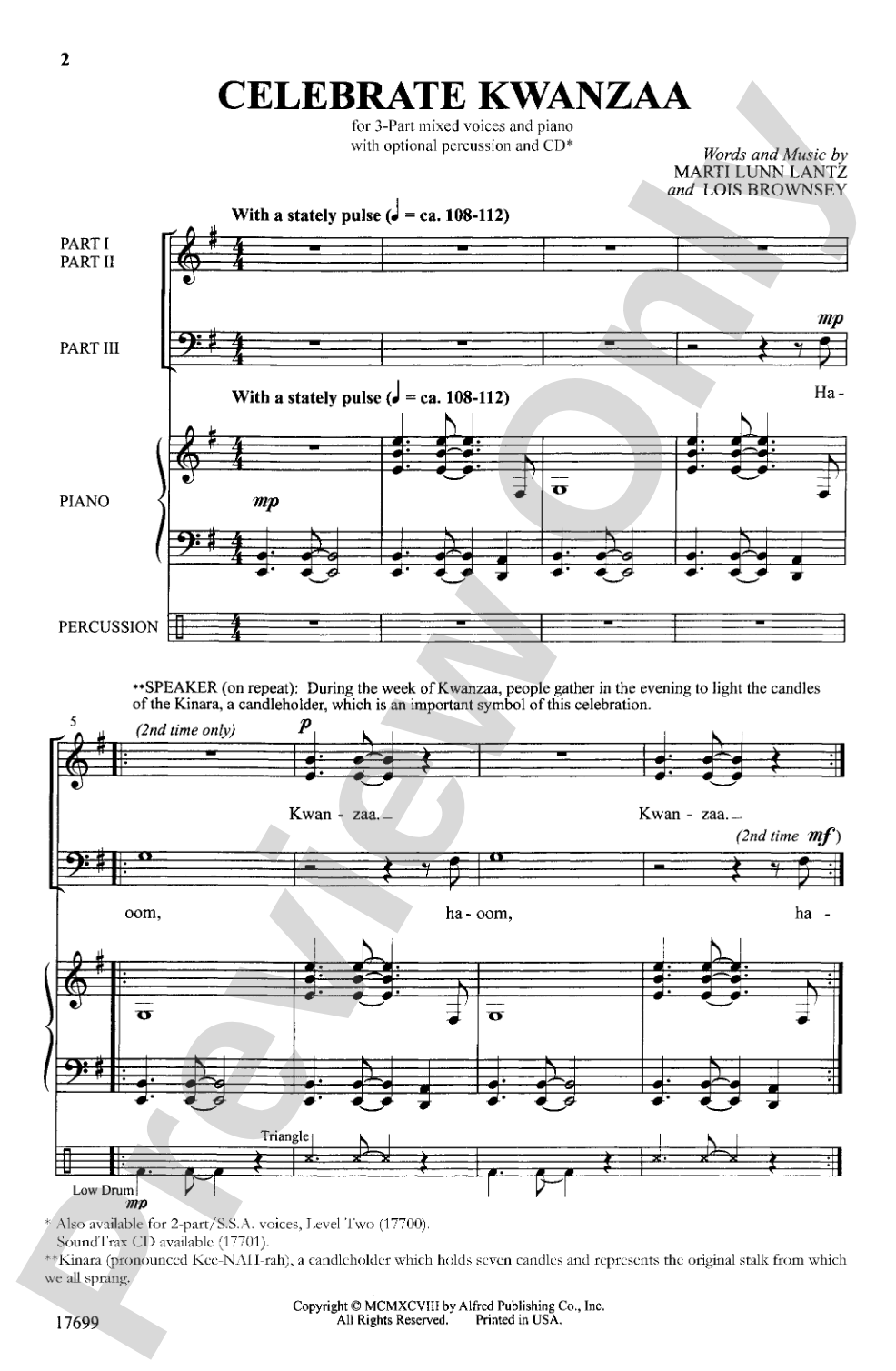
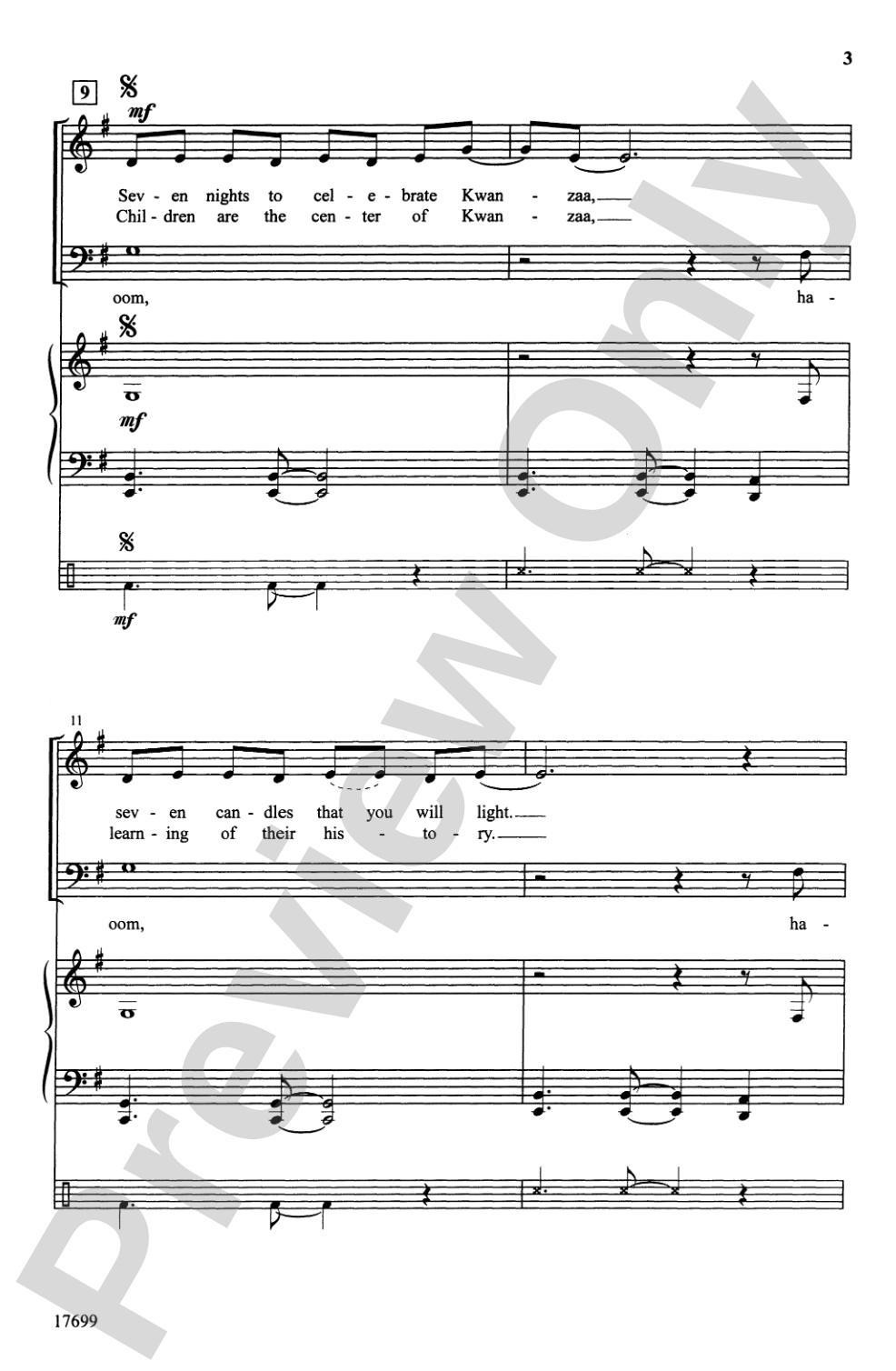
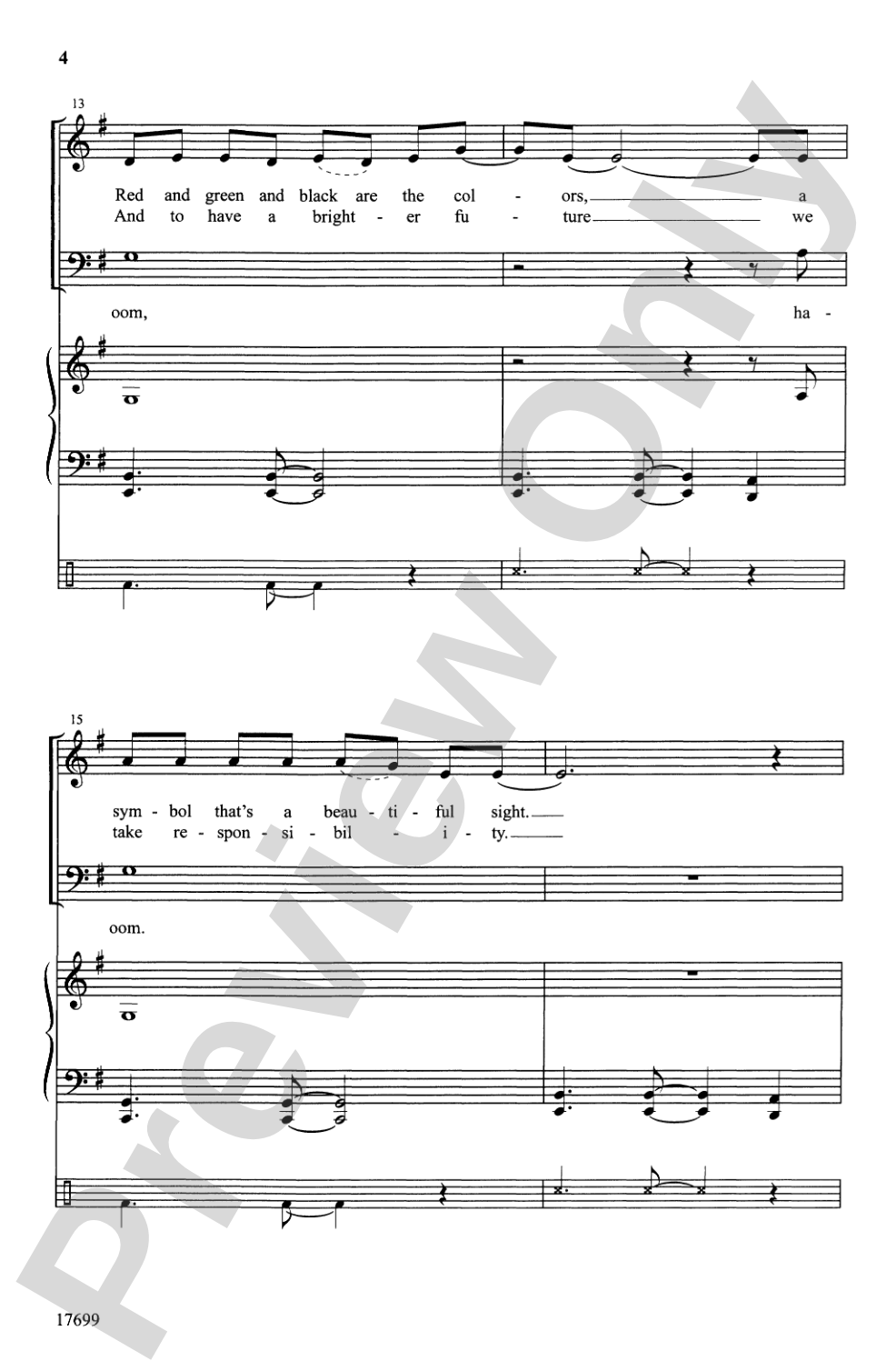

Celebrate Kwanzaa: 3-Part Mixed Choral Octavo
Music by Lois Brownsey and Marti Lunn Lantz
Item: 00-PO-0004007

$2.25
Minimum order quantity: 20 copies
Pickup currently not available
Description
Tells the story of Kwanzaa in the text and with three brief narrations. It has an African feel but the part writing is easy and homophonic.


Don't just read it, hear it, play along with it, and watch your students grow with it. In MakeMusic Cloud, Celebrate Kwanzaa: 3-Part Mixed Choral Octavo comes alive with professional accompaniment, adjustable tempo, and built-in practice tools that turn solo practice into real progress.
Open in the Player
Jump straight in and assign it today.
Start Your Free Trial
Open this title and explore the full library in minutes.
Sample Audio
1
Audio File
--:--
0:00
0:00
Sample Video
No sample videos found.
Additional Details
Series:
Alfred Archive Edition: Alfred Choral Designs
Publisher:
Alfred Music
Page Count:
12
SKU:
00-PO-0004007
Instrumentation:
Opt. Percussion
More about this title
About the Composer: Lois Brownsey
Lois Brownsey and Marti Lunn Lantz have built a decades-long partnership creating choral music that spans cultures and seasons. Based in Pennsylvania, where Brownsey operates Red Rock recording Studios with her husband Kent Heckman, the pair have published numerous works with Alfred that include "Winter's Frost," "Japanese Snow Song," and "The Colors of Winter," along with thematic song collections like Celebrations around the World and The Wonders of the Earth. Brownsey's background spans musical theatre, live performance across multiple genres, and commercial work, bringing a versatile ear to their collaborative compositions.
Their specialty lies in multicultural repertoire and holiday-themed pieces written accessibly for student singers. The pair understand how to balance cultural authenticity with straightforward part writing, making their music both meaningful and teachable at the middle and high school level.
Why we love this
This piece captures the spirit and values of Kwanzaa without sacrificing musical engagement or accessibility. The homophonic writing keeps the focus on text clarity and cultural storytelling, while the African musical feel grounds the piece in authentic sound without overwhelming singers who are new to world music styles. Three embedded narrations break up the choral sections naturally, giving you built-in moments to feature soloists or to vary texture and energy through the performance.
What to expect
This piece breathes with warmth and community. The African-influenced harmonic language creates an inviting, celebratory soundscape that feels both grounded and joyful, while the straightforward vocal lines allow singers to focus energy on expressing the meaning of each principle without vocal strain.
Who it's for
Middle school and high school choirs looking for accessible, culturally significant repertoire that tells a story. Directors seeking music that celebrates Kwanzaa with musical integrity while keeping part writing manageable for developing singers will find the SAB voicing and homophonic texture ideal for mixed ability ensembles.
How to get the most out of it
- Treat the three narrations as character moments. Encourage your narrators to own the emotional arc of each section rather than rushing through the text. This transforms what could feel like filler into genuine storytelling.
- Balance the optional percussion carefully. If you use hand drums or shakers, keep them in the background layer so the choir's voices remain the focal point, especially during the homophonic sections where text clarity matters most.
- Let the African harmonic flavor come through the voicing choices. Even in simple SAB writing, the sonorities should feel warm and open. Avoid overly tight, classical choir voicing; instead, aim for resonance and breadth.
How to use it
Position this as the centerpiece of a winter concert celebrating cultural diversity, or pair it with instrumental selections that complement its African aesthetic. The 12-page length and embedded narrations make it substantial enough to anchor a program segment on its own, and the accessible voicing means you can mount it with minimal rehearsal while still delivering a polished, meaningful performance.
Skills your students will build
- Singing in SAB voicing and maintaining independent voice parts in homophonic texture
- Expressive text delivery and cultural storytelling in performance
- Blending with optional percussion instruments
- Understanding and interpreting non-Western harmonic language and musical idioms