
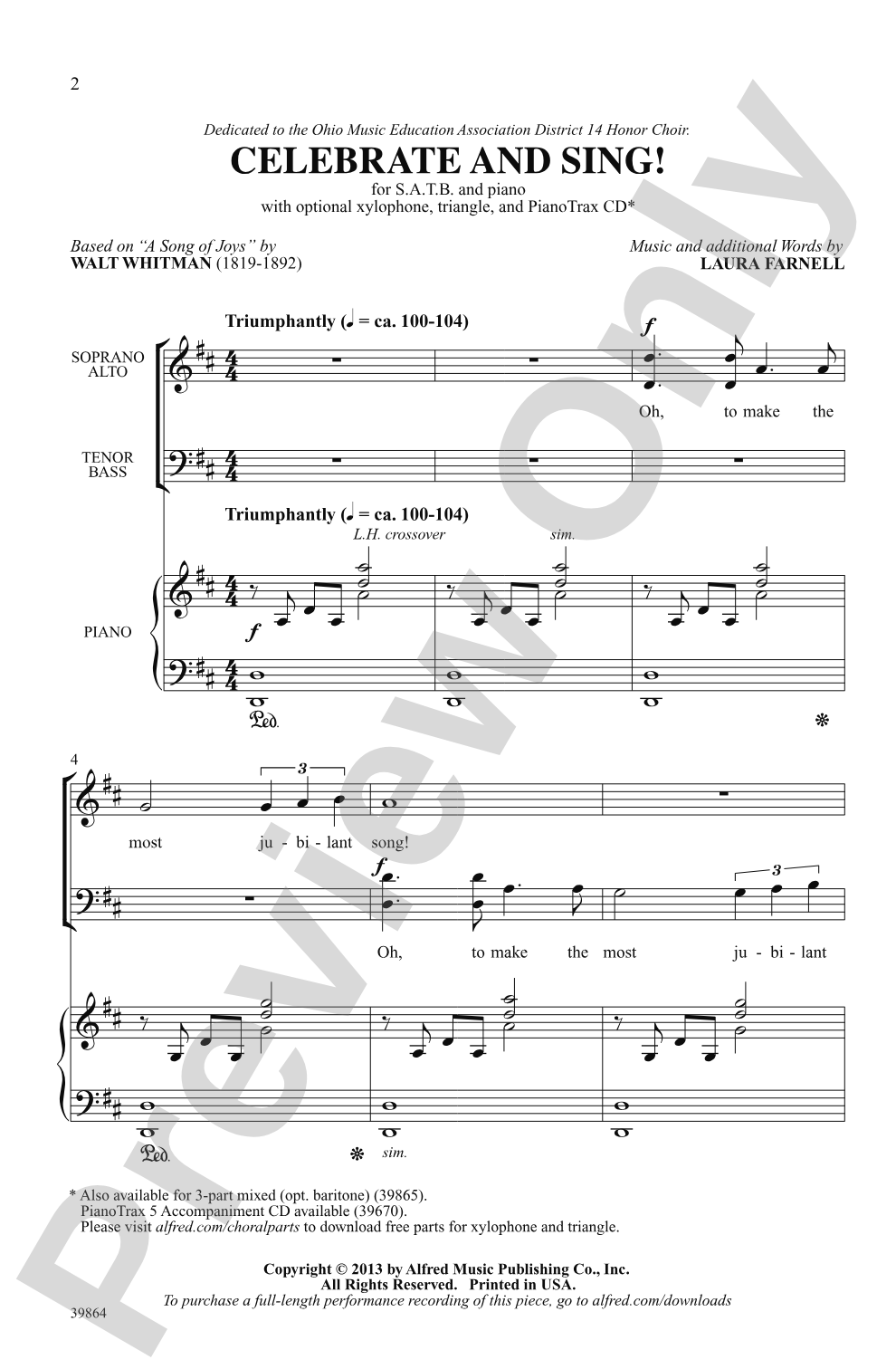
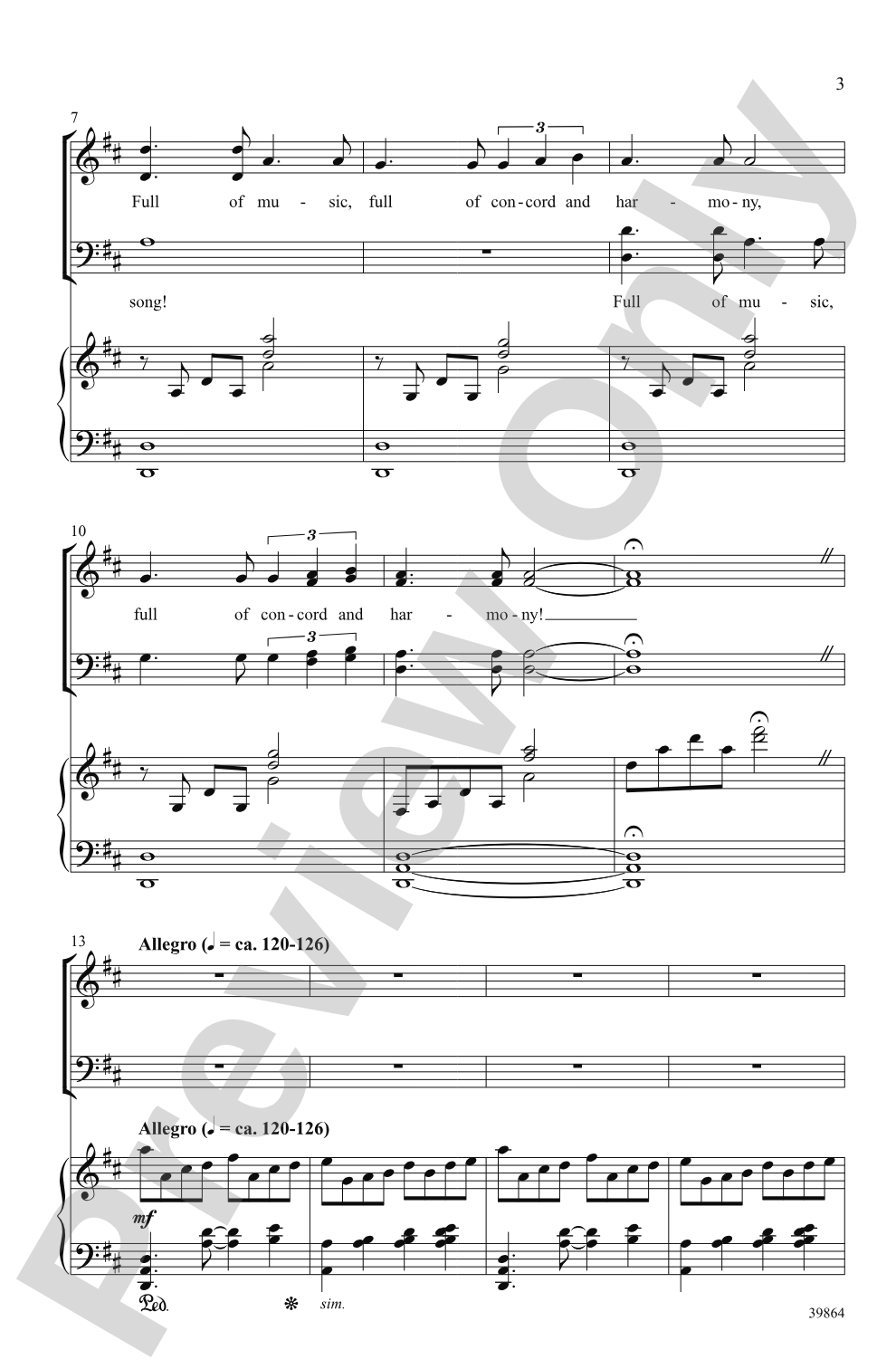

Celebrate and Sing!: SATB Choral Octavo
Based on "A Song of Joys" by Walt Whitman, music and additional words by Laura Farnell
Item: 00-PO-0001664
$1.85
Minimum order quantity: 20 copies
Pickup currently not available
Description
This joyful work makes a brilliant program opener, closer, or theme. Smartly crafted to be impressive in concert or contest, yet accomplishable in rehearsal. Syncopated percussion parts, available free at alfred.com/choralparts, add additional layers.


Celebrate and Sing!: SATB Choral Octavo isn't in MakeMusic Cloud just yet...but it could be. Let us know you'd like to see it, and you'll help shape what comes next. In the meantime, start a free trial and dive into thousands of interactive titles your students can play along with today.
Request This Title
Tell us you want it.
Start Your Free Trial
Explore everything that's ready to play right now.
Sample Audio
1
Audio File
--:--
0:00
0:00
Sample Video
No sample videos found.
Additional Details
Series:
Alfred Choral Designs
Publisher:
Alfred Music
Page Count:
12
SKU:
00-PO-0001664
More about this title
Why we love this
Farnell has created something rare: a piece that genuinely impresses audiences and adjudicators without demanding months of rehearsal time. The syncopated percussion parts (available free online) elevate the sound from solid to sophisticated, letting you build a fuller arrangement as your ensemble grows stronger.
What to expect
Energetic and celebratory, with moments of genuine warmth beneath the surface excitement. The syncopation gives it a contemporary pulse while Whitman's text anchors everything in something meaningful. You leave the stage feeling like you've shared something worth sharing.
Who it's for
Any SATB ensemble confident in rhythm and willing to invest in clean part independence. Contest and festival choirs will find this especially rewarding, though it works equally well for concert and community settings where impressive programming matters.
How to get the most out of it
- Balance the syncopation carefully between voices and percussion so rhythmic precision reads as intentional energy, not unruly complexity. A few focused rehearsals on those measures will pay dividends.
- Whitman's text carries weight beneath the joy. Shape dynamic contours through each phrase so the message lands clearly, even at a tempo that feels celebratory.
- If you add the percussion parts, introduce them after the choir is completely secure. Layering them in late gives singers confidence and lets you control the density in performance.
- Consider whether your space and acoustics favor a brighter or warmer tone quality. Test both approaches in rehearsal to find what makes the piece sing most naturally in your venue.
How to use it
This is a natural opener: it sets an upbeat tone and gets an audience invested immediately. You can also close with it, especially if your program carries a more serious middle section. The piece works beautifully as a festival showcase number, where those percussion parts turn a confident performance into a memorable one.
Skills your students will build
- Syncopated rhythm reading in ensemble context
- Independent voice part security while maintaining ensemble cohesion
- Text expression and phrasing with contemporary poetry
- Coordination of voices with optional percussion accompaniment
- Dynamic shaping and tonal flexibility across a full range