Catch Me If You Can Cover Image

Catch Me If You Can: String Orchestra Conductor Score

$7.00 USD
Sale price  $7.00 USD Regular price 
Skip to product information
Catch Me If You Can Cover Image

Catch Me If You Can: String Orchestra Conductor Score

By Loreta Fin

Grade: 1.5-2

Item: 76-30170S

$7.00
Shipped

One moment…

Description
This piece is a fun exercise in counting notes and, just as importantly, counting rests. The players have to listen carefully, and never stop counting the beat. The notes are very simple, based on the D Major Scale and Arpeggio, and the piece begins with the feel of a canon, until all the parts "catch up" with each other.

Catch Me If You Can: String Orchestra Conductor Score isn't in MakeMusic Cloud just yet...but it could be. Let us know you'd like to see it, and you'll help shape what comes next. In the meantime, start a free trial and dive into thousands of interactive titles your students can play along with today.

Sample Pages

Sample Audio
No sample audio found.
Sample Video
Additional Details
Series: Wilfin String Orchestra: Young String Ensemble Series
Publisher: Wilfin Music
Page Count: 8
UPC: 038081327105
SKU: 76-30170S

More about this title

About the Composer: Loreta Fin
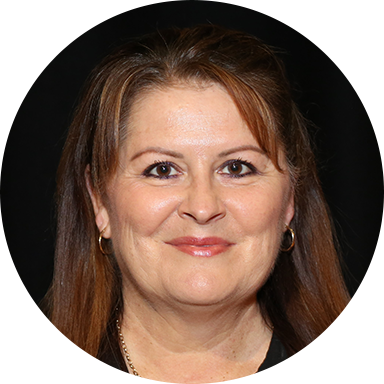
Loreta Fin

Loreta Fin AM is an Australian violist, educator, and prolific composer with deep roots in string pedagogy. She studied at the Sydney Conservatorium of Music and served as Principal Viola with the Queensland Pops Orchestra for over 25 years while maintaining an active chamber and orchestral performance career. Since 1993, she has directed strings at Somerville House School in Brisbane, where she shaped generations of young musicians.

Fin's contributions to music education extend far beyond the classroom. She has presented at national conferences in Australia and the United States, adjudicated major competitions, and served the Australian Strings Association as both State and National President. Her published catalog includes over 100 works for string orchestra, distributed worldwide by Alfred Music. In recognition of her sustained impact, she received the National Award for Services to Music and String Teaching in Australia and was nominated for the inaugural ARIA "Best Teacher" award. She currently serves as State Advisor for Strings with the Australian Music Examinations Board and regularly conducts honours ensembles programs.

Why we love this

Fin understands exactly what young string players need to hear and perform at this level. The canon texture builds ensemble awareness without overwhelming beginners, while the focus on rests teaches the often-neglected skill of counting silence, which matters far more than many directors realize. The D Major framework gives early ensembles immediate success while developing listening habits that transfer to every piece they'll ever play together.

What to expect

Playful and energetic, with the infectious quality of a musical game. The overlapping canon texture creates a sense of friendly chase, and there's real satisfaction when all the parts finally align and the piece locks together. It feels simple on the page but demands attentiveness in the room.

Who it's for

String orchestras and young string ensembles in their first or second year of playing together. Conductors working with groups that struggle with ensemble cohesion or rhythm stability will find this a focused tool for building listening and counting discipline without stepping up in technical difficulty.

How to get the most out of it

  • Assign a consistent counting system before rehearsal. Some groups benefit from tapping the stand or conducting clearly so that all players count as a unified group rather than independently.
  • Work the rests first. Have players mark and speak their rest counts aloud during early rehearsals; this removes the temptation to stop listening when they aren't playing.
  • Keep the tempo steady. The canon effect only works if the conductor maintains unwavering pulse; any rubato collapses the staggered entrances.
  • Record a playback or conduct a recorded rehearsal and have players listen to the full texture. Hearing how their silent moments fit into the whole piece shifts their understanding of rests from "nothing" to "something essential."

How to use it

Use this early in a young ensemble concert to showcase rhythmic clarity and count discipline, or place it midway through a program as a refreshing change of pace from longer pieces. It works equally well as a teaching demonstration at a parent concert, where the visible counting and listening mechanics become part of what the audience observes.

Skills your students will build

  • Sustaining precise counting through extended rests
  • Listening to multiple parts and tracking one's place within a staggered canon texture
  • Coordinating entries with other sections and understanding how canon layering works
  • Maintaining steady pulse without relying on other instruments to anchor rhythm
  • Reading and playing melodies based on the D Major scale and arpeggio

You May Also Like