
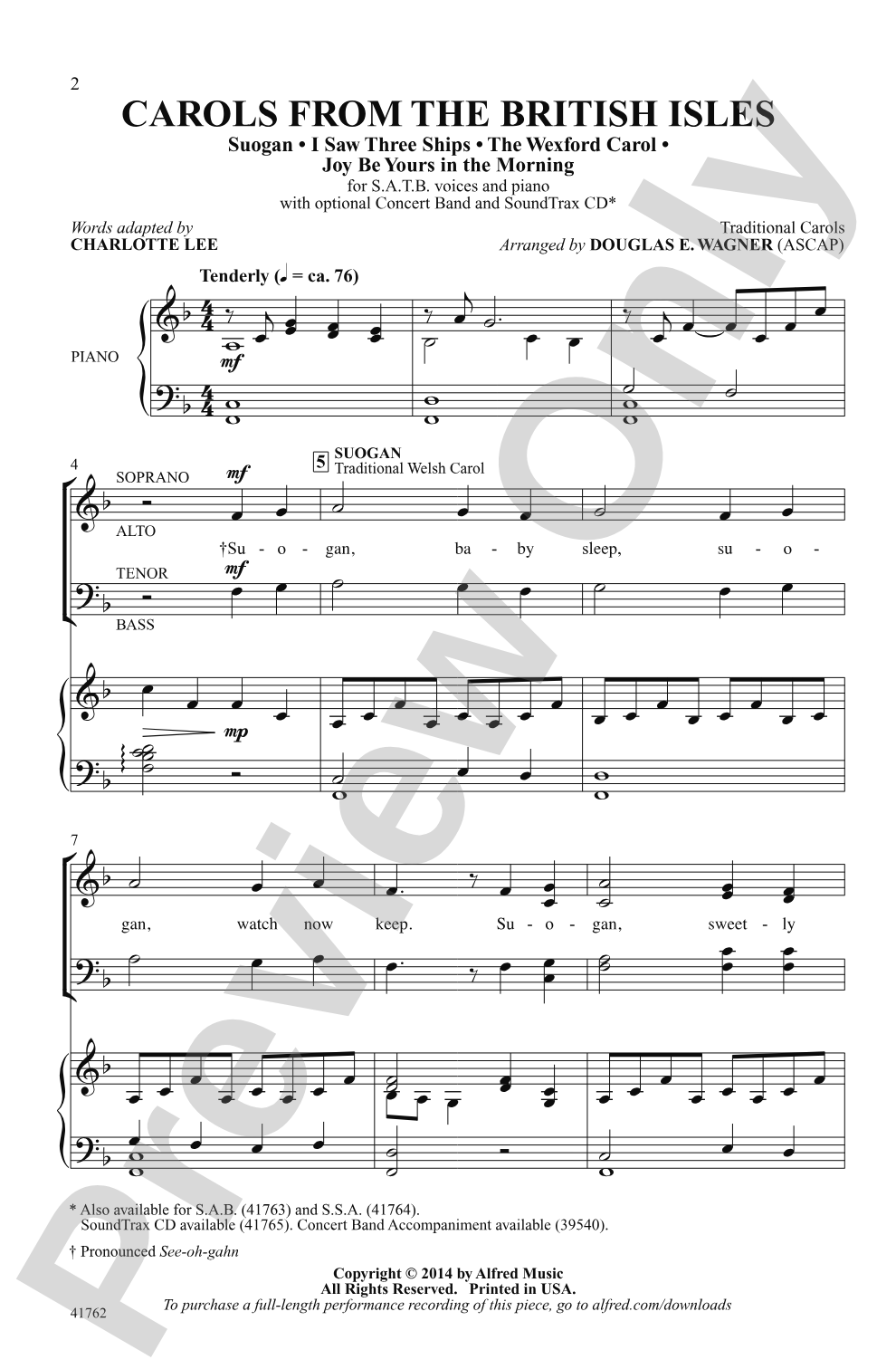
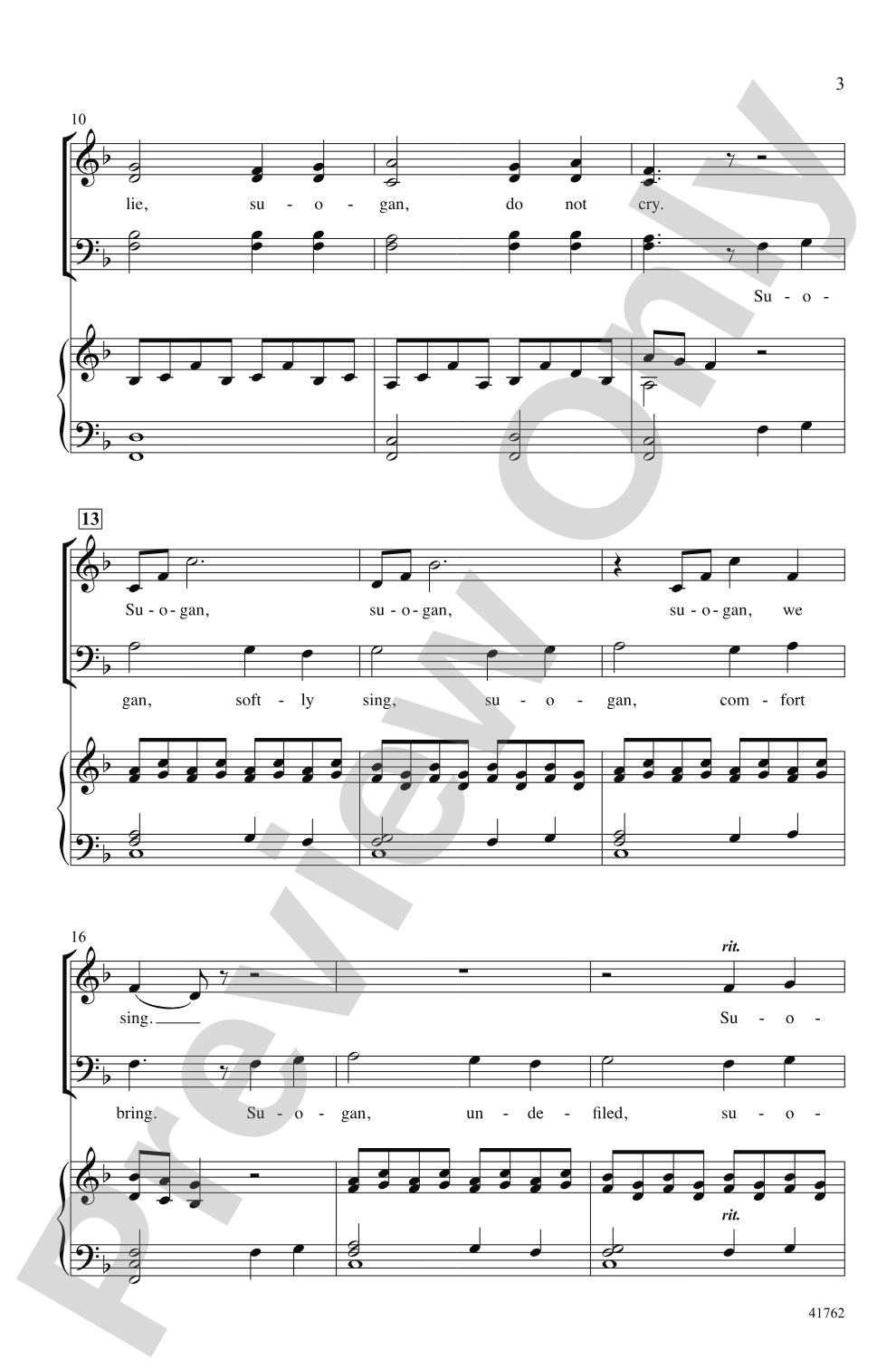

Carols from the British Isles: SATB Choral Octavo
Traditional Carols / words adapted by Charlotte Lee, arr. Douglas E. Wagner
Item: 00-PO-0001902
$1.85
Minimum order quantity: 20 copies
Pickup currently not available
Related Items
Carols from the British Isles: SoundTrax Digital Audio Download |
$34.99
|
View | |
Carols from the British Isles: SAB Choral Octavo |
$1.85
|
View | |
Carols from the British Isles: SSA Choral Octavo |
$1.85
|
View | |
Carols from the British Isles: SATB Choral Octavo |
$1.85
|
View | |
Carols from the British Isles: SAB Choral Octavo |
$1.85
|
View | |
Carols from the British Isles: SSA Choral Octavo |
$1.85
|
View | |
Carols from the British Isles: Choral Octavo SoundTrax CD |
$34.99
|
View |
Description
Four treasured carols from Wales, England, and Ireland comprise this colorfully arranged Christmas medley (three-and-a-half minutes in length). The slow-fast-slow-fast form is carefully constructed for choir alone, band alone, or a combined performance. An elegant and timeless treat for the holidays.


Carols from the British Isles: SATB Choral Octavo isn't in MakeMusic Cloud just yet...but it could be. Let us know you'd like to see it, and you'll help shape what comes next. In the meantime, start a free trial and dive into thousands of interactive titles your students can play along with today.
Request This Title
Tell us you want it.
Start Your Free Trial
Explore everything that's ready to play right now.
Sample Audio
1
Audio File
--:--
0:00
0:00
Sample Video
No sample videos found.
Additional Details
Series:
Alfred Choral Designs
Publisher:
Alfred Music
Page Count:
12
SKU:
00-PO-0001902
More about this title
About the Arranger: Douglas E. Wagner

Douglas E. Wagner grew up in Chicago and earned degrees in music from Butler University before launching a three-decade career as a high school music educator and administrator. Since 1973, he has become one of the most prolific composers and arrangers in American music education, with over 3,500 published titles spanning choral, band, orchestral, handbell, organ, piano, and vocal repertoire.
Wagner's output has reached millions of musicians worldwide. More than seventeen million copies of his music are in circulation, and his works regularly appear in concert halls, on broadcasts, and in educational settings across the United States and internationally. He now resides in Indianapolis with his wife, Sandy, and continues composing full time.
Why we love this
Wagner's structure here is masterful: the alternating slow-fast-slow-fast arc keeps energy moving through a medley that could easily feel stitched together. The flexibility to perform this with choir alone, band alone, or both makes it genuinely useful for schools managing mixed instrumentation or acoustic preferences. You get four carols with real harmonic substance in just twelve pages, which means minimal rehearsal time for maximum impact.
What to expect
Warmth and tradition blend with unexpected harmonic sophistication. The slow sections invite listeners into intimate, reflective moments, while the faster movements sparkle with joy and lightness. Across its three and a half minutes, the piece feels both familiar and freshly imagined.
Who it's for
Choirs preparing holiday concerts need reliable, beautifully crafted material that respects both the singers and the audience. This arrangement works for school choirs seeking something more substantial than simple carol settings, as well as church and community choirs wanting four beloved British melodies in one cohesive performance.
How to get the most out of it
- Establish clear characterizations for each carol's tempo and mood during your first rehearsals; the contrasts between slow and fast movements drive the effectiveness of the entire arrangement.
- Balance the SATB voices evenly in the slower sections, where harmonic colors matter more than the forward momentum of the faster passages.
- If performing with band accompaniment, schedule at least one joint rehearsal to align phrasing and articulation between the instrumental and choral sections.
- Let the familiar melodies breathe in their opening moments; audiences recognize these carols immediately, and a patient entrance sets up the piece's elegance.
How to use it
Position this as a centerpiece in a holiday concert's second half, where its alternating tempos create natural visual and emotional variety. It pairs well before or after more contemporary seasonal fare, offering audiences the comfort of recognizable British carols arranged with musical substance. Its moderate length makes it ideal for school concerts working within strict time limits.
Skills your students will build
- Navigating tempo and stylistic contrasts within a single continuous piece
- Maintaining dynamic control across multiple key areas and harmonic progressions
- Balancing ensemble sound between slow, chorale-like textures and faster, rhythmically active passages
- Coordinating with instrumental accompaniment (if combined performance is chosen)