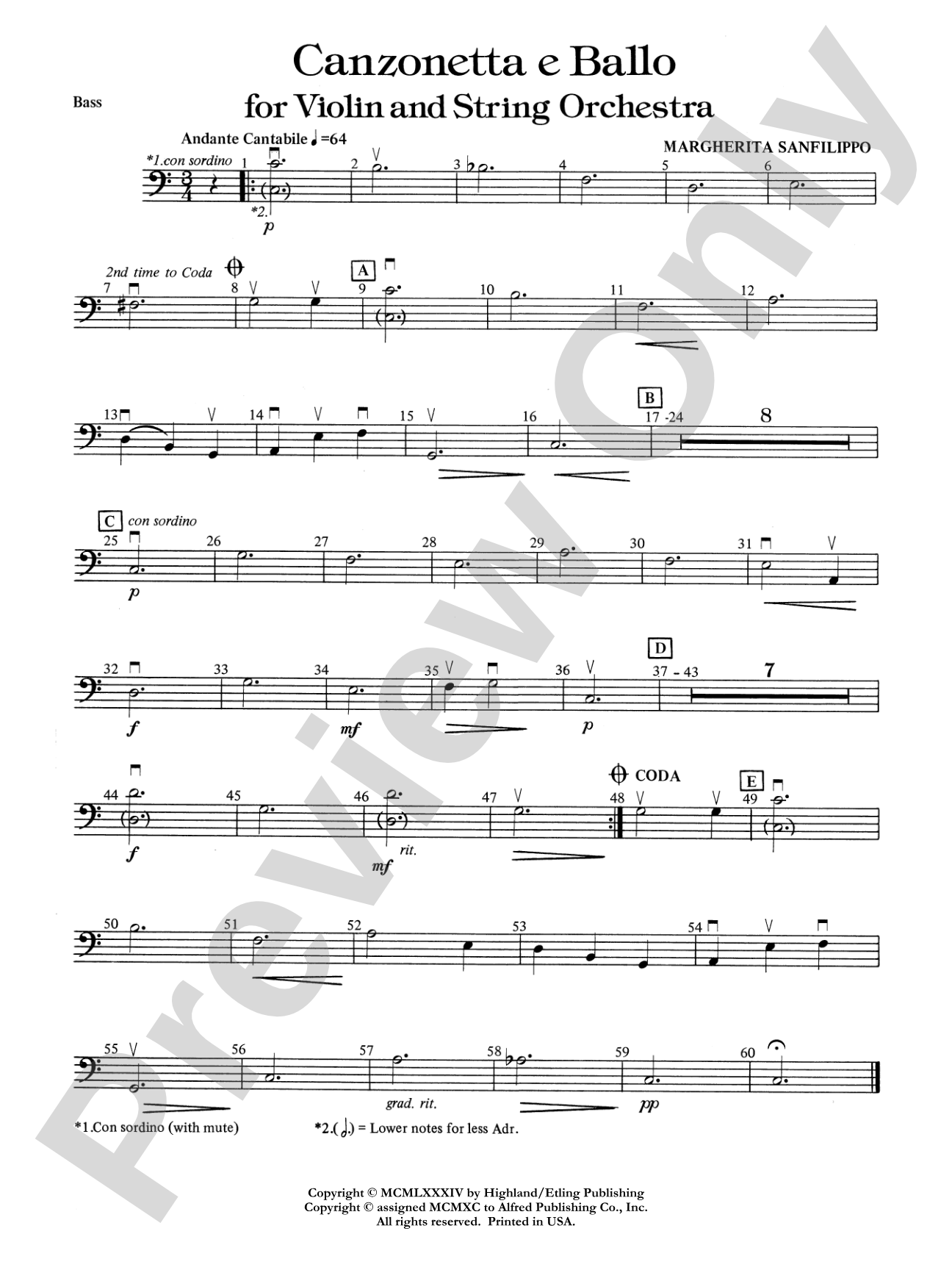
Canzonetta e Ballo (solo violin and string orchestra): String Bass Sheet Music Preview

Canzonetta e Ballo (solo violin and string orchestra): String Bass

Arr. Margaret Sanfilippo

Grade: 3

Item: 00-PC-0000092_SB

Digital Download
$5.99
Description

Don't just read it, hear it, play along with it, and watch your students grow with it. In MakeMusic Cloud, Canzonetta e Ballo (solo violin and string orchestra): String Bass comes alive with professional accompaniment, adjustable tempo, and built-in practice tools that turn solo practice into real progress.

Sample Audio
No sample audio found.
Sample Video
Additional Details
Series: Highland/Etling String Orchestra
Publisher: Alfred Music
SKU: 00-PC-0000092_SB

More about this title

Why we love this

Sanfilippo's arrangement balances the demands of a string orchestra with genuine solo writing, giving your concertmaster or section leader a real moment in the spotlight without overshadowing the ensemble. The Grade 3 orchestration provides accessible textures that let young players support the soloist meaningfully rather than simply fill background space.

What to expect

The canzonetta opens with a singing, lyrical character before shifting into the ballo's brighter rhythmic dance. This pairing gives performers a chance to explore two contrasting moods within one piece, moving from introspective melody to spirited movement.

Who it's for

String orchestras working at the Grade 3 level who want to feature a strong young violinist without jumping to full concerto literature. This works equally well for a student with solid technique and a developing musical voice as it does for a chamber ensemble setting.

How to get the most out of it

  • Establish a clear, confident soloist early. The opening should sing with conviction; the ensemble responds to that energy and settles into its rhythmic support.
  • Listen for clean entrances in the ballo section, where the rhythm quickens. Rehearse those transitions as a unit so the soloist can breathe freely without losing momentum.
  • Balance the solo line just above the ensemble texture. The arrangement likely weaves the violin into fuller passages; make sure that solo voice cuts through without the orchestra pulling back unnaturally.

How to use it

Place this as a feature performance on a spring concert, letting the solo violinist carry the emotional arc while the string section demonstrates ensemble cohesion. It also works beautifully in a solo and ensemble competition format where the accompaniment is truly integrated rather than subordinate.

Skills your students will build

  • Supporting a solo line while maintaining independent rhythmic clarity
  • Transitioning between contrasting tempos and characters (lyrical to dance-like)
  • Balancing textural density so the featured violin remains audible
  • Responding to a soloist's phrasing and rubato as an ensemble

You May Also Like