
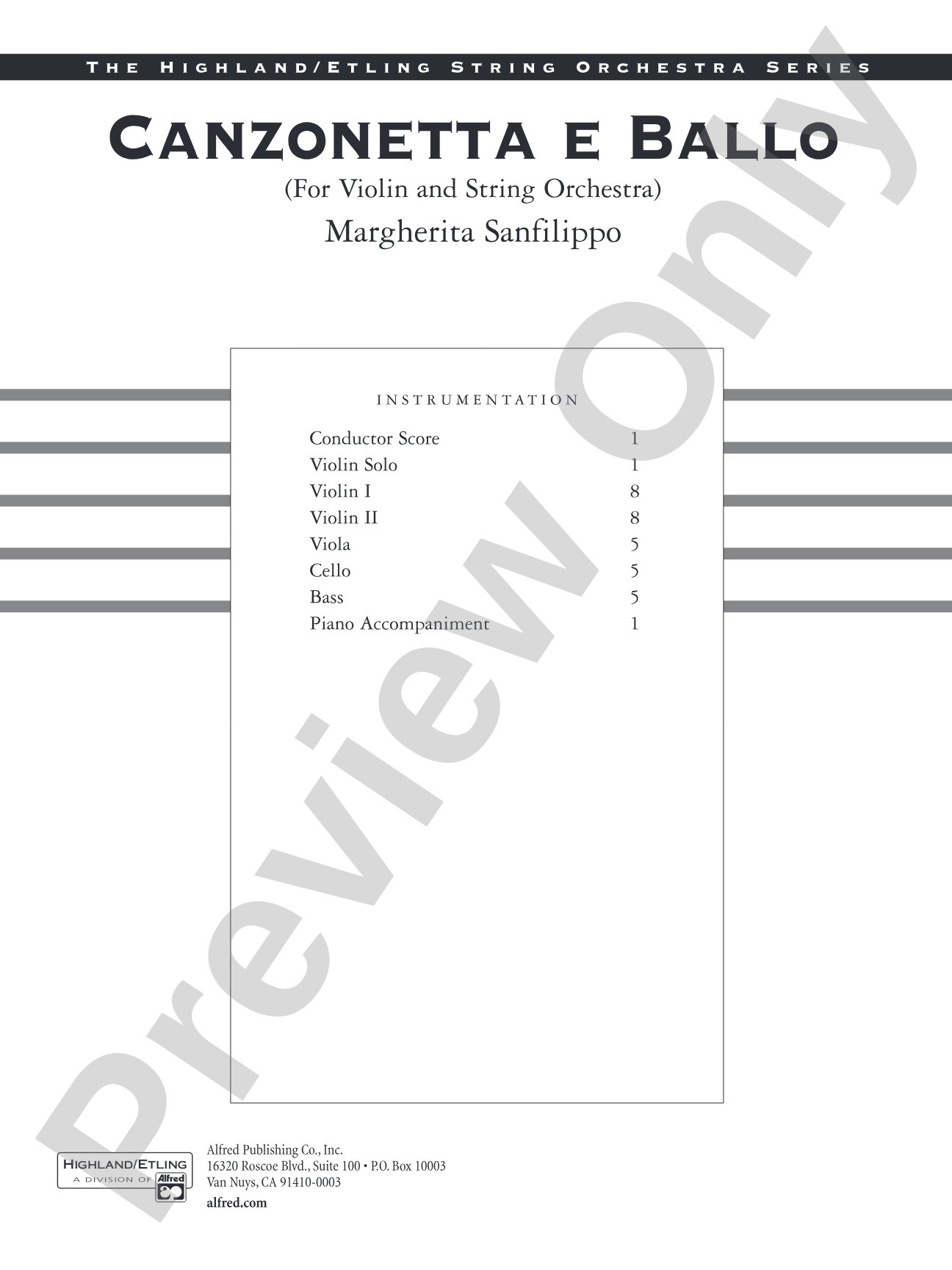
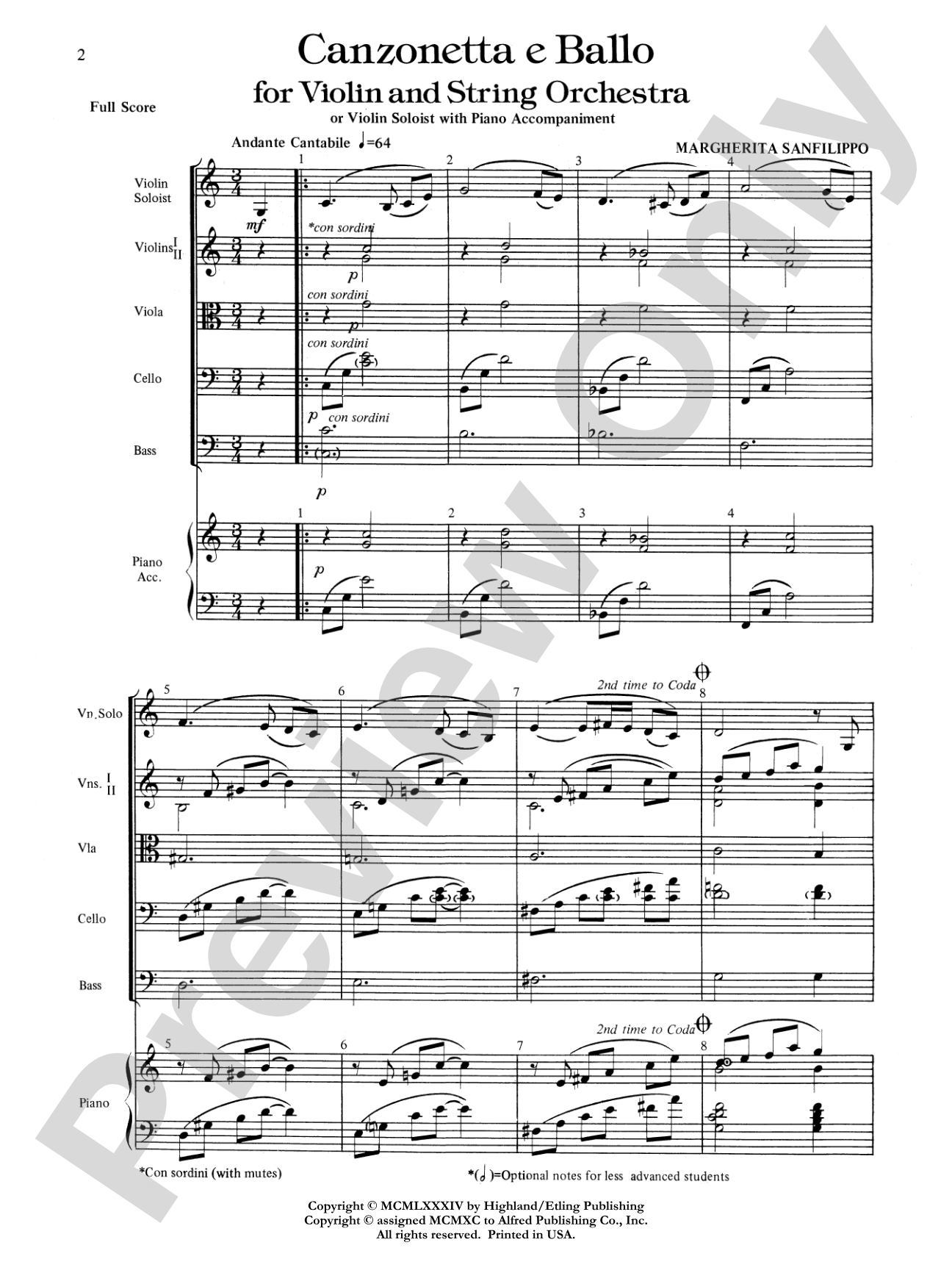
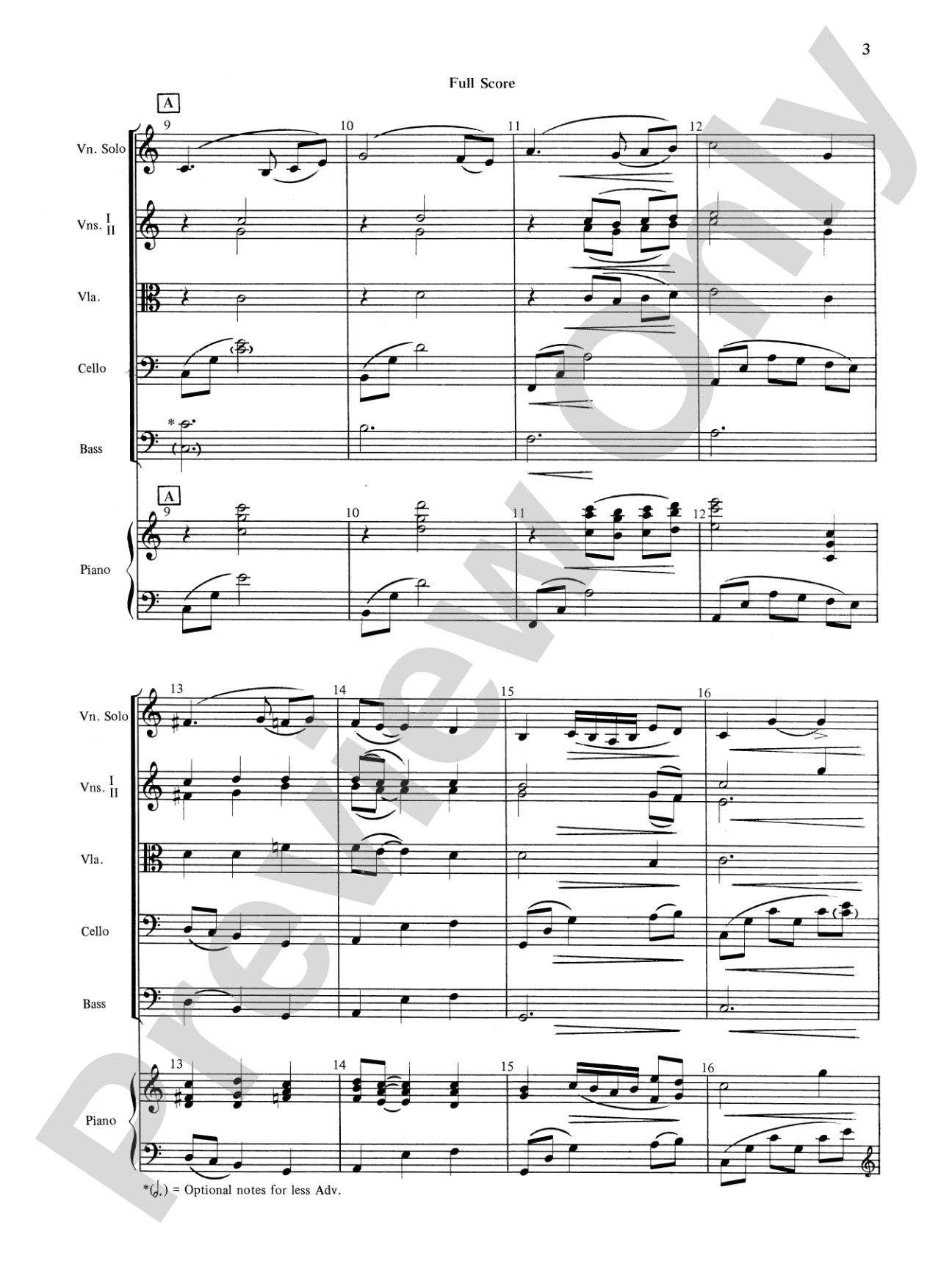
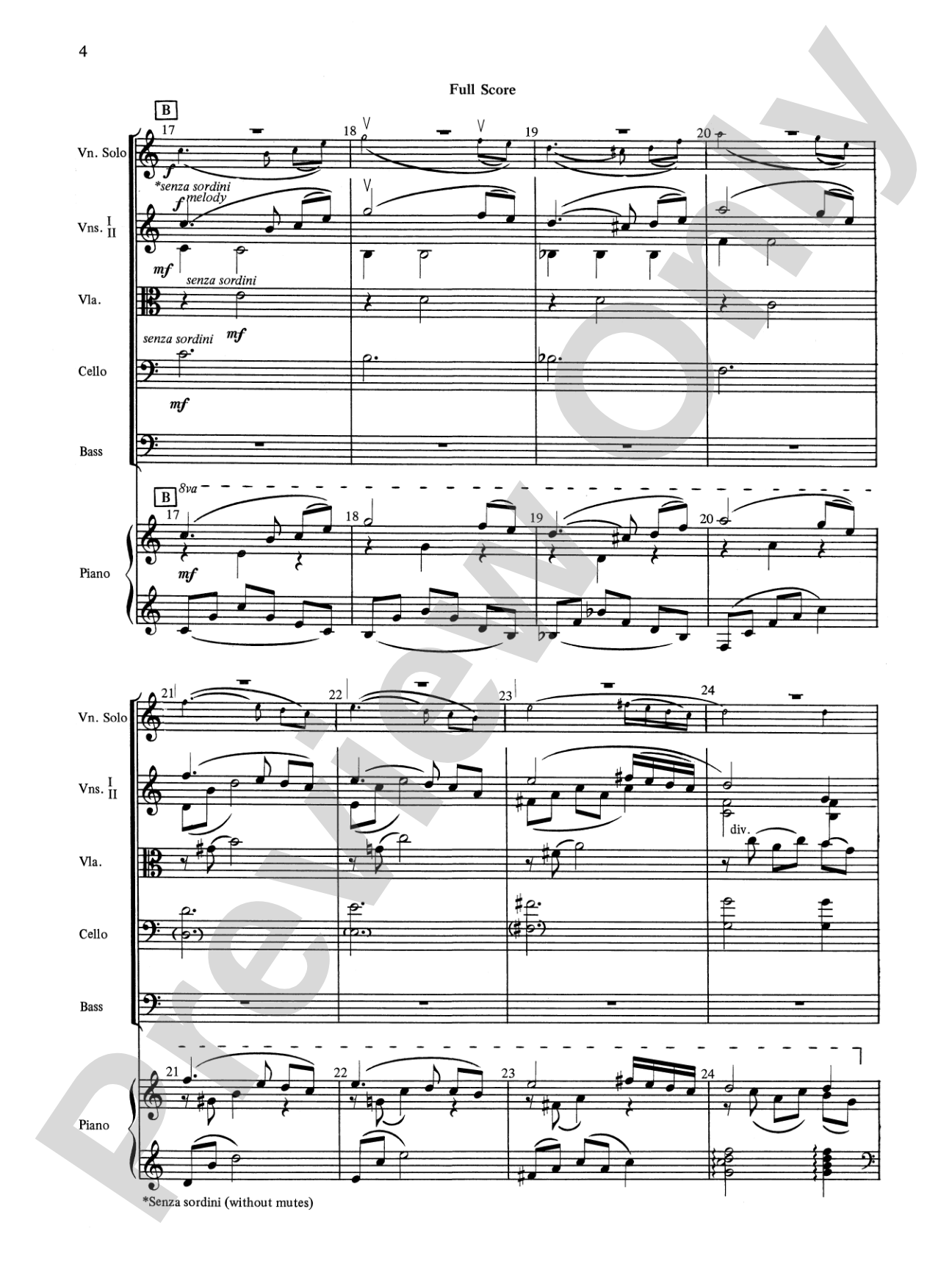
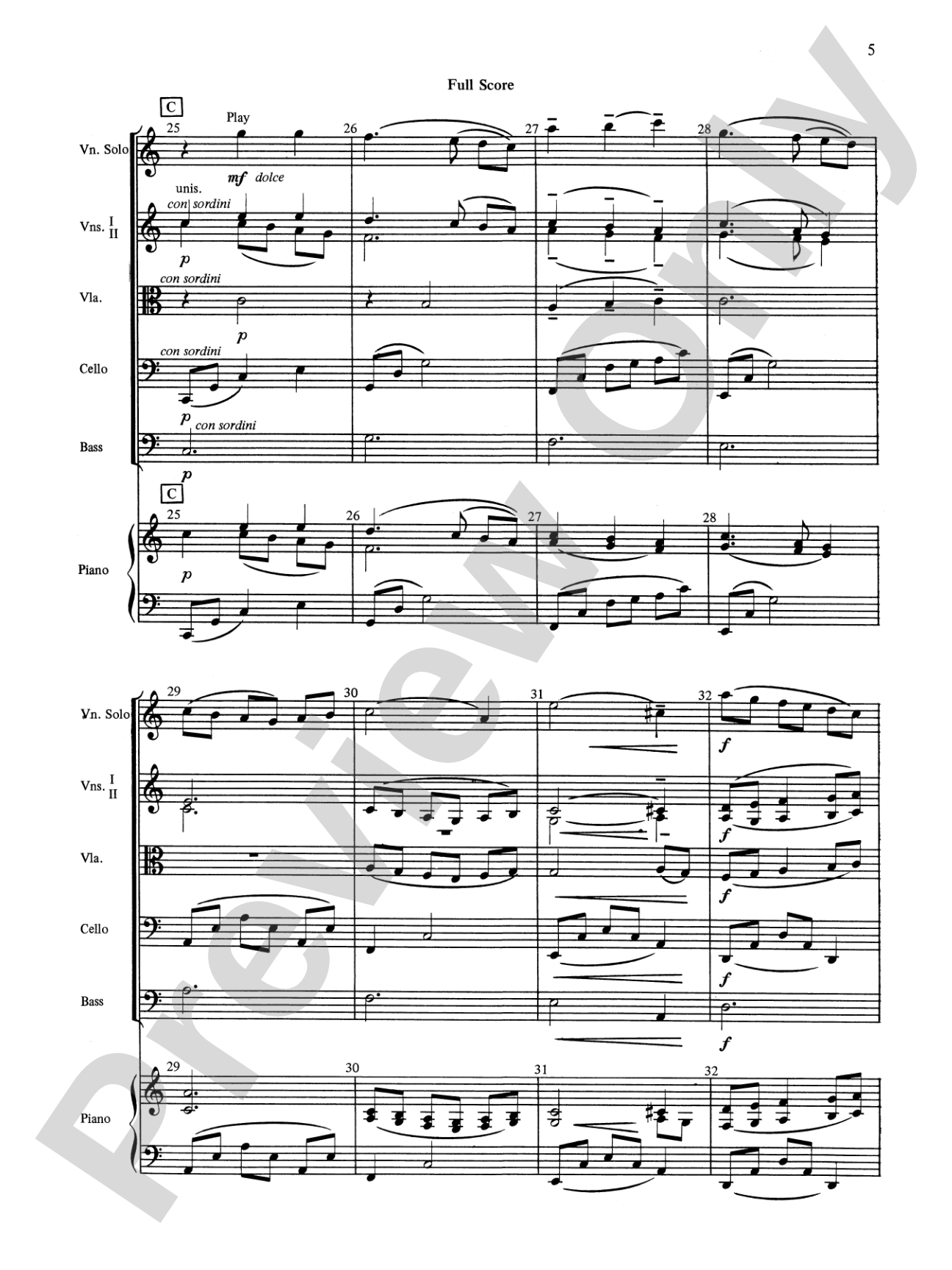
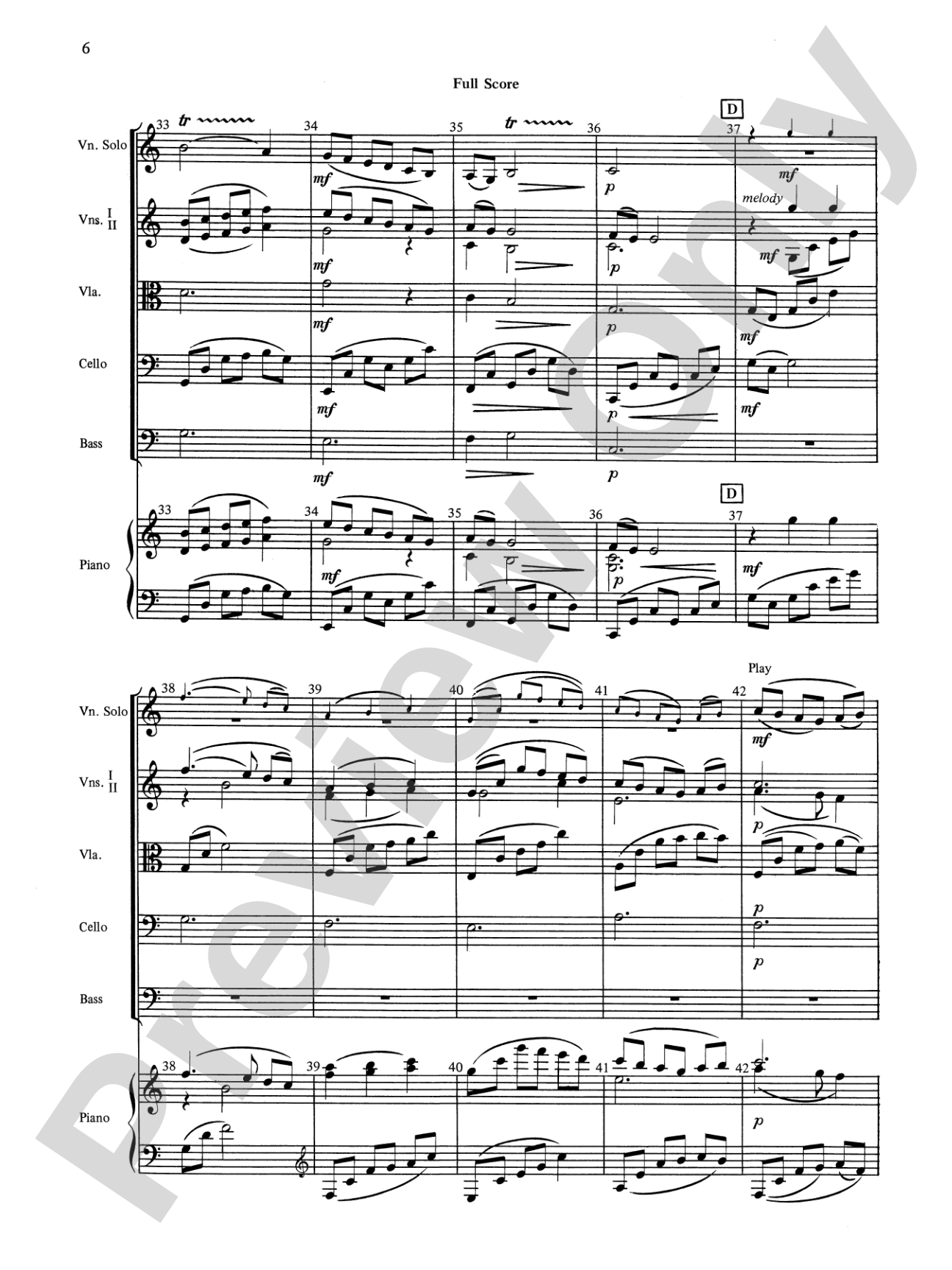
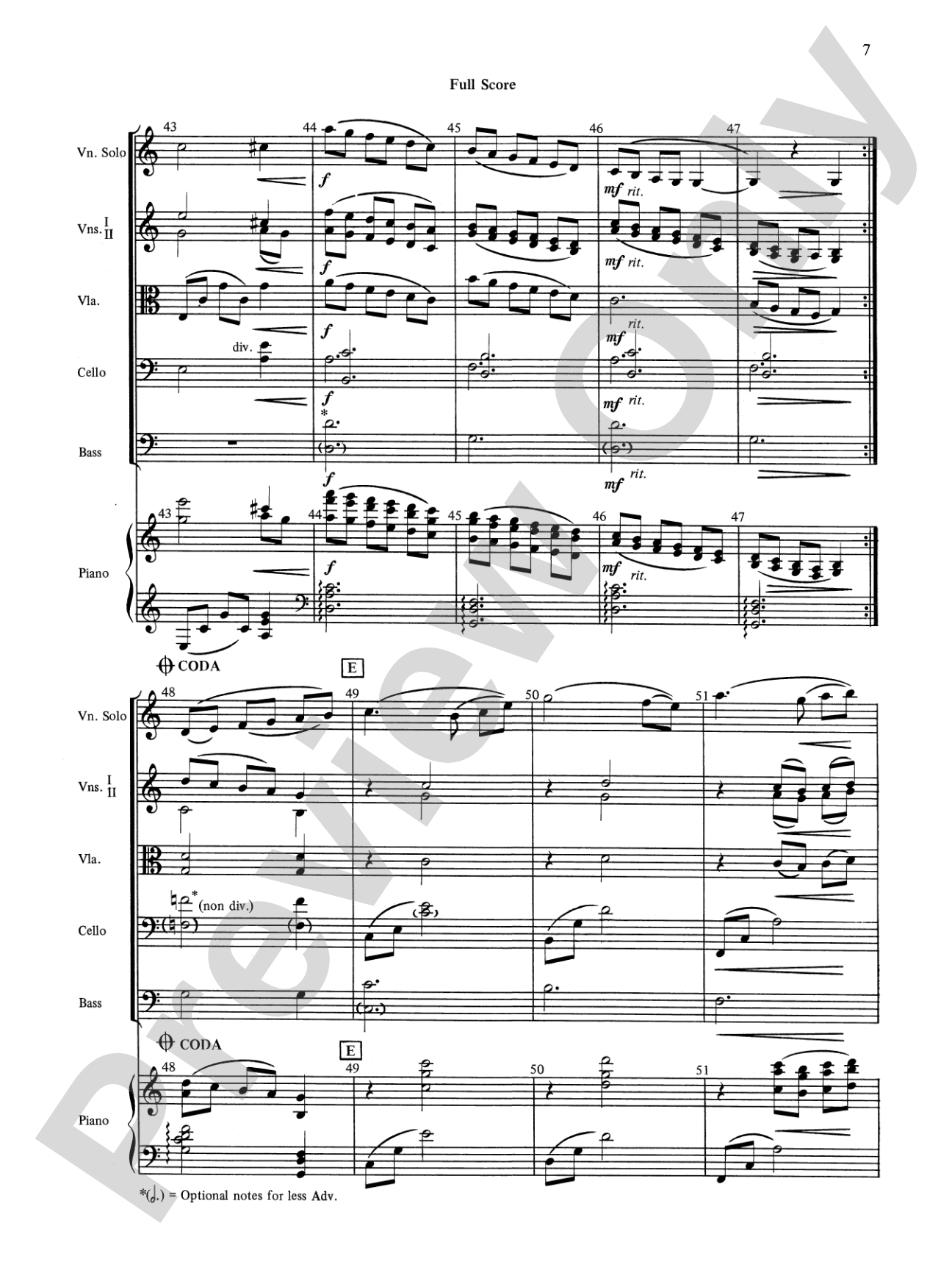
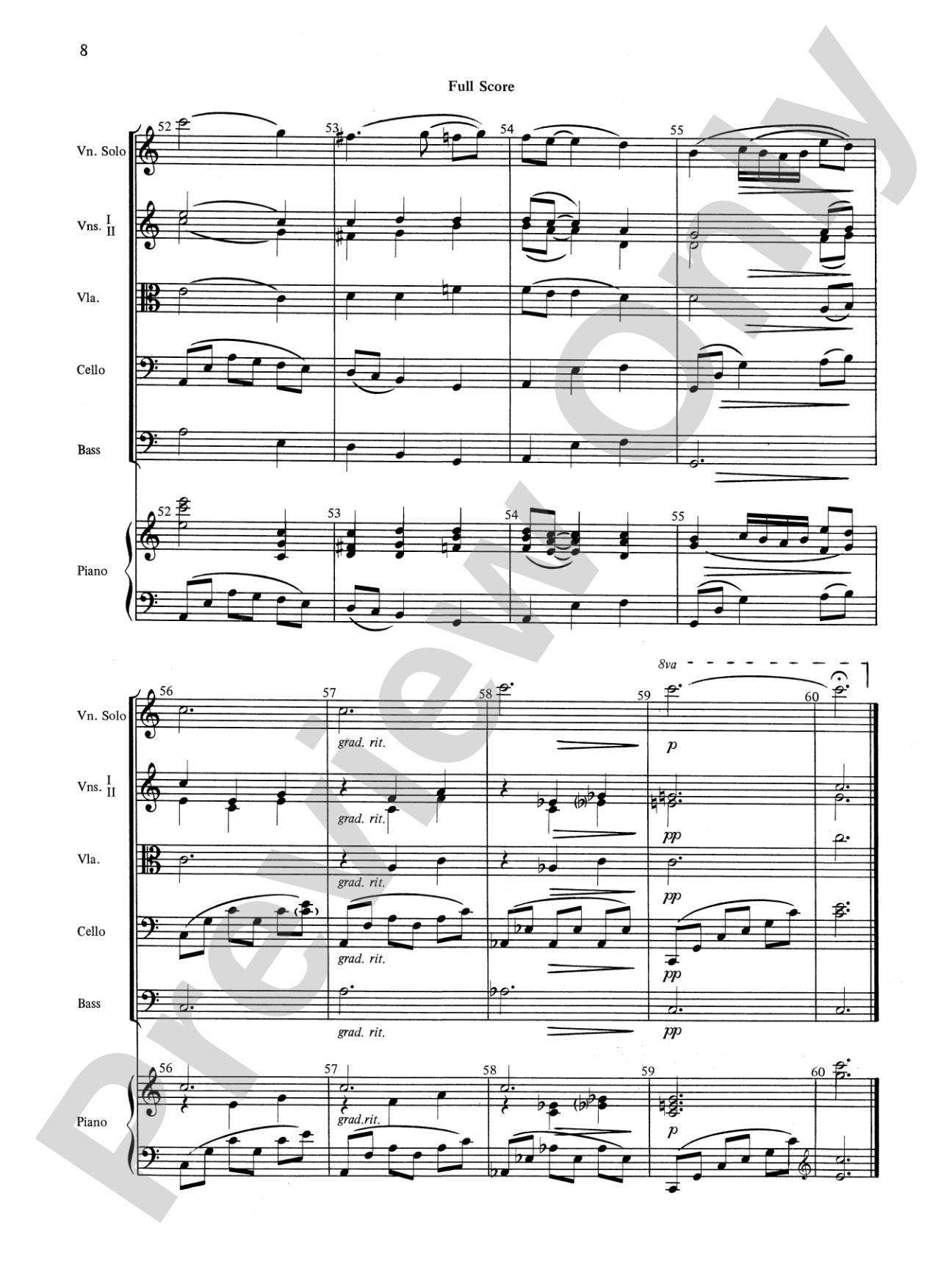
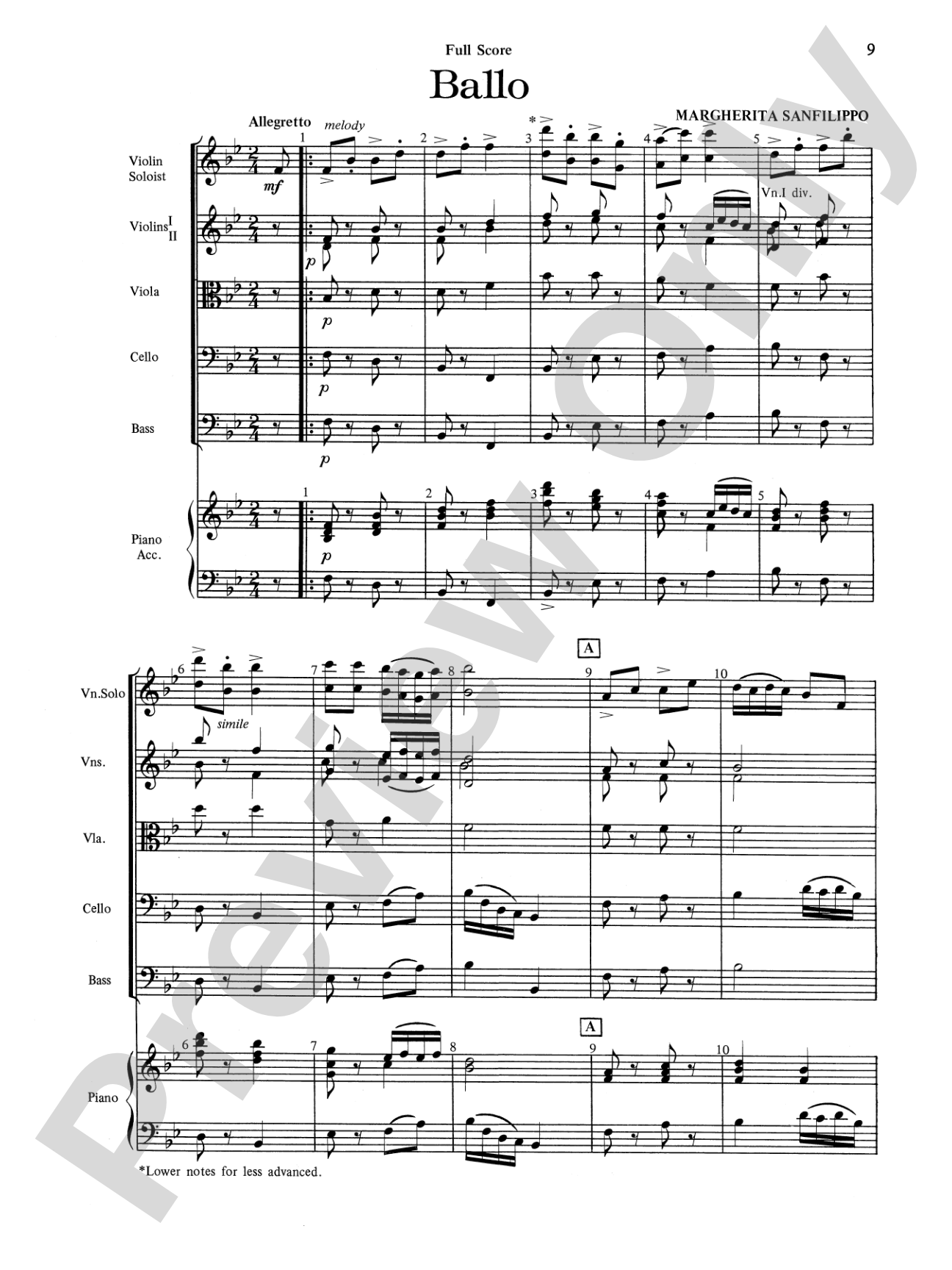
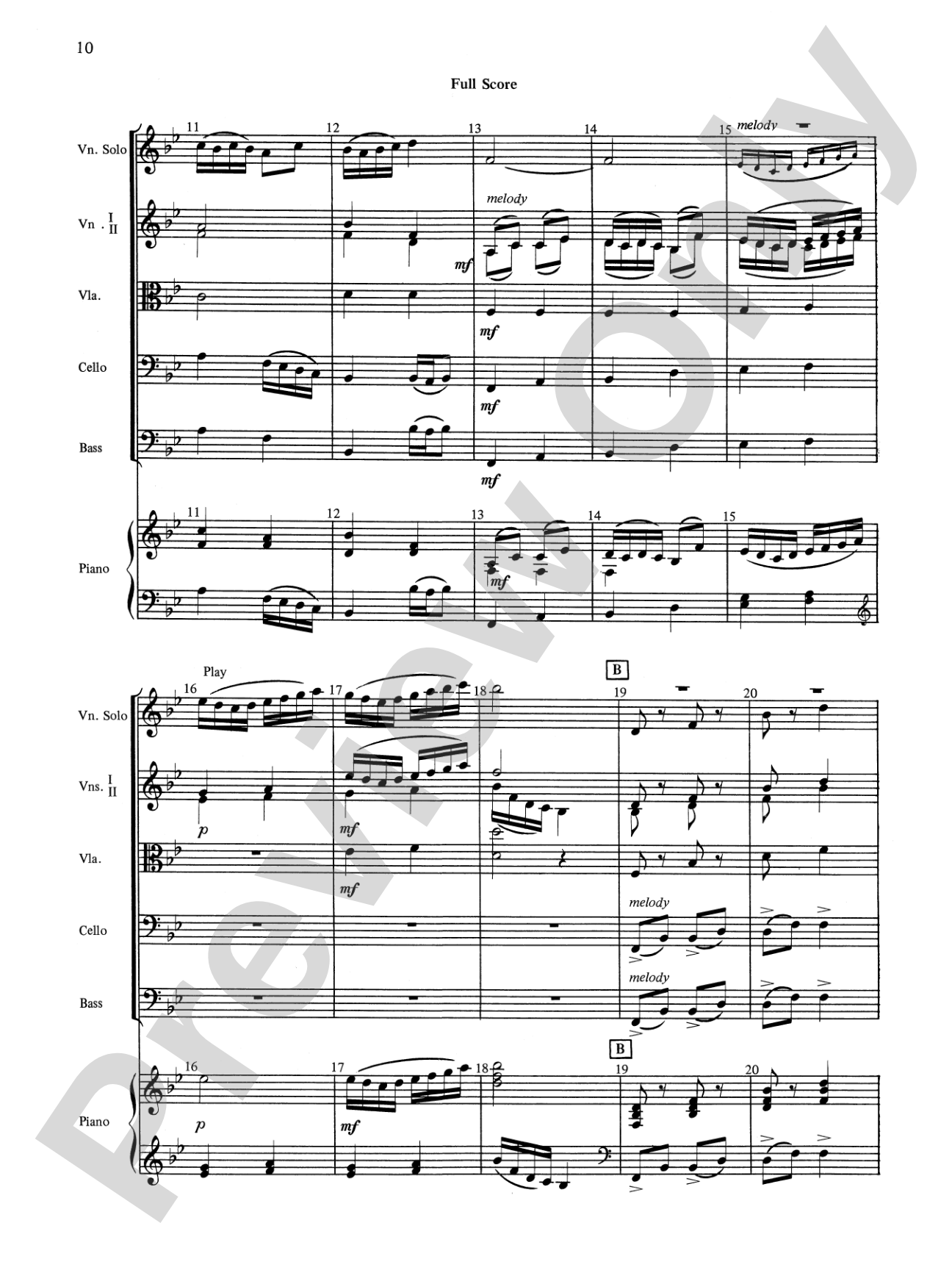
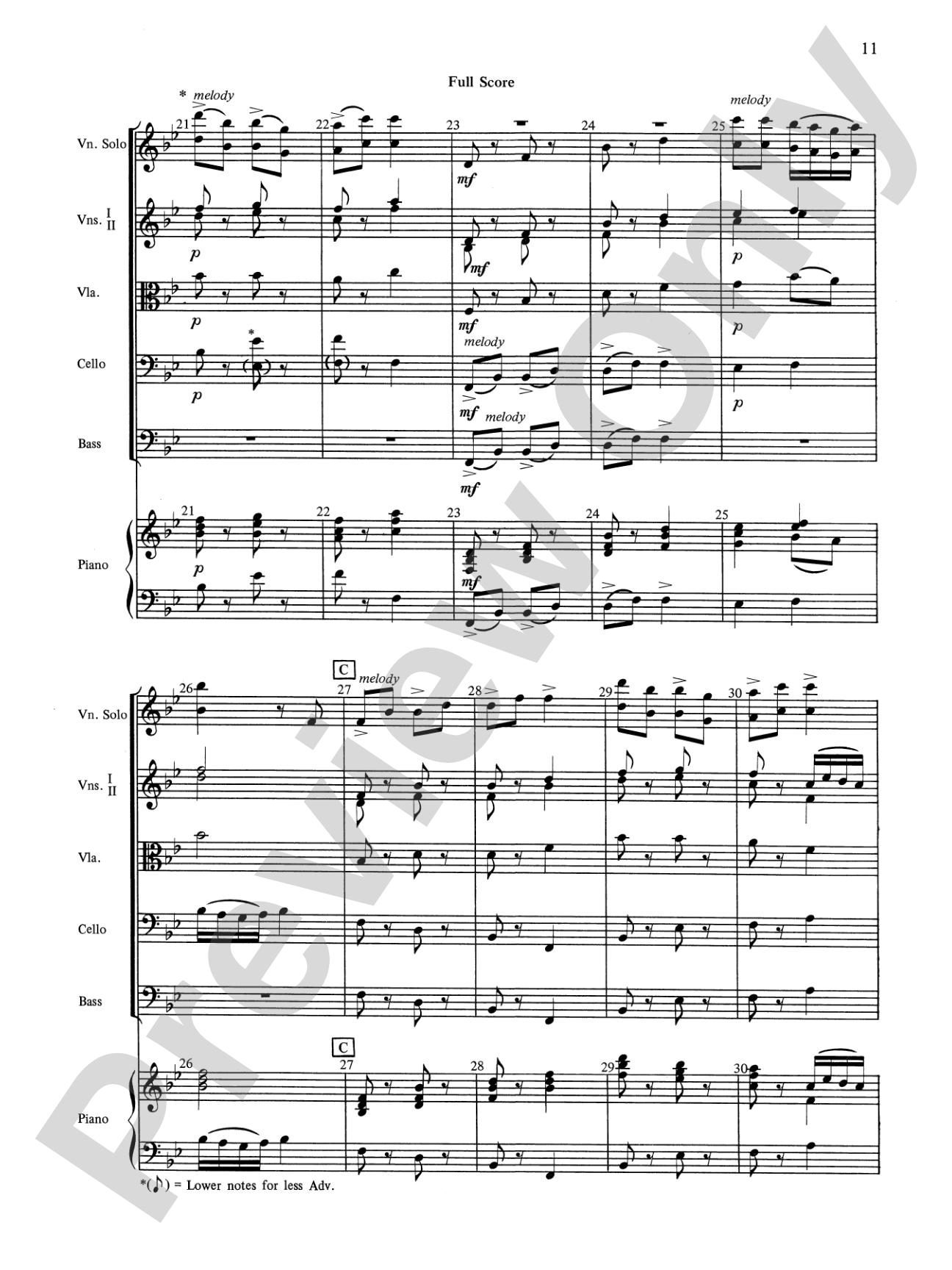
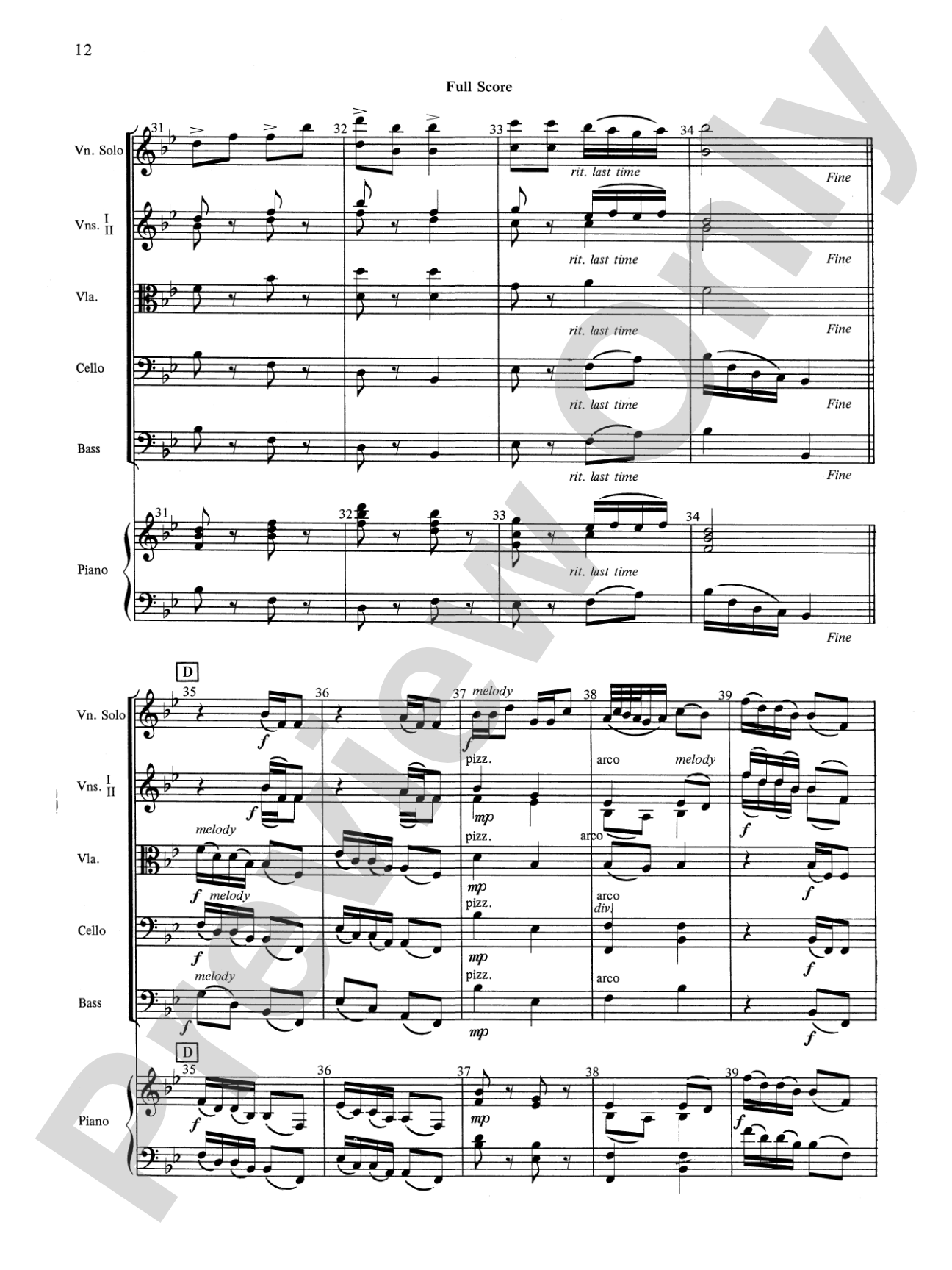
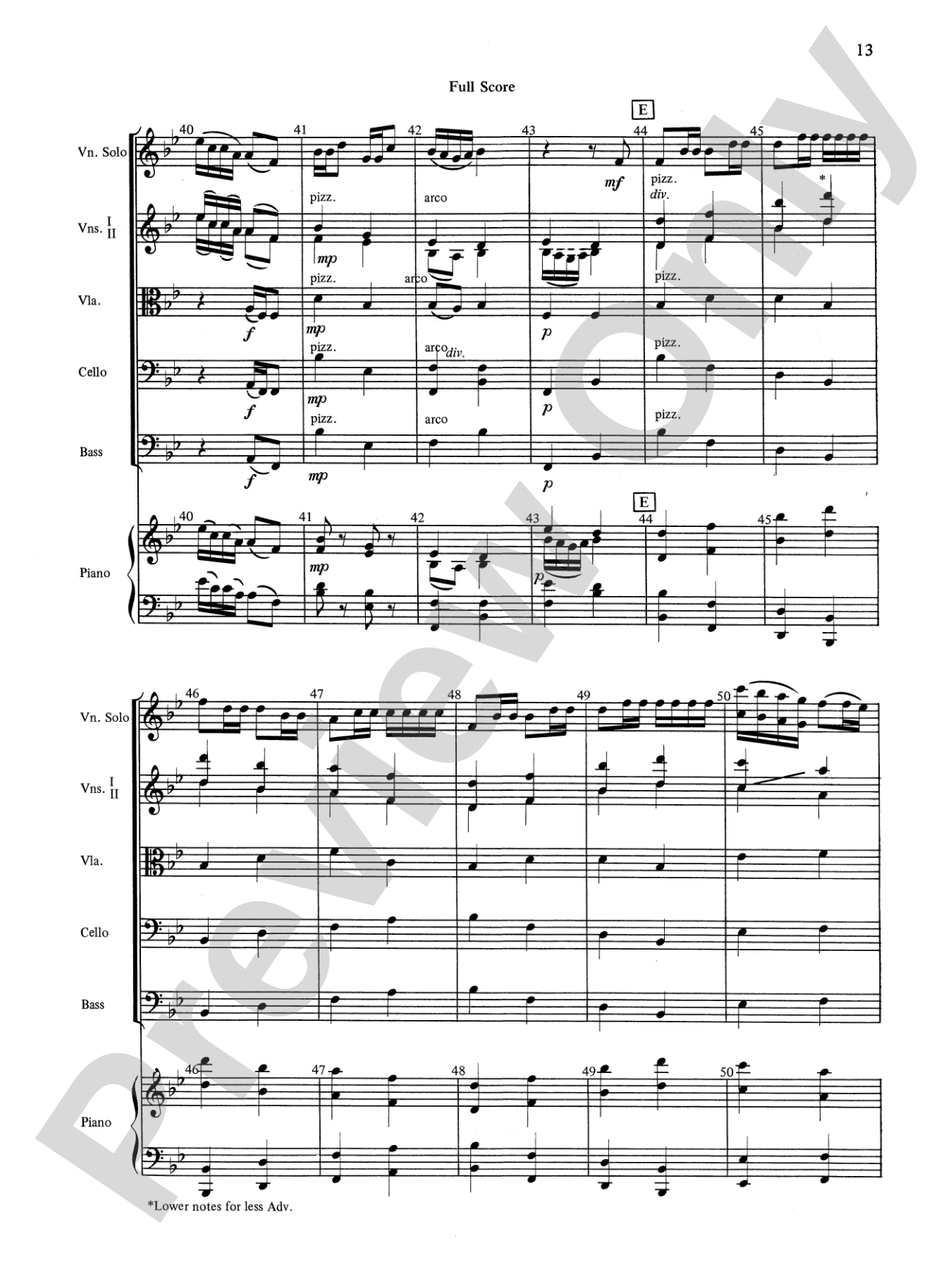
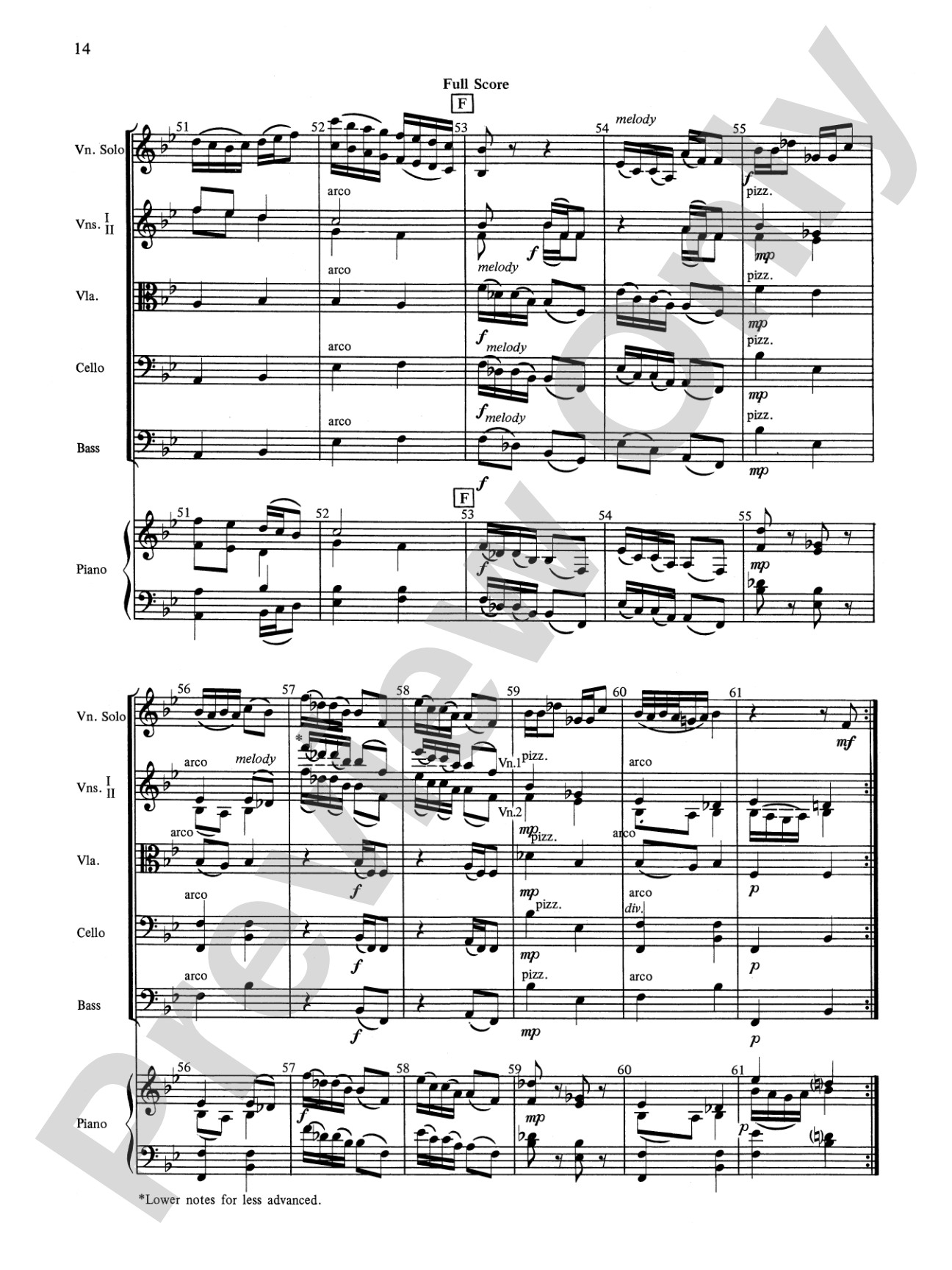



Canzonetta e Ballo (solo violin and string orchestra)
Arr. Margaret Sanfilippo
Grade: 3
Item: 00-PK-0000094

$47.00
Pickup currently not available
Buy Extra Parts (Digital PDF Download)
Parts Added to Cart!
Description


Don't just read it, hear it, play along with it, and watch your students grow with it. In MakeMusic Cloud, Canzonetta e Ballo (solo violin and string orchestra) comes alive with professional accompaniment, adjustable tempo, and built-in practice tools that turn solo practice into real progress.
Open in the Player
Jump straight in and assign it today.
Start Your Free Trial
Open this title and explore the full library in minutes.
Sample Audio
No sample audio found.
Sample Video
No sample videos found.
Additional Details
Series:
Highland/Etling String Orchestra
Publisher:
Alfred Music
SKU:
00-PK-0000094
More about this title
Why we love this
Sanfilippo's arrangement balances the demands of a string orchestra with genuine solo writing, giving your concertmaster or section leader a real moment in the spotlight without overshadowing the ensemble. The Grade 3 orchestration provides accessible textures that let young players support the soloist meaningfully rather than simply fill background space.
What to expect
The canzonetta opens with a singing, lyrical character before shifting into the ballo's brighter rhythmic dance. This pairing gives performers a chance to explore two contrasting moods within one piece, moving from introspective melody to spirited movement.
Who it's for
String orchestras working at the Grade 3 level who want to feature a strong young violinist without jumping to full concerto literature. This works equally well for a student with solid technique and a developing musical voice as it does for a chamber ensemble setting.
How to get the most out of it
- Establish a clear, confident soloist early. The opening should sing with conviction; the ensemble responds to that energy and settles into its rhythmic support.
- Listen for clean entrances in the ballo section, where the rhythm quickens. Rehearse those transitions as a unit so the soloist can breathe freely without losing momentum.
- Balance the solo line just above the ensemble texture. The arrangement likely weaves the violin into fuller passages; make sure that solo voice cuts through without the orchestra pulling back unnaturally.
How to use it
Place this as a feature performance on a spring concert, letting the solo violinist carry the emotional arc while the string section demonstrates ensemble cohesion. It also works beautifully in a solo and ensemble competition format where the accompaniment is truly integrated rather than subordinate.
Skills your students will build
- Supporting a solo line while maintaining independent rhythmic clarity
- Transitioning between contrasting tempos and characters (lyrical to dance-like)
- Balancing textural density so the featured violin remains audible
- Responding to a soloist's phrasing and rubato as an ensemble