

Cantate Domino: 2-Part Choral Octavo
Music by Giuseppe Pitoni / arr. Donald Moore
Item: 00-PO-0004203
$2.25
Minimum order quantity: 20 copies
Pickup currently not available
Description
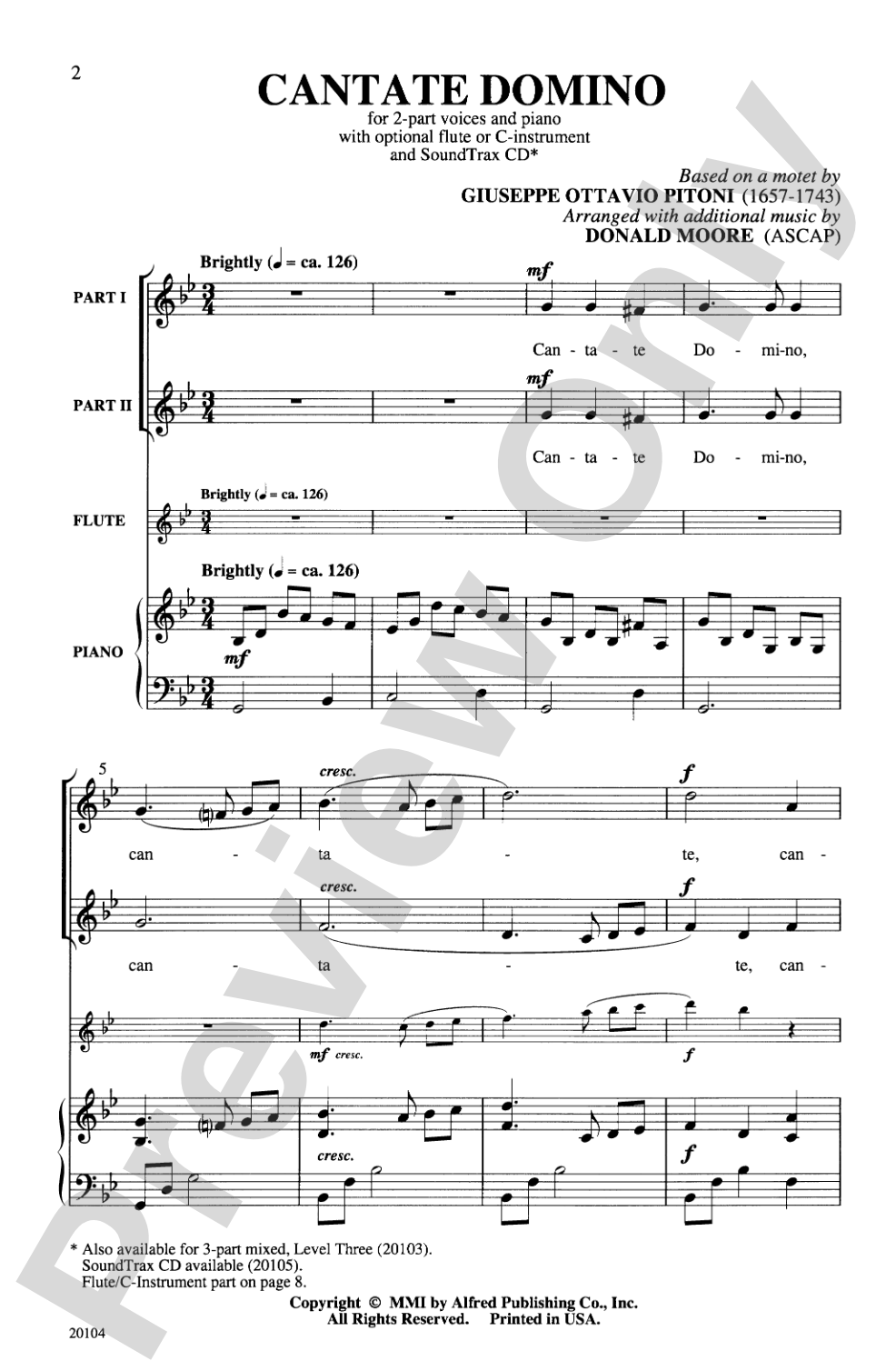
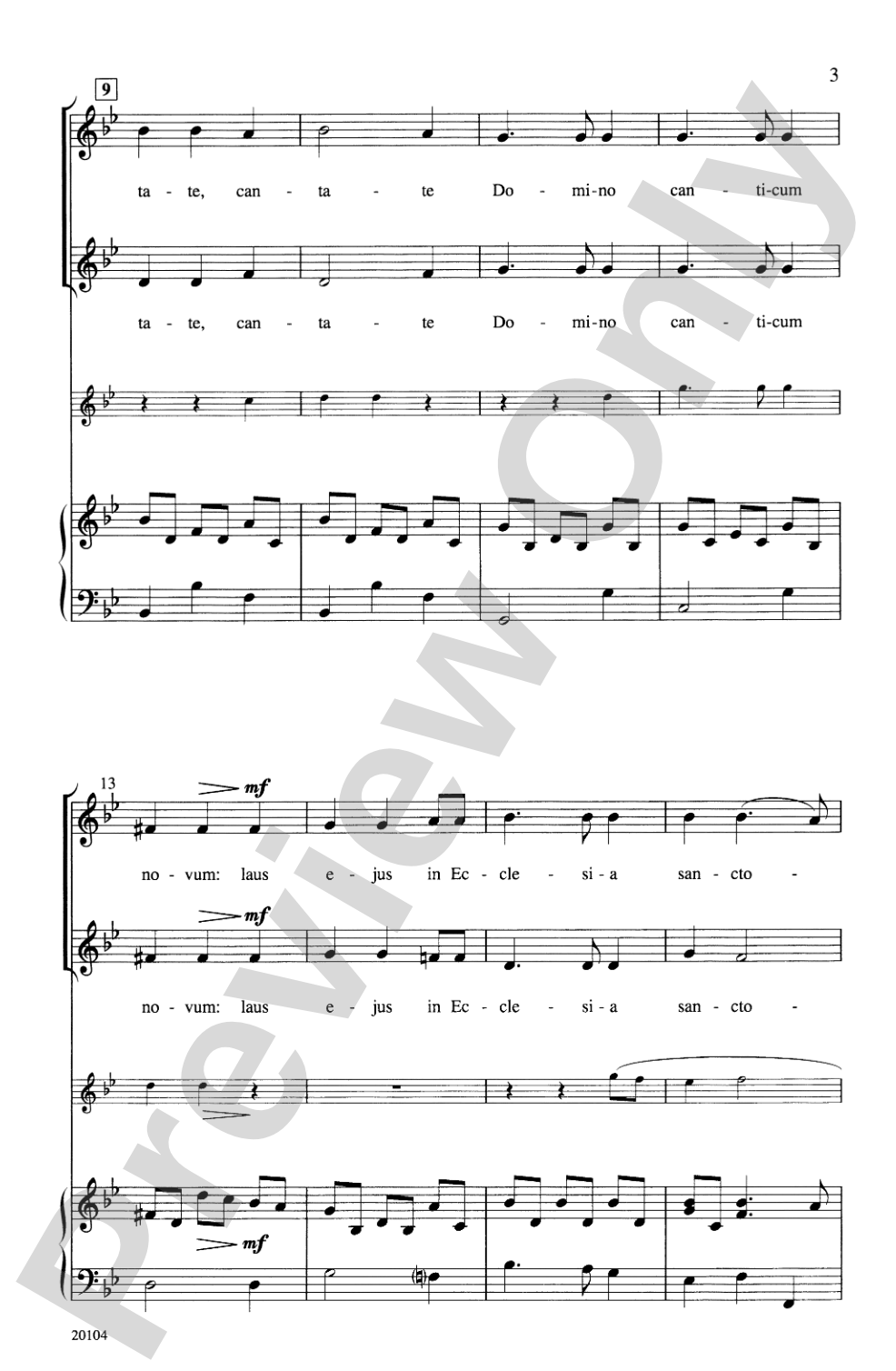
The original work by Giuseppe Pitoni (1657-1743) was a cappella, but Donald Moore has added a straightforward accompaniment of piano and optional flute or C-instrument. What a great way to introduce your students to music of the Baroque era; the music is Baroque in style but the arrangement is crafted expressly for today's 2 and 3-part choirs. Dynamic changes add interest to the singable melodies and solid harmonies. Perfect for concerts, festivals, and adjudications.


Cantate Domino: 2-Part Choral Octavo isn't in MakeMusic Cloud just yet...but it could be. Let us know you'd like to see it, and you'll help shape what comes next. In the meantime, start a free trial and dive into thousands of interactive titles your students can play along with today.
Request This Title
Tell us you want it.
Start Your Free Trial
Explore everything that's ready to play right now.
Sample Audio
1
Audio File
--:--
0:00
0:00
Sample Video
No sample videos found.
Additional Details
Series:
Alfred Archive Edition: Alfred Choral Designs
Publisher:
Alfred Music
Page Count:
8
SKU:
00-PO-0004203
Instrumentation:
Opt. Flute or C-Instrument
More about this title
About the Composer: Giuseppe Pitoni
Giuseppe Pitoni (1657-1743) was a master of sacred vocal music during the late Baroque period. Working primarily in Rome, he developed a reputation for writing clear, singable choral lines supported by solid harmonic foundations, qualities that made his works valued by both amateur and professional singers of his era.
Pitoni's gift lay in accessibility without sacrificing musical substance. His approach to counterpoint and voice leading prioritized the voices themselves, making his compositions natural vehicles for developing singers. His output included masses, motets, and other sacred works that have endured because they serve both the liturgy and the musical growth of those who perform them.
Why we love this
This arrangement gives you an authentic Baroque motet without requiring your students to navigate the complexities of a cappella singing or archaic editions. Moore's piano accompaniment sits squarely in the service of the choral line, and the optional flute or C-instrument part adds textural variety without demanding specialized instrumentation. You get the real thing, arranged with a contemporary choir's needs in mind.
What to expect
Cantate Domino radiates clarity and reverence. The melodic lines sing naturally, never contorted by the harmony beneath them, and the Baroque idiom gives it a sense of formal grace without heaviness. Dynamic sculpting brings the piece to life, creating moments of tender reflection alongside passages of confident affirmation.
Who it's for
This octavo works beautifully for developing singers in grades 5-8 or high school choirs at all levels. The 2-part writing accommodates mixed-maturity ensembles while the optional instrumental parts make the piece flexible enough to use in smaller programs without accompaniment specialists.
How to get the most out of it
- Approach the dynamic markings as structural signposts. They're placed to give shape to the phrases and clarify the form, not to create artificial drama.
- Let the piano accompaniment anchor harmonic clarity without overwhelming the vocal sound. Rehearse with the accompaniment from the start so singers understand how their lines sit against it.
- If using the optional flute or C-instrument, have it double the soprano line for added brilliance in sections marked with growth; this brightens the texture without obscuring the text.
- Attend to vowel consistency within the section, especially across the dynamic changes. The shifts in intensity should come from supported singing, not from tensions in the throat.
How to use it
Pair this with Renaissance or earlier Baroque pieces to build a concert section that traces the evolution of sacred choral writing. It also stands alone as a festival or adjudication selection where straightforward musicality and clean part-singing matter. Consider programming it in the second half of your year, once singers have developed enough technique to shape phrases with control.
Skills your students will build
- Reading and balancing two-part harmony with independent melodic motion
- Sustaining legato singing through phrase arcs marked by dynamic change
- Coordinating vocal lines with piano accompaniment and optional instruments
- Understanding Baroque text setting and the relationship between words and musical gesture