
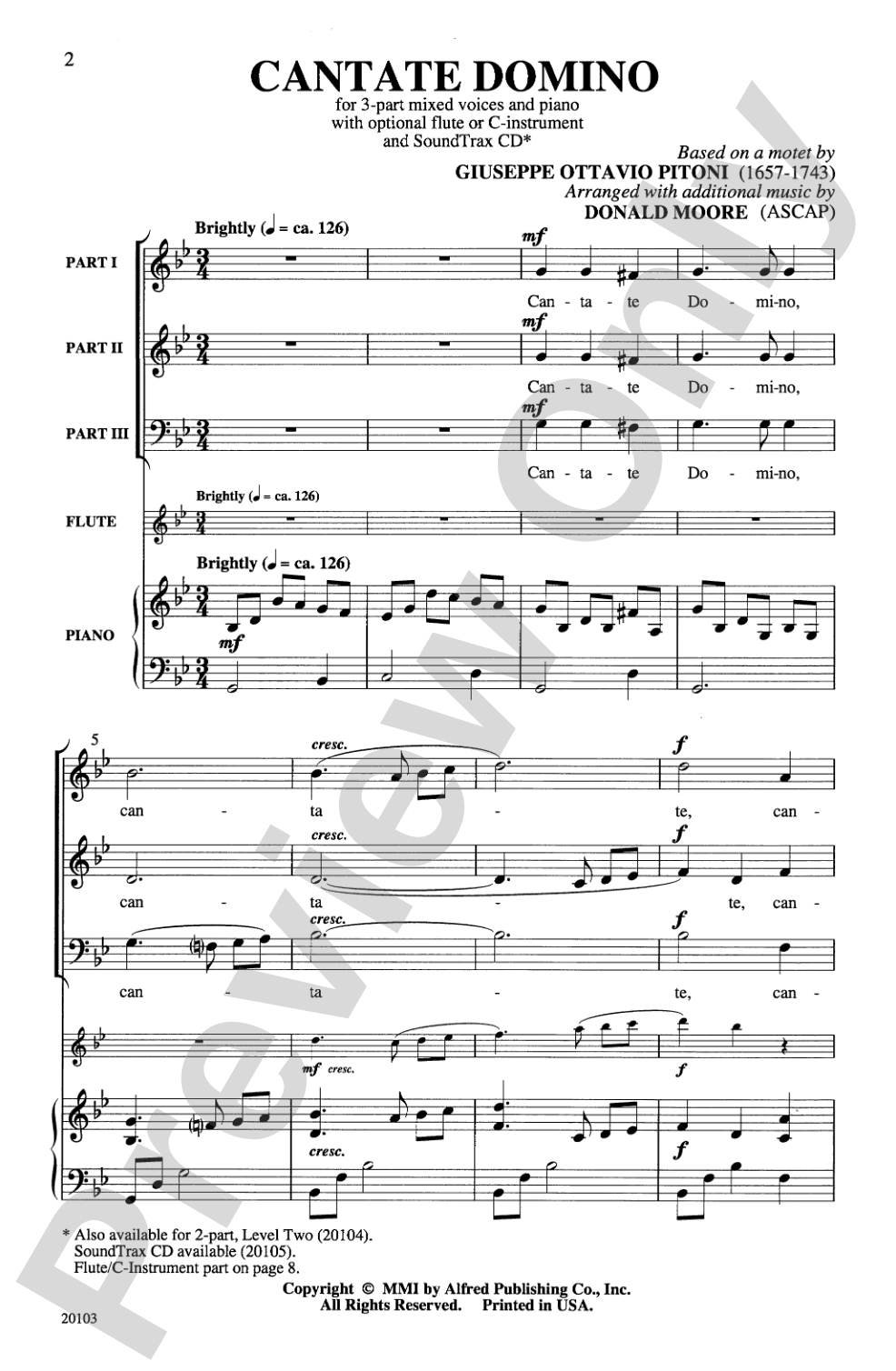

Cantate Domino: 3-Part Mixed Choral Octavo
Music by Giuseppe Pitoni / arr. Donald Moore
Item: 00-PO-0002177
$2.25
Minimum order quantity: 20 copies
Pickup currently not available
Description
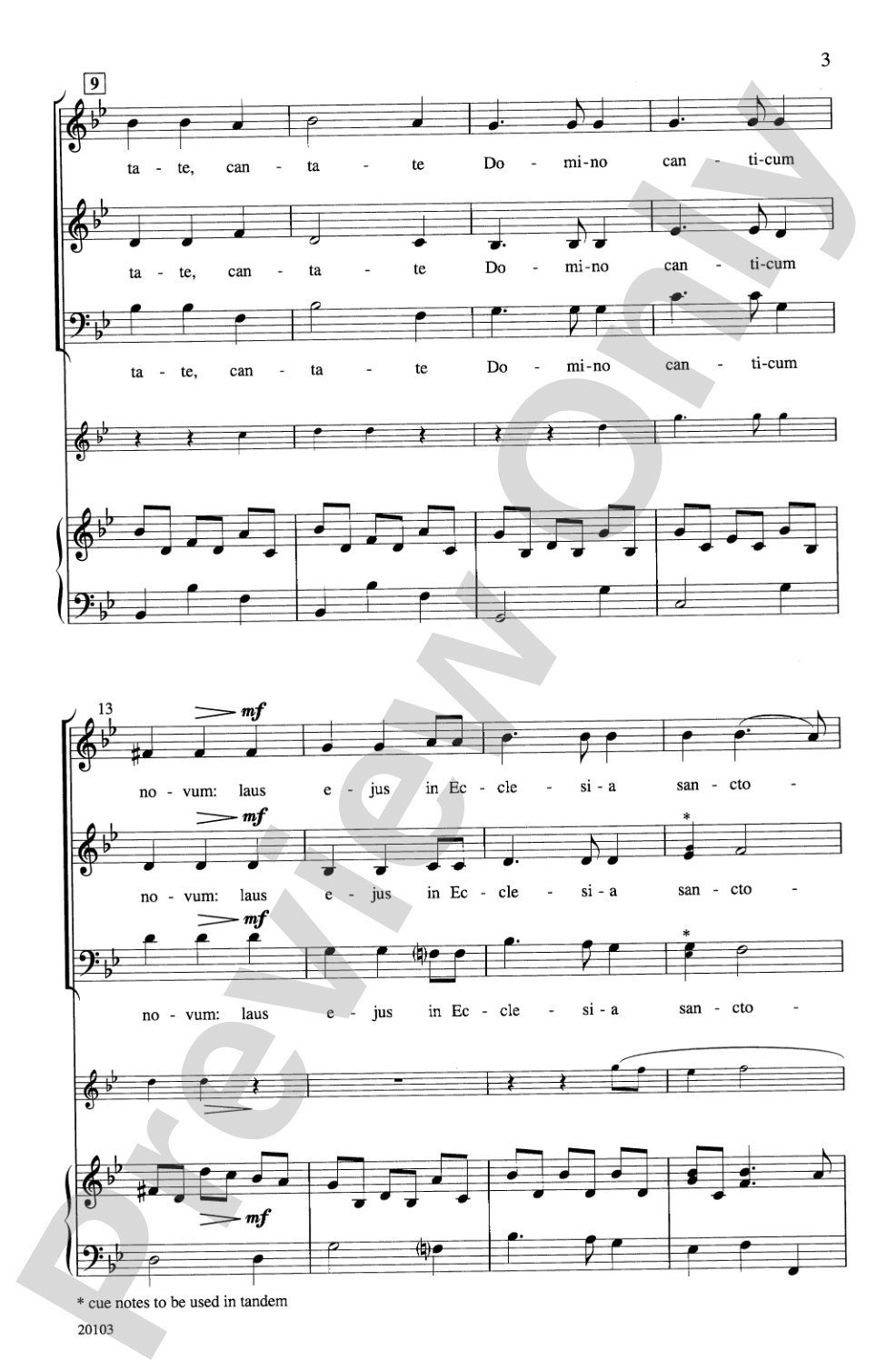
The original work by Giuseppe Pitoni (1657-1743) was a cappella, but Donald Moore has added a straightforward accompaniment of piano and optional flute or C-instrument. What a great way to introduce your students to music of the Baroque era; the music is Baroque in style but the arrangement is crafted expressly for today's 2 and 3-part choirs. Dynamic changes add interest to the singable melodies and solid harmonies. Perfect for concerts, festivals, and adjudications.


Cantate Domino: 3-Part Mixed Choral Octavo isn't in MakeMusic Cloud just yet...but it could be. Let us know you'd like to see it, and you'll help shape what comes next. In the meantime, start a free trial and dive into thousands of interactive titles your students can play along with today.
Request This Title
Tell us you want it.
Start Your Free Trial
Explore everything that's ready to play right now.
Sample Audio
1
Audio File
--:--
0:00
0:00
Sample Video
No sample videos found.
Additional Details
Series:
Alfred Archive Edition: Alfred Choral Designs
Publisher:
Alfred Music
Page Count:
8
SKU:
00-PO-0002177
Instrumentation:
Opt. Flute or C-Instrument
More about this title
About the Composer: Giuseppe Pitoni
Giuseppe Pitoni (1657-1743) was a Roman composer and maestro di cappella whose sacred works exemplify the refined polyphonic traditions of the late Baroque. His training in the contrapuntal language of his era made him a respected voice in church music, and his compositions for choir remain accessible entry points into that sophisticated harmonic world.
Pitoni's music combines melodic clarity with solid harmonic writing, qualities that make his works particularly valuable in education. Teachers have long turned to his pieces as bridges between early music and the choral literature students encounter in modern ensembles.
Why we love this
This arrangement strips away nothing essential from Pitoni's original while making the work genuinely singable for developing choirs. The added piano accompaniment and optional instrumental parts give you flexibility in performance without requiring students to navigate the unaccompanied complexity of the original score.
What to expect
Singing Pitoni feels like stepping into a sacred space where prayer and music are one. The straightforward harmonies and flowing lines create an intimate, reverent mood that rewards careful attention to phrasing and blend, while the dynamic markings give singers moments of expressive lift that keep the music alive.
Who it's for
This piece belongs in the repertoire of middle school through early high school choirs learning to read and sing music of the Baroque period. It also works beautifully for community and church choirs seeking accessible sacred works that don't require large forces or complex vocal demands.
How to get the most out of it
- Shape the melodic lines with gentle dynamic growth into the written crescendos rather than sudden changes; the Baroque aesthetic favors gradual intensity.
- Blend the soprano and alto parts carefully in the upper register, where they carry much of the harmonic interest and need to sound as one voice.
- If using the optional flute or C-instrument, ensure it mirrors the energy of the choir entrance and doesn't overwhelm the singers during vulnerable passages.
- Practice transitions between the marked dynamic sections independently with each voice part before full ensemble rehearsals.
How to use it
Program this as an anchor for a Baroque or Renaissance set, pairing it with works by composers like Palestrina or Pergolesi to give your audience a coherent musical journey through that era. Its eight-page length and moderate difficulty make it an ideal selection for festival competitions or spring concert programming alongside contemporary pieces.
Skills your students will build
- Singing three-part SAB voicing with independent melodic lines
- Reading and responding to dynamic markings in Baroque style
- Blending with optional instrumental doubling and accompaniment
- Approaching sacred texts with reverence and control
- Sustaining legato phrasing across phrases without instrumental melody to lean on