
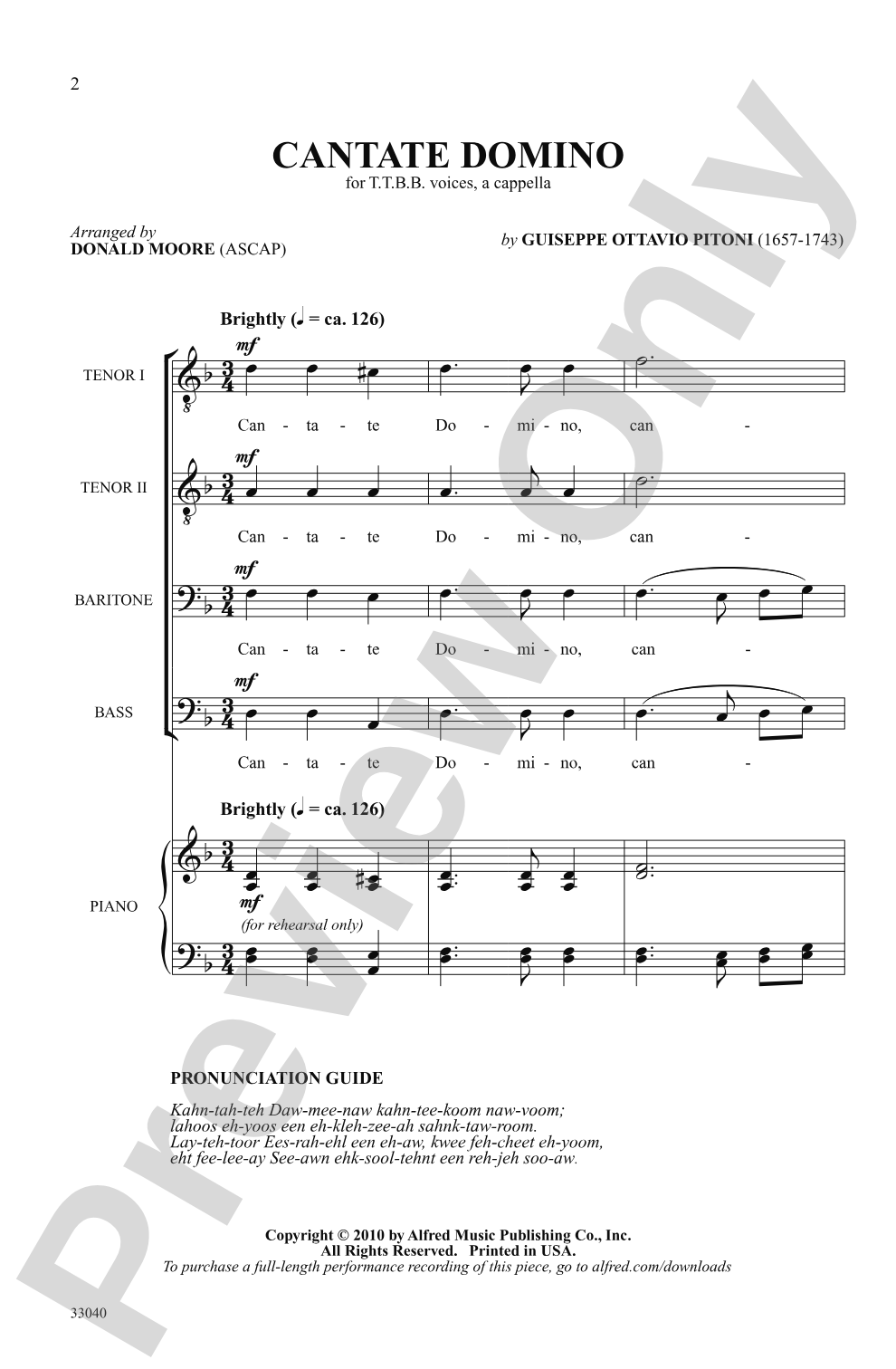
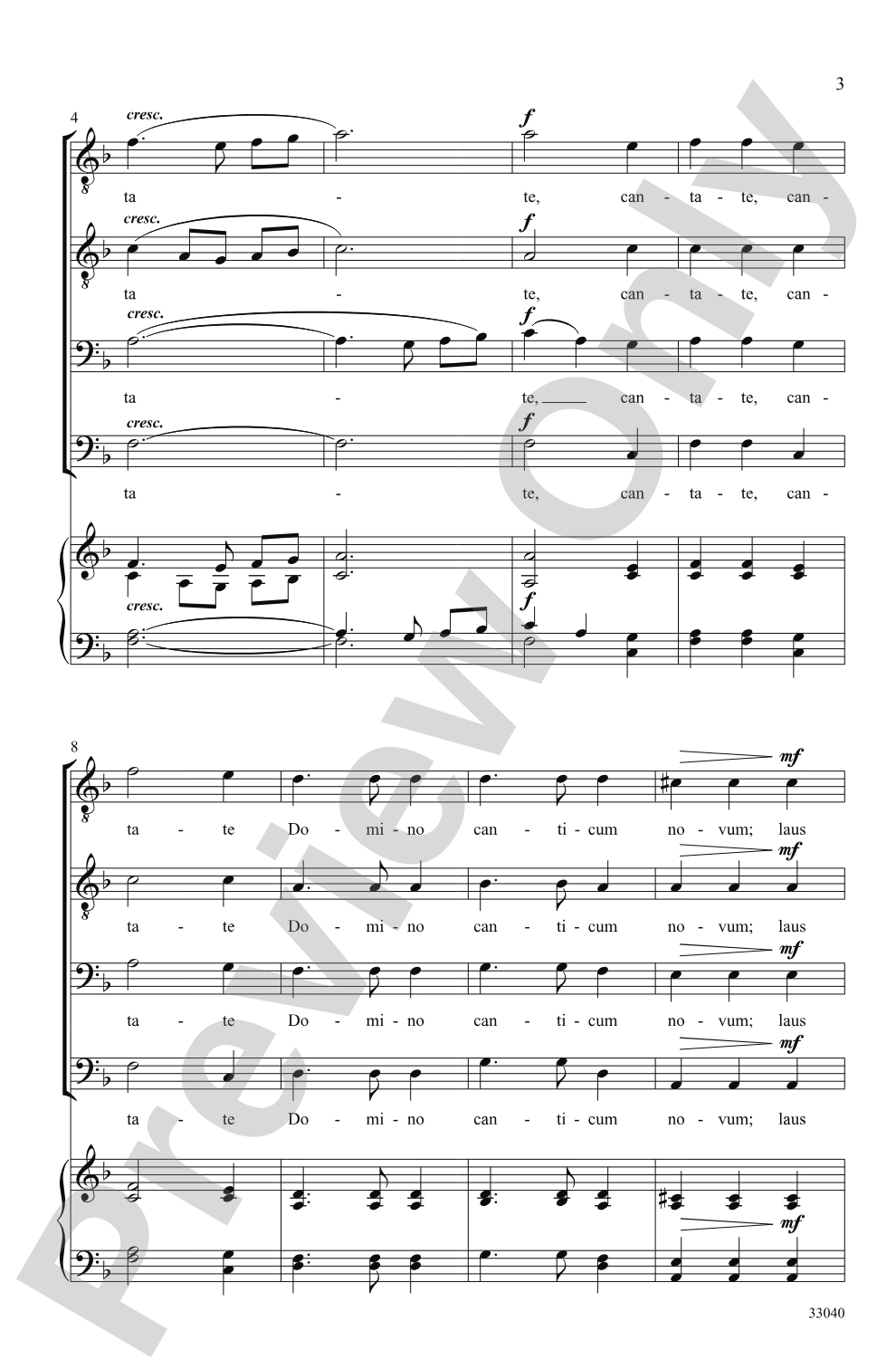

Cantate Domino: TTBB, a cappella Choral Octavo
By Giuseppe Ottavio Pitoni / arr. Donald Moore
Item: 00-PO-0000858
$1.75
Minimum order quantity: 20 copies
Pickup currently not available
Description
Available for the first time for male choruses, Pitoni's Cantate Domino is one of the great masterpieces of standard choral repertoire. Top-notch concert and contest literature.


Cantate Domino: TTBB, a cappella Choral Octavo isn't in MakeMusic Cloud just yet...but it could be. Let us know you'd like to see it, and you'll help shape what comes next. In the meantime, start a free trial and dive into thousands of interactive titles your students can play along with today.
Request This Title
Tell us you want it.
Start Your Free Trial
Explore everything that's ready to play right now.
Sample Audio
1
Audio File
--:--
0:00
0:00
Sample Video
No sample videos found.
Additional Details
Series:
Alfred Choral Designs
Publisher:
Alfred Music
Page Count:
8
SKU:
00-PO-0000858
More about this title
About the Composer: Giuseppe Ottavio Pitoni
Giuseppe Ottavio Pitoni (1561–1643) was a Roman priest and one of the most prolific composers of the late Renaissance and early Baroque periods. His sacred choral works earned him a position of influence in the papal chapel, where he helped shape the development of liturgical music during a transformative era. Pitoni's mastery of counterpoint and his gift for setting Latin texts with both clarity and grandeur made his compositions enduring models for choral writing.
His output was staggering: over 2,000 compositions for the church, ranging from motets to extended choral works. Many of his pieces remained in active liturgical use for centuries after his death, testament to their structural integrity and spiritual resonance. Pitoni represents the bridge between Renaissance polyphony and the more homophonic textures of the emerging Baroque.
Why we love this
This is one of the few genuinely great Baroque masterworks available in a reliable, well-crafted TTBB arrangement. Most male chorus libraries lean toward folk songs, barbershop, or arrangements of instrumental classics; Cantate Domino offers your singers access to the kind of sophisticated polyphonic literature that builds real musicianship. Moore's voicing preserves the integrity of Pitoni's original while sitting naturally for male voices.
What to expect
Cantate Domino unfolds with stately confidence, its four voices weaving in and out of alignment. The text (a setting of Psalm 100) glows with devotional warmth while the counterpoint keeps the ear constantly engaged. There's an underlying sense of order and proportion that feels both timeless and alive.
Who it's for
College and community male choirs seeking concert and contest repertoire with substance. Directors building a choral program that honors the Baroque canon will find this both pedagogically rigorous and artistically rewarding.
How to get the most out of it
- Establish a clear pulse without a conductor's beat in the opening measures; the piece lives in its independence of voice parts, and singers must lock in rhythmically from the start.
- Shape each phrase toward its harmonic goal rather than treating the text syllabically. Pitoni's lines breathe across bar lines.
- Balance the parts carefully in rehearsal. The tenor and baritone lines carry harmonic weight equally; neither should dominate.
- Sing with forward vowels and consistent breath support throughout. A cappella singing demands vocal stamina and evenness across the range.
How to use it
Position this as a centerpiece on a concert featuring sacred Baroque works, or use it to anchor a program that spans Renaissance to contemporary choral music. It works equally well as a contest selection where musical depth and technical execution matter.
Skills your students will build
- Reading and performing four-part counterpoint without harmonic reduction
- Maintaining independent vocal lines while listening to three other parts
- Sustaining a cappella intonation over extended phrases
- Shaping long melodic lines and understanding harmonic motion in Baroque style