

¡Cantar! (Sing!): 2-Part Choral Octavo
Words and music by Jay Althouse
Item: 00-PO-0003142
$2.05
Minimum order quantity: 20 copies
Pickup currently not available
Related Items
¡Cantar! (Sing!): SATB Choral Octavo |
$2.05
|
View | |
¡Cantar! (Sing!): SAB Choral Octavo |
$2.05
|
View | |
Cantar! (Sing): SSA Choral Octavo |
$2.05
|
View | |
¡Cantar! (Sing!): TB Choral Octavo |
$2.05
|
View | |
Cantar! (Sing!): Choral SoundPax |
$20.00
|
View | |
¡Cantar! (Sing!): SATB Choral Octavo |
$2.05
|
View | |
¡Cantar! (Sing!): SAB Choral Octavo |
$2.05
|
View | |
¡Cantar! (Sing!): SSA Choral Octavo |
$2.05
|
View | |
¡Cantar! (Sing!): TB Choral Octavo |
$2.05
|
View | |
¡Cantar! (Sing!): 2-Part Choral Octavo |
$2.05
|
View | |
¡Cantar! (Sing!): Choral Octavo SoundTrax CD |
$27.99
|
View | |
¡Cantar! (Sing!): Choral SoundPax |
$20.00
|
View |
Description
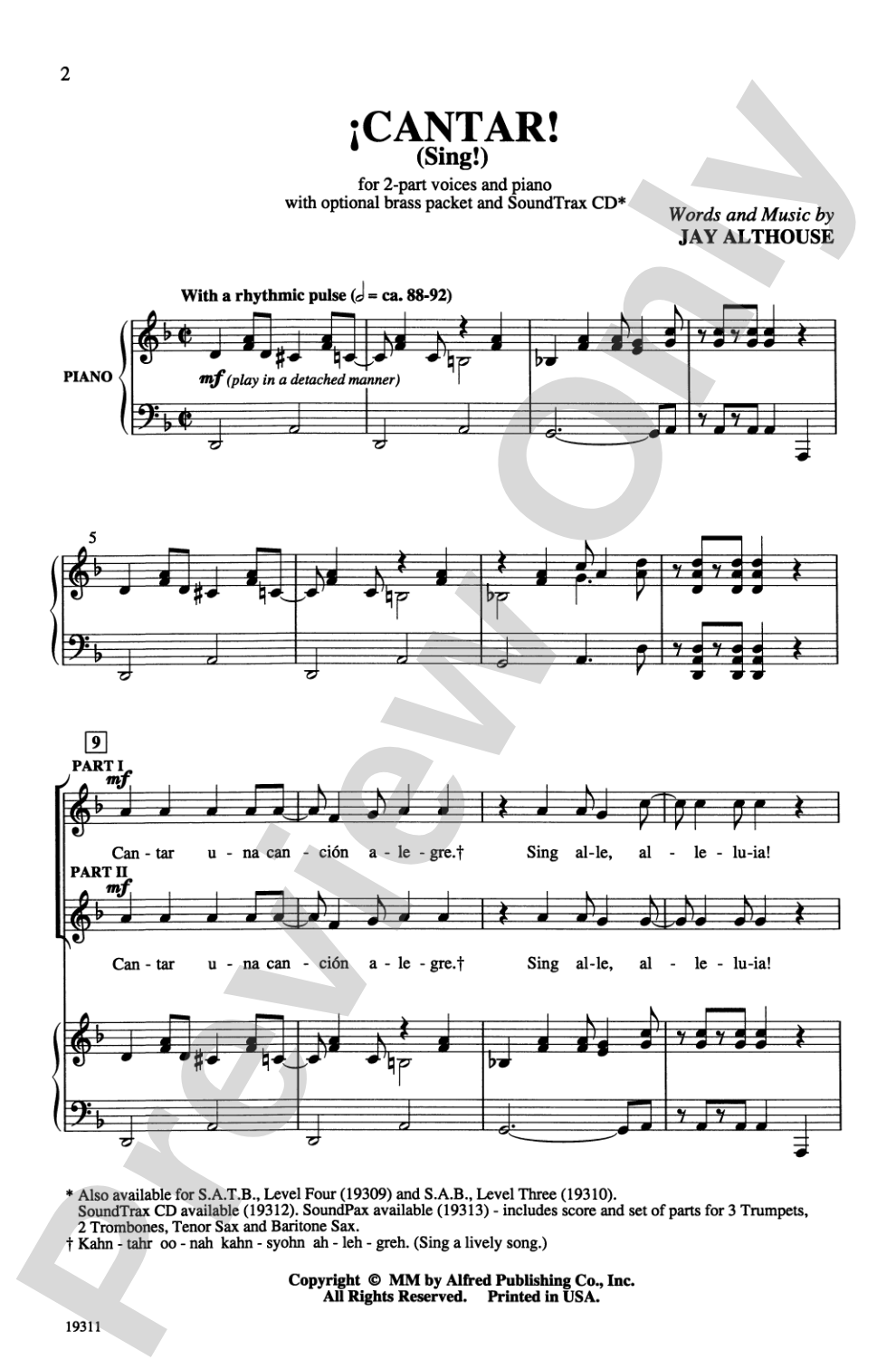
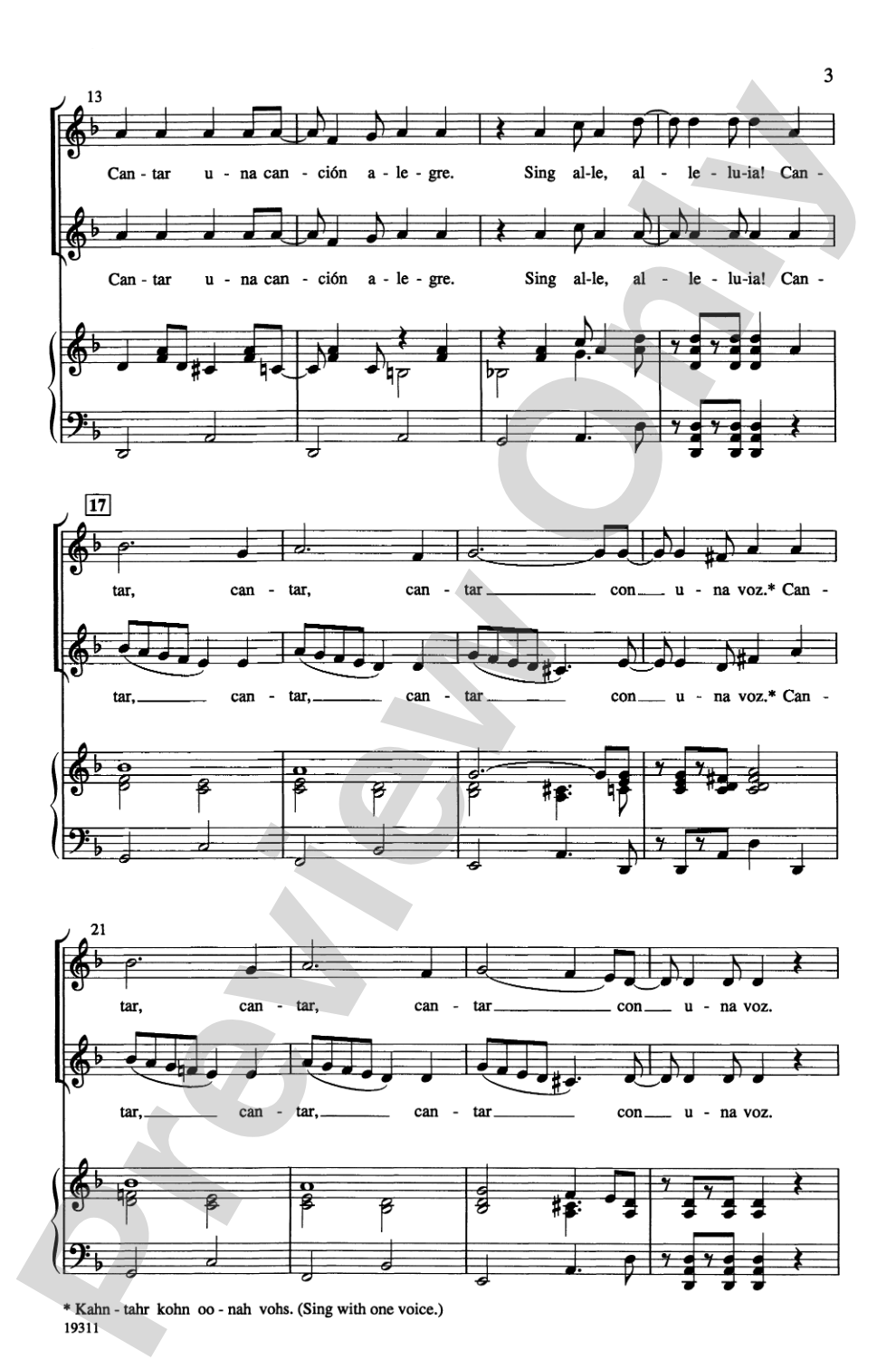
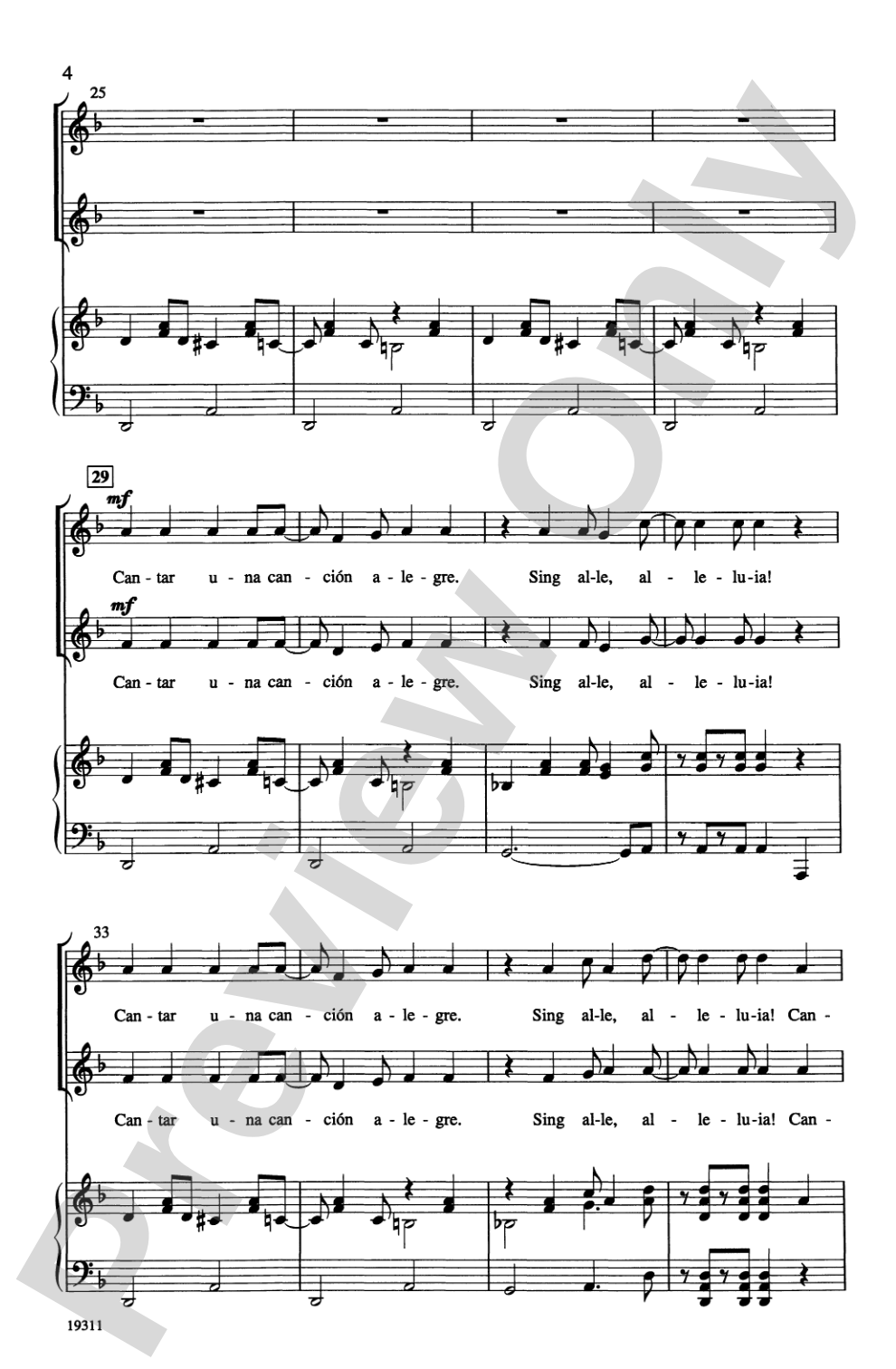
"¡Cantar!" is a stylistically authentic salsa work for choir. The text is a combination of English and simple, repetitive Spanish phrases set to a rhythmically infectious melody. Enjoy this new SSA voicing of Jay's #1 seller! Sizzling!


¡Cantar! (Sing!): 2-Part Choral Octavo isn't in MakeMusic Cloud just yet...but it could be. Let us know you'd like to see it, and you'll help shape what comes next. In the meantime, start a free trial and dive into thousands of interactive titles your students can play along with today.
Request This Title
Tell us you want it.
Start Your Free Trial
Explore everything that's ready to play right now.
Sample Audio
1
Audio File
--:--
0:00
0:00
Sample Video
Additional Details
Series:
Alfred Choral Designs
Publisher:
Alfred Music
Page Count:
12
SKU:
00-PO-0003142
More about this title
About the Composer: Jay Althouse

Jay Althouse holds degrees in Music Education and Music from Indiana University of Pennsylvania, where he was later honored as a Distinguished Alumnus. His career spans both the publishing side and creative work; he spent eight years managing rights and licenses for a major educational music publisher and served on the Executive Board of the Music Publishers Association of America.
As a composer, Althouse has written more than 800 choral works performed regularly across the English-speaking world. He is a writer member of ASCAP and a consistent recipient of the ASCAP Special Award. Beyond composition, he has co-created children's musicals with his wife Sally K. Albrecht, edited widely used vocal solo collections, co-authored The Complete Choral Warm-up Book and Accent on Composers, and written classroom resources including Ready to Read Music and One-Page Composer Bios. His work I Hear America Singing, co-written with Albrecht, was performed by the San Francisco Girls and Boys Choirs at President Barack Obama's 2009 Inauguration.
Why we love this
Althouse has mastered the art of writing accessible, energetic pieces that actually land with singers. ¡Cantar! demonstrates why his choral catalog remains one of the most performed in schools: the Latin rhythms are propulsive without being complicated, the bilingual text feels natural rather than forced, and the melody sticks. Directors who program this find rehearsals shift gear when the piece clicks into place.
What to expect
Salsa energy meets singable charm. The rhythm infectious and propulsive, pulling singers forward with infectious momentum. The bilingual text adds cultural flavor and a sense of celebration without ever feeling didactic.
Who it's for
This work suits treble choirs and mixed choirs performing the SSA version. It works equally well for middle school singers discovering Latin music and high school ensembles looking for a crowd-pleasing encore that feels both authentic and fun.
How to get the most out of it
- Lock the syncopated rhythms in the melody line early; the salsa groove depends on precision, and singers will gain confidence once they feel the pocket
- Layer the Spanish phrases gradually during rehearsal. Start with the English text, then add the Spanish sections so students understand where the language shifts and why they matter to the musical feel
- Keep the sound lean and bright in the upper voice and let the lower part cut through cleanly; the piece thrives on clarity rather than blend
How to use it
Program this as a concert brightener alongside more serious classical work, or use it to open a set when you want to establish an energetic, inclusive mood. It also works beautifully in multicultural concert themes or as a finale that sends audiences out smiling.
Skills your students will build
- Syncopated rhythm reading and execution in Latin styles
- Bilingual text pronunciation and diction (English and Spanish)
- Independent melodic line singing within a two-part texture
- Stylistic interpretation of Latin/salsa idioms
- Rhythmic precision and ensemble lock in syncopated passages