

¡Cantar! (Sing!): SAB Choral Octavo
Words and music by Jay Althouse
Item: 00-PO-0003141

$2.05
Minimum order quantity: 20 copies
Pickup currently not available
Related Items
¡Cantar! (Sing!): SATB Choral Octavo |
$2.05
|
View | |
Cantar! (Sing): SSA Choral Octavo |
$2.05
|
View | |
¡Cantar! (Sing!): TB Choral Octavo |
$2.05
|
View | |
¡Cantar! (Sing!): 2-Part Choral Octavo |
$2.05
|
View | |
Cantar! (Sing!): Choral SoundPax |
$20.00
|
View | |
¡Cantar! (Sing!): SATB Choral Octavo |
$2.05
|
View | |
¡Cantar! (Sing!): SAB Choral Octavo |
$2.50
|
View | |
¡Cantar! (Sing!): SSA Choral Octavo |
$2.05
|
View | |
¡Cantar! (Sing!): TB Choral Octavo |
$2.05
|
View | |
¡Cantar! (Sing!): 2-Part Choral Octavo |
$2.05
|
View | |
¡Cantar! (Sing!): Choral Octavo SoundTrax CD |
$27.99
|
View | |
¡Cantar! (Sing!): Choral SoundPax |
$20.00
|
View |
Description
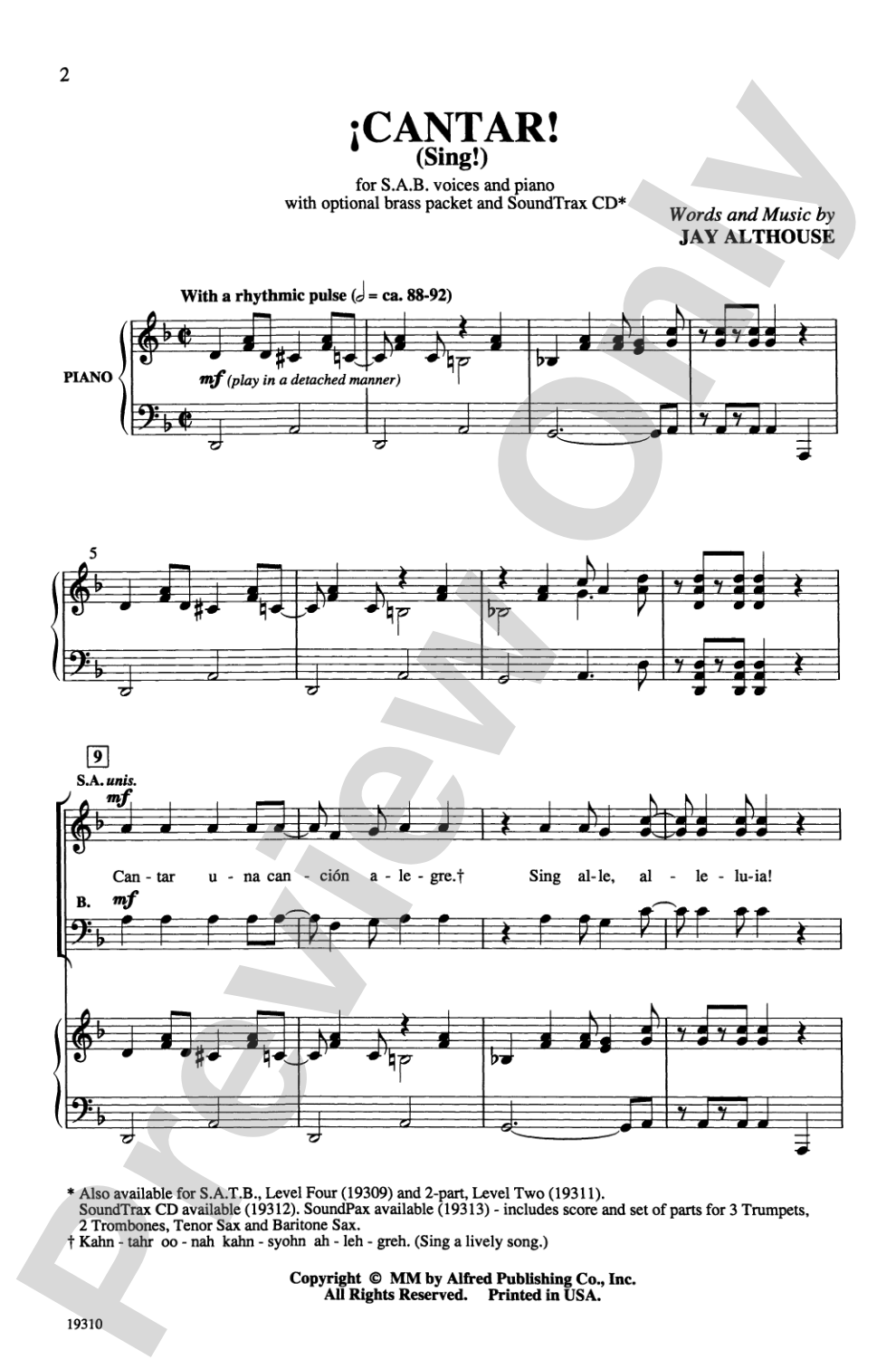
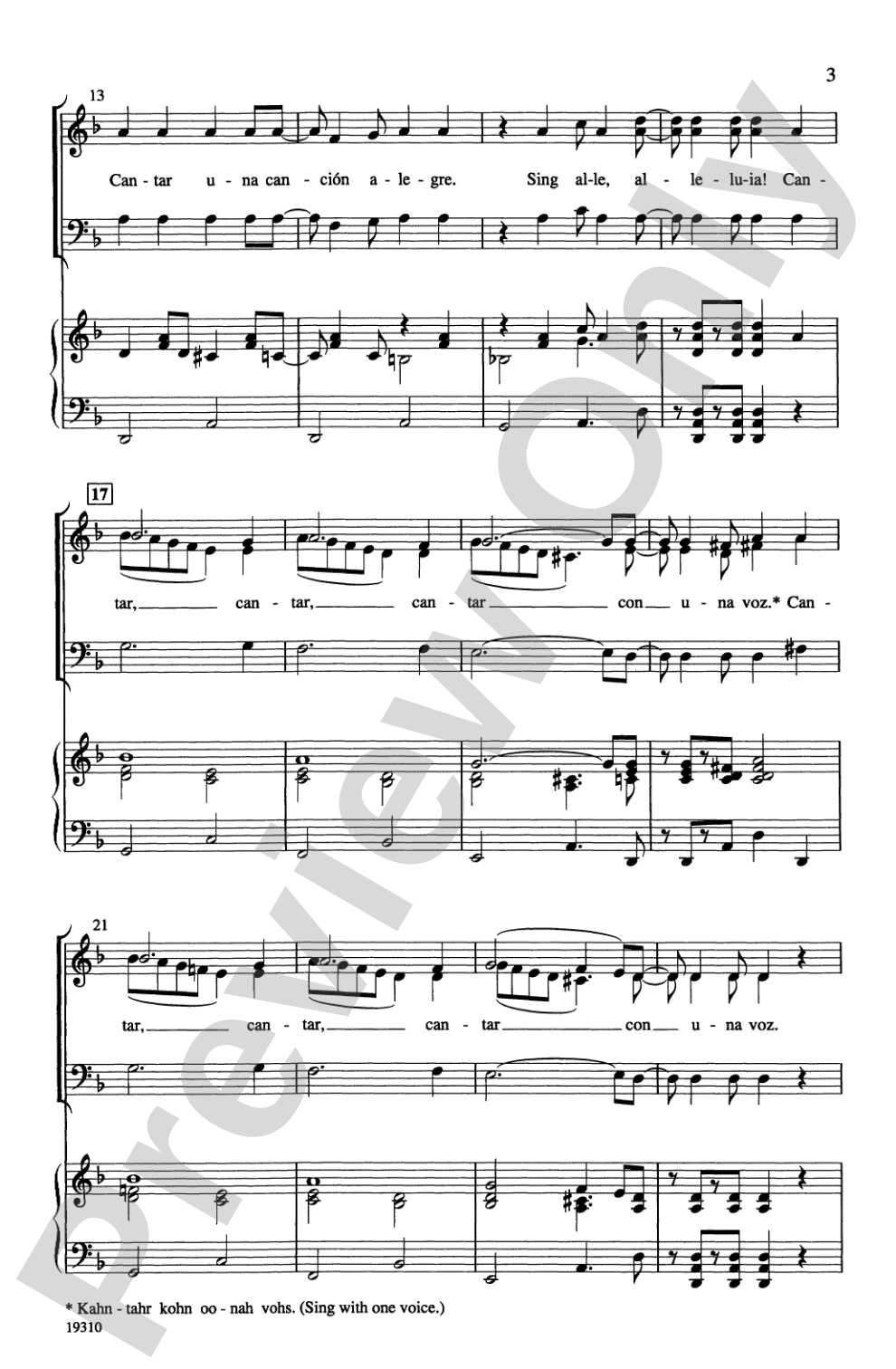
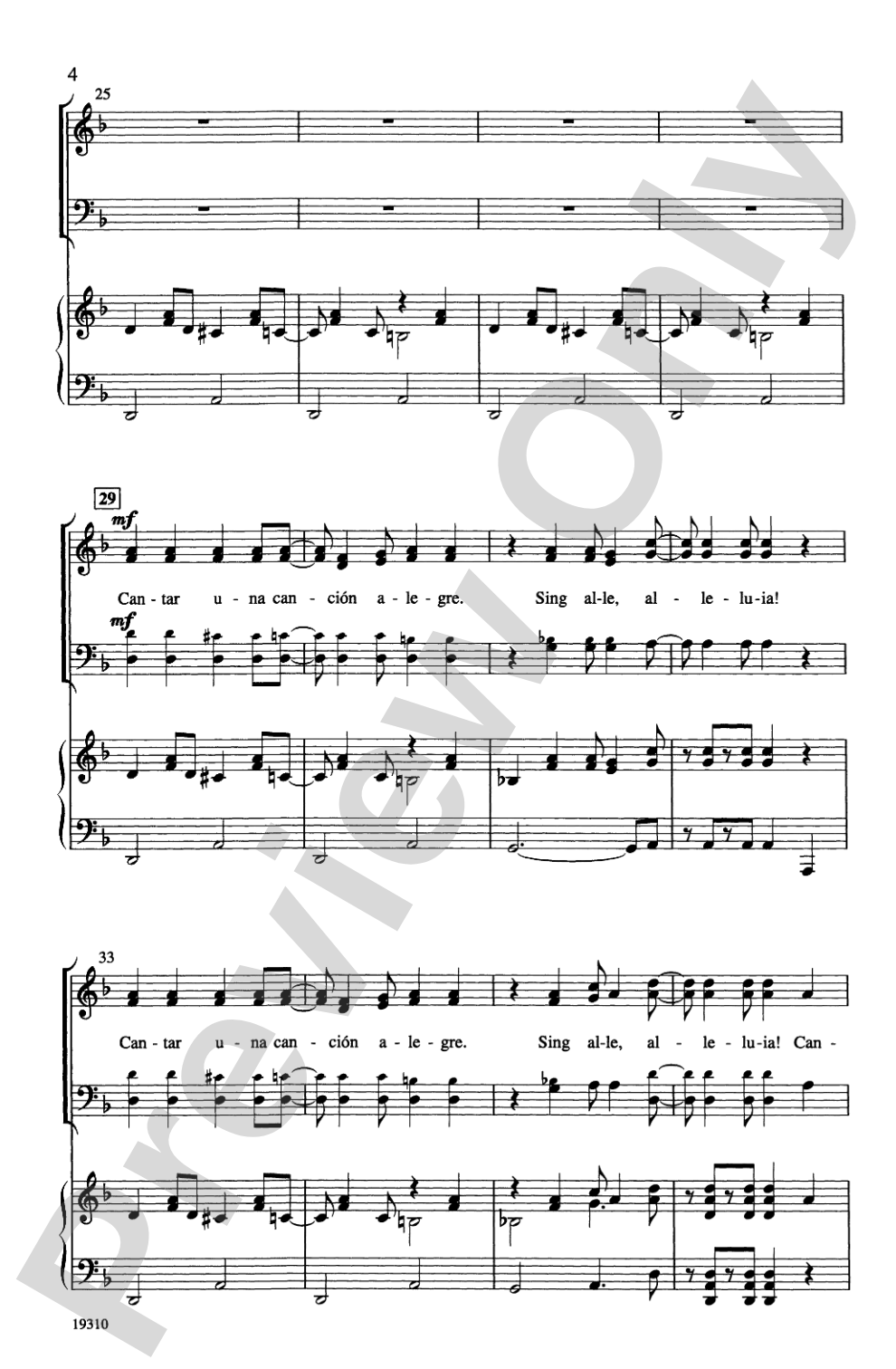
"¡Cantar!" is a stylistically authentic salsa work for choir. The text is a combination of English and simple, repetitive Spanish phrases set to a rhythmically infectious melody. Enjoy this new SSA voicing of Jay's #1 seller! Sizzling!


Don't just read it, hear it, play along with it, and watch your students grow with it. In MakeMusic Cloud, ¡Cantar! (Sing!): SAB Choral Octavo comes alive with professional accompaniment, adjustable tempo, and built-in practice tools that turn solo practice into real progress.
Open in the Player
Jump straight in and assign it today.
Start Your Free Trial
Open this title and explore the full library in minutes.
Sample Audio
1
Audio File
--:--
0:00
0:00
Sample Video
1 / 2
Additional Details
Series:
Alfred Choral Designs
Publisher:
Alfred Music
Page Count:
12
SKU:
00-PO-0003141
More about this title
About the Composer: Jay Althouse

Jay Althouse holds degrees in Music Education and Music from Indiana University of Pennsylvania, where he earned the Distinguished Alumni award. He spent eight years as a rights and licenses administrator for a major educational music publisher and served on the Executive Board of the Music Publishers Association of America. As a composer, Althouse has created more than 800 choral works performed throughout the English-speaking world and is a writer member of ASCAP, a regular recipient of the ASCAP Special Award for his compositions.
Beyond his prolific output as a composer, Althouse has co-written children's musicals with Sally K. Albrecht, compiled vocal solo collections including Folk Songs for Solo Singers, and authored instructional books for music classrooms such as Ready to Read Music and Sixty Music Quizzes. He co-wrote I Hear America Singing, performed by the San Francisco Girls and Boys Choirs at President Barack Obama's inauguration in 2009. Althouse resides in North Carolina and serves on the National Advisory Board of the Folk Art Society of America.
Why we love this
Althouse built his reputation on pieces that work across skill levels, and this SAB voicing proves why: the rhythmic drive and Latin authenticity make it genuinely fun to sing, while the text blend of English and Spanish keeps the learning curve accessible. Directors consistently return to his catalog because his melodies stick, his harmonic writing supports singers, and the energy in the room is contagious. A proven seller for good reason.
What to expect
From the first phrase, this piece radiates joy and movement. The salsa rhythm infectious and propulsive, driving the ensemble forward with the kind of infectious groove that makes singers want to lock in and commit. The text, mixing accessible English with simple Spanish repetition, creates an inclusive feel that invites the listener into the celebration.
Who it's for
SAB choirs at the middle school, high school, and community level will find this piece accessible yet authentically rhythmic. Mixed ensembles looking for multicultural repertoire that feels genuinely rooted in salsa style, not watered down, will connect with Althouse's treatment. Singers who enjoy the energy of Latin music but need something manageable in rehearsal time will thrive with this.
How to get the most out of it
- Nail the rhythmic precision in the salsa groove by locking the ensemble onto the main pulse; a recorded accompaniment is available and makes this much easier to absorb.
- Emphasize the crisp articulation on repetitive Spanish phrases; they should pop and drive forward rather than sit passively.
- Balance the English and Spanish text carefully so neither section feels secondary; both languages deserve equal musical weight.
How to use it
Program this during a spring concert focused on world music or multicultural themes; it pairs beautifully alongside other Latin or Spanish-language works. It also works as a high-energy closing piece or encore, especially for younger or community choirs seeking an accessible crowd-pleaser. Consider pairing it with a visual element or simple choreography to amplify its concert presence.
Skills your students will build
- Reading and performing Latin rhythmic patterns, particularly syncopation in a salsa context
- Articulating Spanish text with authentic pronunciation and rhythmic clarity
- Maintaining steady pulse and ensemble cohesion in a rhythmically driven arrangement
- Blending English and Spanish text within a single melodic phrase