

Candlelight Canon: SAB Choral Octavo
Words and music by Andy Beck
Item: 00-PO-0003596
$2.20
Minimum order quantity: 20 copies
Pickup currently not available
Related Items
Candlelight Canon: SoundTrax Digital Audio Download |
$27.99
|
View | |
Candlelight Canon: SATB Choral Octavo |
$2.20
|
View | |
Candlelight Canon: SSA Choral Octavo |
$2.00
|
View | |
Candlelight Canon: 2-Part Choral Octavo |
$2.20
|
View | |
Candlelight Canon: SATB Choral Octavo |
$2.20
|
View | |
Candlelight Canon: SSA Choral Octavo |
$2.00
|
View | |
Candlelight Canon: 2-Part Choral Octavo |
$2.20
|
View | |
Candlelight Canon: Choral Octavo SoundTrax CD |
$27.99
|
View |
Description
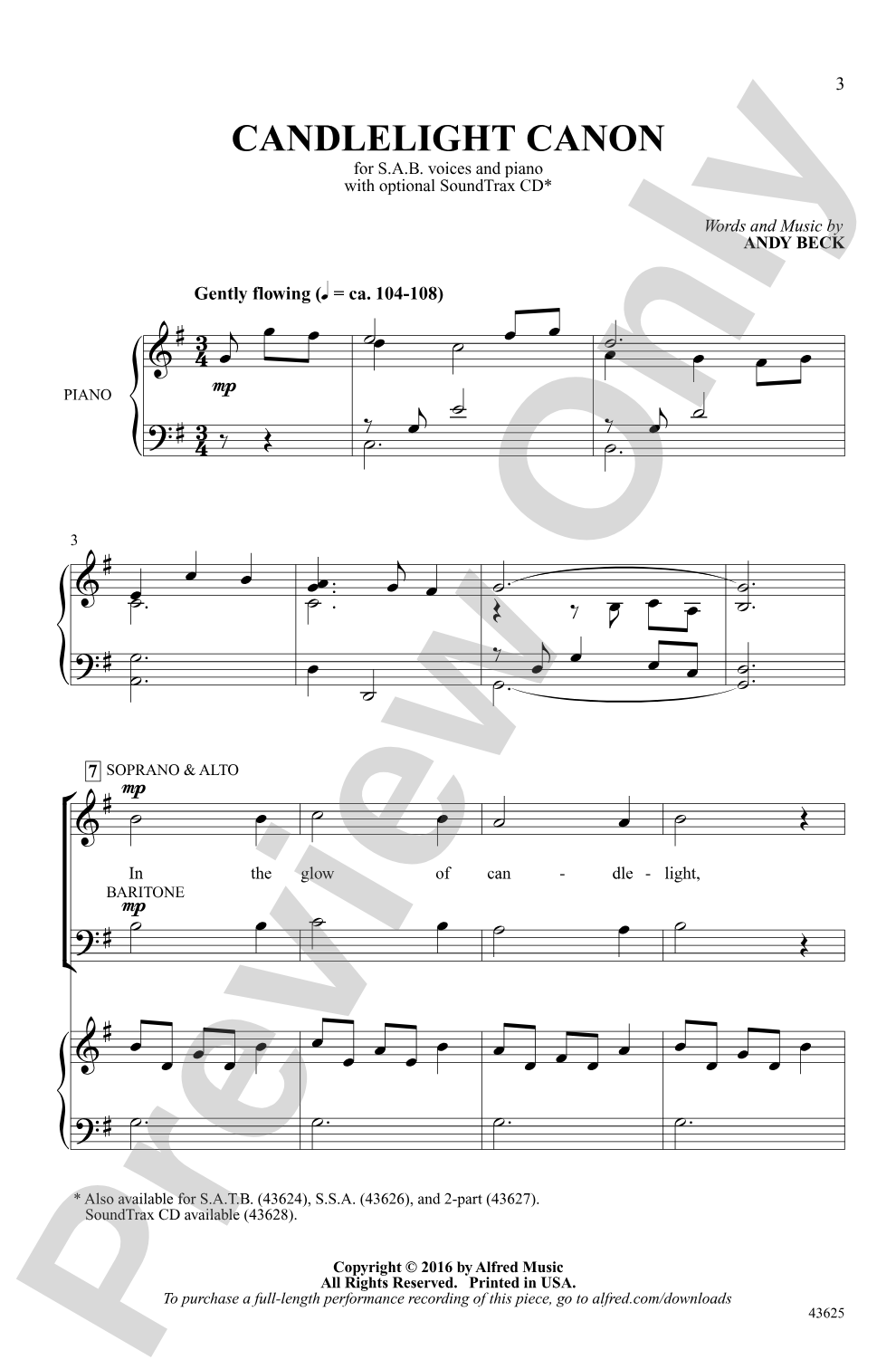
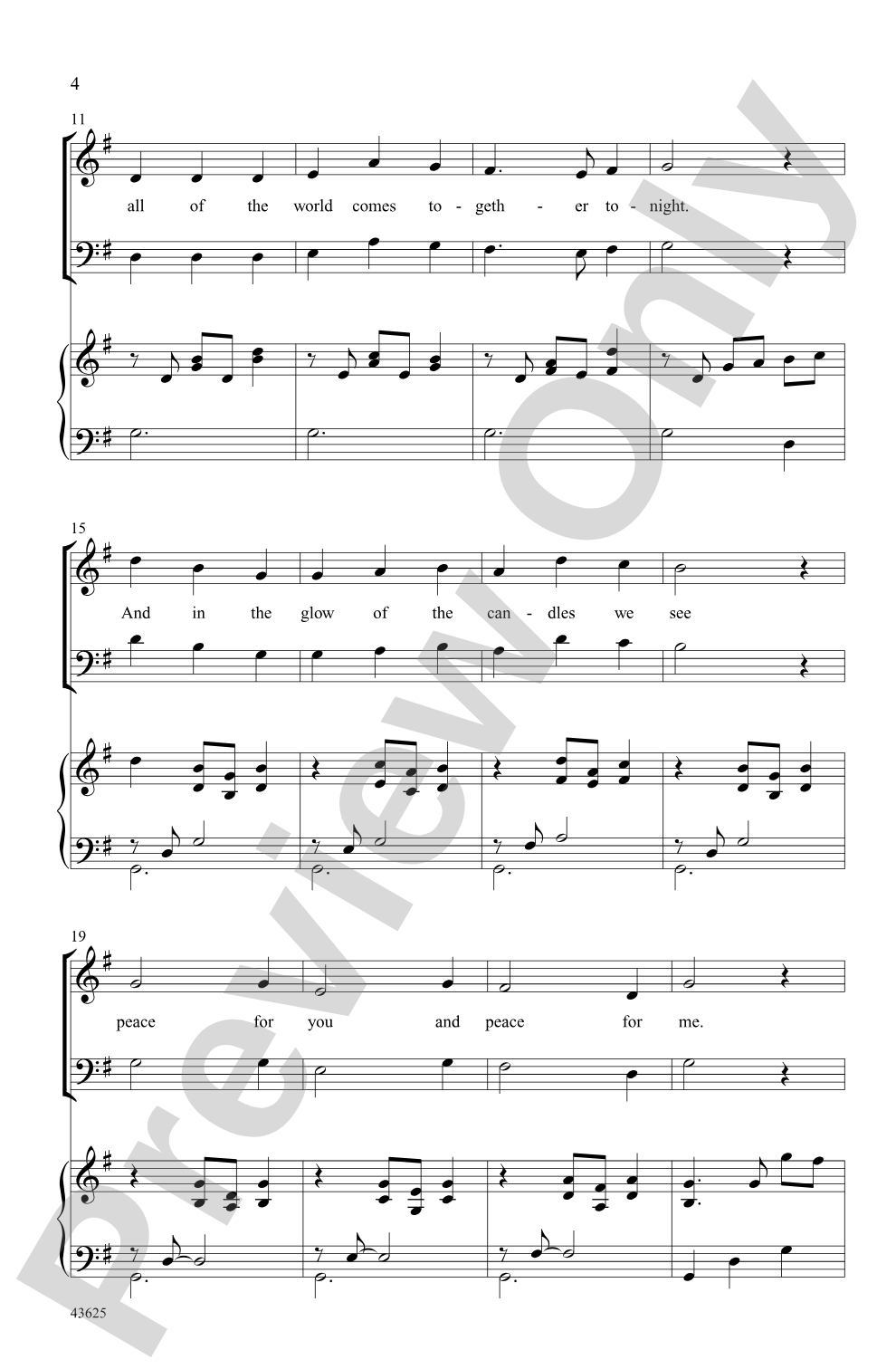
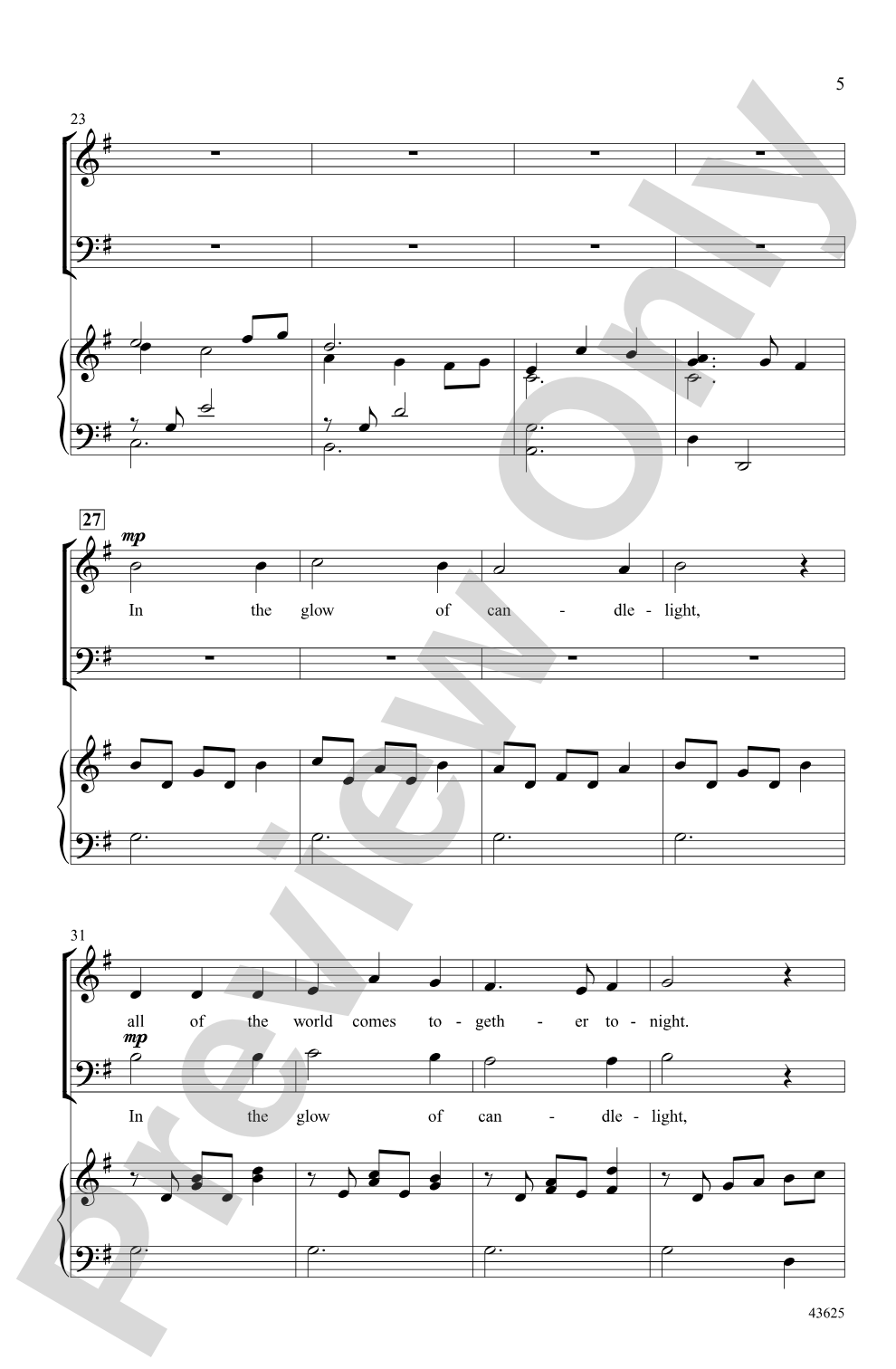
A reflection on the candle as a symbol of peace, this simple yet elegant selection is appropriate for choirs of all ages, at any time of year. The beautiful single-octave melody (from D to D) is sung in unison before becoming a round. A contrasting refrain pleases the ear and warms the heart.


Candlelight Canon: SAB Choral Octavo isn't in MakeMusic Cloud just yet...but it could be. Let us know you'd like to see it, and you'll help shape what comes next. In the meantime, start a free trial and dive into thousands of interactive titles your students can play along with today.
Request This Title
Tell us you want it.
Start Your Free Trial
Explore everything that's ready to play right now.
Sample Audio
1
Audio File
--:--
0:00
0:00
Sample Video
No sample videos found.
Additional Details
Series:
Alfred Choral Designs
Publisher:
Alfred Music
Page Count:
16
SKU:
00-PO-0003596
More about this title
About the Composer: Andy Beck

Andy Beck heads the choral publications department at Alfred Music, where he oversees a catalog of more than 450 choral compositions, arrangements, and vocal resources. Beyond his work as a publisher and composer, Beck is an active clinician, guest conductor, and adjudicator who regularly leads honor choirs and all-state ensembles across the Southeast and beyond. His pedagogical writing includes the influential method series Sing at First Sight, Foundations in Choral Sight Singing, and Vocalize! 45 Vocal Warm-Ups That Teach Technique.
A trained tenor with degrees from Ithaca College and Northwest Missouri State University, Beck combines his performance experience with deep knowledge of choral pedagogy. His music reaches singers across the globe, and he remains committed to building musical literacy and artistic growth through both his compositions and his curation of Alfred's choral offerings. When not writing or conducting, he performs with the North Carolina Master Chorale Chamber Choir and maintains his long association with Alfred as a studio vocalist.
Why we love this
Beck understands what makes a piece work in real rehearsals: the unison melody before the canon enters means even younger or less confident singers find immediate success, while the round structure and contrasting refrain keep singers engaged without overwhelming them. The flexibility of the piece across seasons and holidays makes it genuinely useful programming, and the single-octave range acknowledges the reality of mixed-age choirs without sacrificing musical integrity.
What to expect
The piece opens with quiet, unified intention, almost meditative. When the canon unfolds, there's a gentle layering of voices that builds texture without intensity, evoking the image of multiple candles burning steadily in the same space.
Who it's for
This works for any choir willing to embrace a short, achievable project. Youth choirs benefit from the straightforward range and the satisfaction of a completed round; adult choirs find the reflective quality and elegant simplicity refreshing.
How to get the most out of it
- Shape the unison melody with gentle phrase contours in the opening; this establishes the candle's steady, contemplative glow before the canon begins.
- Stagger your parts carefully when the round enters. A clear cutoff on the director's beat prevents the texture from becoming muddy as lines overlap.
- Let the refrain breathe and warm. This is where singers relax into the harmonic texture after the canon's rhythmic complexity.
How to use it
This fits naturally in winter concerts or holiday programs, but its secular framing around peace and light makes it equally at home in a spring benefit concert or a brief, meaningful choral moment during school assembly. Its brevity and gentle character also make it ideal filler between heavier repertoire or as an opener that settles the audience before more demanding work.
Skills your students will build
- Singing in unison with secure intonation
- Maintaining an independent vocal line within a canon texture
- Phrasing with intention across a single-octave melody
- Listening and blend in three-part mixed voicing