

Can You See the Star?: SAB Choral Octavo
Words and music by Sally K. Albrecht and Jay Althouse
Item: 00-PO-0000733
$1.75
Minimum order quantity: 20 copies
Pickup currently not available
Related Items
Can You See the Star?: SoundTrax Digital Audio Download |
$24.95
|
View | |
Can You See the Star?: SATB Choral Octavo |
$1.75
|
View | |
Can You See the Star?: 2-Part Choral Octavo |
$1.75
|
View | |
Can You See the Star?: SATB Choral Octavo |
$1.75
|
View | |
Can You See the Star?: SAB Choral Octavo |
$1.75
|
View | |
Can You See the Star?: 2-Part Choral Octavo |
$1.75
|
View | |
Can You See the Star?: Choral Octavo SoundTrax CD |
$27.99
|
View |
Description
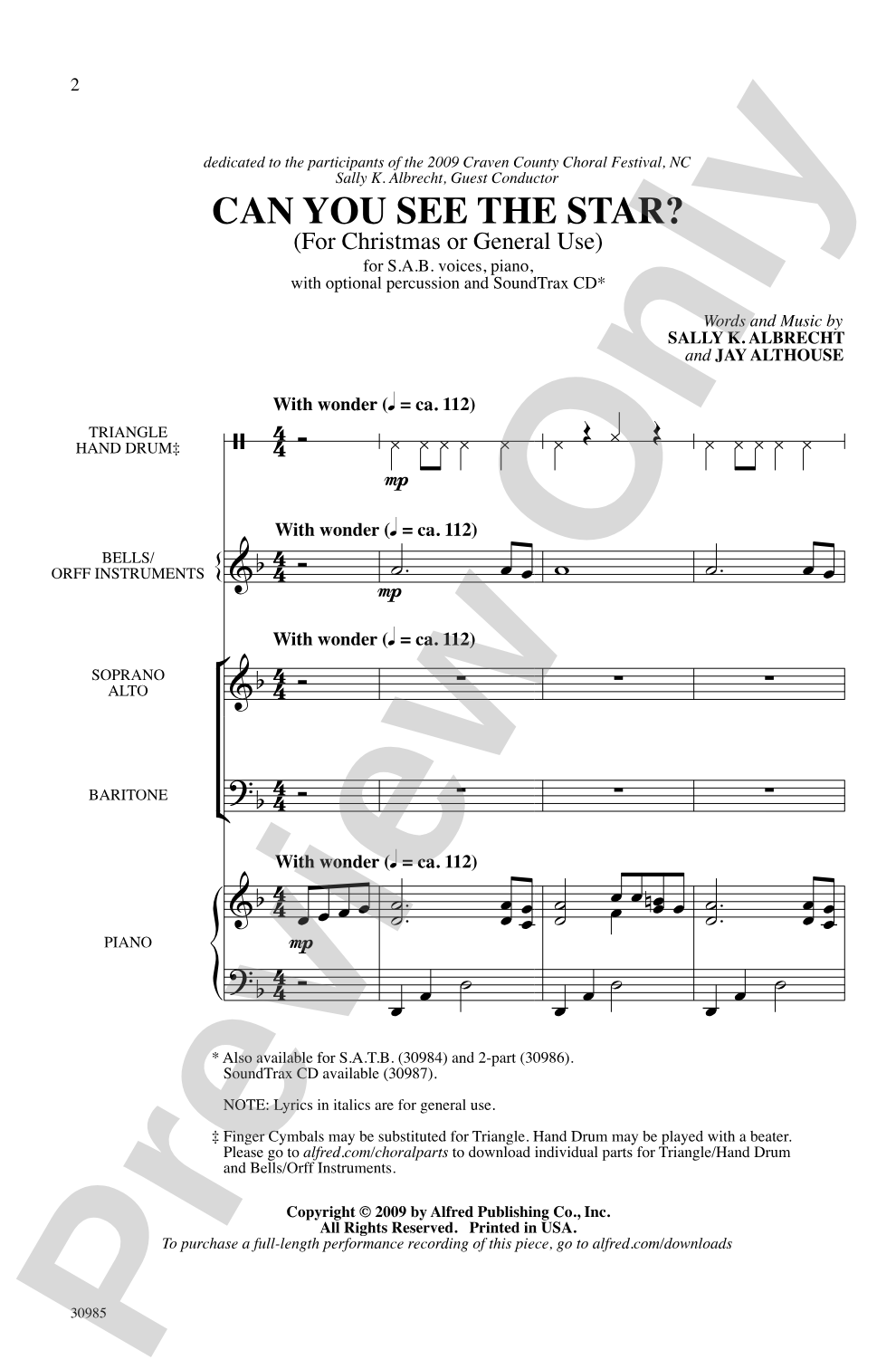
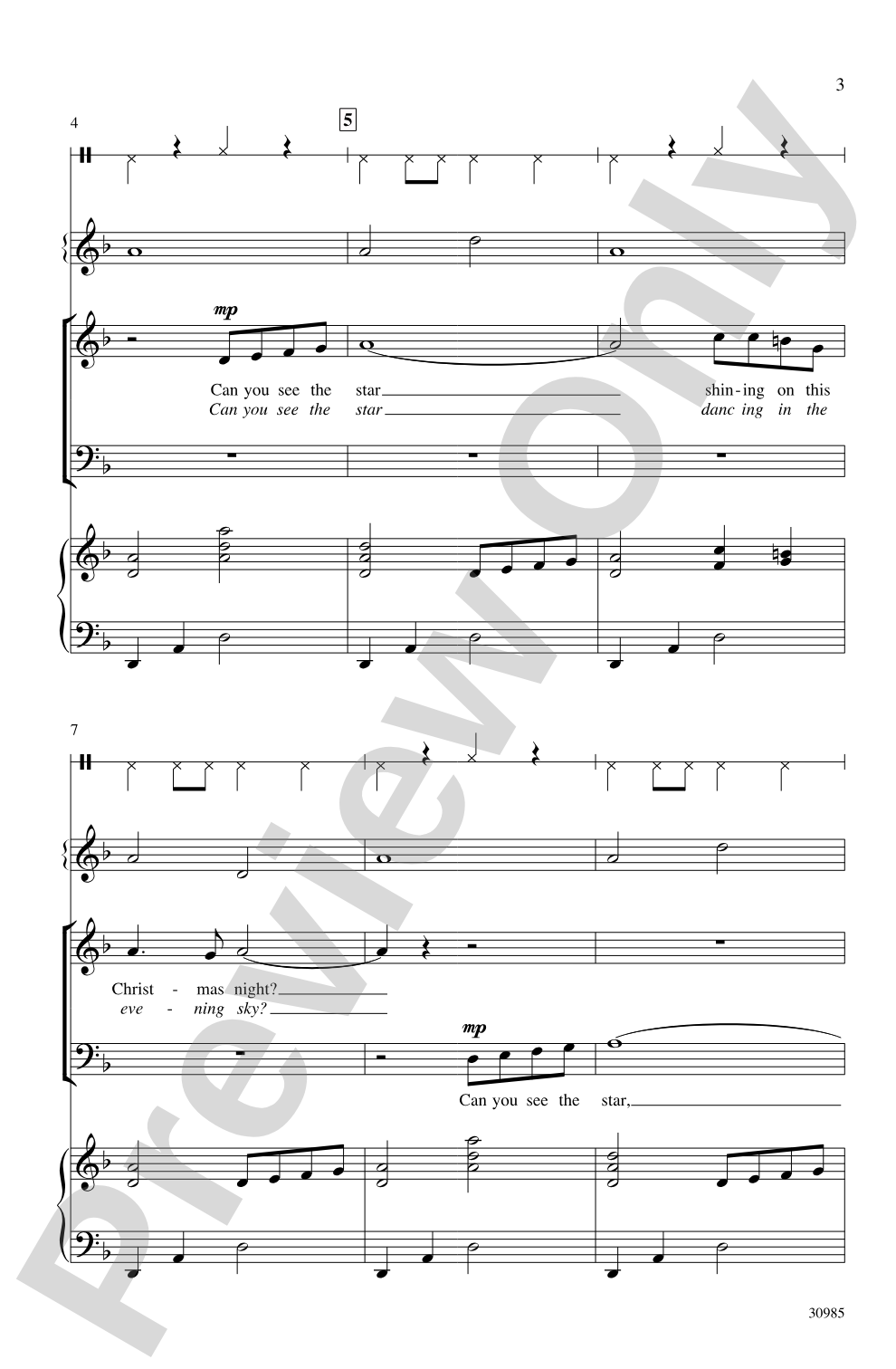
A multi-use choral featuring two texts---one for Christmas and one for general use. The minor key echo-format melody on the verses contrasts with a sparkling major key sound on the chorus. Percussion parts are available free, online. Church or school use.


Can You See the Star?: SAB Choral Octavo isn't in MakeMusic Cloud just yet...but it could be. Let us know you'd like to see it, and you'll help shape what comes next. In the meantime, start a free trial and dive into thousands of interactive titles your students can play along with today.
Request This Title
Tell us you want it.
Start Your Free Trial
Explore everything that's ready to play right now.
Sample Audio
1
Audio File
--:--
0:00
0:00
Sample Video
No sample videos found.
Additional Details
Series:
Alfred Choral Designs
Publisher:
Alfred Music
Page Count:
12
SKU:
00-PO-0000733
More about this title
About the Composer: Sally K. Albrecht

Sally K. Albrecht has shaped American choral music for over four decades through her prolific composing, conducting, and advocacy for choral performance. Since 1987, she has received annual ASCAP Special Music Awards and published more than 600 choral pieces alongside 75 full-length musicals and songbooks. Her work with choral movement has made her a sought-after clinician and conductor at major festivals including Lincoln Center, Carnegie Hall, and The Kennedy Center.
Albrecht's career in music publishing spanned more than thirty years, where she directed school choral, vocal, and elementary publications at major educational publishers, including Alfred Music. She earned her B.A. in Music and Theater from Rollins College (1976) and continued her studies at the University of Miami, receiving an M.A. in Drama (1977) and an M.M. in Accompanying (1979). In 2021, she received Distinguished Alumna Awards from both institutions. Based in North Carolina, she collaborates frequently with composer and arranger Jay Althouse and has served as Chair of the Board of Trustees for Omicron Delta Kappa National Leadership Honor Society.
Why we love this
The dual-text structure makes this genuinely useful for multiple seasons without feeling like a compromise. Albrecht and Althouse's use of minor-key verses that shift to major-key choruses creates real emotional arc, and the contrast lands naturally rather than feeling forced. The free online percussion parts mean your accompanying options expand without additional cost.
What to expect
The verses create a contemplative, almost ethereal quality through their minor-key echo patterns, inviting singers and listeners to pause and reflect. When the chorus arrives in major, it feels like a light breaking through; the shift is immediate, joyful, and substantial enough to refresh the ear without losing the piece's musical identity.
Who it's for
Directors seeking a single piece that serves both holiday and general-use programs without programming two separate pieces. Intermediate choirs with solid ensemble balance will benefit most, though the SAB voicing keeps it accessible even for younger mixed ensembles.
How to get the most out of it
- Lean into the echo-format melody on verses to give singers space for clarity and blend; the repetition can either feel rote or hypnotic depending on your attention to dynamics and ensemble precision.
- Let the major key chorus sing freely and with brightness once you've grounded the minor verses. The contrast will feel more impactful if the shift isn't gradual.
- Download the percussion parts early in rehearsal planning. Even light percussion layering transforms the energy of the chorus without requiring specialized expertise.
- Balance the three SAB parts carefully in the verses where harmonic movement may feel sparse. Make sure altos and baritones aren't being covered by soprano soloists or they'll lose the echo effect entirely.
How to use it
Place this as a centerpiece in a winter concert where you want one memorable, multi-purpose piece rather than multiple seasonal arrangements. It works equally well as a reflective moment in a sacred concert or as a bright conclusion to a secular program. Consider pairing it with longer choral works since its compact length (12 pages) leaves room for complementary repertoire.
Skills your students will build
- Singing echo-format melodies with clear rhythmic precision and vocal independence
- Managing tonal shifts from minor to major within a single piece
- SAB voicing balance and part integrity, especially in sparse harmonic textures
- Responding to rhythmic and dynamic shaping rather than resting on harmonic familiarity