
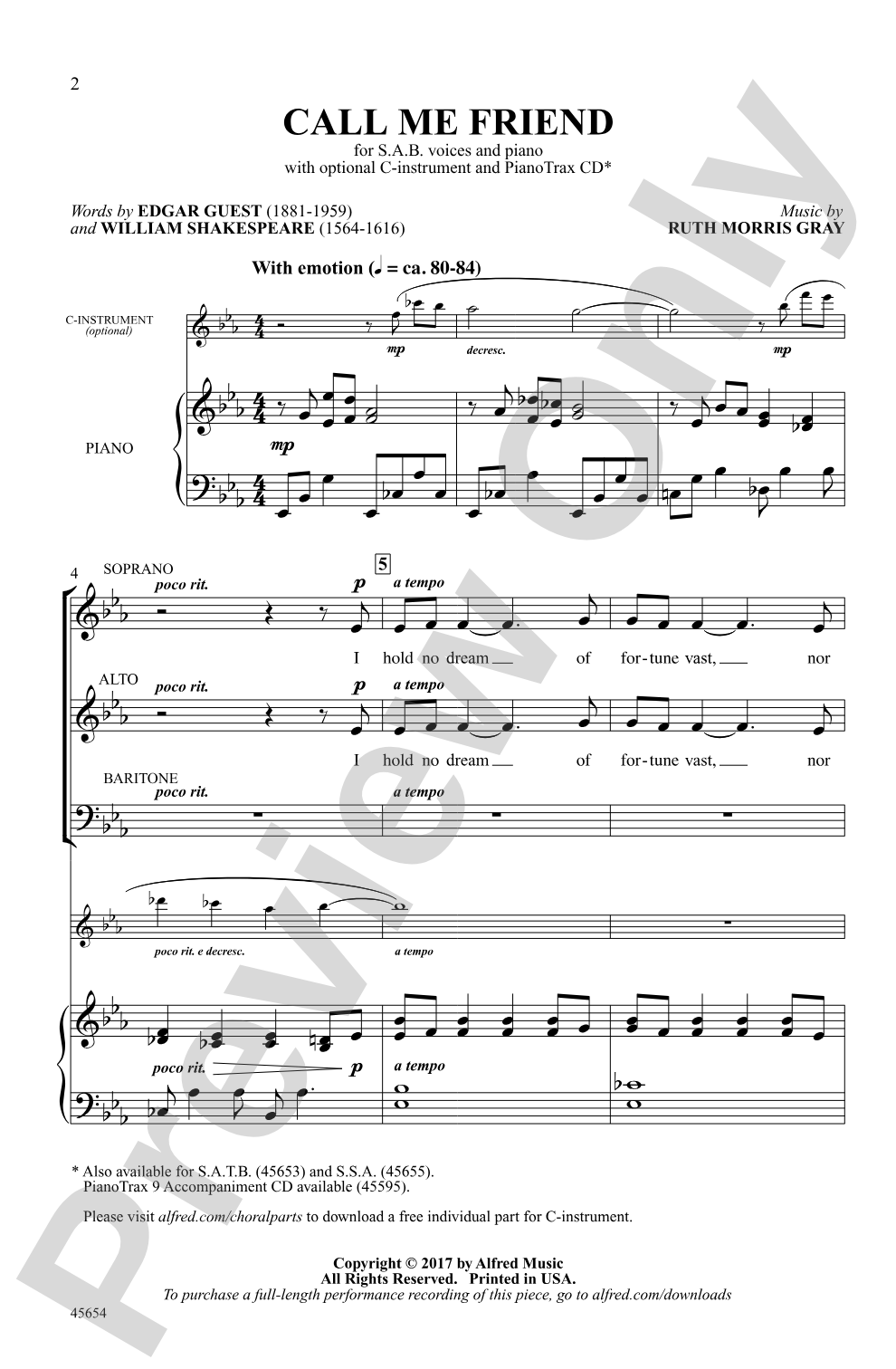

Call Me Friend: SAB Choral Octavo
Words by Edgar Guest and William Shakespeare, music by Ruth Morris Gray
Item: 00-PO-0005533
$1.90
Minimum order quantity: 20 copies
Pickup currently not available
Description
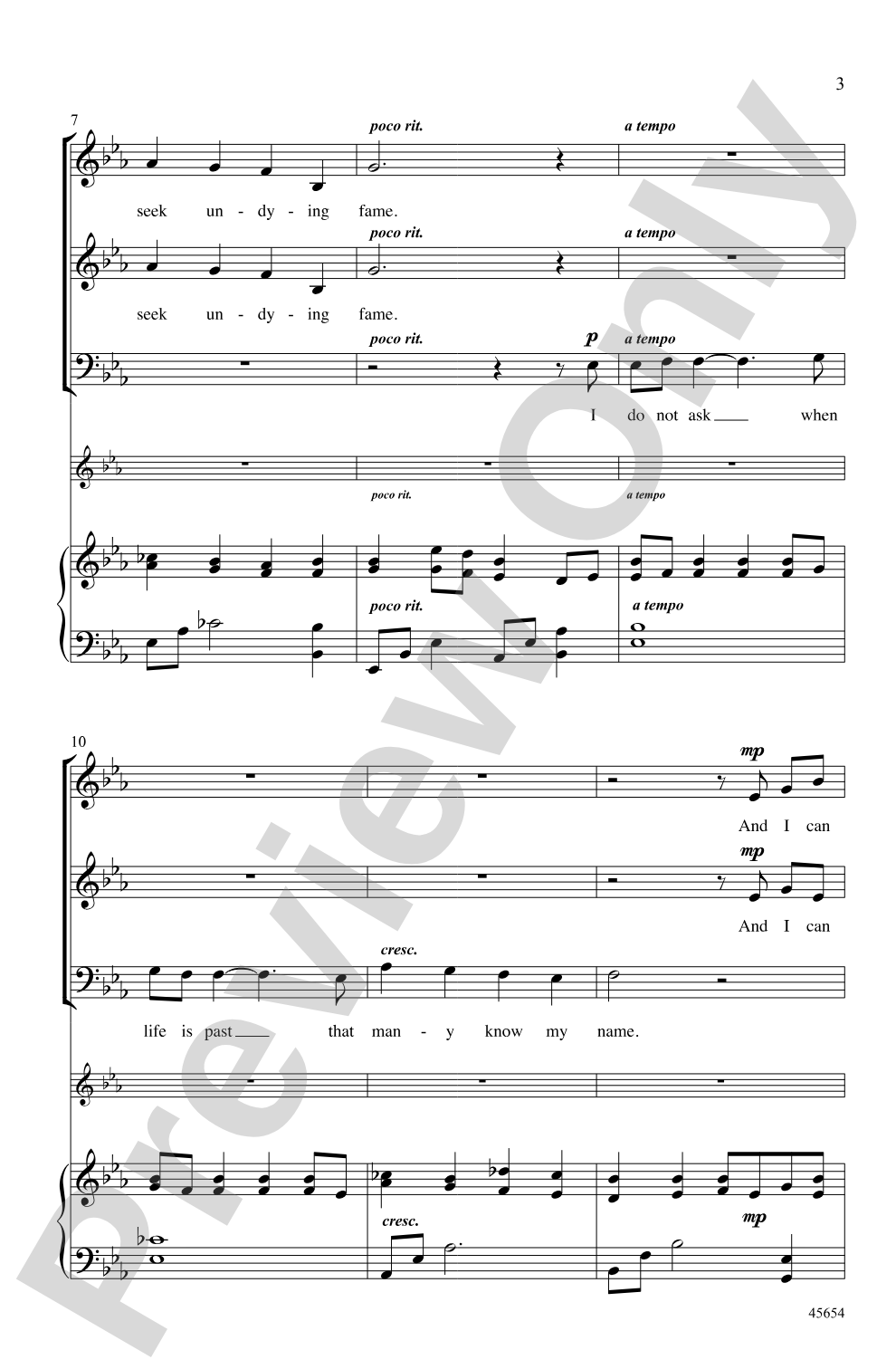
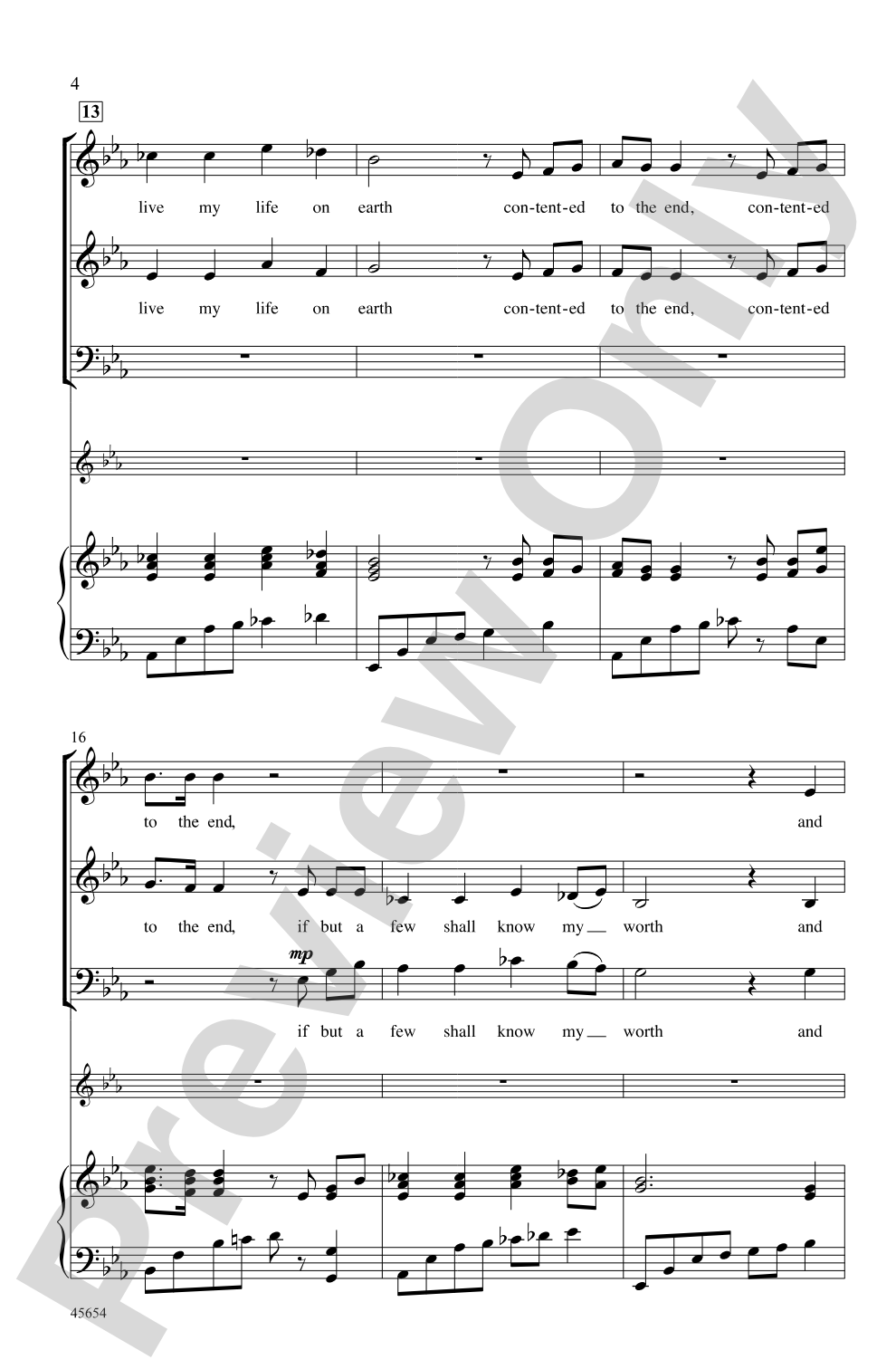
"I can live my life on earth contented to the end, if but a few shall . . . call me friend." "Success," by "people's poet" Edgar Guest is paired with a few lines from Shakespeare's "Sonnet 50" to create a warm, reflective text on the importance of friendship. Subtle tempo changes and sensitive dynamics encourage expressive singing, and an optional obbligato allows for a C-instrument of your choice.


Call Me Friend: SAB Choral Octavo isn't in MakeMusic Cloud just yet...but it could be. Let us know you'd like to see it, and you'll help shape what comes next. In the meantime, start a free trial and dive into thousands of interactive titles your students can play along with today.
Request This Title
Tell us you want it.
Start Your Free Trial
Explore everything that's ready to play right now.
Sample Audio
1
Audio File
--:--
0:00
0:00
Sample Video
No sample videos found.
Additional Details
Series:
Alfred Choral Designs
Publisher:
Alfred Music
Page Count:
12
SKU:
00-PO-0005533
More about this title
About the Composer: Ruth Morris Gray

Ruth Morris Gray has served as Director of Choirs at Rosemead High School in California since 2004, where she also teaches piano. She holds a Bachelor of Music in Piano Performance and Composition from Biola University and earned her Master of Arts in Music Composition from the University of California, Santa Barbara. Her California Single Subject Music Credential comes from California State University, Northridge.
With over 100 published choral compositions to her name, Gray has established herself as a prolific voice in contemporary choral music. Beyond the classroom and rehearsal hall, she is an active performer and brings her love of literature, travel, and outdoor pursuits into her life outside of music.
Why we love this
Gray's pairing of Edgar Guest's accessible verse with Shakespeare creates a text that feels both intimate and substantive, giving singers something meaningful to convey. The optional C-instrument obbligato adds textural interest without complicating the core SAB writing, making this piece work beautifully in programs where you want to showcase both singers and an available instrumentalist. Subtle tempo and dynamic shifts demand real musical maturity from your singers, transforming a straightforward friendship anthem into something genuinely reflective.
What to expect
Warm and contemplative, this piece invites singers and listeners alike into a quiet moment of reflection on what friendship truly means. The interplay of Guest's contemporary voice with Shakespeare's timeless words creates an unhurried, almost meditative atmosphere that builds emotional resonance through simplicity rather than complexity.
Who it's for
SAB choirs looking for repertoire that balances accessibility with musical substance will find this piece immediately useful. It works well for singers who have basic ensemble skills and are ready to respond to expressive direction, making it suitable for both high school and community choirs. The optional obbligato makes it flexible for programs with or without available C-instruments.
How to get the most out of it
- Shape the phrases through the subtle tempo changes rather than treating them mechanically; let the text guide your singers into natural rubato that feels conversational, not imposed.
- Balance the C-instrument obbligato so it enhances rather than dominates; it should feel like a commentary on the text, not a competing melody.
- Attend to the sensitive dynamic markings as structural tools. They're not just mood setters; they clarify which voices carry the primary thought at any given moment.
- Encourage your singers to commit fully to the reflective quality of the text. This piece asks for genuine warmth, which only emerges when singers understand the emotional weight of what they're singing about.
How to use it
This pairs naturally with concert programs exploring themes of connection, gratitude, or human values. Its introspective quality makes it an excellent centerpiece for a concert devoted to literary texts, or a graceful anchor for a program mixing classical and contemporary voices. The accessible harmonic language and modest technical demands position it well as a piece that lets your singers shine without overwhelming them.
Skills your students will build
- Responsive dynamic shaping and its effect on phrase clarity
- Interpreting tempo changes as expressive tools rather than technical obstacles
- Balancing ensemble blend when an optional instrumental line is present
- Singing with emotional conviction in accessible, non-virtuosic music