
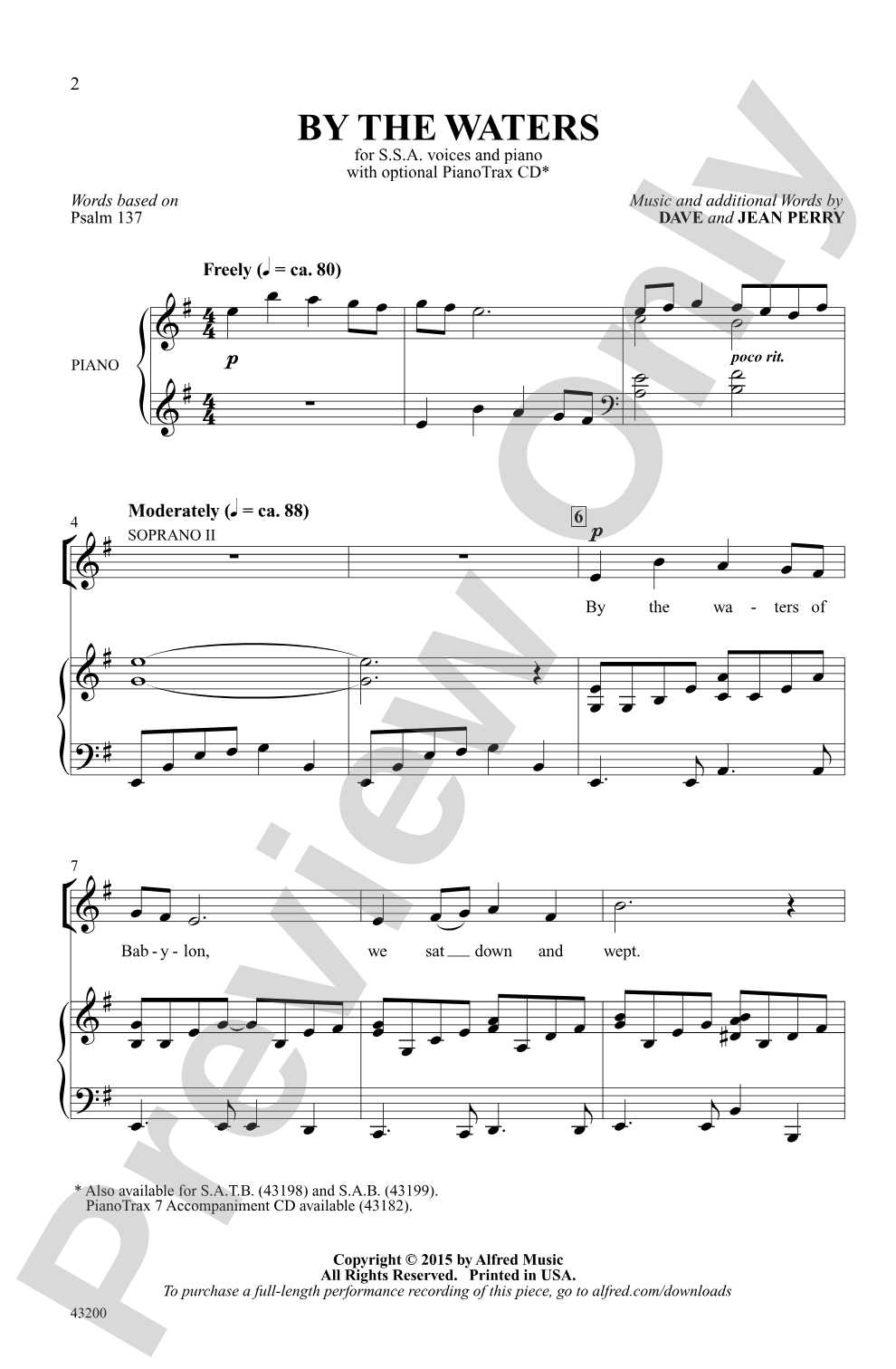
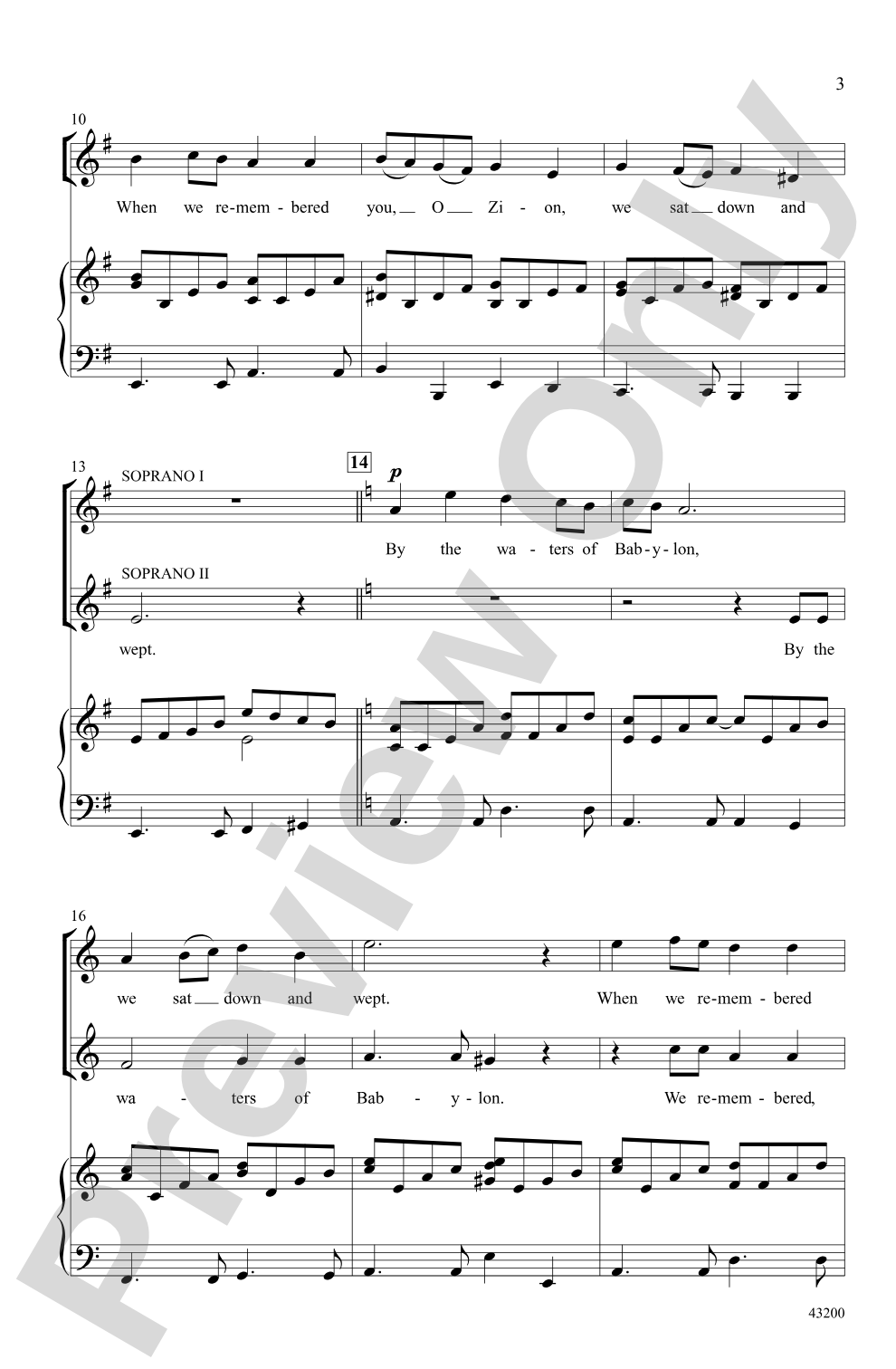
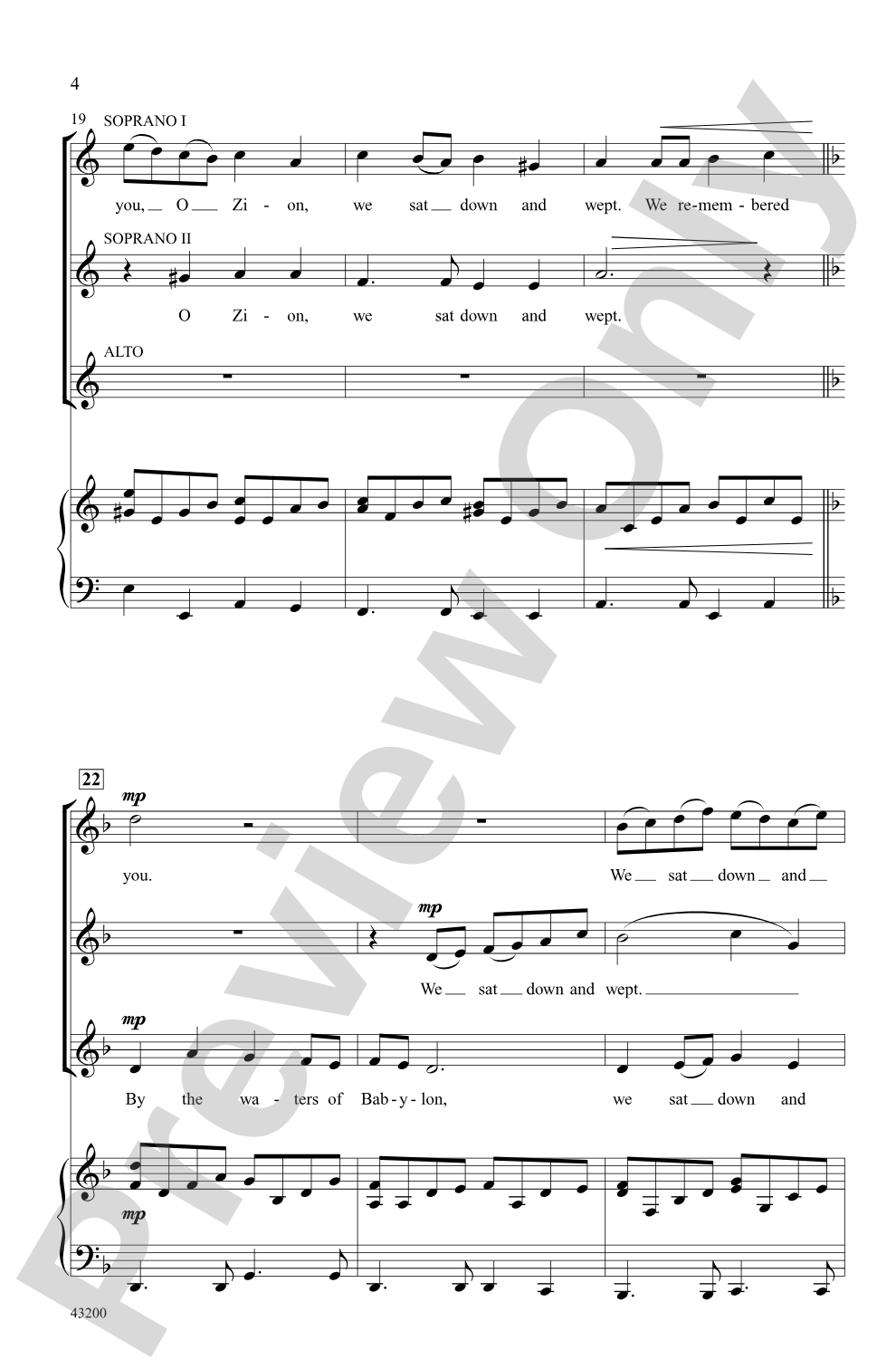

By the Waters: SSA Choral Octavo
Words based on Psalm 137, music and additional words by Dave and Jean Perry
Item: 00-PO-0003200
$1.90
Minimum order quantity: 20 copies
Pickup currently not available
Description
A haunting, minor-mode melody is passed through the choir in this fugue treatment of an expressive psalm text. What begins as artful simplicity develops into lush polyphony. "By the waters of Babylon, we sat down and wept."


By the Waters: SSA Choral Octavo isn't in MakeMusic Cloud just yet...but it could be. Let us know you'd like to see it, and you'll help shape what comes next. In the meantime, start a free trial and dive into thousands of interactive titles your students can play along with today.
Request This Title
Tell us you want it.
Start Your Free Trial
Explore everything that's ready to play right now.
Sample Audio
1
Audio File
--:--
0:00
0:00
Sample Video
No sample videos found.
Additional Details
Series:
Alfred Choral Designs
Publisher:
Alfred Music
Page Count:
12
SKU:
00-PO-0003200
More about this title
Why we love this
Perry's decision to unfold the text through fugal writing transforms a straightforward psalm into something architecturally ambitious without losing emotional weight. The piece rewards careful rehearsal; when your singers nail the overlapping entries and the gradual densening of texture, audiences feel the architecture itself become expressive.
What to expect
A quiet, reflective meditation that builds toward a moment of genuine polyphonic beauty. The minor-mode melody casts a contemplative shadow throughout, even as the voices interweave; there's sorrow in the text and dignity in how it's written.
Who it's for
SSA and SSAA choirs seeking sacred repertoire with structural sophistication and expressive depth. This works well for choirs with solid sight-reading skills and comfort with imitative writing.
How to get the most out of it
- Establish the opening melody with absolute clarity and stillness before the second voice enters. The power of the fugal treatment depends on listeners recognizing the theme as it returns.
- Pay close attention to the minor tonality throughout; it's easy for singers to brighten the sound instinctively, but the haunting quality relies on restraint and a sustained, supported tone in the lower register.
- Balance the polyphonic passages by having singers listen actively across all three parts rather than focusing only on their own line. Mark potential focal points in rehearsal where one voice should emerge slightly.
How to use it
Program this as the centerpiece of a sacred concert devoted to psalm texts, or pair it with contemporary settings of similar material for a thematic program. Its 12 pages give you substantial rehearsal time without demanding an unwieldy commitment.
Skills your students will build
- Following a musical subject through fugal imitation across multiple voice parts
- Sustaining minor-mode tonality with expressive control
- Balancing independent melodic lines while maintaining harmonic cohesion
- Phrasing and text expression within polyphonic writing