
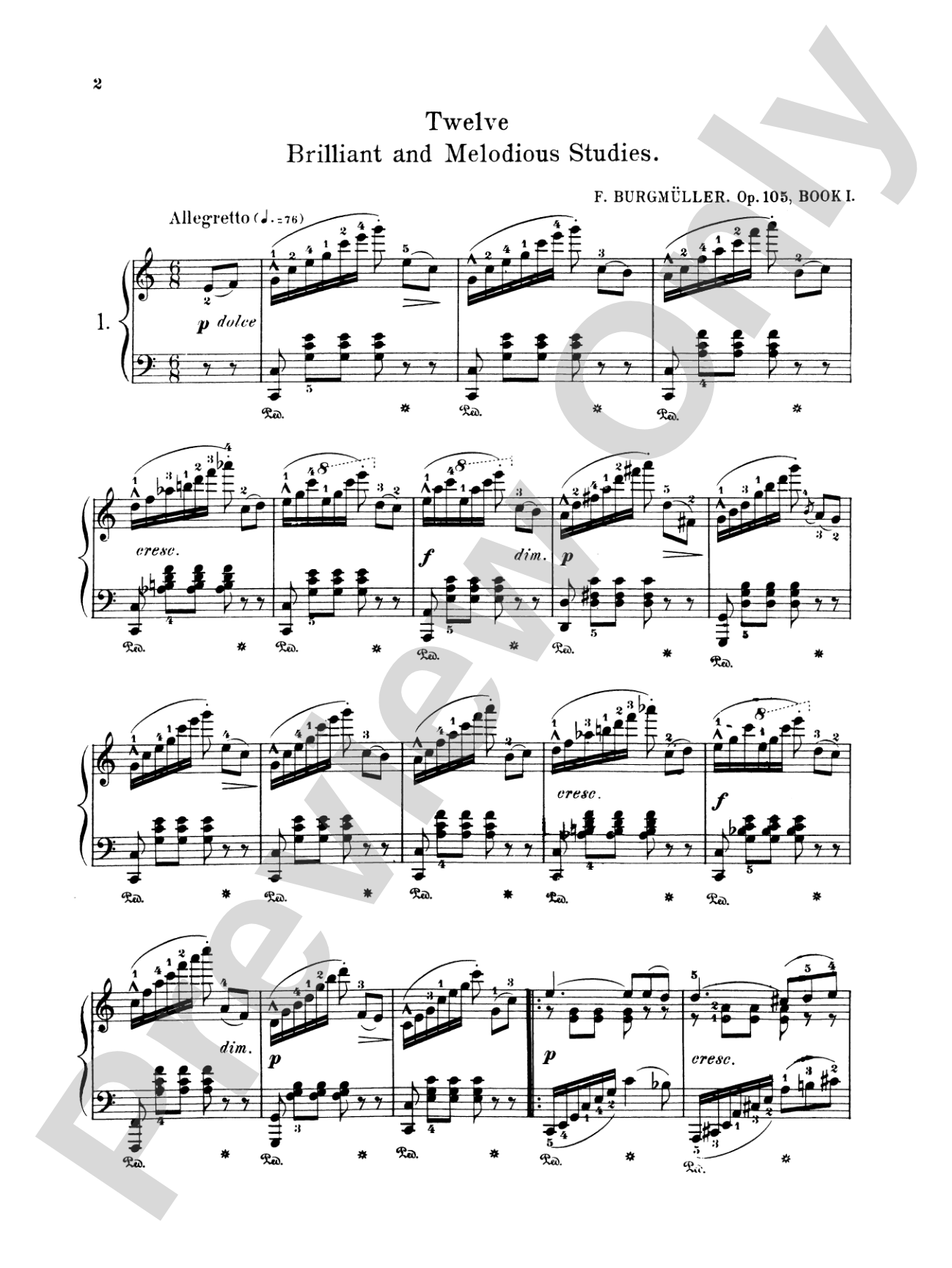
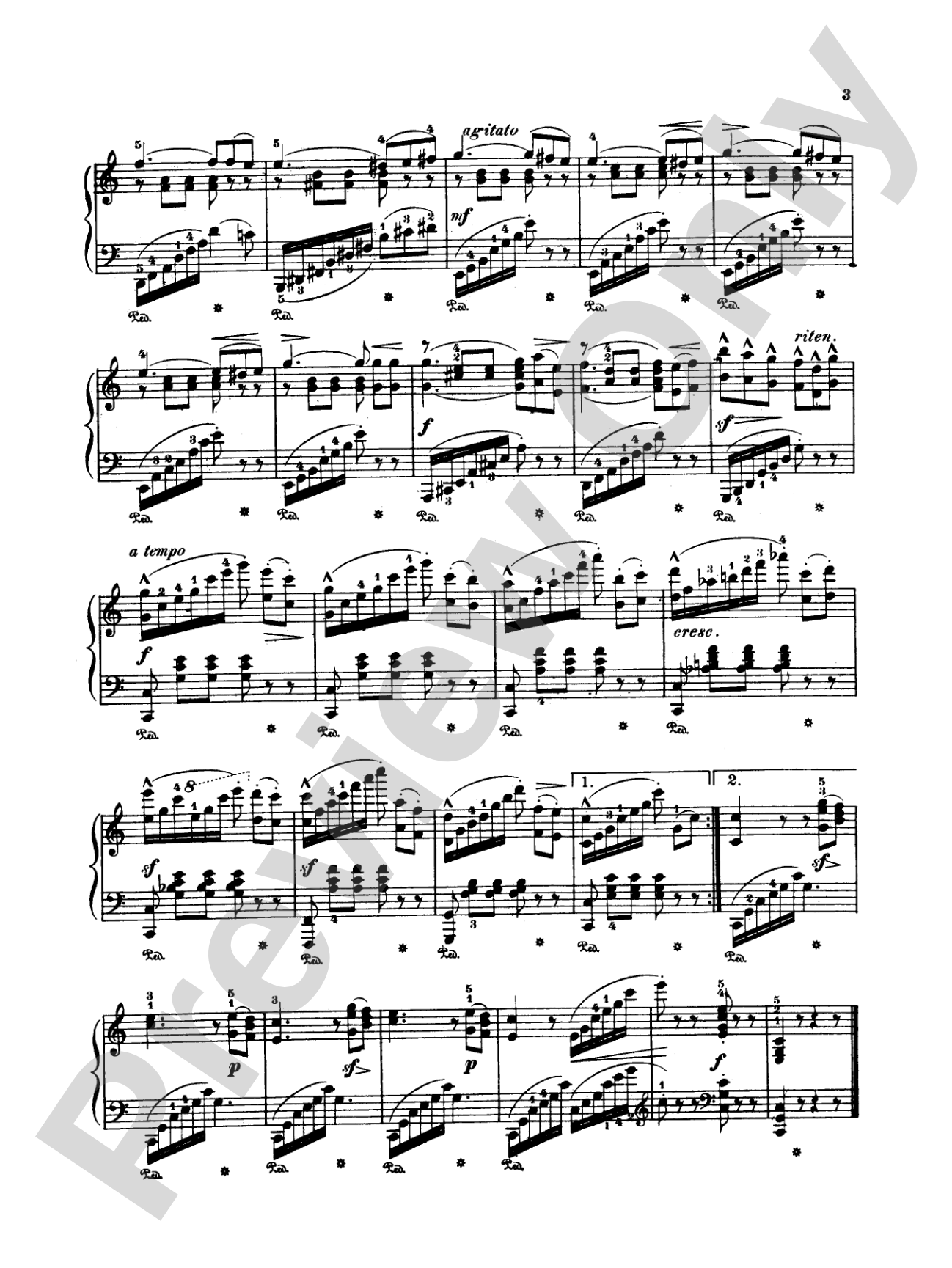

Burgmüller: Twelve Brilliant and Melodious Studies, Op. 105: Piano Book
By Johann Friedrich Burgmüller
Level: Intermediate / Advanced
Item: 00-PK-0002979

$8.99
Pickup currently not available
Buy Extra Parts (Digital PDF Download)
Parts Added to Cart!
Related Items
Twelve Brilliant and Melodious Studies, Opus 105: Piano Book |
$8.99
|
View |
Description
Friedrich Burgmüller, (1806--1874) was a German pianist and composer. This collection contains 12 of his of more difficult technical etudes for the piano.


Don't just read it, hear it, play along with it, and watch your students grow with it. In MakeMusic Cloud, Burgmüller: Twelve Brilliant and Melodious Studies, Op. 105: Piano Book comes alive with professional accompaniment, adjustable tempo, and built-in practice tools that turn solo practice into real progress.
Open in the Player
Jump straight in and assign it today.
Start Your Free Trial
Open this title and explore the full library in minutes.
Sample Audio
No sample audio found.
Sample Video
No sample videos found.
Additional Details
Series:
Kalmus Edition
Publisher:
Alfred Music
Page Count:
36
SKU:
00-PK-0002979
More about this title
About the Composer: Johann Burgmüller
Johann Burgmüller (1806, 1874) was a German pianist and composer whose etude collections became staples of 19th-century piano pedagogy. Active across Europe as both performer and teacher, he understood exactly what intermediate and advanced students needed to develop genuine technical command and musical sensitivity simultaneously.
His etudes strike a balance rarely found in the literature. They demand facility with scales, arpeggios, and hand independence, yet each study lives as a complete musical thought rather than a mechanical exercise. This combination made his works essential training for generations of pianists and explains their continued relevance in serious music education.
Why we love this
Burgmüller writes studies that refuse to be boring. These 12 pieces demand real technical growth, finger independence, rhythmic precision, voicing clarity, while maintaining the melodic integrity students actually want to play. The Romantic-era writing gives students exposure to harmonic language and expressive depth they won't find in purely mechanical etude collections.
What to expect
Graceful but challenging. Burgmüller's writing feels pianistic—designed by someone who understood the instrument—with flowing lines that catch light and momentum even when the technical demands are high. The Romantic sensibility keeps everything from feeling like pure work.
Who it's for
Intermediate to advanced pianists ready to tackle technical material that requires genuine musicianship, not just speed and accuracy. These studies suit students preparing for competitions, advancing toward conservatory-level playing, or looking for substantial technical repertoire with genuine artistic reward.
How to get the most out of it
- Map the harmonic structure before drilling passages so you understand what the right hand is building toward, not just the mechanics of what it's playing.
- Separate hand work thoroughly in the most intricate passages, then layer them back together only when each hand executes independently at tempo.
- Let the melodic line sing through the figuration; these pieces suffer when played as pure technical display rather than as songs accompanied by complex piano writing.
How to use it
These work well as recital closers for an intermediate pianist eager to showcase growth, or as stepping stones toward standard Romantic repertoire like early Liszt or Mendelssohn. You might also assign individual studies across a season of lessons rather than treating them as a single unit, pairing them with contrasting repertoire.
Skills your students will build
- Rapid scalar passages and broken chord figuration at tempo
- Hand independence with complex accompaniment patterns beneath singing lines
- Sustaining melodic coherence through technically demanding passage work
- Pedal control in Romantic harmonic contexts
- Sight-reading intermediate-advanced notation