
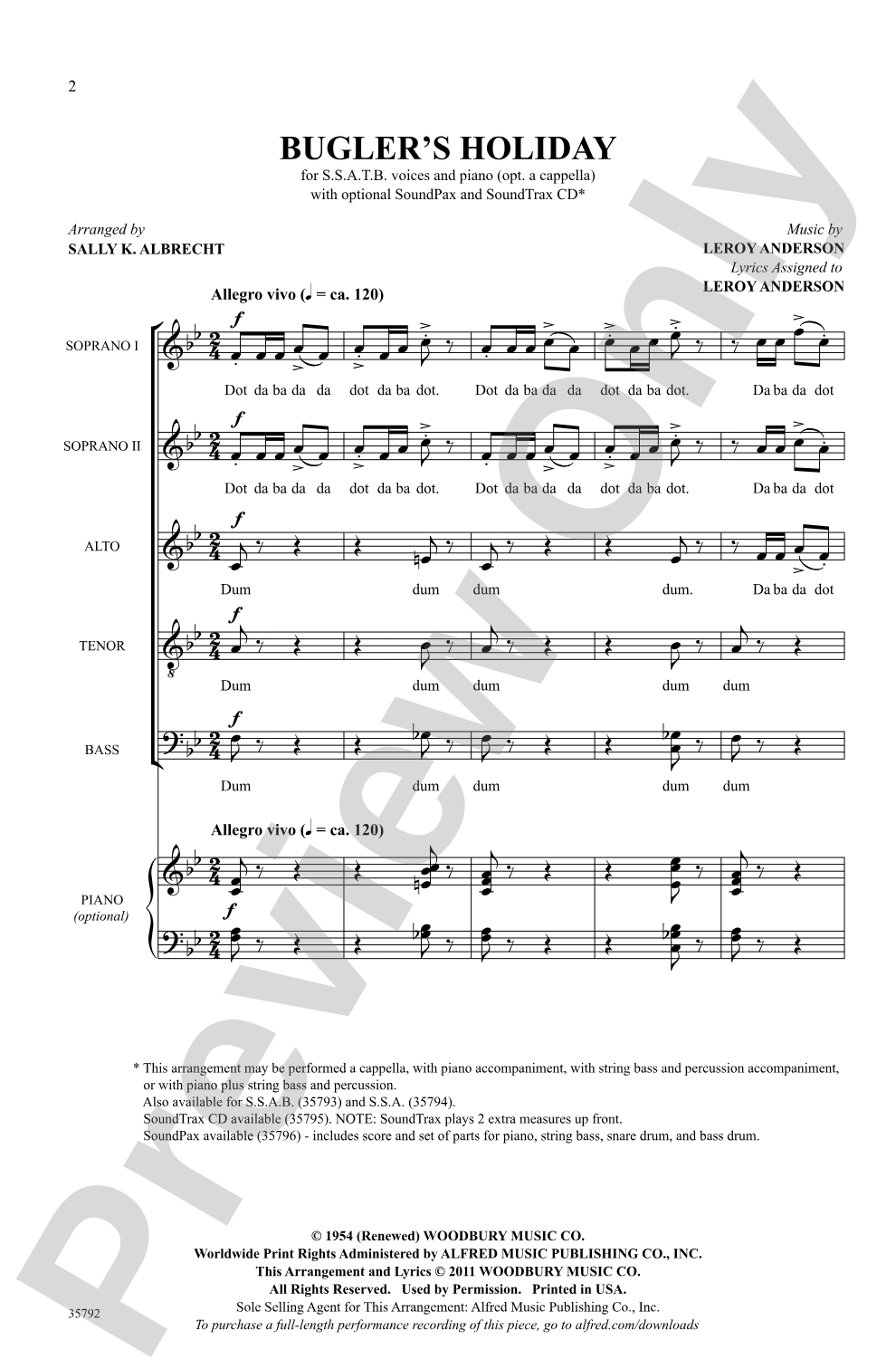
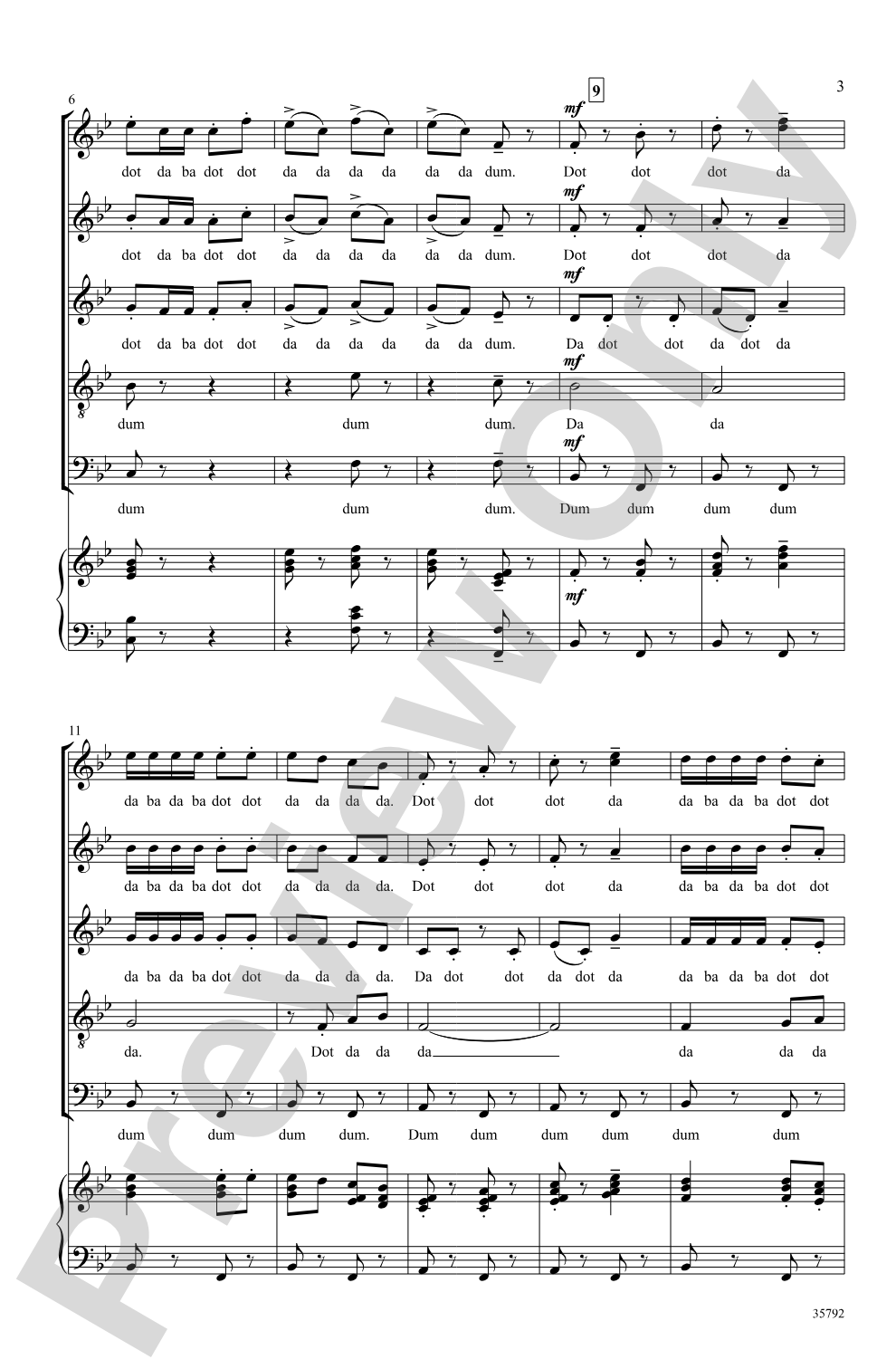
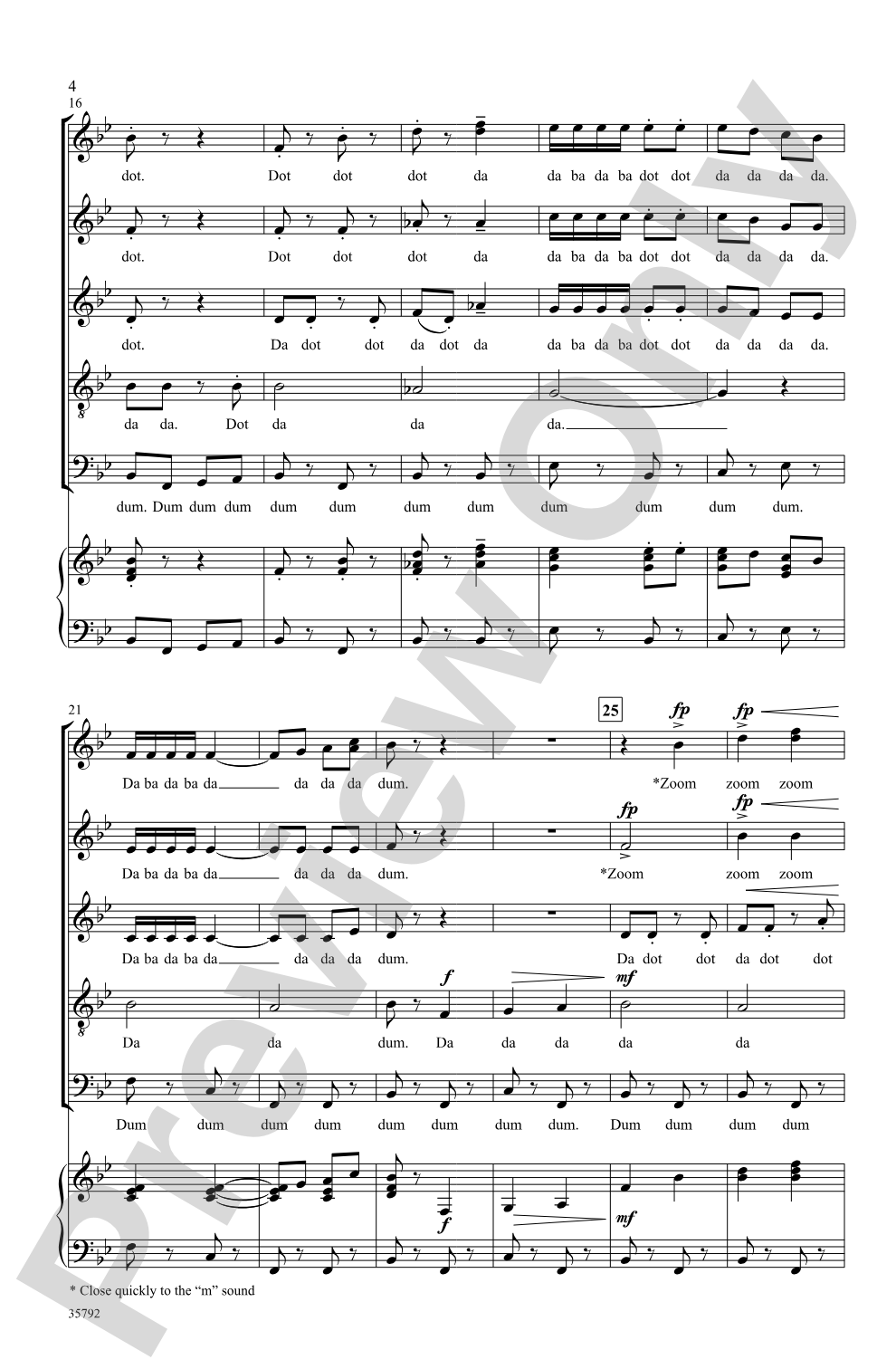
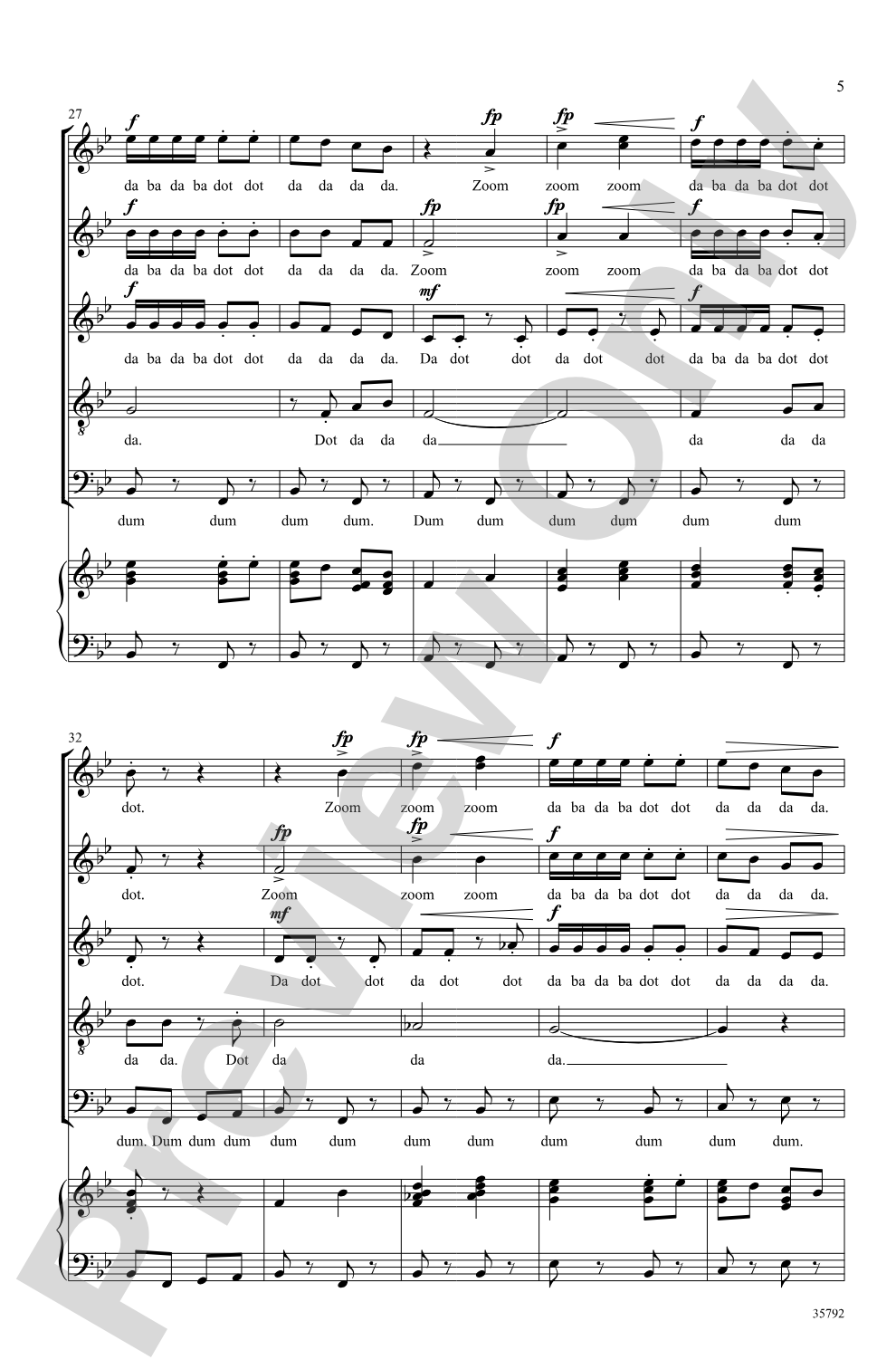

Bugler's Holiday: SSATB Choral Octavo
Music by Leroy Anderson / arr. Sally K. Albrecht
Item: 00-PO-0001095
$2.25
Minimum order quantity: 20 copies
Pickup currently not available
Related Items
Bugler's Holiday: SoundTrax Digital Audio Download |
$26.99
|
View | |
Bugler's Holiday: SSAB Choral Octavo |
$2.25
|
View | |
Bugler's Holiday: SSA Choral Octavo |
$2.25
|
View | |
Bugler's Holiday: Choral SoundPax |
$20.00
|
View | |
Bugler's Holiday: SSATB Choral Octavo |
$2.25
|
View | |
Bugler's Holiday: SSAB Choral Octavo |
$2.25
|
View | |
Bugler's Holiday: SSA Choral Octavo |
$2.25
|
View | |
Bugler's Holiday: Choral Octavo SoundTrax CD |
$26.99
|
View | |
Bugler's Holiday: Choral SoundPax |
$20.00
|
View |
Description
Leroy Anderson's classic orchestral work is now available for choirs! The mixed choir arrangements may be performed a cappella, with piano, or with optional string bass and percussion. There is also a supportive piano accompaniment part included for all voicings. Great any time of year!


Bugler's Holiday: SSATB Choral Octavo isn't in MakeMusic Cloud just yet...but it could be. Let us know you'd like to see it, and you'll help shape what comes next. In the meantime, start a free trial and dive into thousands of interactive titles your students can play along with today.
Request This Title
Tell us you want it.
Start Your Free Trial
Explore everything that's ready to play right now.
Sample Audio
1
Audio File
--:--
0:00
0:00
Sample Video
No sample videos found.
Additional Details
Series:
Alfred Pop Choral Series
Publisher:
Alfred Music
Page Count:
20
SKU:
00-PO-0001095
More about this title
About the Composer: Leroy Anderson
Leroy Anderson (1908-1975) was an American composer and conductor whose light orchestral works became staples of American concert music. He studied at Harvard University and served as conductor of the Boston Pops Orchestra, where his accessible, tuneful compositions found a natural home. Anderson's gift for melody and orchestration made complex musical ideas feel effortless, and his works remain favorites in schools, concert halls, and community settings worldwide.
Anderson composed over 100 pieces across a wide range of styles, from marches and waltzes to character pieces and ballets. His music combines classical sophistication with popular appeal, making it ideal for music education. Pieces like "Plink, Plank, Plunk!" and "The Syncopated Clock" have introduced generations of students to orchestral textures and rhythmic innovation.
Why we love this
Sally K. Albrecht's arrangement captures the playful character of Anderson's original while giving choir singers genuine musical material to perform. The flexibility to perform a cappella, with piano, or with optional strings and percussion means you can scale this to your resources without compromising the musical intent. This is the kind of piece that energizes rehearsals and audiences alike.
What to expect
Buoyant and charming, with a march-like confidence that feels both vintage and timeless. The piece sparkles with rhythmic vitality and warm harmonies, inviting singers to dig into a text with character and audiences to leave smiling.
Who it's for
This arrangement works for mixed choirs at the intermediate to advanced level who want accessible, performance-ready material with genuine musical substance. Directors programming spring or pops concerts will find this especially valuable, as it appeals to both singers and audiences without requiring an accompanist if you choose to go a cappella.
How to get the most out of it
- Balance the SSATB voicing so that the second soprano and alto parts don't get buried; these lines often carry secondary melodies that add texture and interest.
- Take advantage of the recorded accompaniment to lock in tempo and ensemble precision during early rehearsals, then transition to live piano or a cappella to build independence.
- Shape the phrasing with dynamic contrast; Anderson's melodies thrive on subtle swells and releases that prevent the buoyant character from becoming flat.
- If adding optional string bass and percussion, rehearse these parts separately with the choir first to ensure rhythmic clarity before full ensemble integration.
How to use it
Program this as a second-act opener or encore to shift energy and mood after more serious repertoire. Its relatively compact length (check final page count) and flexible instrumentation make it ideal for pops concerts, spring celebrations, or any program that benefits from a moment of musical wit.
Skills your students will build
- Rhythmic precision in syncopated passages
- Balancing secondary melodic lines within four-part texture
- Diction and articulation in bright, energetic material
- Flexibility in ensemble arrangement (a cappella, accompanied, and optional instrumentation)
- Shaping phrasing and dynamics in light orchestral idiom