

Break Out: Concert Band Conductor Score & Parts
By Steve Hodges
Grade: 1.5 (Easy)
Item: 00-PK-0006153

$50.00
Pickup currently not available
Buy Extra Parts (Digital PDF Download)
| Product | Price | Quantity |
|---|---|---|
| Break Out: Score | $6.00 | |
| Break Out: Flute | $3.00 | |
| Break Out: Oboe | $3.00 | |
| Break Out: Bassoon | $3.00 | |
| Break Out: 1st B-flat Clarinet | $3.00 | |
| Break Out: 2nd B-flat Clarinet | $3.00 | |
| Break Out: B-flat Bass Clarinet | $3.00 | |
| Break Out: E-flat Alto Saxophone | $3.00 | |
| Break Out: 2nd E-flat Alto Saxophone | $3.00 | |
| Break Out: B-flat Tenor Saxophone | $3.00 | |
| Break Out: E-flat Baritone Saxophone | $3.00 | |
| Break Out: 1st B-flat Trumpet | $3.00 | |
| Break Out: 2nd B-flat Trumpet | $3.00 | |
| Break Out: 1st F Horn | $3.00 | |
| Break Out: 1st Trombone | $3.00 | |
| Break Out: Baritone T.C. | $3.00 | |
| Break Out: Baritone B.C. | $3.00 | |
| Break Out: Tuba | $3.00 | |
| Break Out: 1st Percussion | $3.00 | |
| Break Out: 2nd Percussion | $3.00 |
Parts Added to Cart!
Description
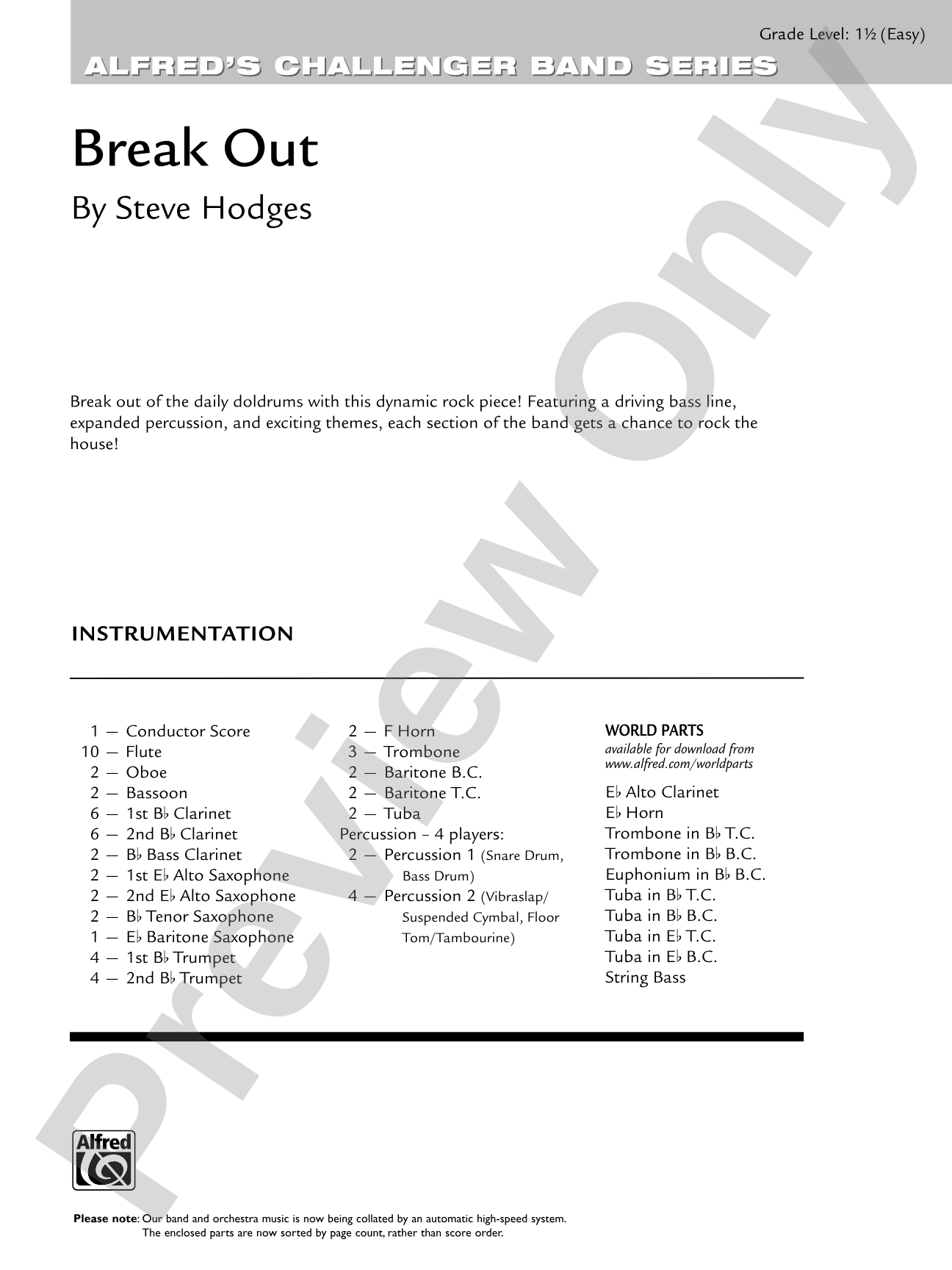
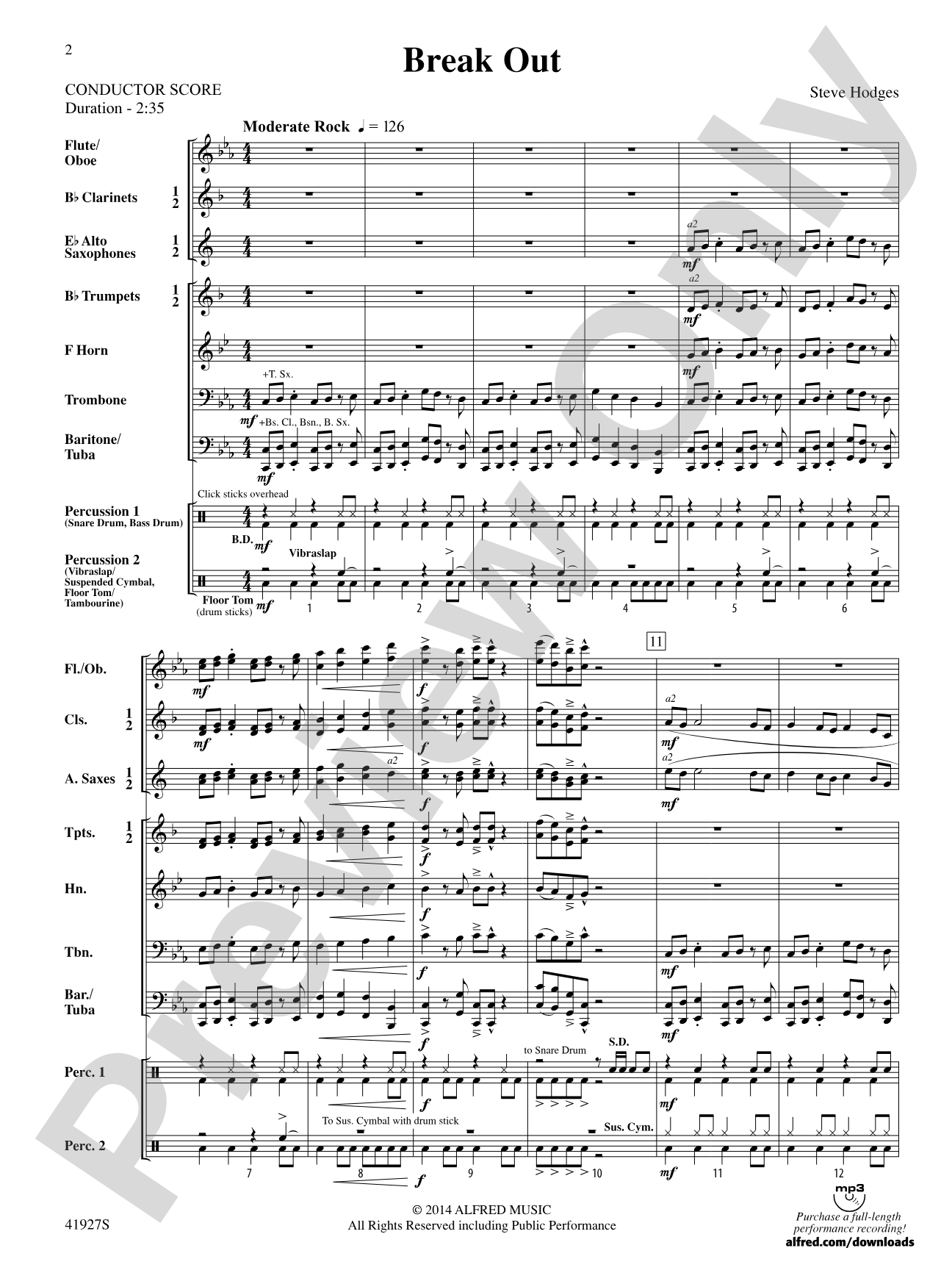
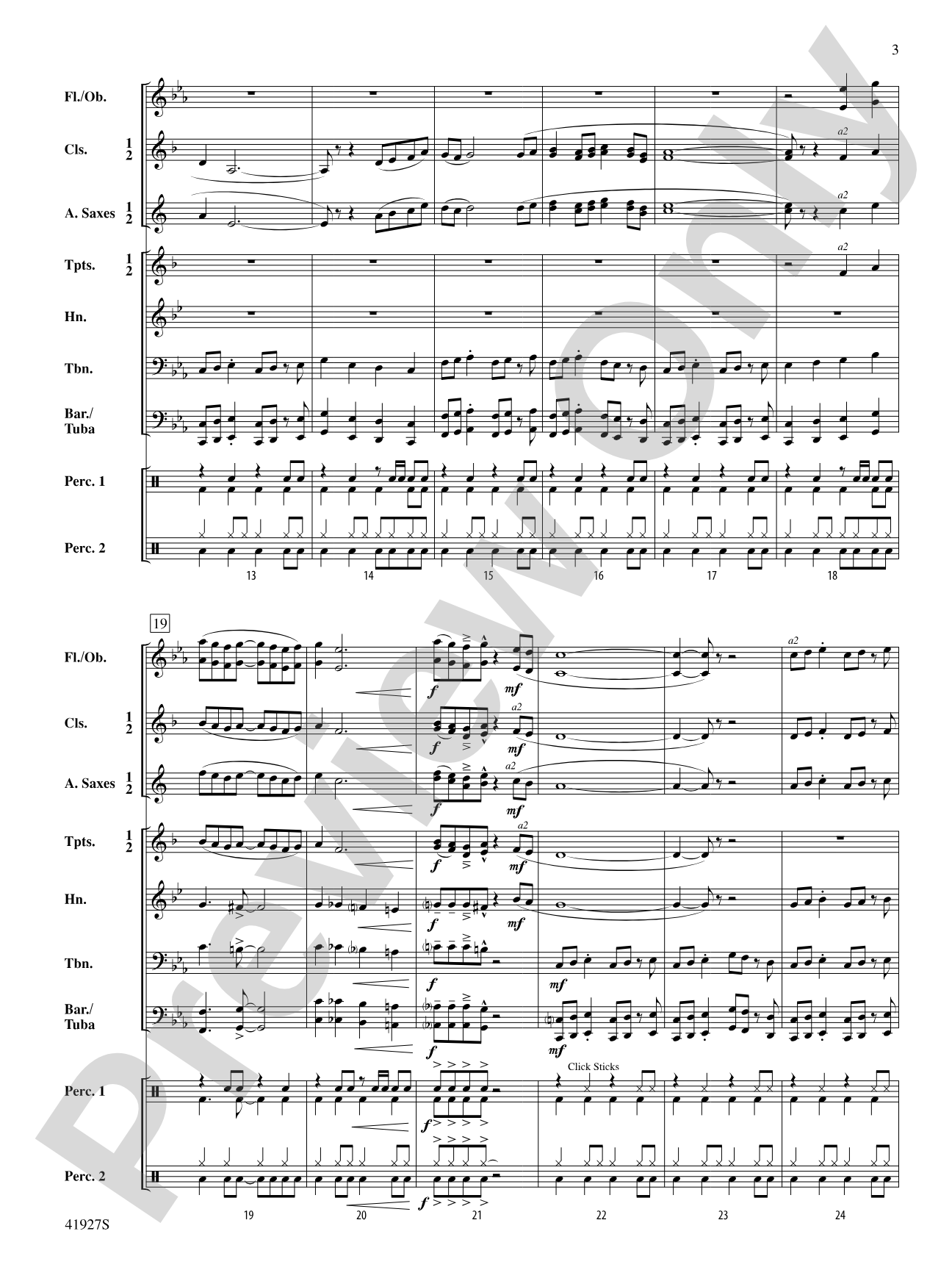
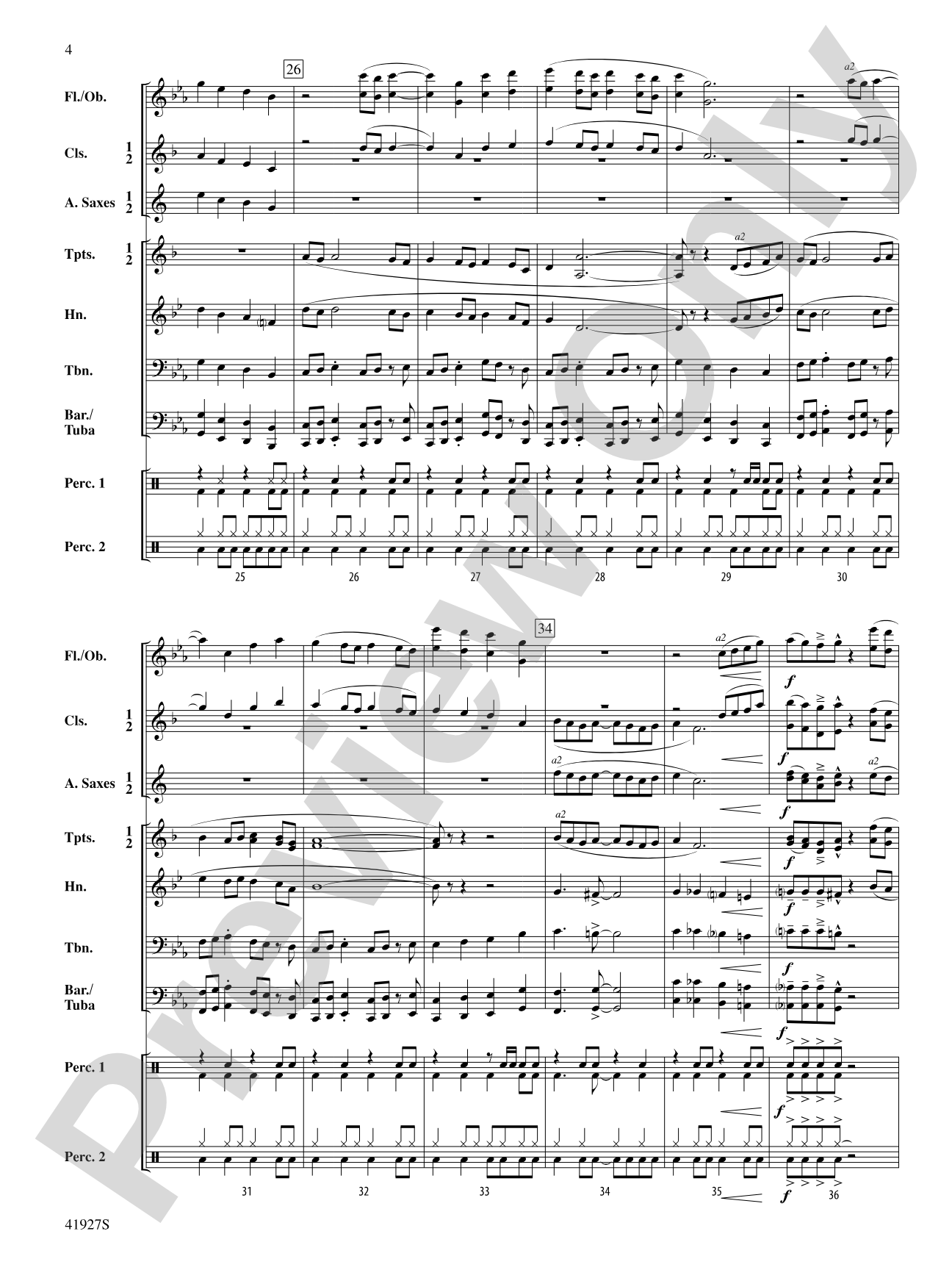
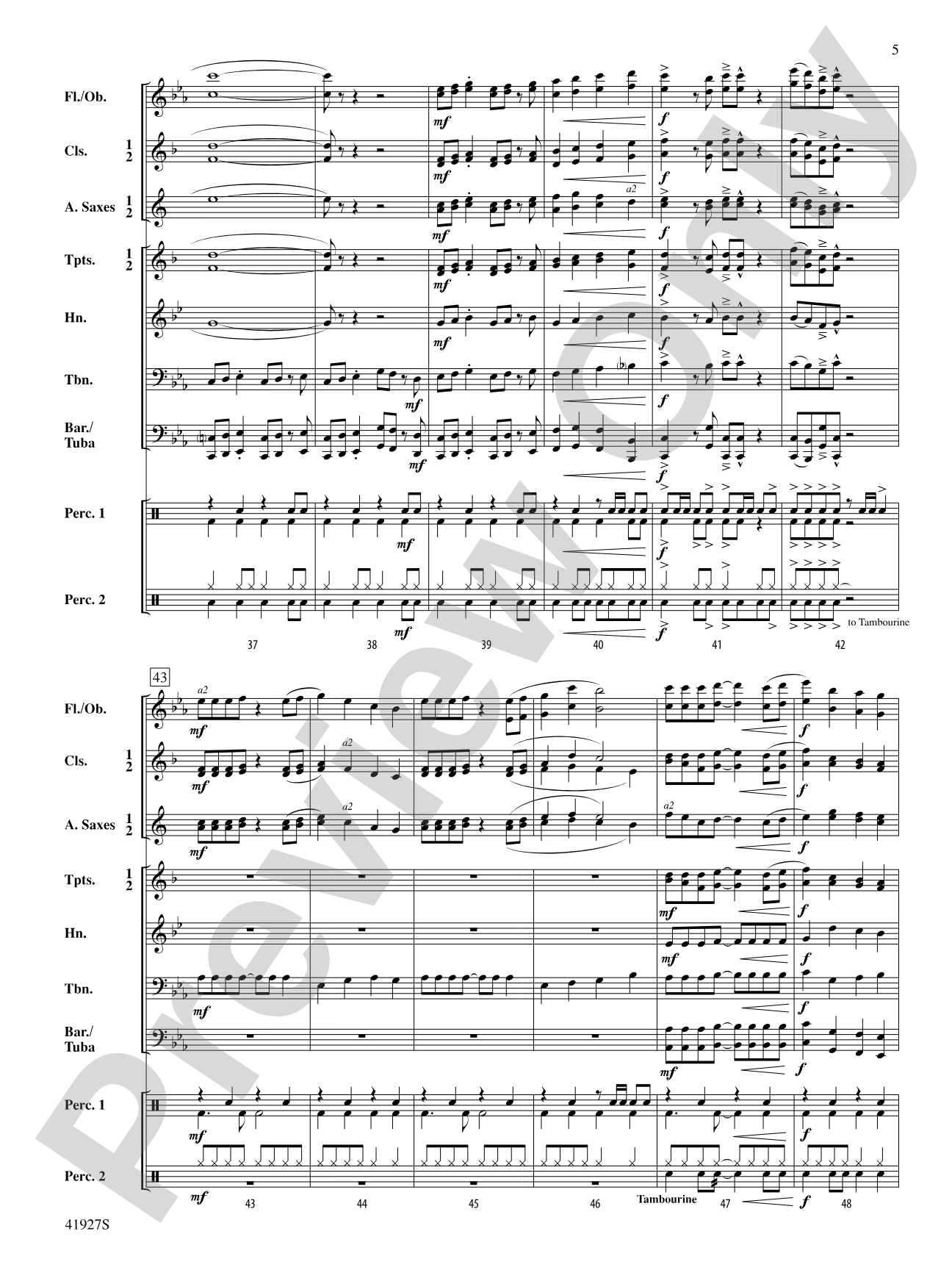
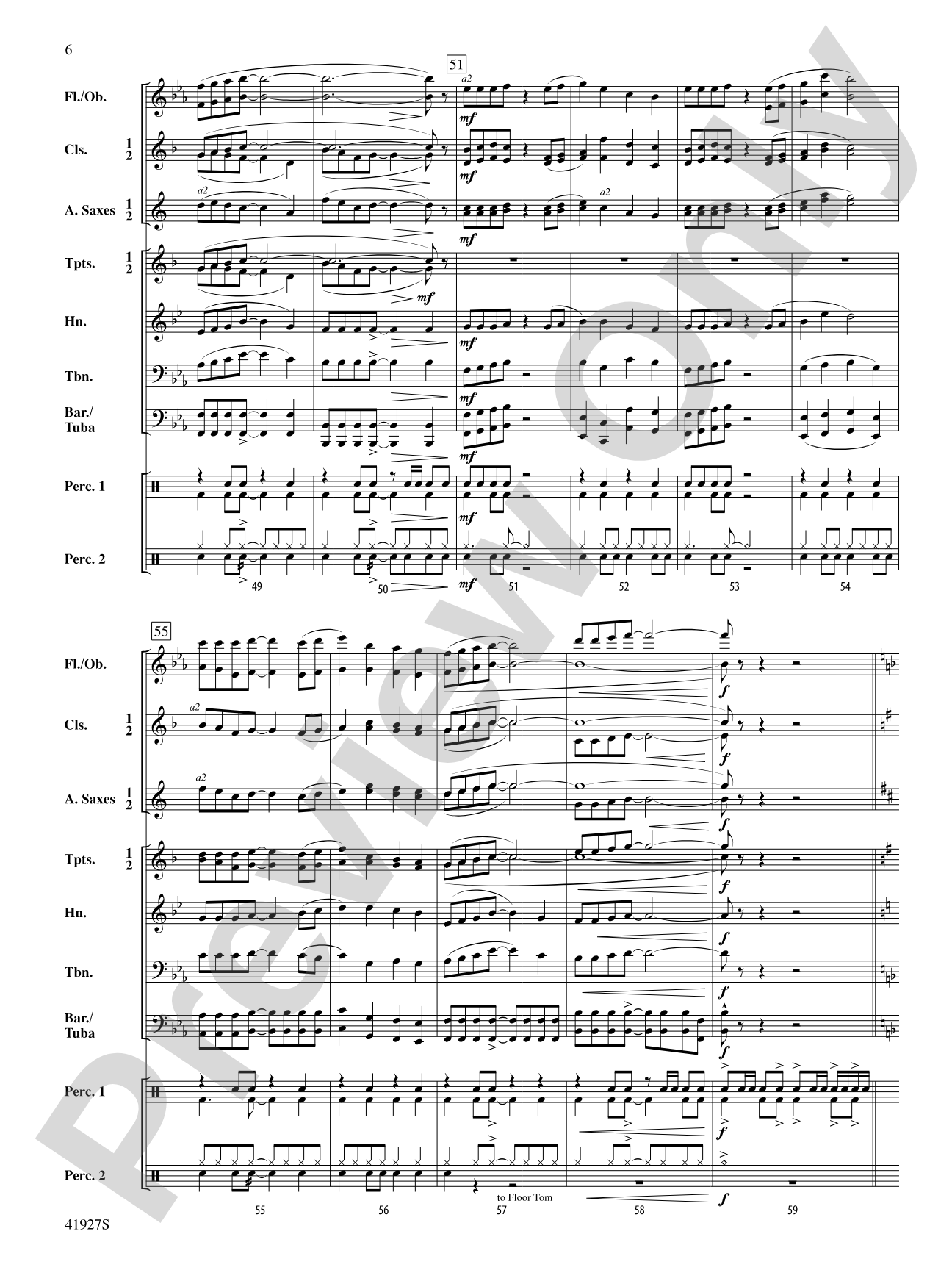
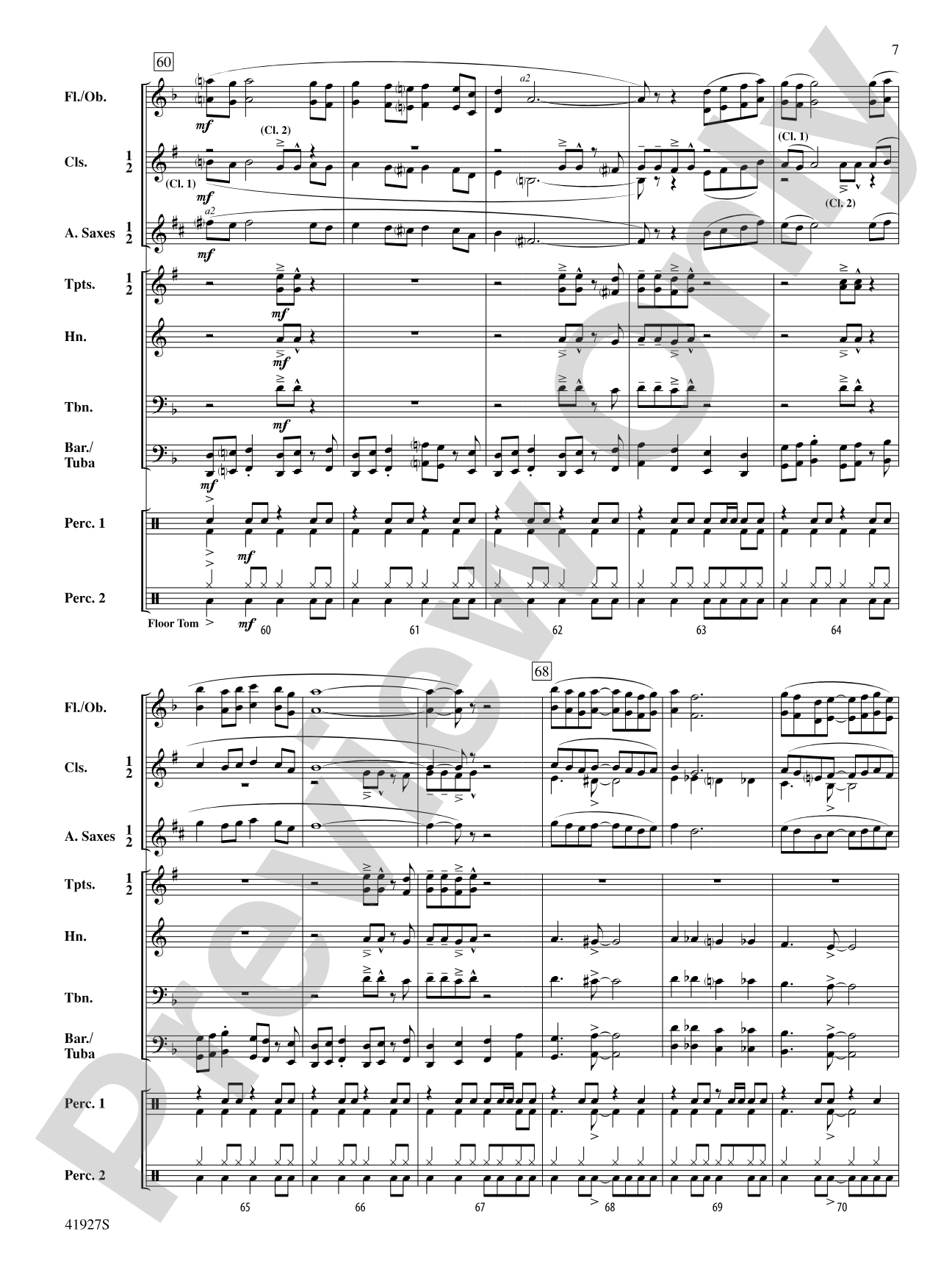
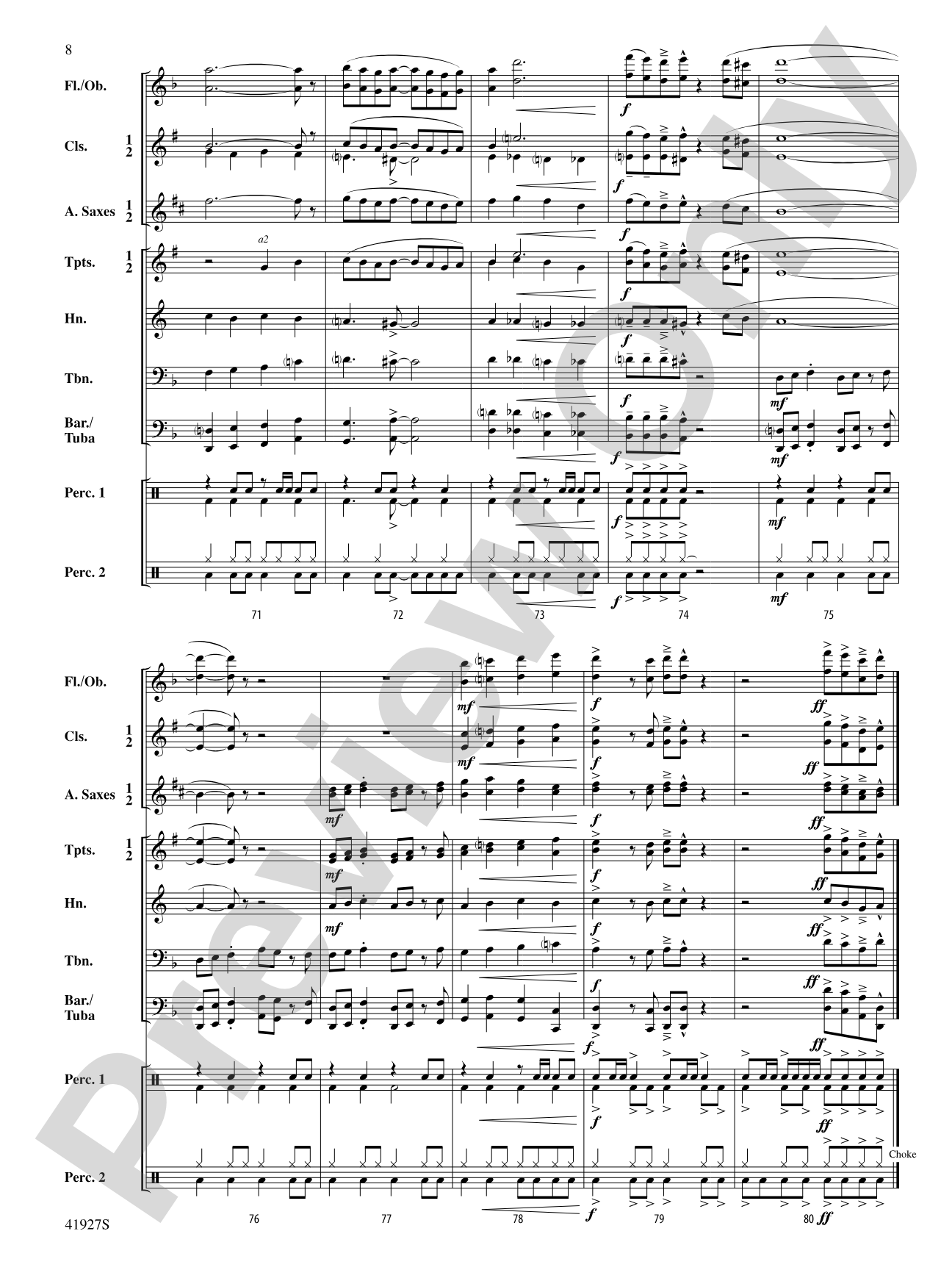
Break out of the daily doldrums with this dynamic rock piece! Featuring a driving bass line, expanded percussion, and exciting themes, each section of the band gets a chance to rock the house! (2:35)


Don't just read it, hear it, play along with it, and watch your students grow with it. In MakeMusic Cloud, Break Out: Concert Band Conductor Score & Parts comes alive with professional accompaniment, adjustable tempo, and built-in practice tools that turn solo practice into real progress.
Open in the Player
Jump straight in and assign it today.
Start Your Free Trial
Open this title and explore the full library in minutes.
Sample Audio
1
Audio File
--:--
0:00
0:00
Sample Video
No sample videos found.
Additional Details
Series:
Challenger Band Series
Publisher:
Alfred Music
Page Count:
176
SKU:
00-PK-0006153
More about this title
About the Composer: Steve Hodges

Steve Hodges brings four decades of public school band directing experience to his compositions. He holds degrees from Western Oregon University (Bachelor of Science) and Central Washington University (Master of Music Education), and since 1986 has published over 120 concert band works through Alfred Music, along with choral arrangements for Staff Music and Shawnee Press.
His music has earned commissions from honor bands and school programs across North America, from Virginia to British Columbia, and has been featured on TBS and ESPN. A member of ASCAP with multiple published awards, Hodges now resides in The Dalles, Oregon, where he continues to engage with community music and takes particular joy in hearing his grandchildren perform his compositions in their own school ensembles.
Why we love this
Hodges understands what makes a rock piece work for young bands: infectious energy without technical overreach, doubled themes so every section feels heard, and percussion writing that drives without overwhelming. At 1.5, this sits at the perfect difficulty for a program that wants to genuinely rock while keeping rehearsal time realistic.
What to expect
Immediate and propulsive. The driving bass line and rock groove establish momentum from the opening, while alternating themes give different sections their moment. The overall effect is bright and forward-moving, with enough rhythmic interest to hold attention without demanding virtuosity.
Who it's for
Beginning and early intermediate concert bands hungry for something with contemporary edge. This works equally well for groups building confidence in a standard season and for standalone pops or spring concert contexts where you want to energize an audience without complexity.
How to get the most out of it
- Lock the bass line (tuba, baritone, bass clarinet) to the kick drum. That driving foundation is what makes rock feel rock; any slop upfront kills the whole effect.
- Balance the expanded percussion so it sits behind the melody, not on top of it. The drums are the engine, not the spotlight.
- Let the dynamics breathe within phrases. Young players often lock into one volume and stay there; small pushes and pulls in the middle of a section add shape and keep the energy from feeling flat.
How to use it
Pair this in a pop concert or spring program to bridge between your classical core and lighter fare. At 2:35, it's also an ideal opening number to grab an audience's attention and set a confident tone for the rest of the concert.
Skills your students will build
- Playing with a steady pulse against written rhythms
- Balancing melody and accompaniment in a rock idiom
- Responding to dynamic and articulation cues that shape phrasing
- Coordinating across sections (rhythm section and melody) to maintain ensemble cohesion