
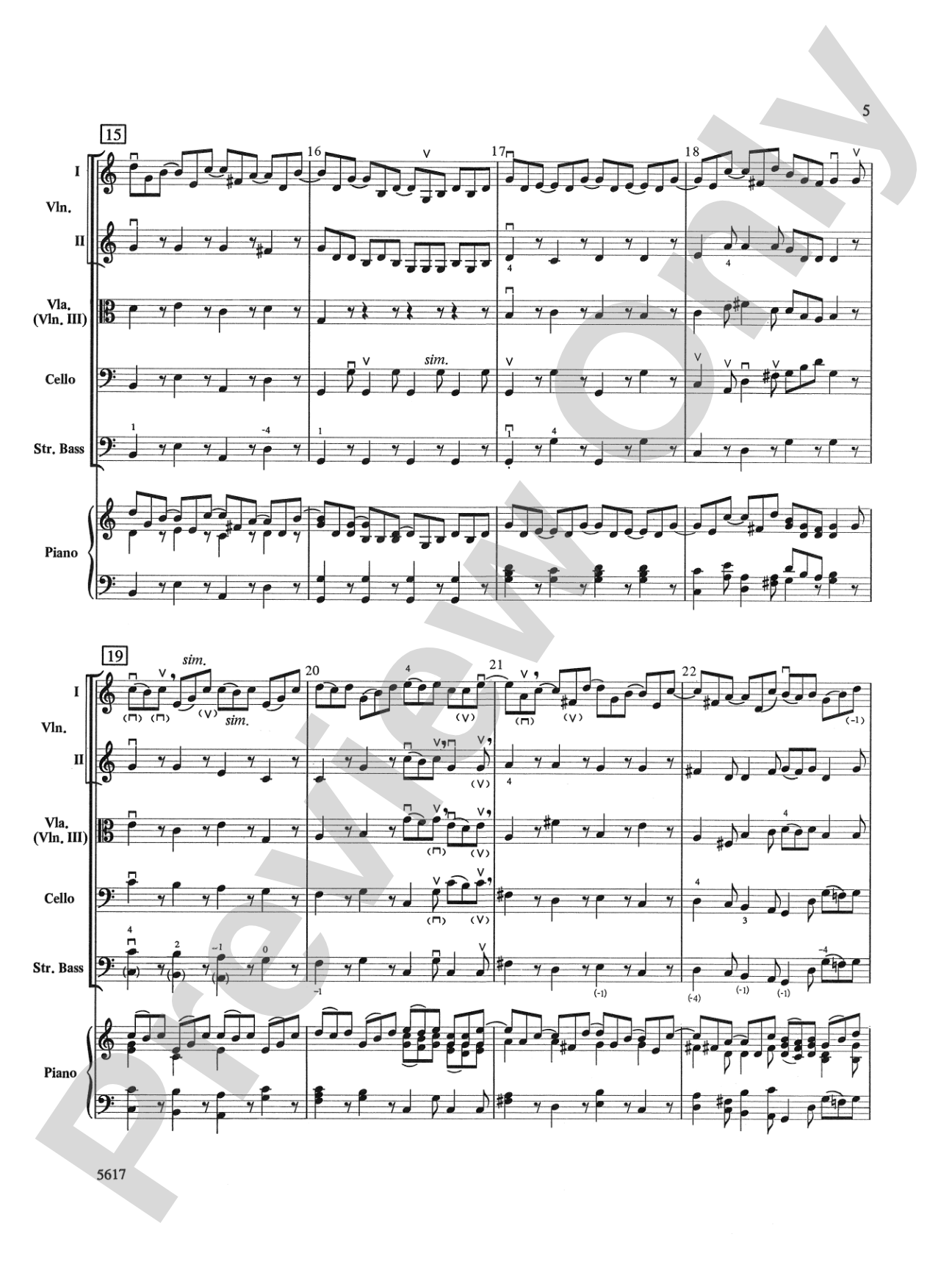
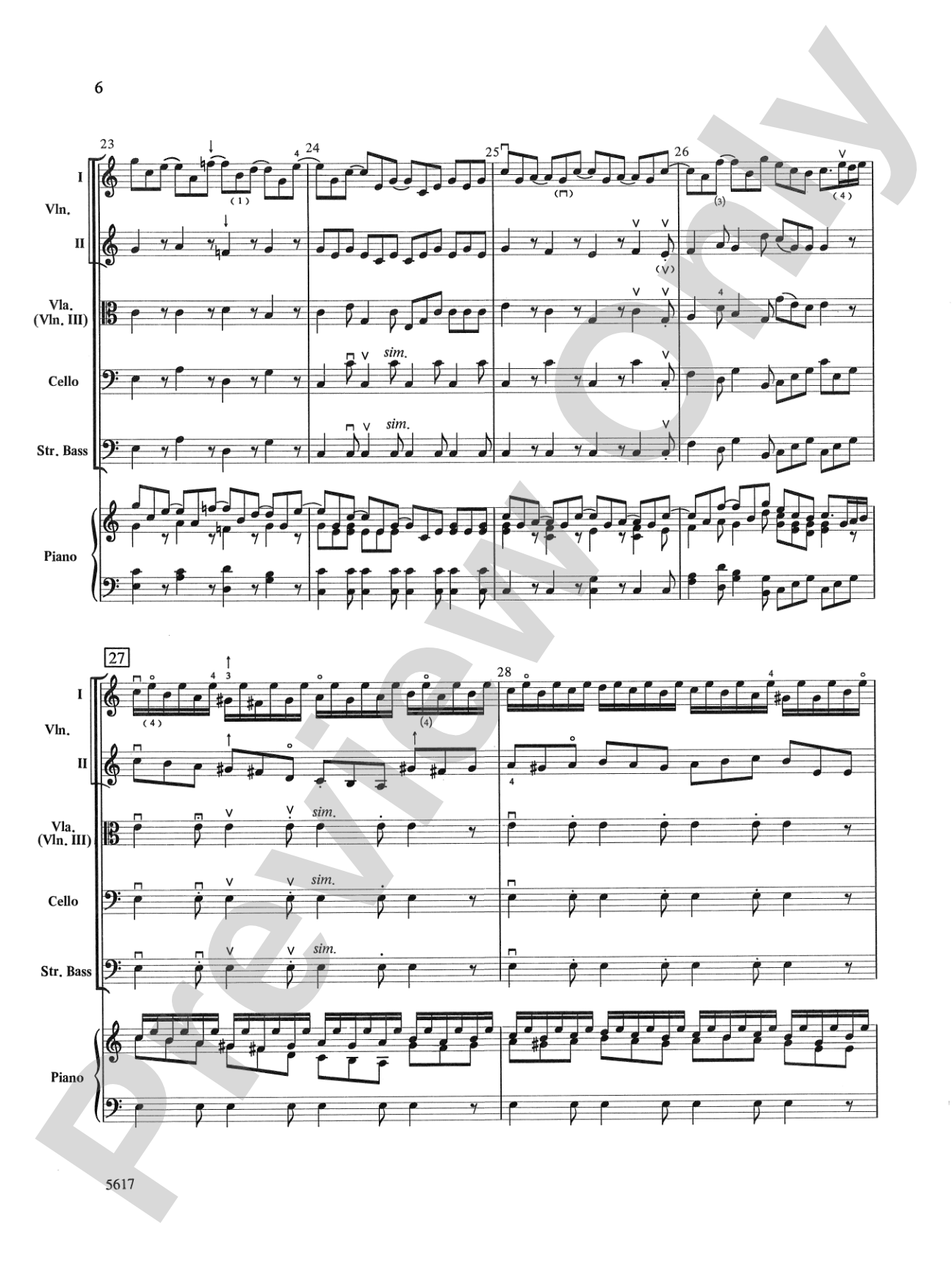
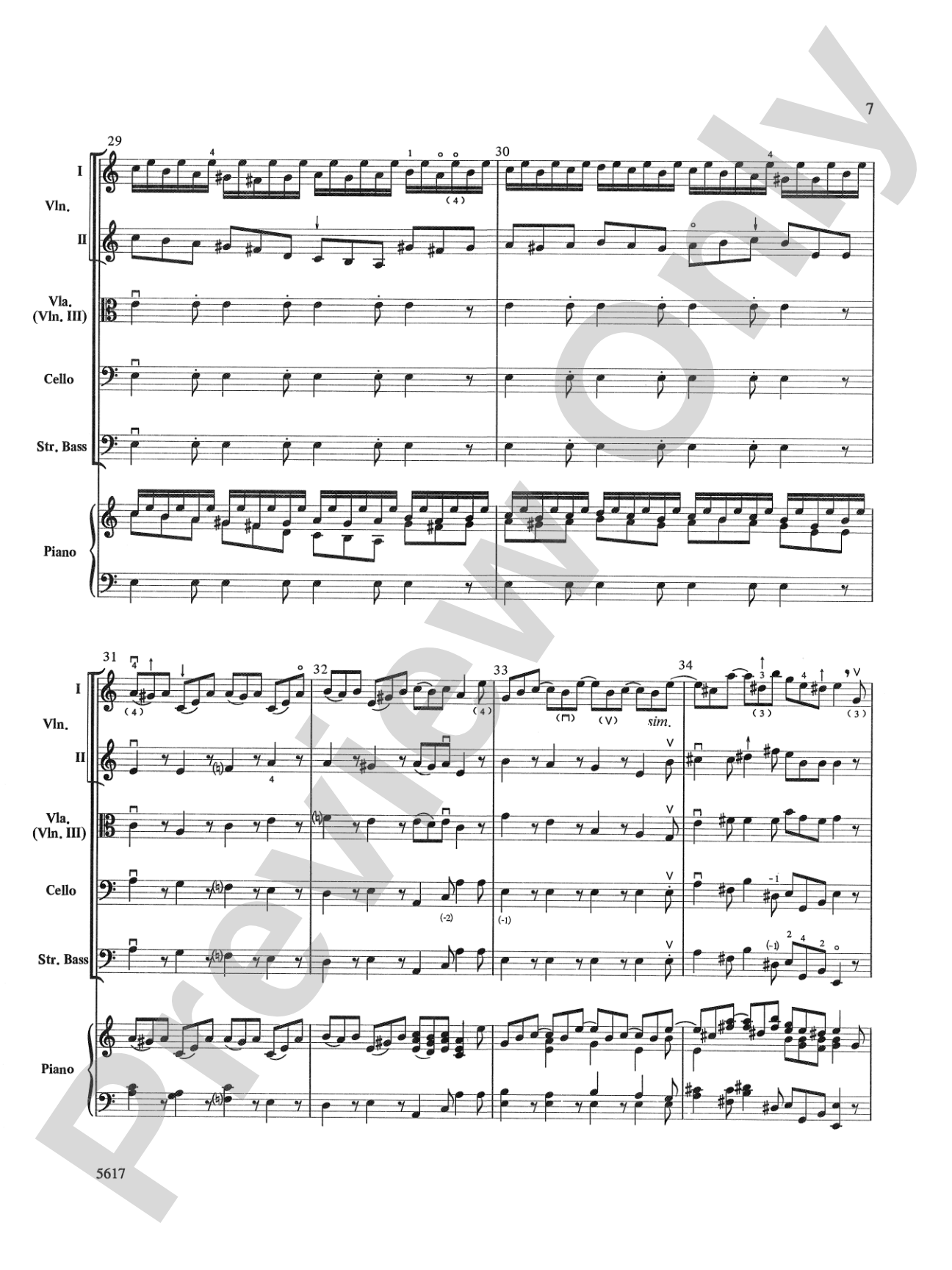
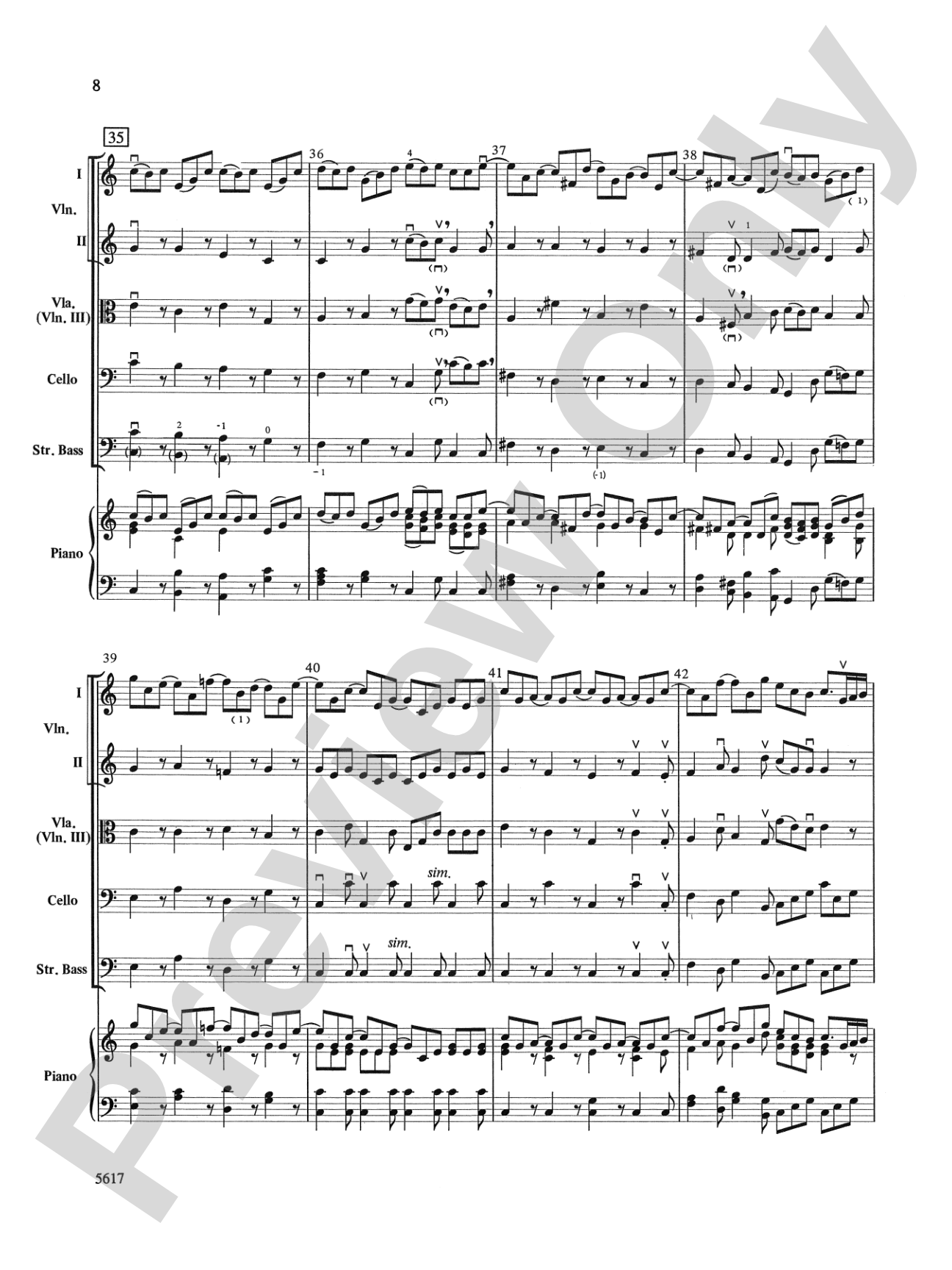
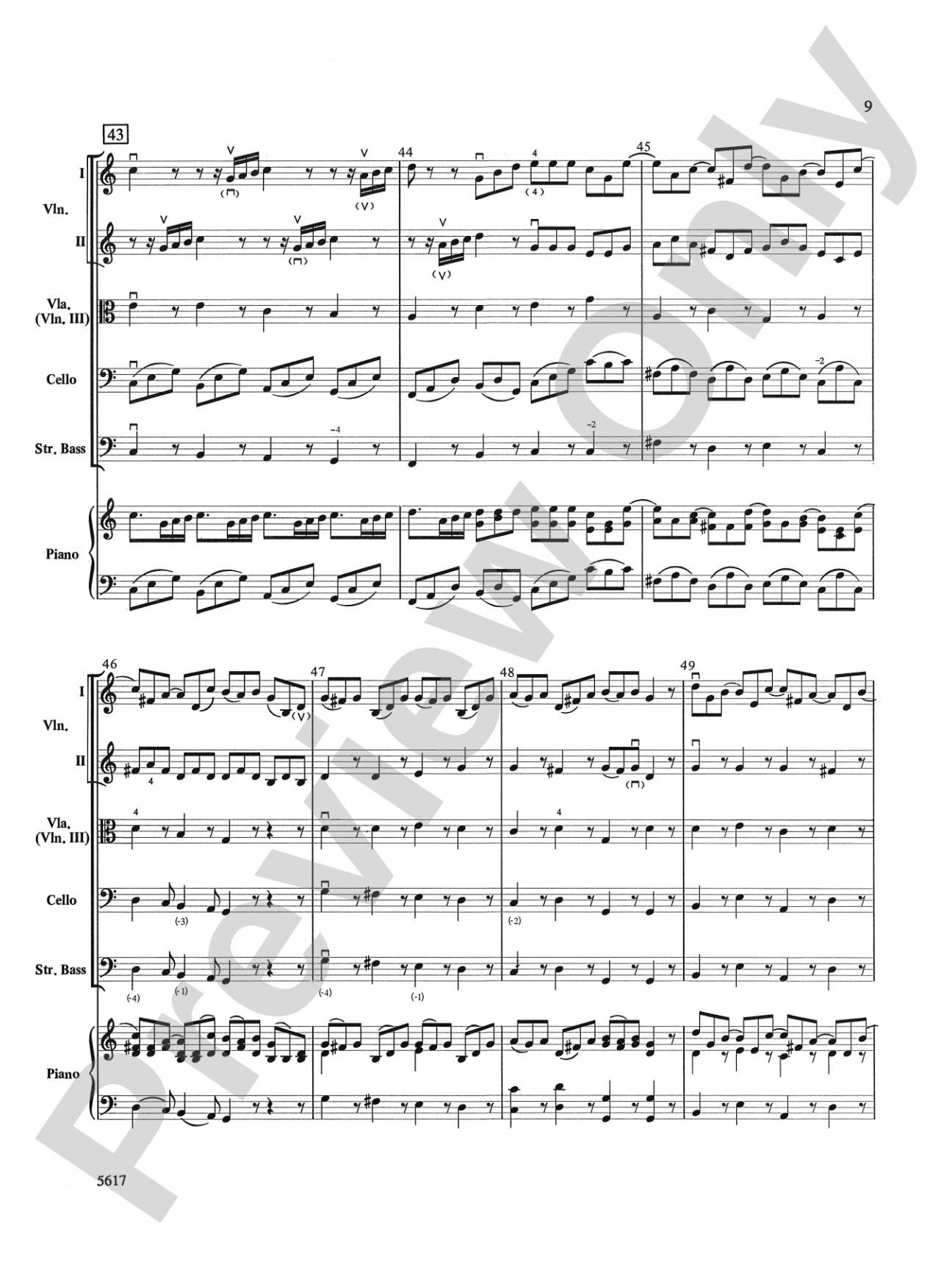
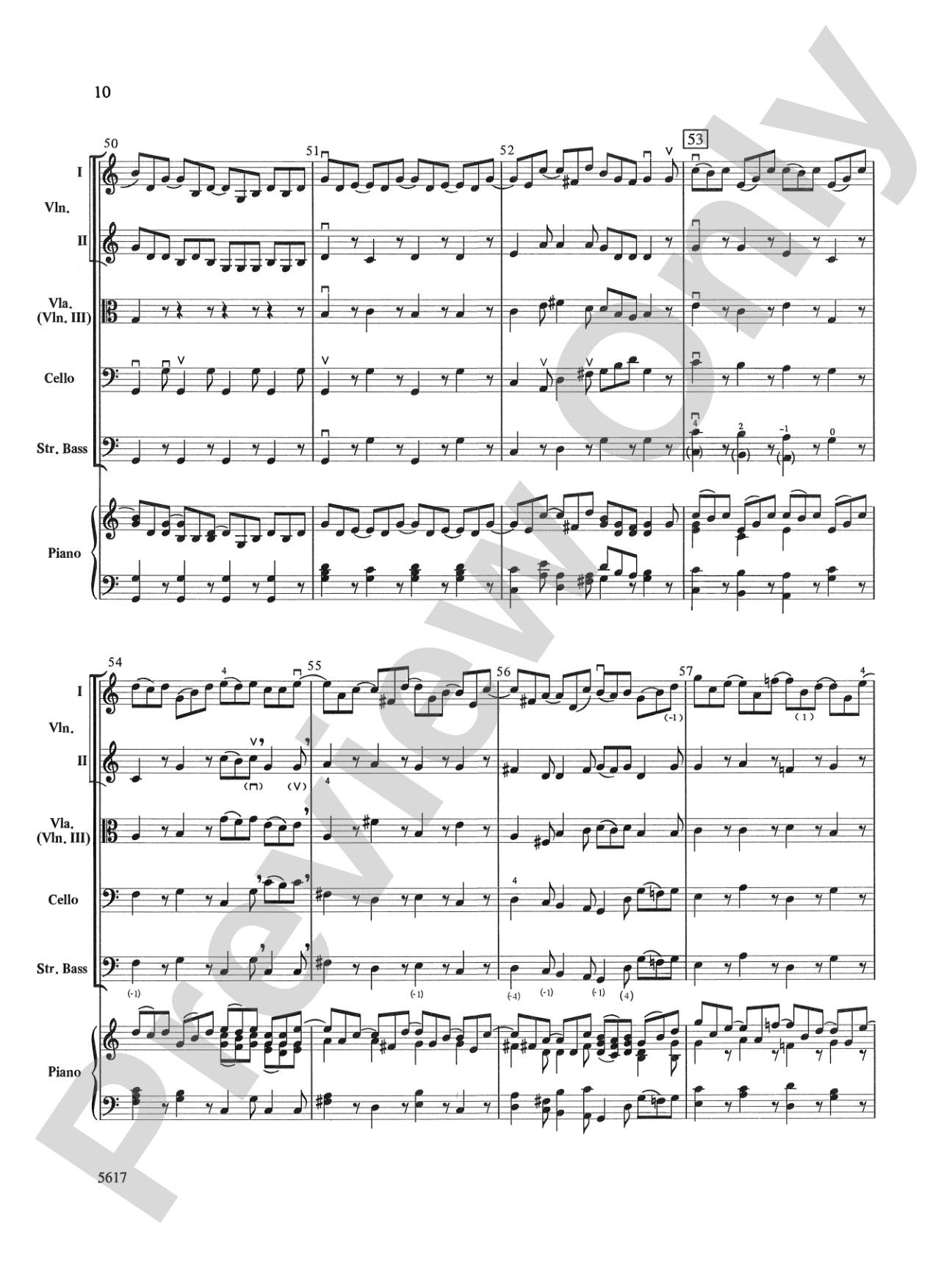
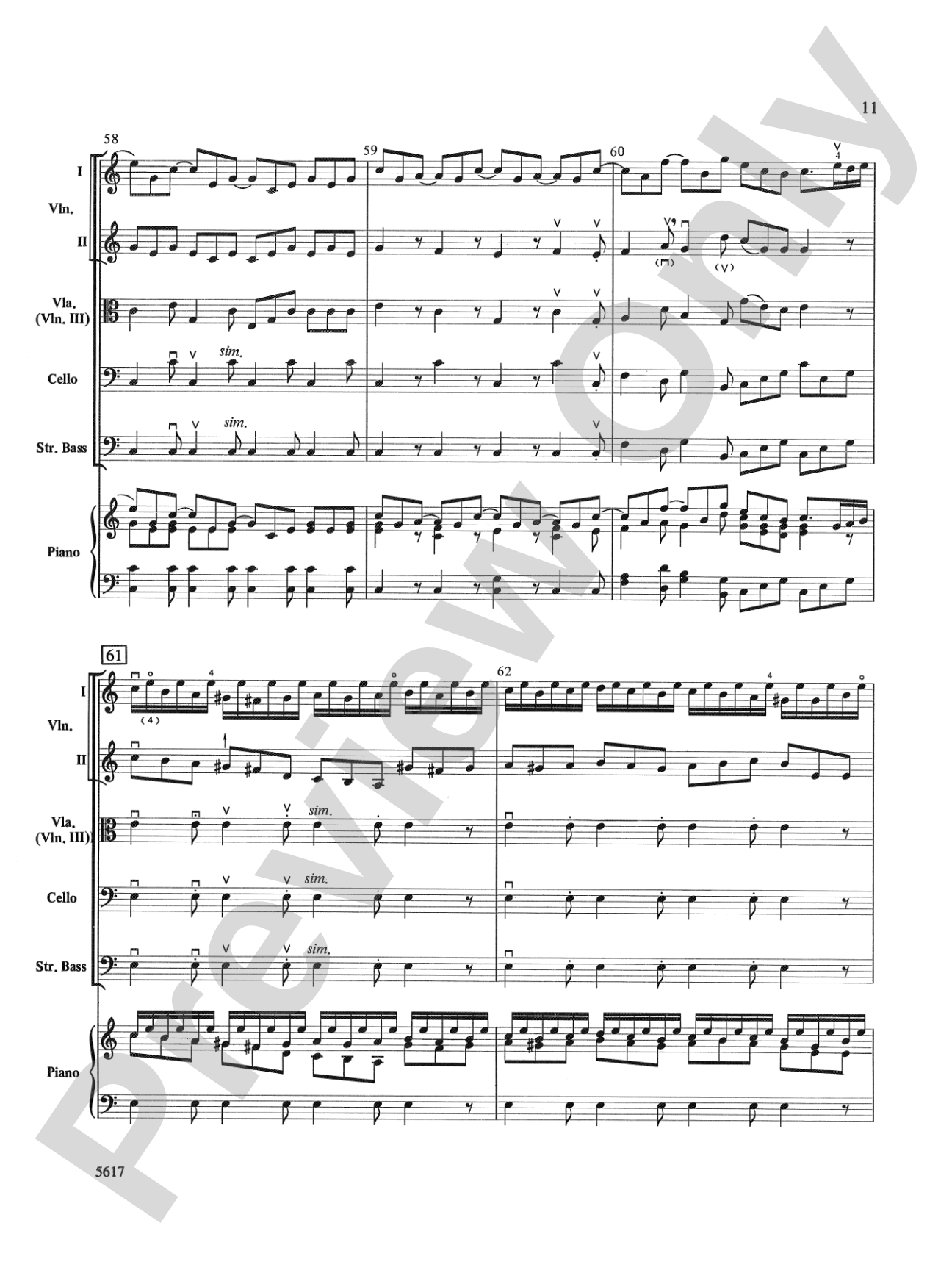
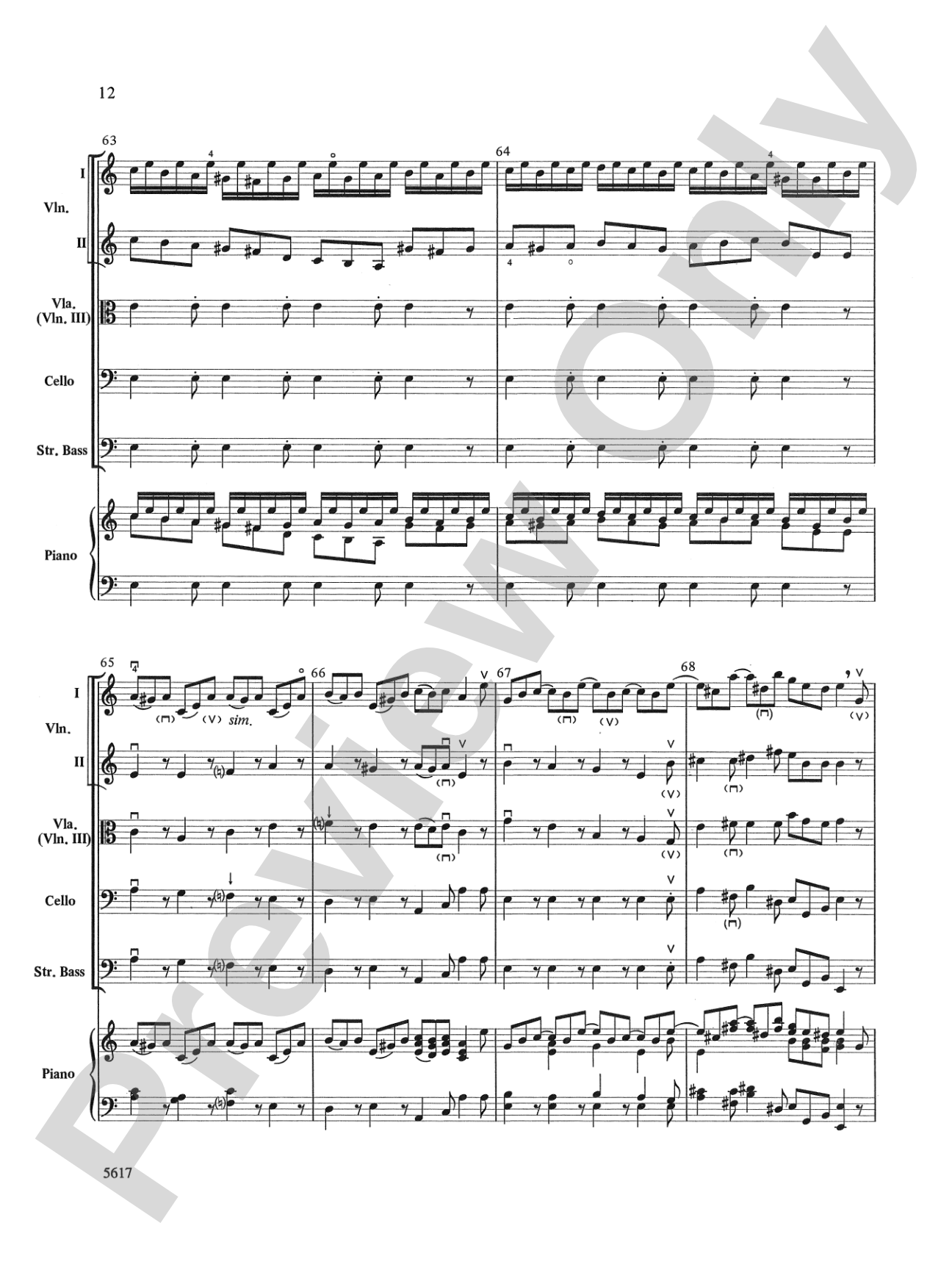
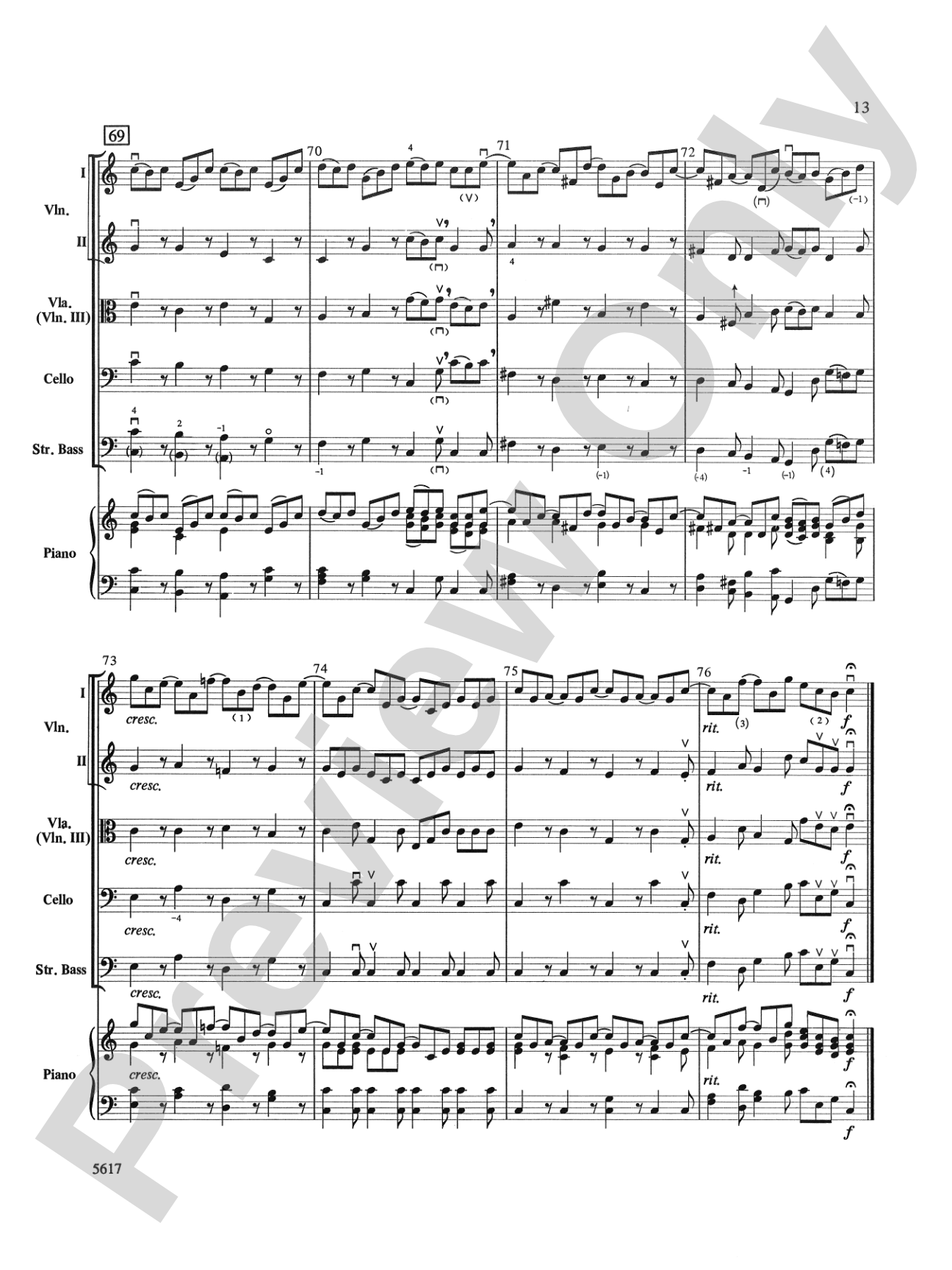




Brandenburg Concerto No. 6, 3rd Movement (Abridged): String Orchestra Conductor Score & Parts
(Third Movement -- Abridged)
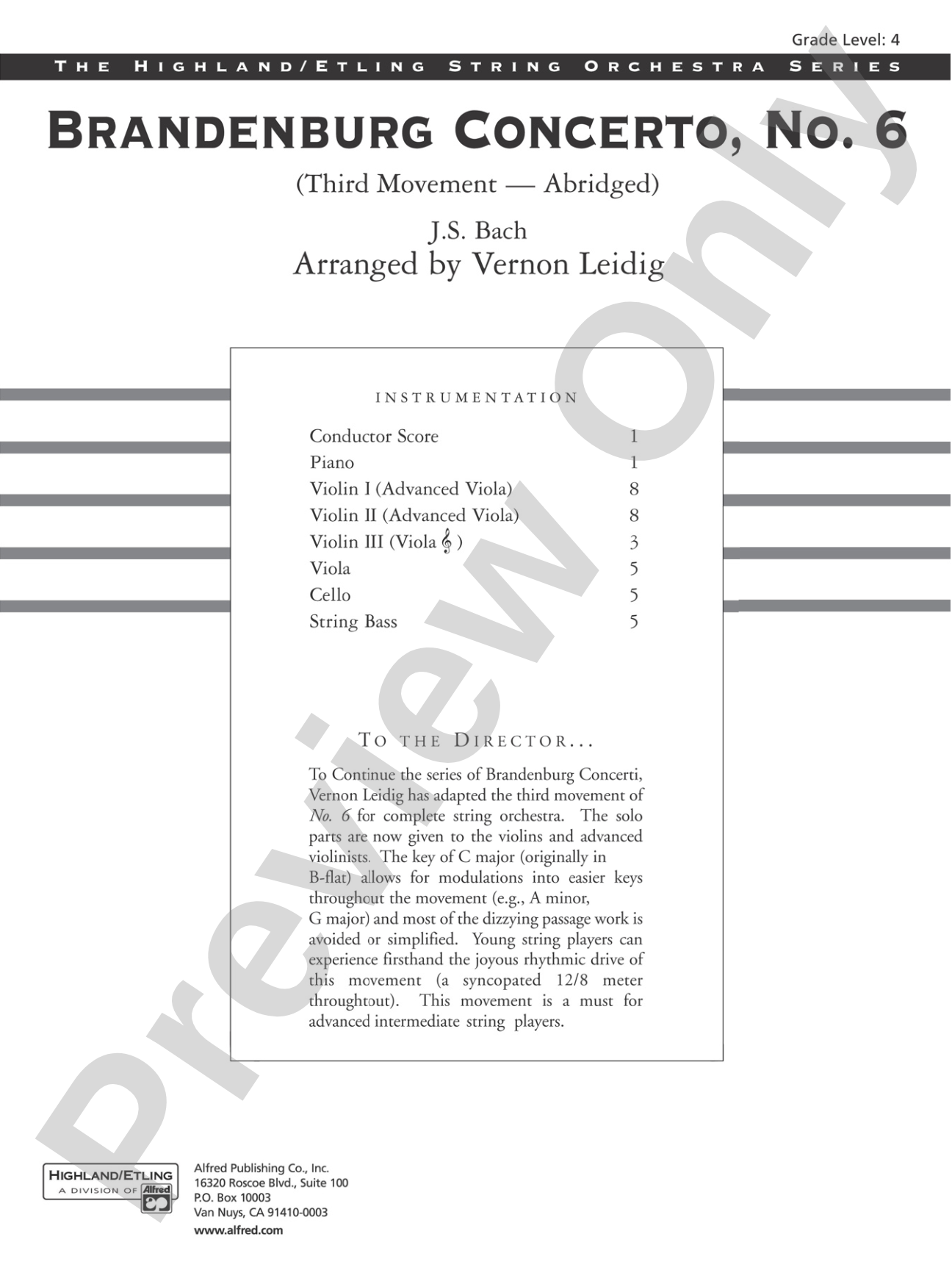
By Johann Sebastian Bach / arr. Vernon Leidig
Grade: 4
Item: 00-PK-0001905

$60.00
Pickup currently not available
Buy Extra Parts (Digital PDF Download)
Parts Added to Cart!
Description
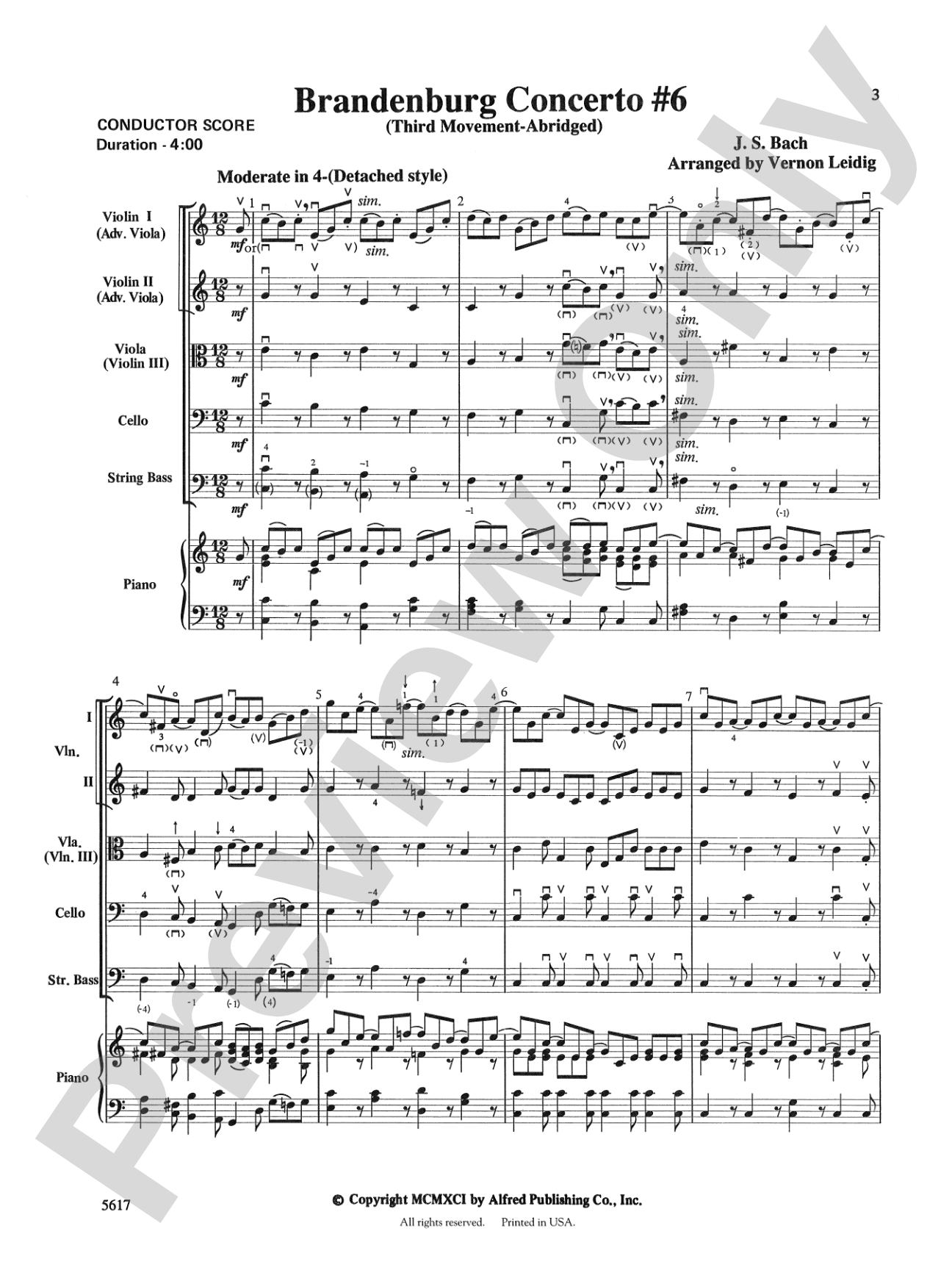
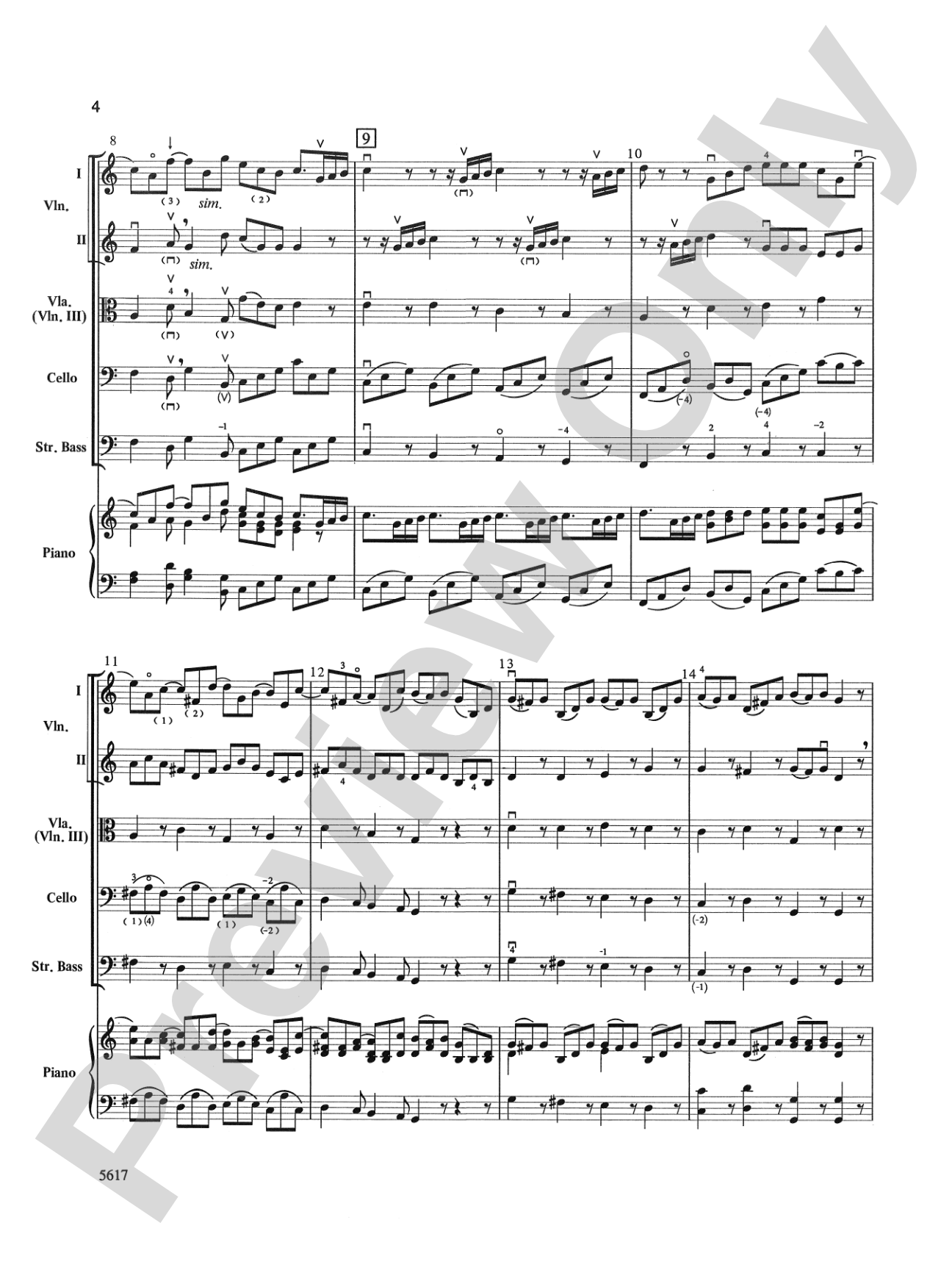
Vernon Leidig has skillfully adapted the third movement of Brandenburg Concerto No. 6 for complete string orchestra (originally with two solo viola parts, gamba parts, etc). Although solo parts are now given to the violins, advanced violists can play off the Violin parts.hand the joyous rhythmic drive of this Concerto. A must for advanced intermediate string players.


Don't just read it, hear it, play along with it, and watch your students grow with it. In MakeMusic Cloud, Brandenburg Concerto No. 6, 3rd Movement (Abridged): String Orchestra Conductor Score & Parts comes alive with professional accompaniment, adjustable tempo, and built-in practice tools that turn solo practice into real progress.
Open in the Player
Jump straight in and assign it today.
Start Your Free Trial
Open this title and explore the full library in minutes.
Sample Audio
No sample audio found.
Sample Video
No sample videos found.
Additional Details
Series:
Highland/Etling String Orchestra
Publisher:
Alfred Music
Page Count:
140
SKU:
00-PK-0001905
More about this title
About the Composer: Johann Sebastian Bach
Johann Sebastian Bach (1685-1750) shaped the musical language of the Baroque era and laid the harmonic and contrapuntal foundations that would influence every composer who followed. His works span sacred cantatas, instrumental concertos, keyboard music, and chamber works that demonstrate complete mastery of counterpoint, fugal writing, and orchestral color. For string players, Bach's music offers unparalleled opportunity to develop ensemble blend, intonation precision, and the rhythmic clarity that Baroque style demands.
Why we love this
Leidig's arrangement opens the Brandenburg Concerto No. 6 to ensembles that lack the specialized instrumentation of the original while preserving Bach's architectural brilliance and harmonic integrity. The abridged third movement gives advanced intermediate orchestras a genuinely rewarding Baroque masterwork at their level, and the optional advanced viola parts add textural richness for stronger players without compromising accessibility. This is the kind of arrangement that respects both the composer's vision and the practical needs of a growing string orchestra.
What to expect
Spirited and luminous, with the kind of relentless rhythmic energy that characterizes Bach's instrumental concertos. The movement unfolds as a conversation among string voices, with graceful counterpoint and harmonic clarity that feels elegant rather than austere.
Who it's for
Advanced intermediate string orchestras looking for substantial Baroque repertoire that fits realistic instrumentation and performance capabilities. Players at Grade 4 level who are developing secure intonation, independent part reading, and stylistic awareness will find this movement both accessible and genuinely musically challenging.
How to get the most out of it
- Establish the rhythmic drive as your first priority. The piece's energy lives in crisp articulation and clear ensemble alignment; mark cut-offs in advance and rehearse them until every section responds together.
- Balance the dialogue between upper and lower strings carefully. When violins carry solo material, violas and cellos must support without overwhelming; this requires listening across the ensemble, not just within sections.
- Shape phrases with gentle dynamic swells rather than dramatic contrasts. Baroque style favors terraced dynamics and careful voice leading over the crescendos that Romantic music demands.
- Tune the harmonic progressions with particular care. Bach's functional harmony is transparent in a string orchestra setting, so intonation issues become immediately audible; spend rehearsal time on half-step passages and sus chords.
How to use it
This works beautifully as a centerpiece in a Baroque concert program or as a stylistic anchor in a broader historical survey. The abridged length makes it practical for contests and festivals, and programming it alongside other arranged Baroque works (or pairing it with a concerto grosso) creates natural programming coherence without requiring specialized soloists.
Skills your students will build
- Baroque articulation and phrasing conventions
- Independent part reading within dense contrapuntal textures
- Precise ensemble intonation across functional harmonic progressions
- Terraced dynamics and period-appropriate shaping
- Rhythmic precision and collective ensemble response to conducting gestures