

Boyce Canon: SAB Choral Octavo
Music by William Boyce / arr., with new words, by Douglas E. Wagner
Item: 00-PO-0007447
$2.30
Minimum order quantity: 20 copies
Pickup currently not available
Description
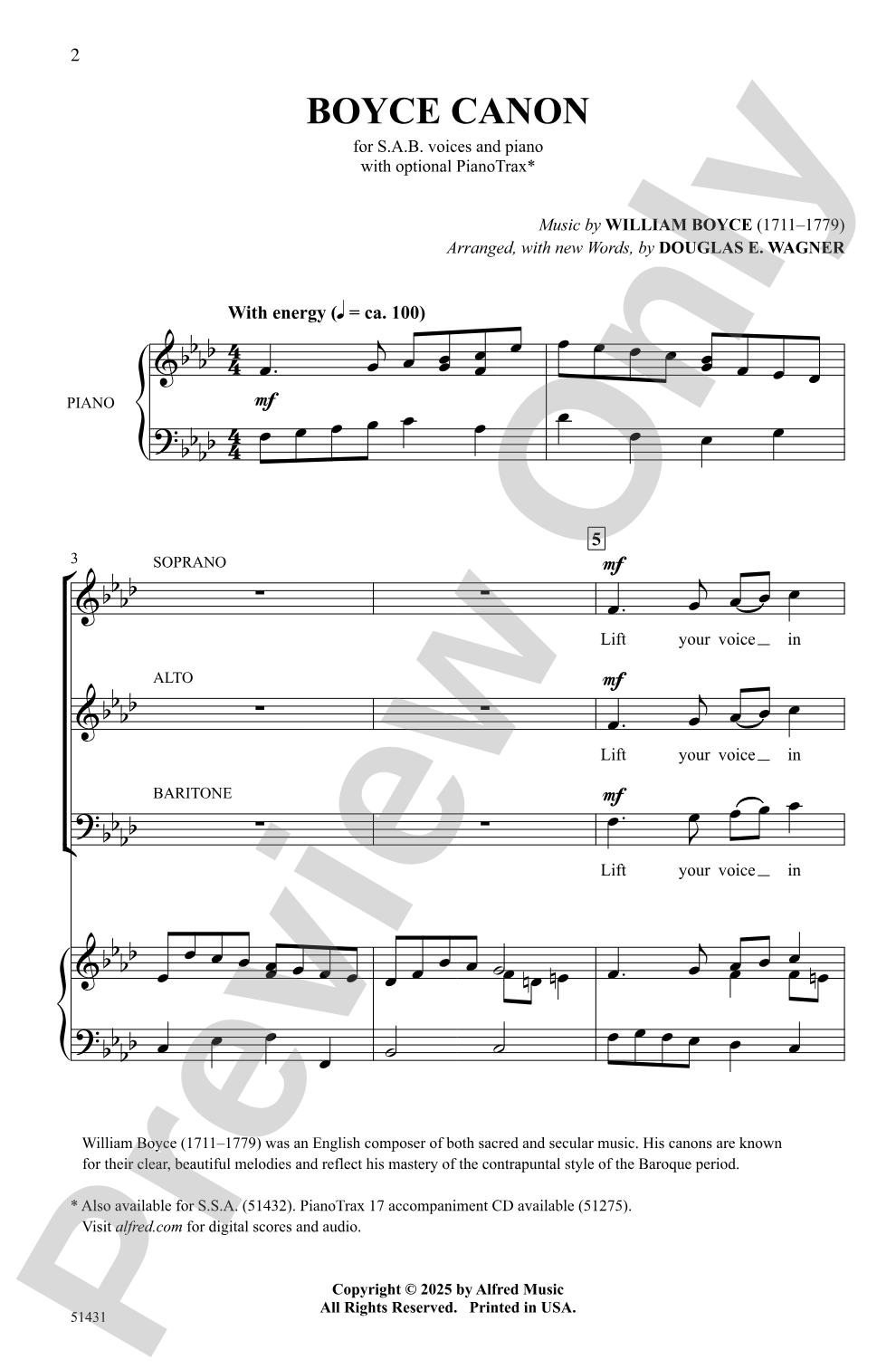
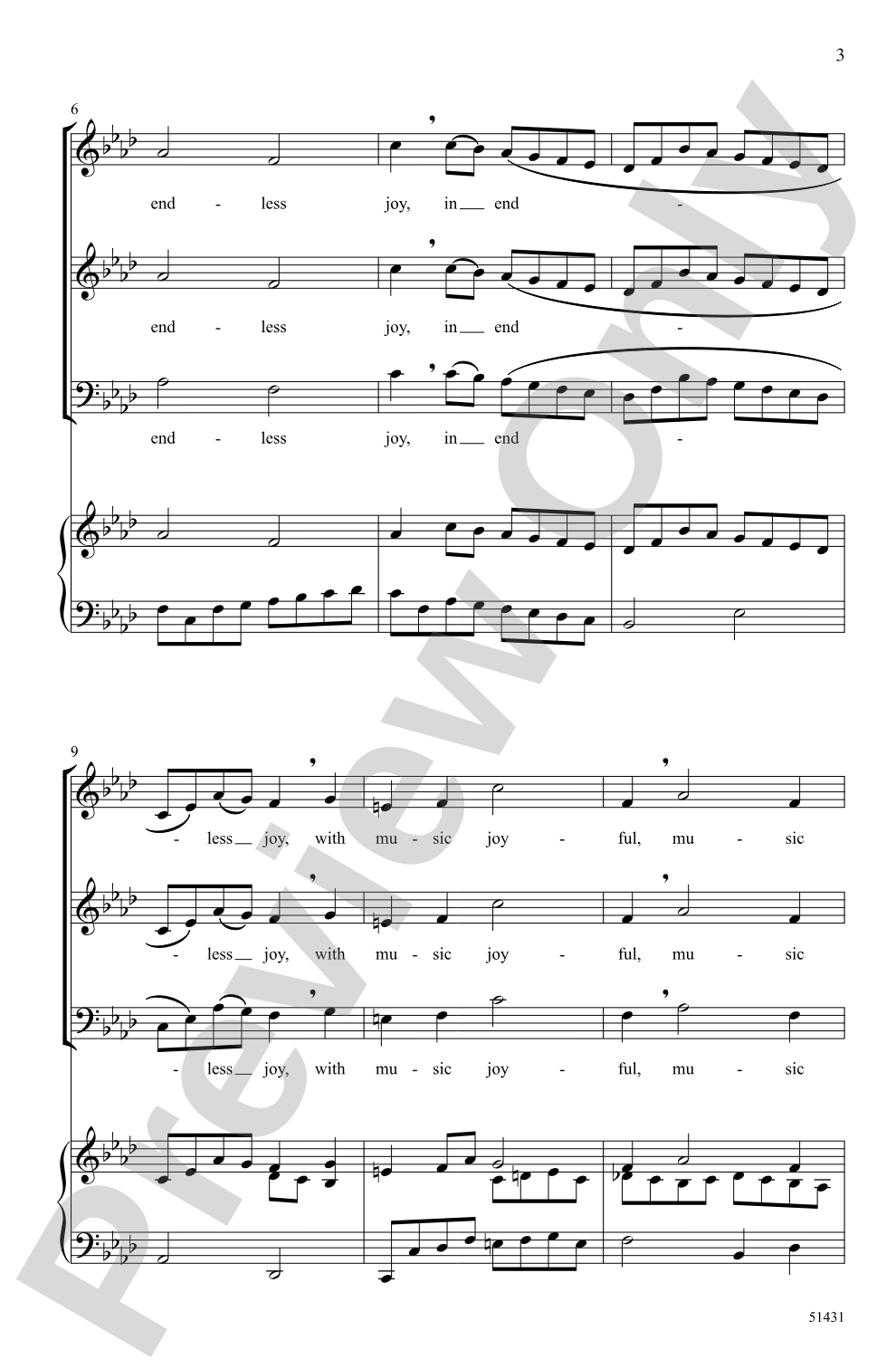
William Boyce's beautiful Baroque melody is introduced in unison, and then sung as a canon in this accessible masterwork arrangement. Newly penned secular lyrics serve as an invitation to "lift your voice in endless joy." This piece is ideal for reinforcing skills, as well as developing vocal technique. Use as a warm-up and then program for concert, contest, or festival.


Discover MakeMusic Cloud: thousands of interactive titles your students can play along with today.
Sample Audio
1
Audio File
--:--
0:00
0:00
Sample Video
Additional Details
Series:
Alfred Choral Designs
Publisher:
Alfred Music
Page Count:
12
SKU:
00-PO-0007447
More about this title
About the Composer: William Boyce
William Boyce (1711-1779) was a leading English composer of the Baroque period whose sacred and instrumental works shaped the sound of 18th-century Britain. His facility with melody and counterpoint made him a master of both grand vocal works and intimate chamber pieces. Boyce's influence on English musical life extended through his roles as composer, organist, and music historian, and his works remain central to the choral repertoire.
Boyce's gift for writing singable, elegant lines that sit naturally in the voice has made his music enduringly popular in educational and concert settings. His melodies combine Baroque sophistication with genuine accessibility, qualities that make his work ideal for developing young singers.
Why we love this
Boyce's original melody carries such clarity and grace that singers immediately understand the phrase shape and style they're aiming for. The canon structure rewards careful listening and precise ensemble work, yet remains accessible enough for mixed-ability choirs. The new secular text frames the piece as both a vocal technique exercise and a genuine concert moment, making rehearsal time doubly valuable.
What to expect
This canon unfolds with elegant inevitability, each voice entering like voices joining a conversation already in progress. The Baroque melody feels timeless and unhurried, inviting singers to find beauty in its straightforward lines and natural harmonic unfolding. There is genuine joy in the independent singing required, particularly in the moment when all voices align to create sparkling consonance.
Who it's for
Mixed choirs of any age from upper middle school through adult ensembles will find this piece both musically rewarding and technically beneficial. It suits directors seeking literature that builds independent part-singing and polyphonic awareness without excessive difficulty. The short length and optional recorded accompaniment make it workable for nearly any ensemble context.
How to get the most out of it
- Establish the unison melody first with careful attention to line and breath placement; this foundation will anchor the canon entries that follow.
- Balance the canon voices by thinking of each line as equally important rather than assigning soprano as primary. Rotating who sings each voice in rehearsal helps singers internalize the interweaving lines.
- Take advantage of the Baroque style to shape phrases with gentle dynamic rise toward peak notes and natural diminuendo at cadences rather than singing at one dynamic throughout.
- Let the text "lift your voice in endless joy" guide your interpretation; this piece should feel buoyant and bright without excessive speed.
How to use it
Open a concert with this piece as a transition from warm-up into formal performance, or place it strategically mid-program to reset acoustic balance and demonstrate choir growth on stage. Its accessibility and concert-ready quality make it ideal for festival or competition submissions, particularly when you want to showcase clean ensemble work and healthy vocal production without extensive production demands.
Skills your students will build
- Reading and singing independent lines in canon structure
- Maintaining steady pulse while listening to other voice parts
- Shaping Baroque phrasing with attention to line and cadence
- Blend and balance in three-part mixed voicing
- Unison singing with precise intonation as foundation for part work