
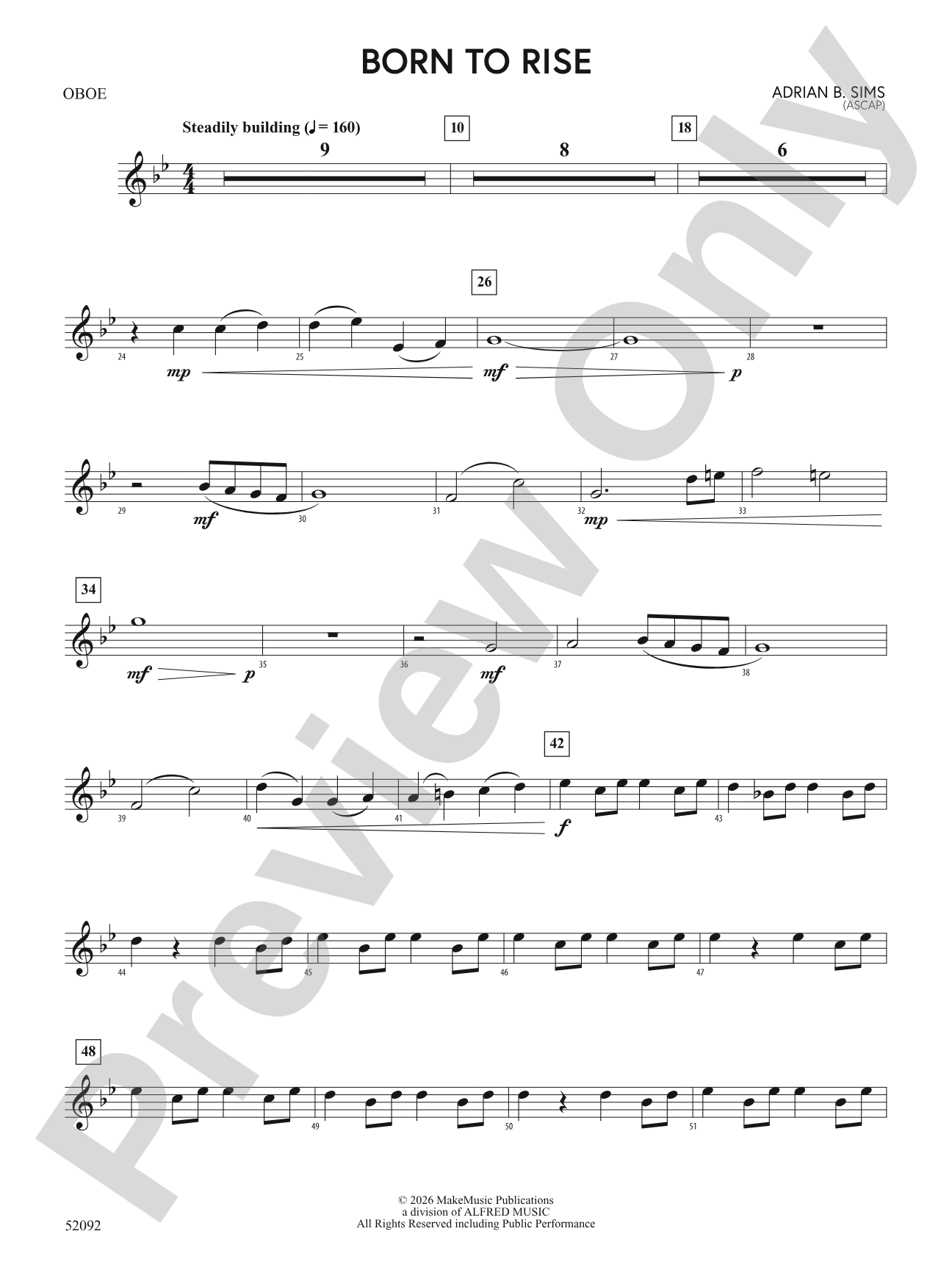

BORN TO RISE/MYB: Oboe
By Adrian B. Sims
Grade: 2
Item: 00-PC-0019689_O1
$3.00
Pickup currently not available
Description
Unleash an unstoppable burst of energy with Born to Rise by Adrian B. Sims! This composition explodes with epic brass and driving percussion, celebrating musical growth and achievement. A high-octane opener or closer guaranteed to ignite audiences, performers, and directors alike! (2:15)


Don't just read it, hear it, play along with it, and watch your students grow with it. In MakeMusic Cloud, BORN TO RISE/MYB: Oboe comes alive with professional accompaniment, adjustable tempo, and built-in practice tools that turn solo practice into real progress.
Open in the Player
Jump straight in and assign it today.
Start Your Free Trial
Open this title and explore the full library in minutes.
Sample Audio
1
Audio File
--:--
0:00
0:00
Sample Video
Additional Details
Series:
MakeMusic Young Band
Publisher:
MakeMusic Publications
SKU:
00-PC-0019689_O1
More about this title
About the Composer: Adrian B. Sims
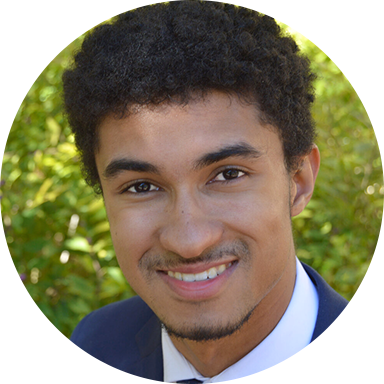
Adrian B. Sims is a Seattle-born composer, conductor, and educator currently pursuing dual degrees in Music Education and Composition at the University of Maryland. His work has been featured at The Midwest Band and Orchestra Clinic, earned recognition on the Bandworld Top 100 List, and won multiple composition competitions including the Maryland Music Educators Association Young Composers Project and the Make Music Young Composers Contest. As a trombonist, he performs in the university's top ensembles and has collaborated with the Baltimore Symphony Orchestra.
Sims studied composition under Dr. Robert Gibson at Maryland and has been mentored by world-renowned composer Brian Balmages. His development as both a musician and educator reflects deep roots in Maryland's vibrant school music community, where he has frequently rehearsed and conducted his own compositions. He credits his band directors Christopher Gnagey and Cindy Stevenson with shaping his artistic foundation.
Why we love this
Born to Rise captures what makes Grade 2 concert band so rewarding: accessible writing that doesn't sacrifice energy or craft. Sims delivers clean orchestration with impactful brass hits and propulsive percussion work that younger players can execute cleanly while feeling genuinely powerful. The two-minute-fifteen-second duration makes it an ideal opening number for festivals or full concerts when you need immediate audience engagement.
What to expect
Born to Rise erupts with youthful confidence and forward momentum. Driving percussion and punchy brass articulations create an infectious sense of celebration, as if the music itself is announcing an achievement worth shouting about. The combination of accessible writing and genuine musical energy makes performers feel like they're playing something substantial.
Who it's for
Grade 2 concert bands looking for a high-energy opener that delivers on both performance appeal and musical substance. Directors programming festival competitions, pep band performances, or full concert programs will find a piece that energizes student performers while remaining achievable in rehearsal time.
How to get the most out of it
- Lock the brass section on articulation during the main theme; consistent tonguing across trumpet, horn, and trombone lines will tighten the impact and prevent the lines from muddying together.
- Shape the percussion entrance by bringing in timpani and bass drum slightly ahead of the snare/cymbal parts; this creates clarity and prevents the rhythm section from feeling jumbled.
- Push the tempo slightly on the final section buildup to heighten the sense of momentum and allow the ending to land with real conviction.
- Balance the melodic material in the upper woodwinds against the harmonic foundation; they should shine without drowning out the chord support underneath.
How to use it
Use this as your concert opener when you want an immediate connection with your audience and need to establish energy from the first downbeat. It also works effectively as a festival-competition piece where visual and sonic impact matter in the opening minutes. The duration makes it an excellent pairing with longer concert pieces, allowing you to structure a program with variety without overloading rehearsal time.
Skills your students will build
- Consistent brass articulation across multiple parts
- Dynamic balance between melodic lines and harmonic support
- Rhythmic precision with driving percussion accompaniment
- Ensemble cohesion at faster tempos with exposed passages