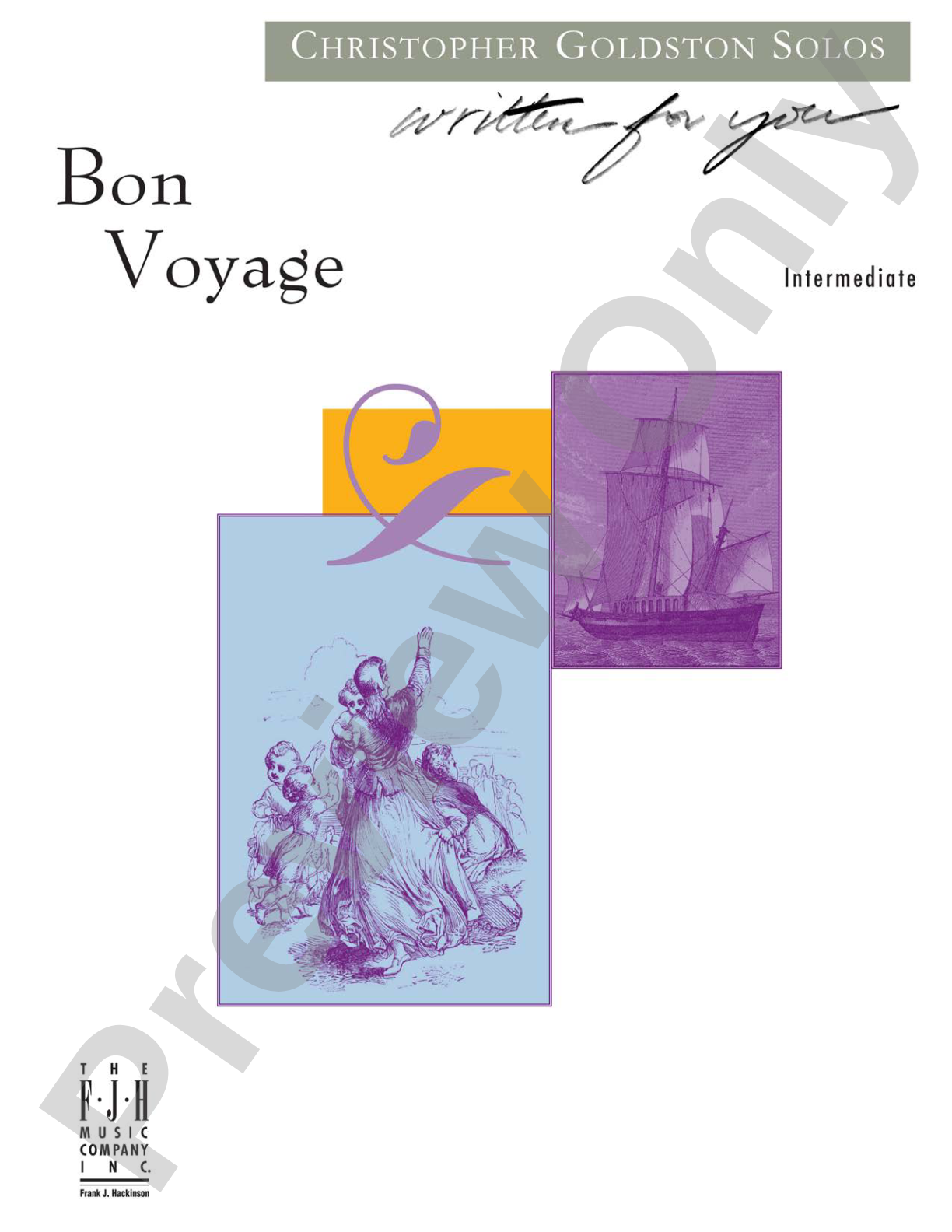
This piece is an expressive intermediate ballad, perfect for the teenage or adult student. Written in 4/4 time, it explores a variety of keys and offers a lyrical, rubato-playing experience. This piece is wonderful for recitals to display the pianist’s own sentimental interpretation.
Discover MakeMusic Cloud: thousands of interactive titles your students can play along with today.
Christopher Goldston earned his Master of Music in piano performance and pedagogy from Northwestern University and his Bachelor of Music degree in piano performance from the University of North Carolina-Greensboro. He has taught at Columbia College Chicago, Roosevelt University, and Sherwood Conservatory of Music, and continues to maintain both a studio-based teaching practice and virtual instruction in Chicago.
Goldston's compositions have earned significant recognition within music education circles. His debut composition, Night Train, received the National Federation of Music Clubs Lynn Freeman Olson Composition Award in 1991. Since 2010, he has served as national coordinator for the MTNA Composition Competition, and in 2022 MTNA commissioned him to write Four Virtues for oboe, violin, and piano, which premiered at the national conference. He was named an MTNA Foundation Fellow in 2020 and served as MTNA National Secretary-Treasurer from 2021 to 2023.
Why we love this
Goldston writes with genuine understanding of what intermediate pianists need to develop expressive maturity. The piece avoids technical showy-ness in favor of exploring harmonic color and rubato, giving students real interpretive responsibility rather than relying on speed or difficulty to impress. For recitals, it strikes the right balance between sounding sophisticated and remaining genuinely performable.
What to expect
A quiet goodbye with grace and contemplation. The harmonic language is warm and introspective, unfolding like a personal letter rather than a public declaration. There's space for the pianist's own voice here; the music invites sincerity and doesn't apologize for sentiment.
Who it's for
Intermediate pianists ready to move beyond note-reading into genuine musical interpretation. This piece suits the teenage or adult student who responds to emotional expression and is prepared to make deliberate choices about tempo and phrasing rather than follow a rigid click.
How to get the most out of it
Allow the harmonic shifts to breathe. Since the piece explores multiple keys, let each tonal center establish itself before moving forward; resist rushing through transitions.
Shape the phrase contours with the pedal in mind. At the intermediate level, careful pedal work will enhance the lyrical quality without muddying harmonic clarity.
Approach rubato as conversation, not chaos. Goldston's notation suggests where flexibility serves the musical line; practice with a metronome first to understand the underlying pulse, then layer in expressive give-and-take.
How to use it
Program this as a recital centerpiece for a student ready to step into maturity as a performer, or pair it with a more spirited contemporary piece to frame a program around the theme of transitions. It also works well in studio recitals where listening audiences appreciate understated artistry and clear storytelling.
Skills your students will build
Expressive rubato in ensemble with harmonic rhythm
Voice leading across multiple key areas
Pedal technique for harmonic resonance without blurring
Interpretive decision-making and musical phrasing
Emotional communication through touch and dynamics
You May Also Like
Scan to Complete Your Purchase
Use your phone's camera to scan the code below
You'll log in on your phone and the order will be added to your account