
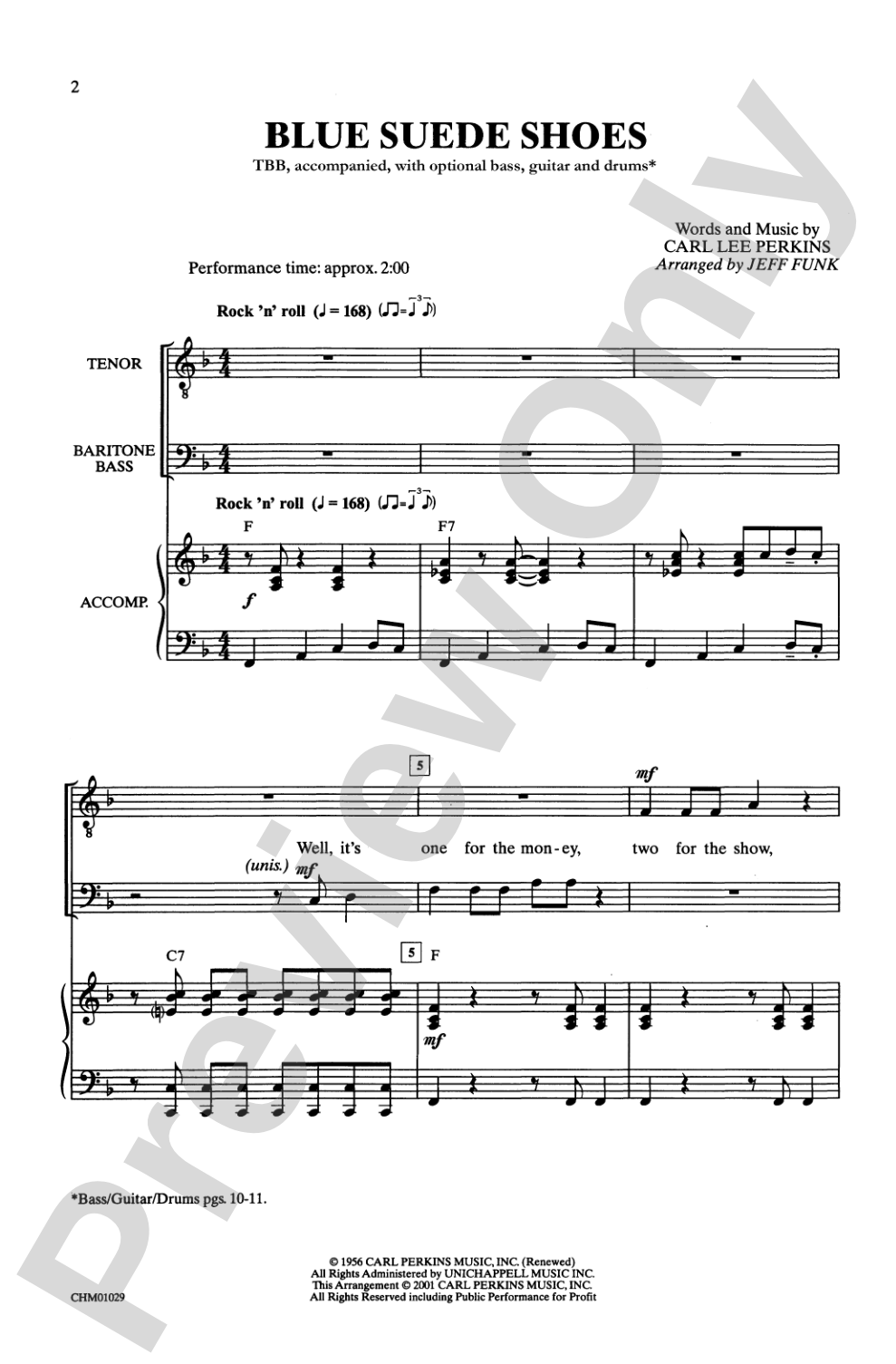
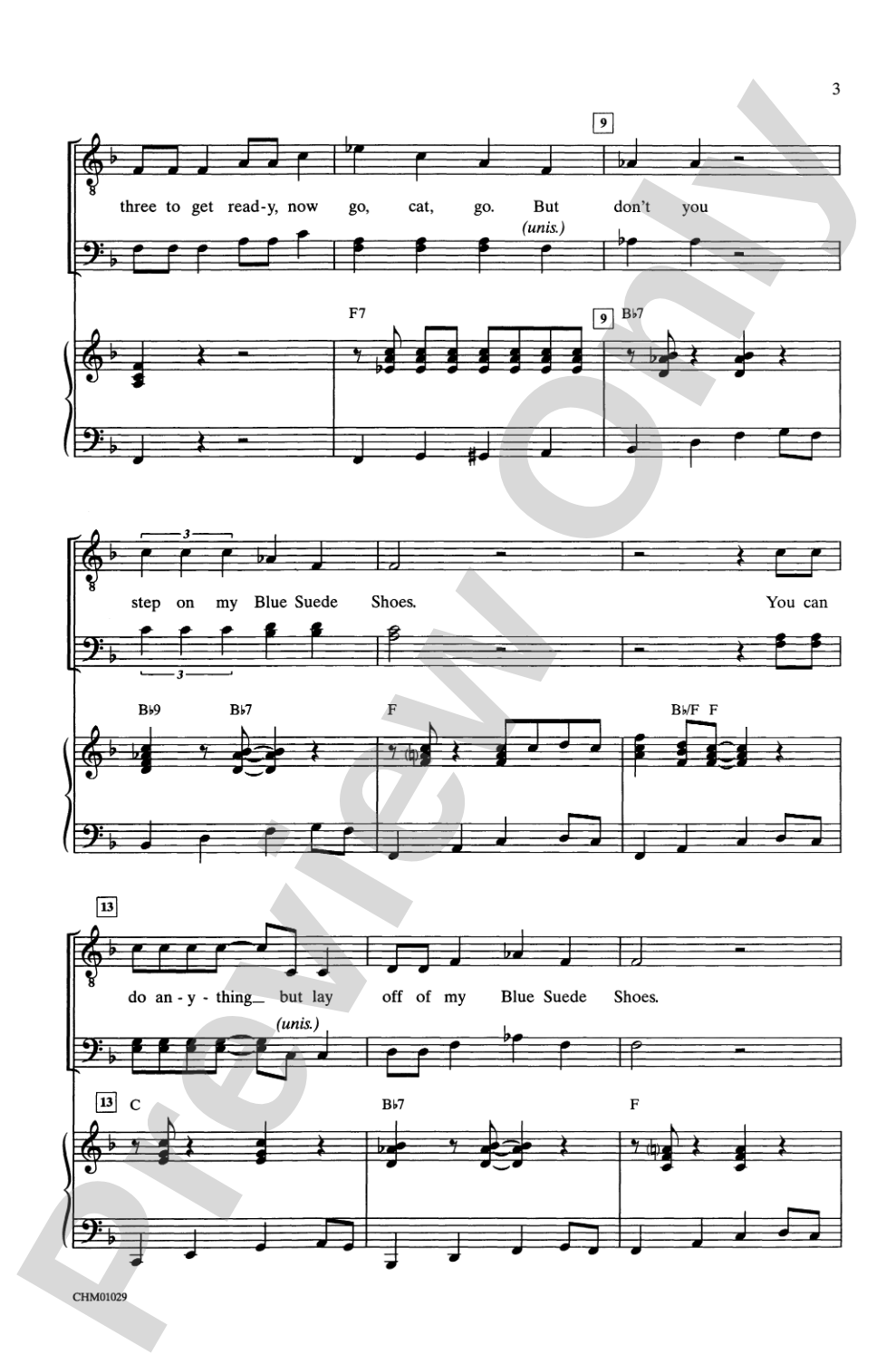

Blue Suede Shoes: TBB Choral Octavo
Words and music by Carl Lee Perkins / arr. Jeff Funk
Level: Moderate
Item: 00-PO-0004772
$2.25
Minimum order quantity: 20 copies
Pickup currently not available
Description
Everyone will think of Elvis when they hear this one! Take your audience back to the early days of rock and roll with this '50s pop classic.


Blue Suede Shoes: TBB Choral Octavo isn't in MakeMusic Cloud just yet...but it could be. Let us know you'd like to see it, and you'll help shape what comes next. In the meantime, start a free trial and dive into thousands of interactive titles your students can play along with today.
Request This Title
Tell us you want it.
Start Your Free Trial
Explore everything that's ready to play right now.
Sample Audio
No sample audio found.
Sample Video
No sample videos found.
Additional Details
Series:
Alfred Archive Edition: Alfred Pop Choral Series
Publisher:
Alfred Music
Page Count:
12
SKU:
00-PO-0004772
More about this title
About the Composer: Carl Lee Perkins
Carl Lee Perkins (1932-1998) was a pioneering rockabilly musician and songwriter who shaped the sound of early rock and roll. Born in Jackson, Tennessee, Perkins wrote and recorded "Blue Suede Shoes" in 1955, a song that became a crossover hit and remains one of the most covered songs in American music history.
Perkins' influence extended far beyond his own recordings. His guitar style, songwriting, and energy helped define the rockabilly genre and influenced musicians across rock, country, and pop. While Elvis Presley's version of "Blue Suede Shoes" introduced the song to millions, Perkins' original recording remains the gold standard of the era, cementing his place as a foundational figure in rock and roll history.
Why we love this
Jeff Funk's arrangement captures the infectious energy and swagger of '50s rock and roll while remaining perfectly accessible for developing treble choirs. The voicing sits naturally for TBB forces, the rhythmic drive keeps singers engaged, and the arrangement respects the original's appeal without requiring advanced vocal technique. Programming this alongside other pop standards creates a concert segment that lands with audiences of all ages.
What to expect
Walking into the rehearsal space with this piece feels like stepping back into a sock hop. The swagger, the drive, the undeniable coolness of early rock and roll radiates from the page. Even as students are learning the mechanics of the arrangement, they're already imagining themselves delivering this with attitude and energy.
Who it's for
This arrangement suits intermediate treble choirs (grades 6-9 and community choirs) who want to add an energetic pop hit to their repertoire. The moderate difficulty level makes it achievable without extensive vocal training, while the iconic melody and '50s rock aesthetic appeal to singers and audiences alike.
How to get the most out of it
- Lock in the rhythmic groove from the first rehearsal. The drive and swagger of this piece depend entirely on consistent tempo and crisp articulation of the rhythmic figures.
- Balance the upper voices carefully during the refrain so the melody cuts through without drowning out the harmonic support underneath.
- Use the recorded accompaniment in rehearsal to internalize the style and feel of the original recording; it's a powerful reference for understanding the attitude this piece demands.
- Let the text work for you. The repeated phrasing and catchy hook make this piece fun to sing, so encourage singers to commit to the attitude and character of the era.
How to use it
Program this as an upbeat moment in a pop or rock-themed concert, or use it to bridge a set of classic American songs spanning decades. The piece works equally well as a standalone crowd-pleaser or as part of a larger medley or themed program. It's also ideal for spring or end-of-year concerts where you want to celebrate something fun and historically significant without demanding serious dramatic depth.
Skills your students will build
- Maintaining steady rhythm and groove in a pop/rock style
- Balancing melody and harmony in close voicings
- Singing with stylistic authenticity and attitude
- Reading and performing syncopated rhythmic patterns
- Blending treble voices across a three-part texture