
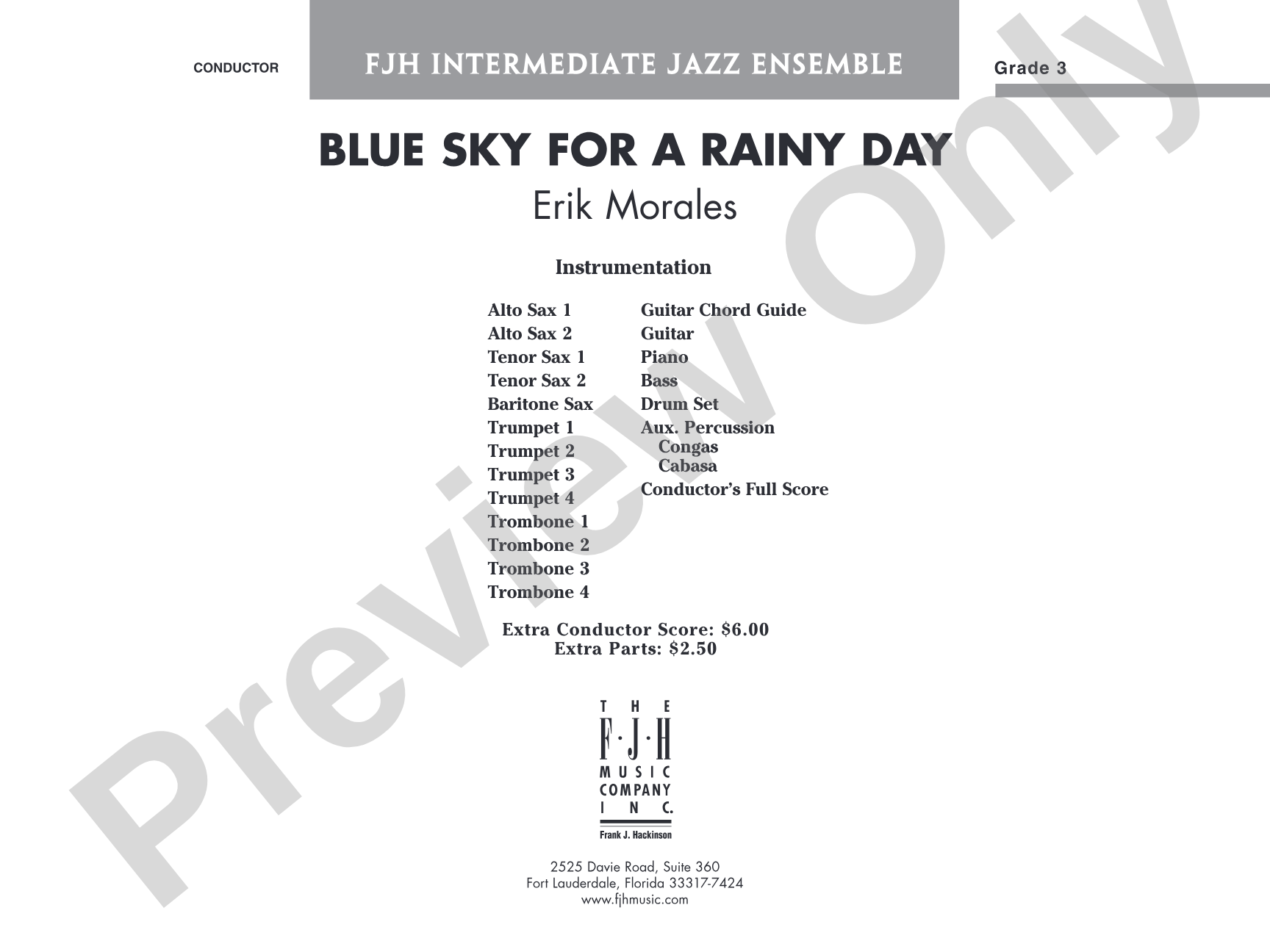
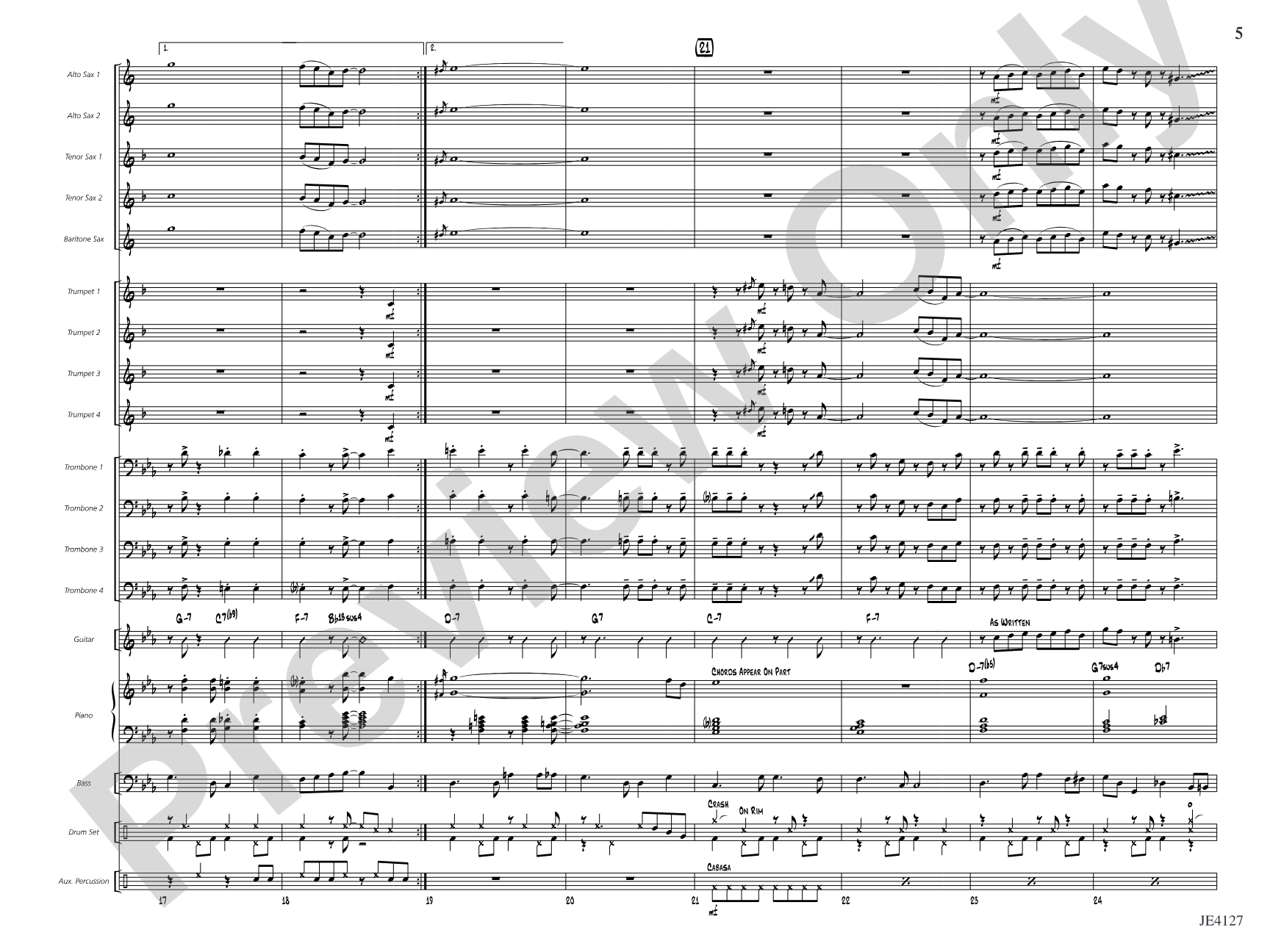
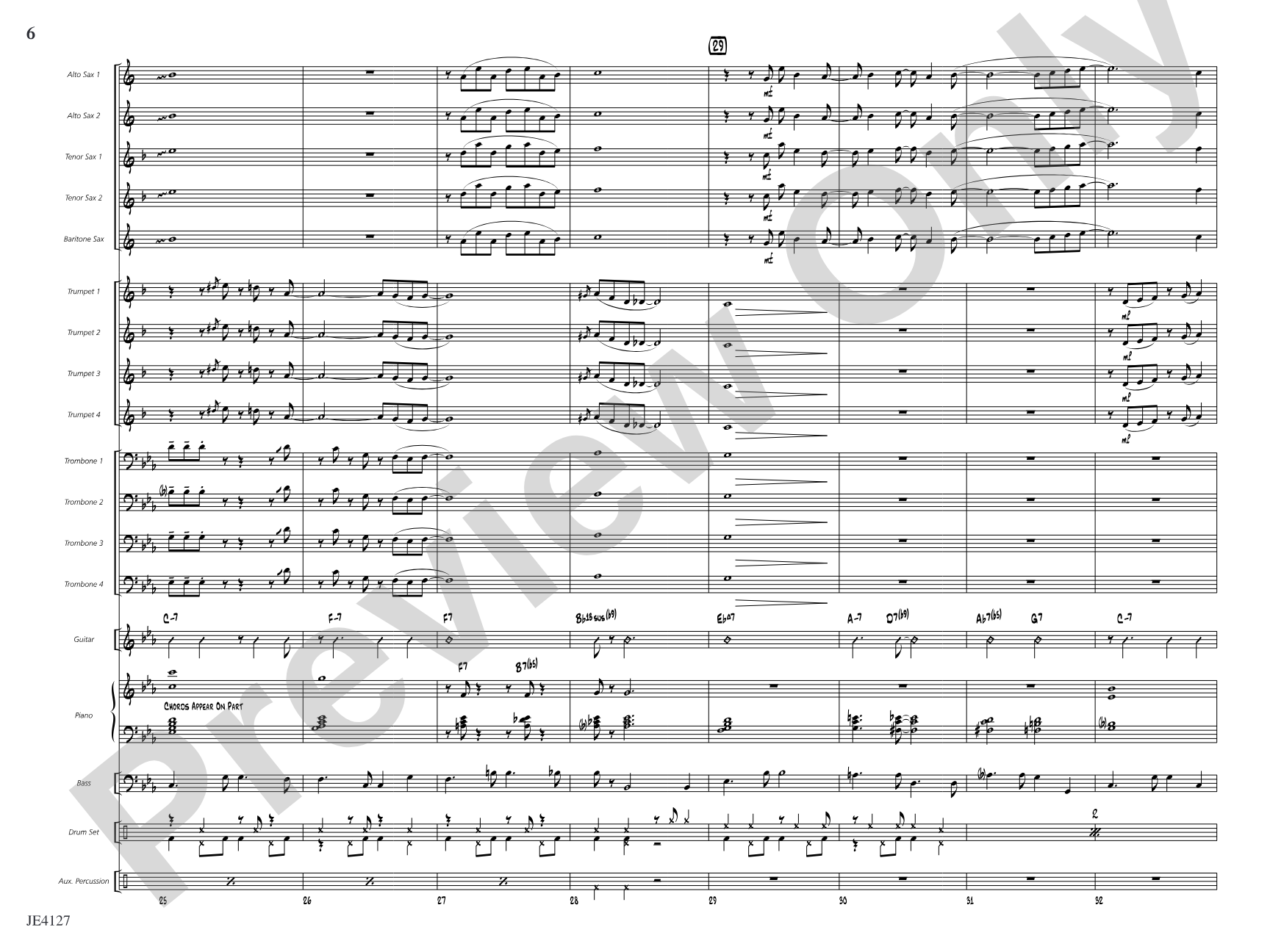
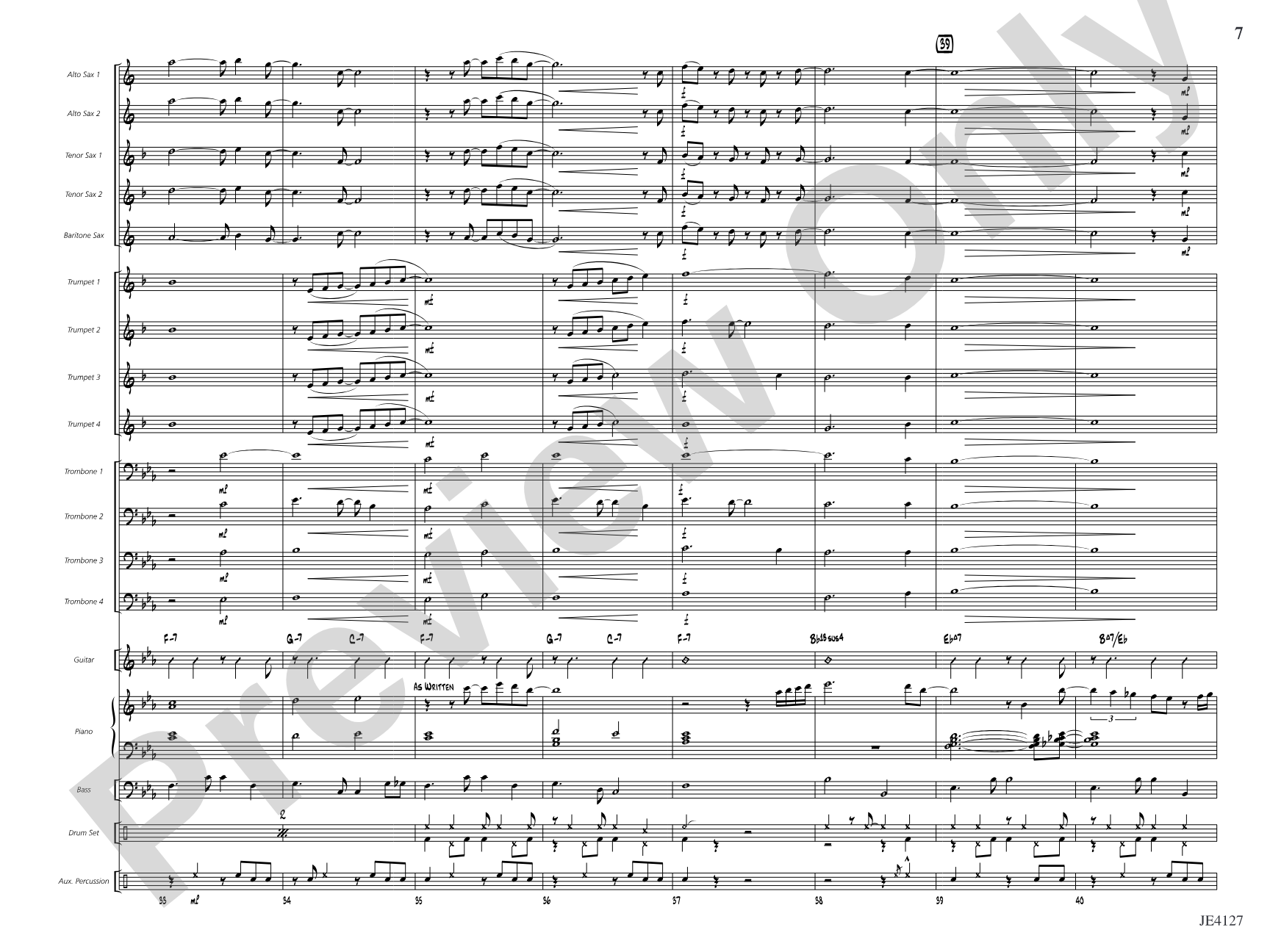
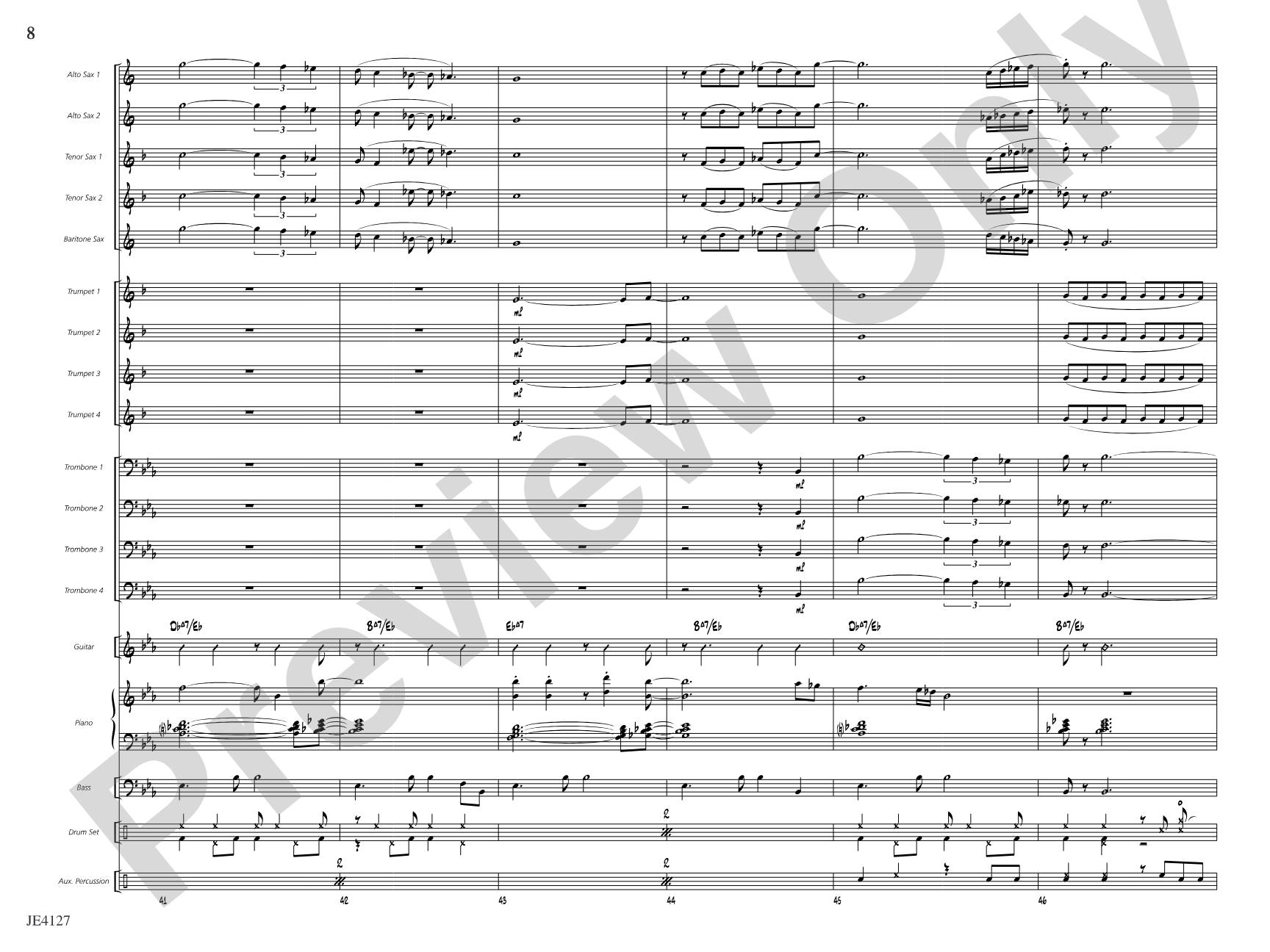
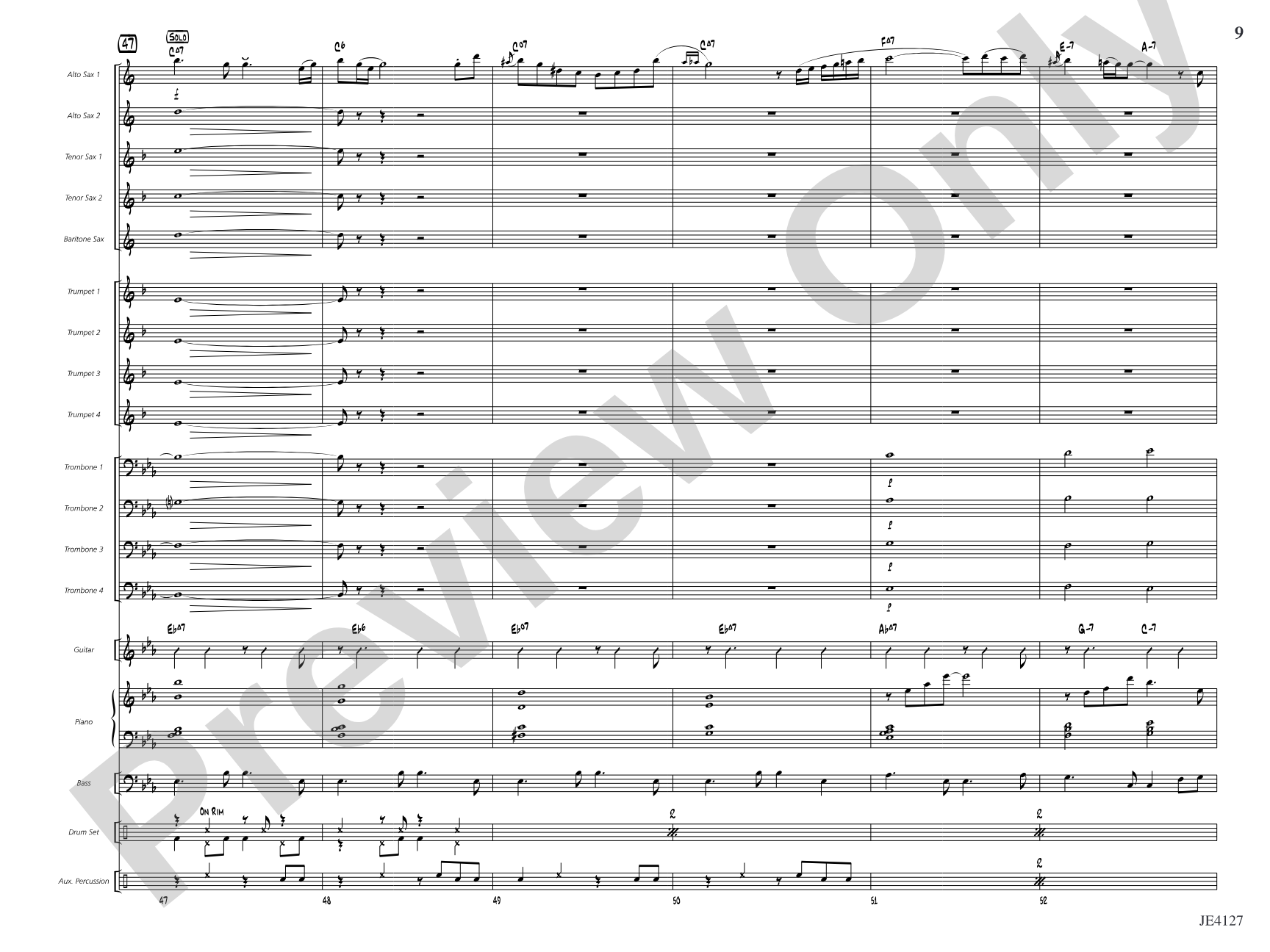
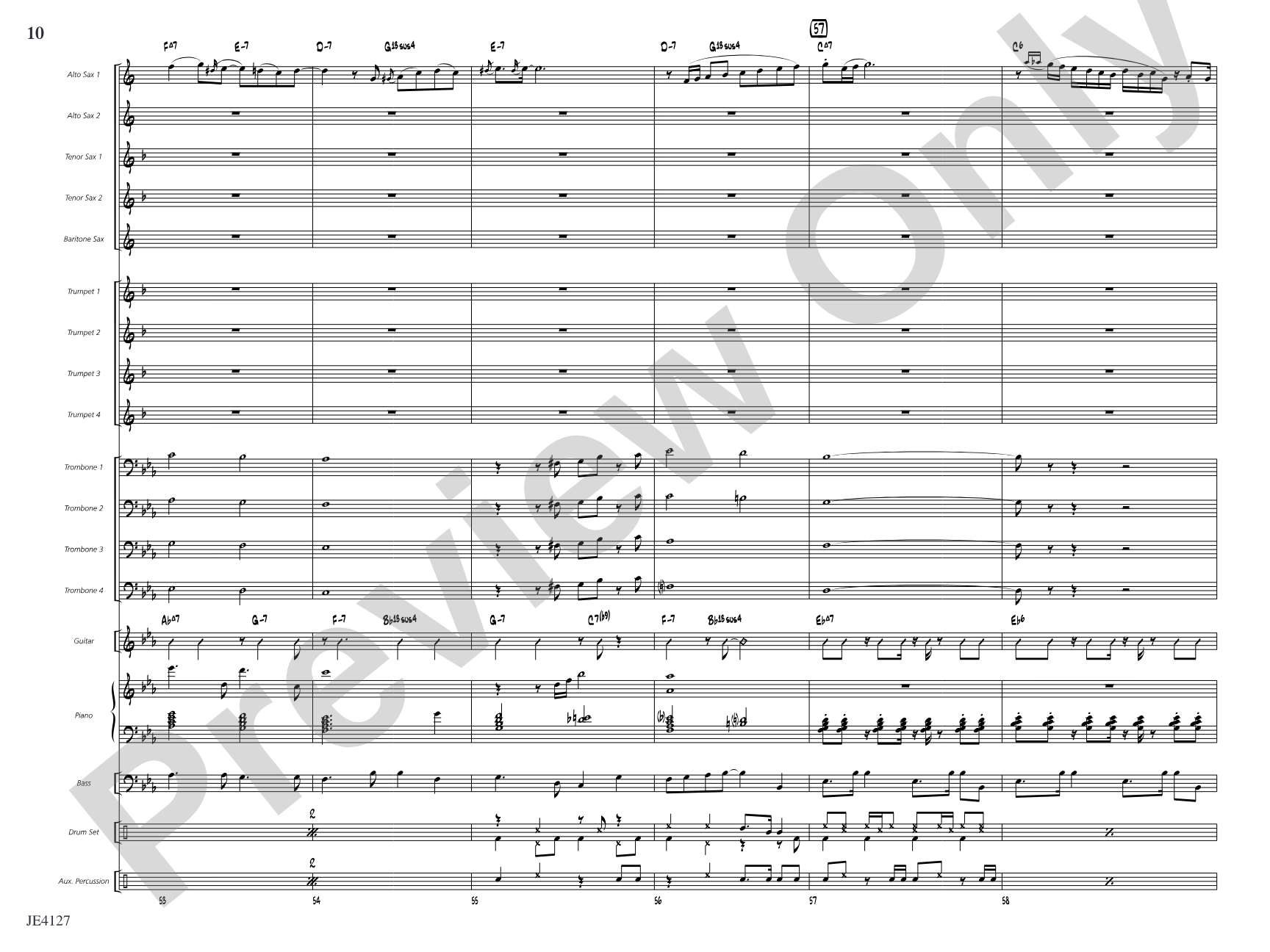
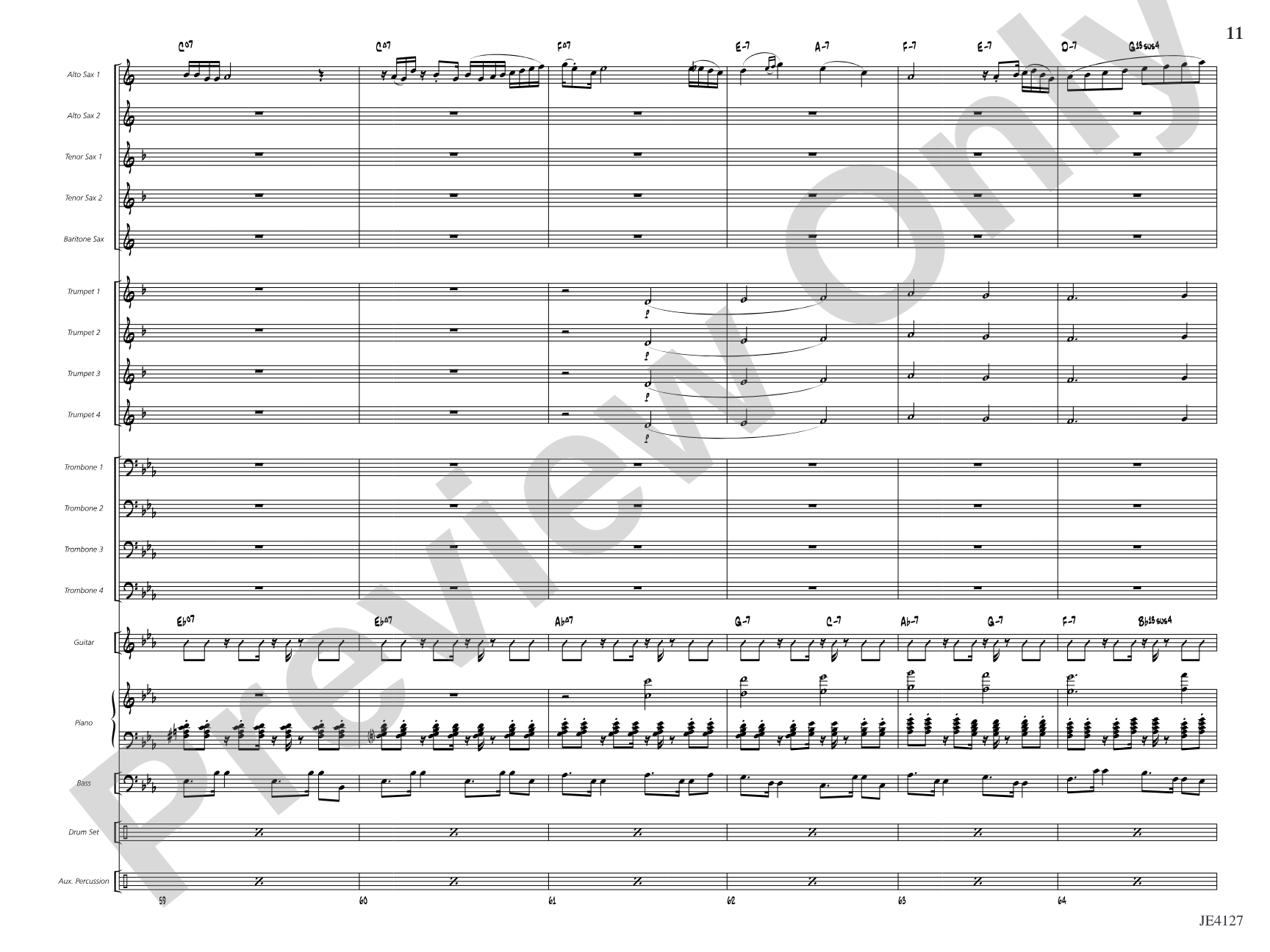
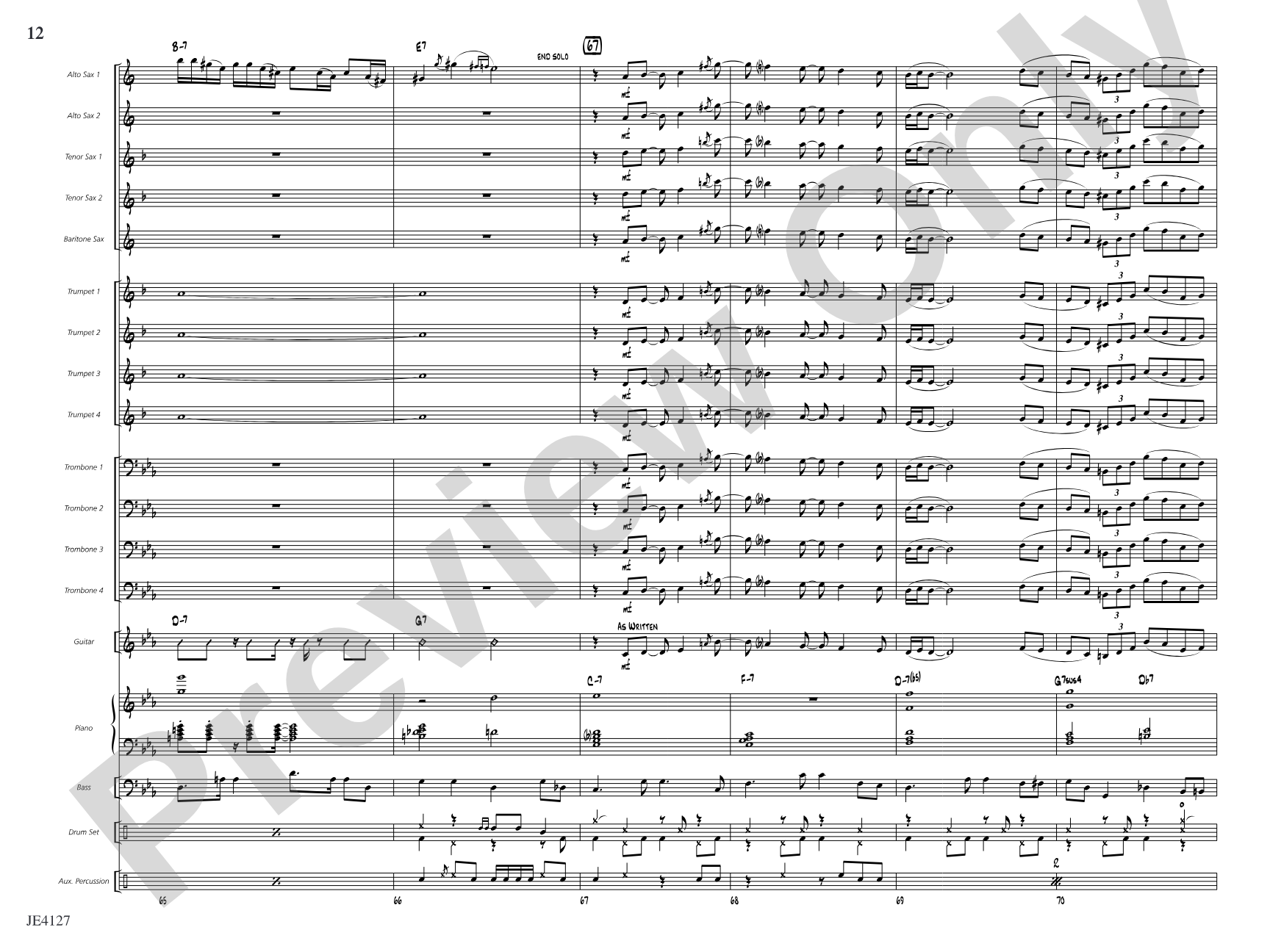
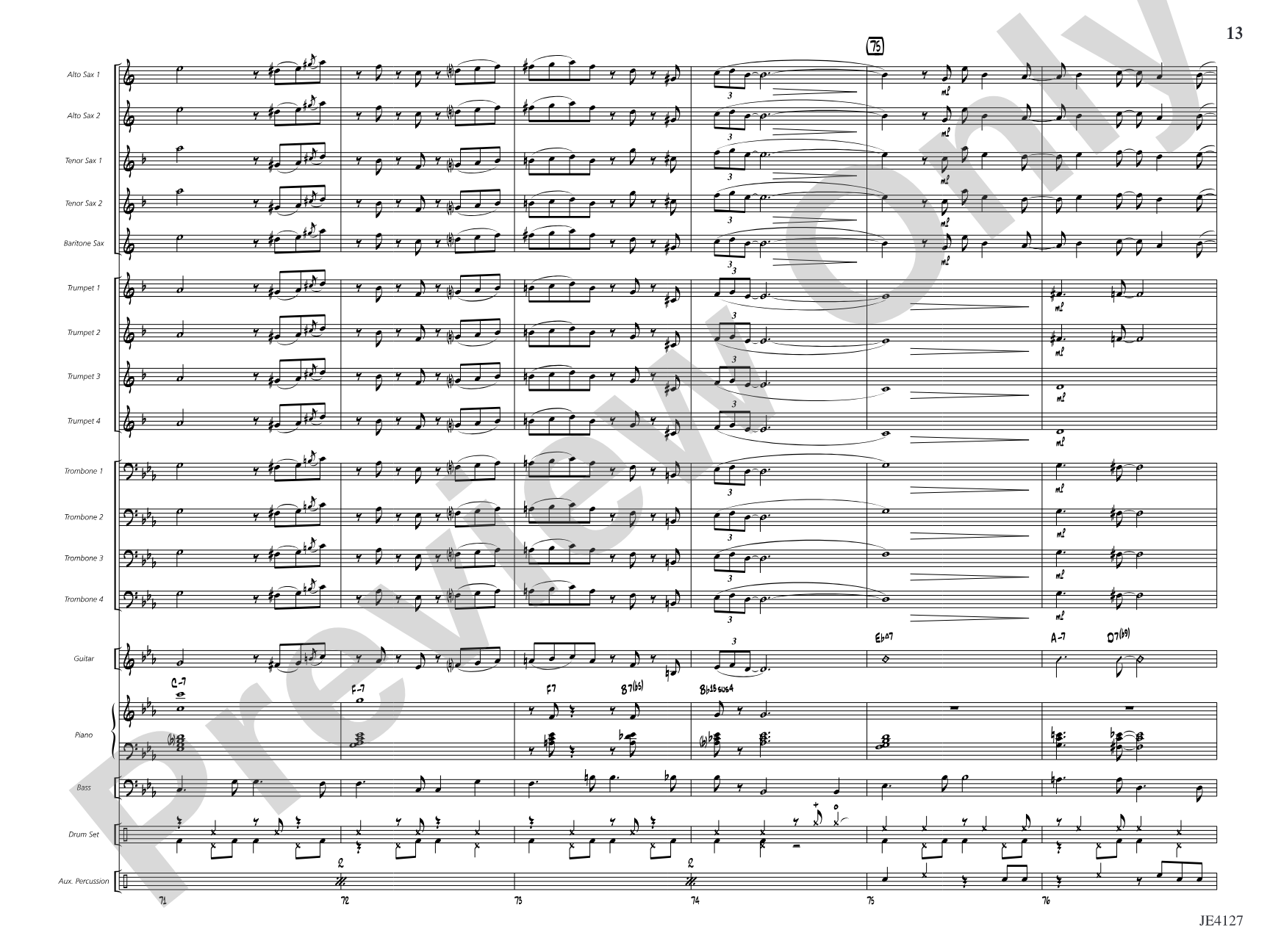
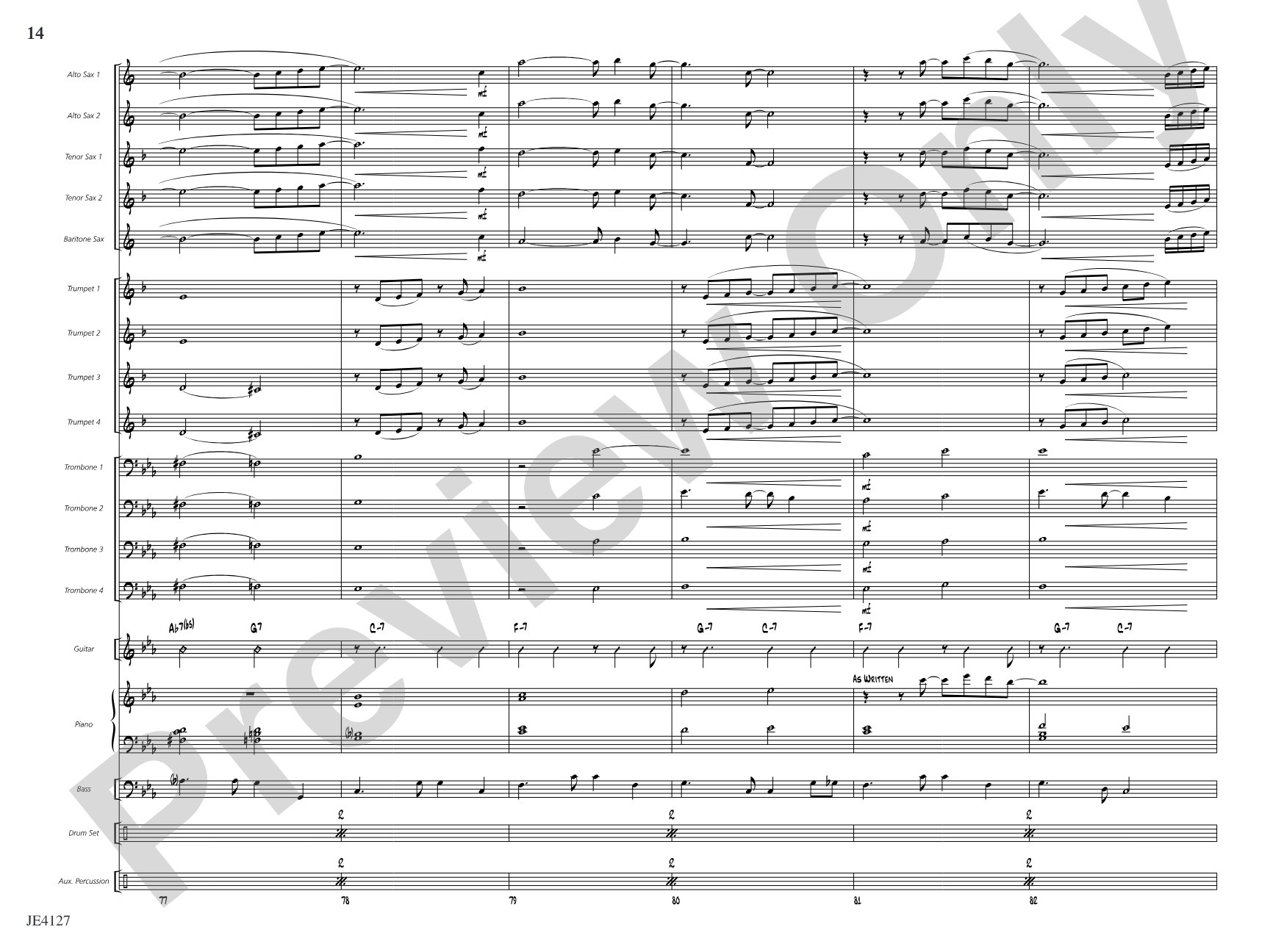
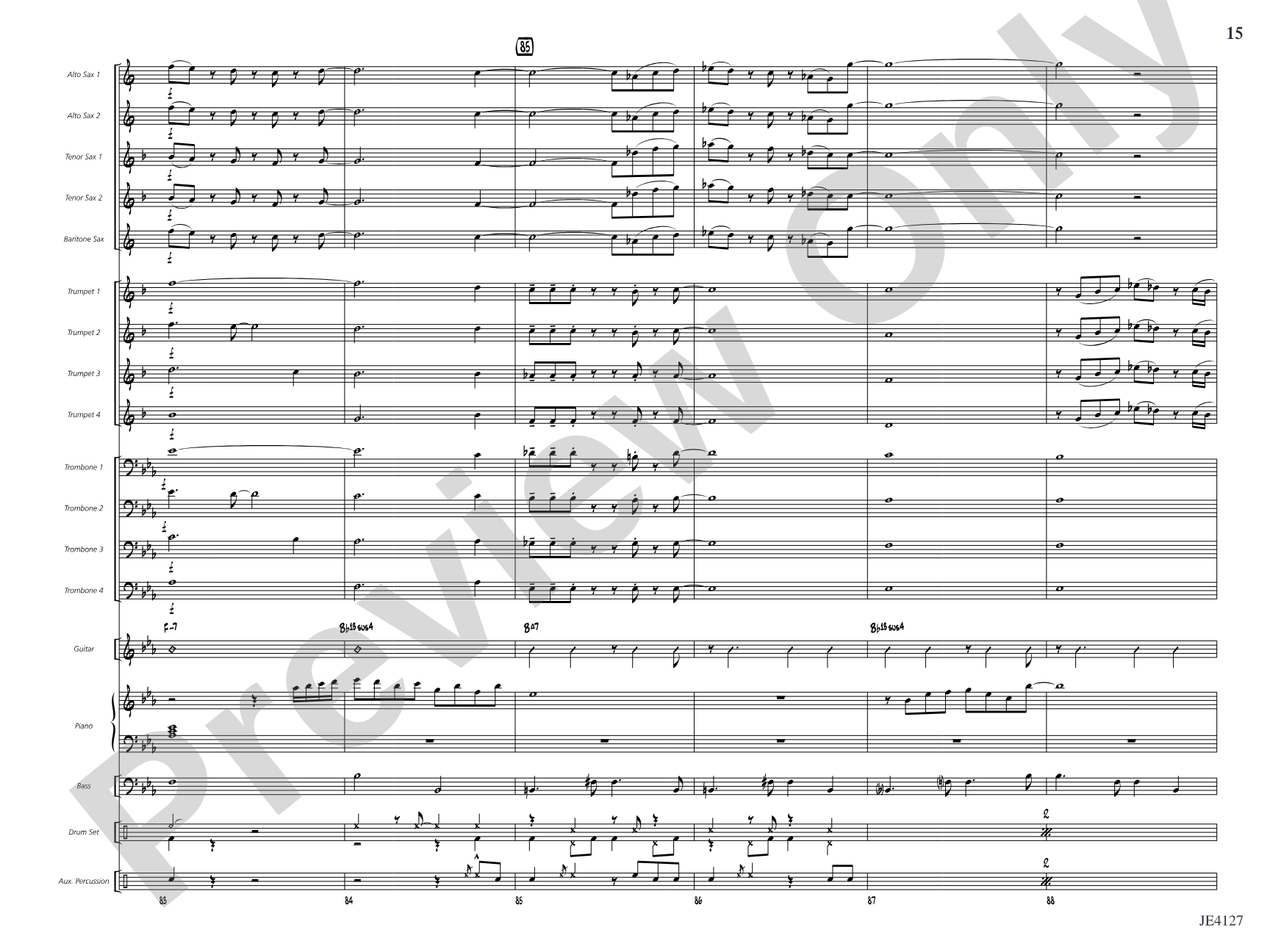
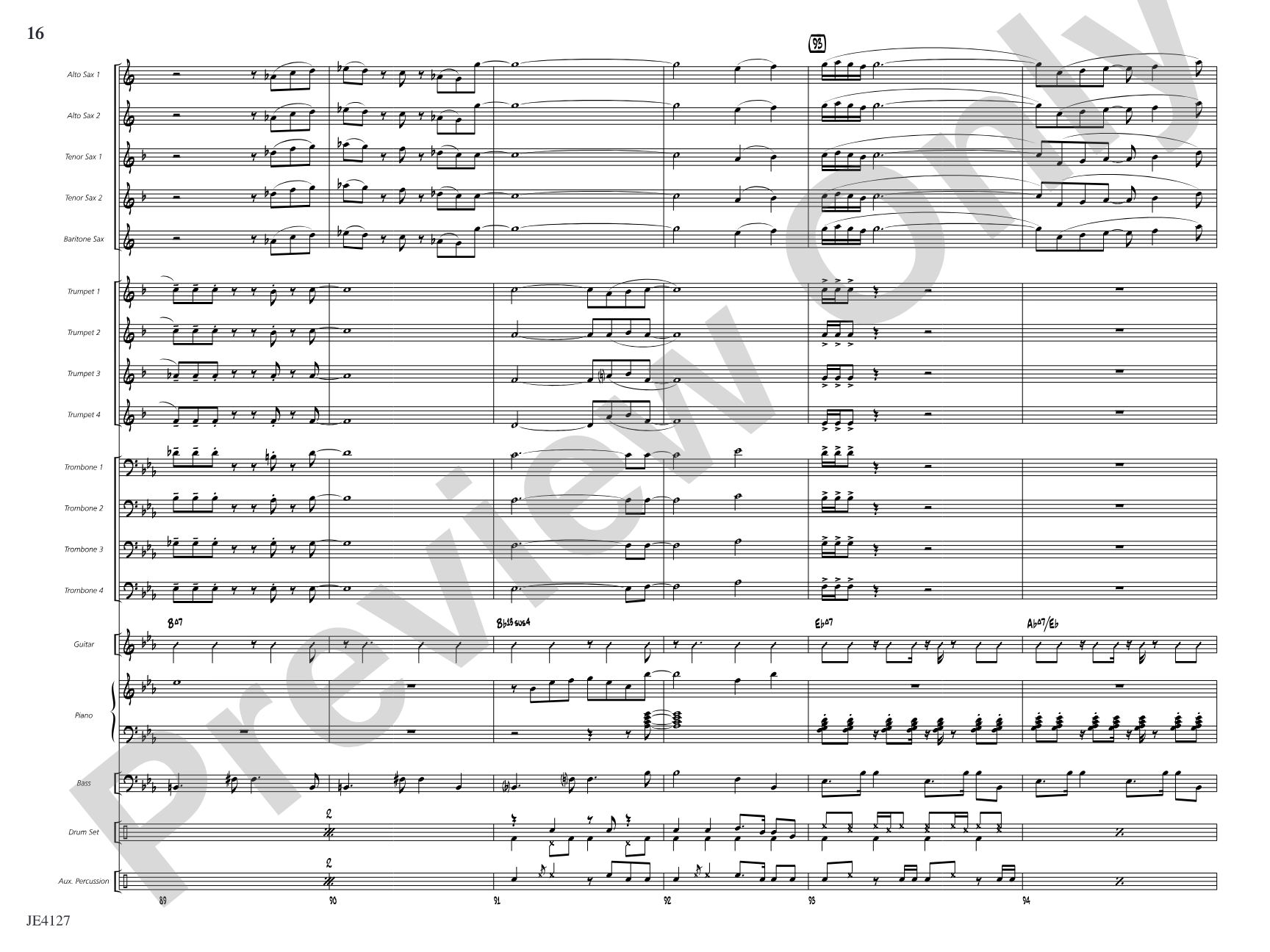

Blue Sky for a Rainy Day: Jazz Ensemble Conductor Score & Parts
By Erik Morales
Grade: 3
Item: 98-DJE4127
$55.00
Pickup currently not available
Buy Extra Parts (Digital PDF Download)
Parts Added to Cart!
Description
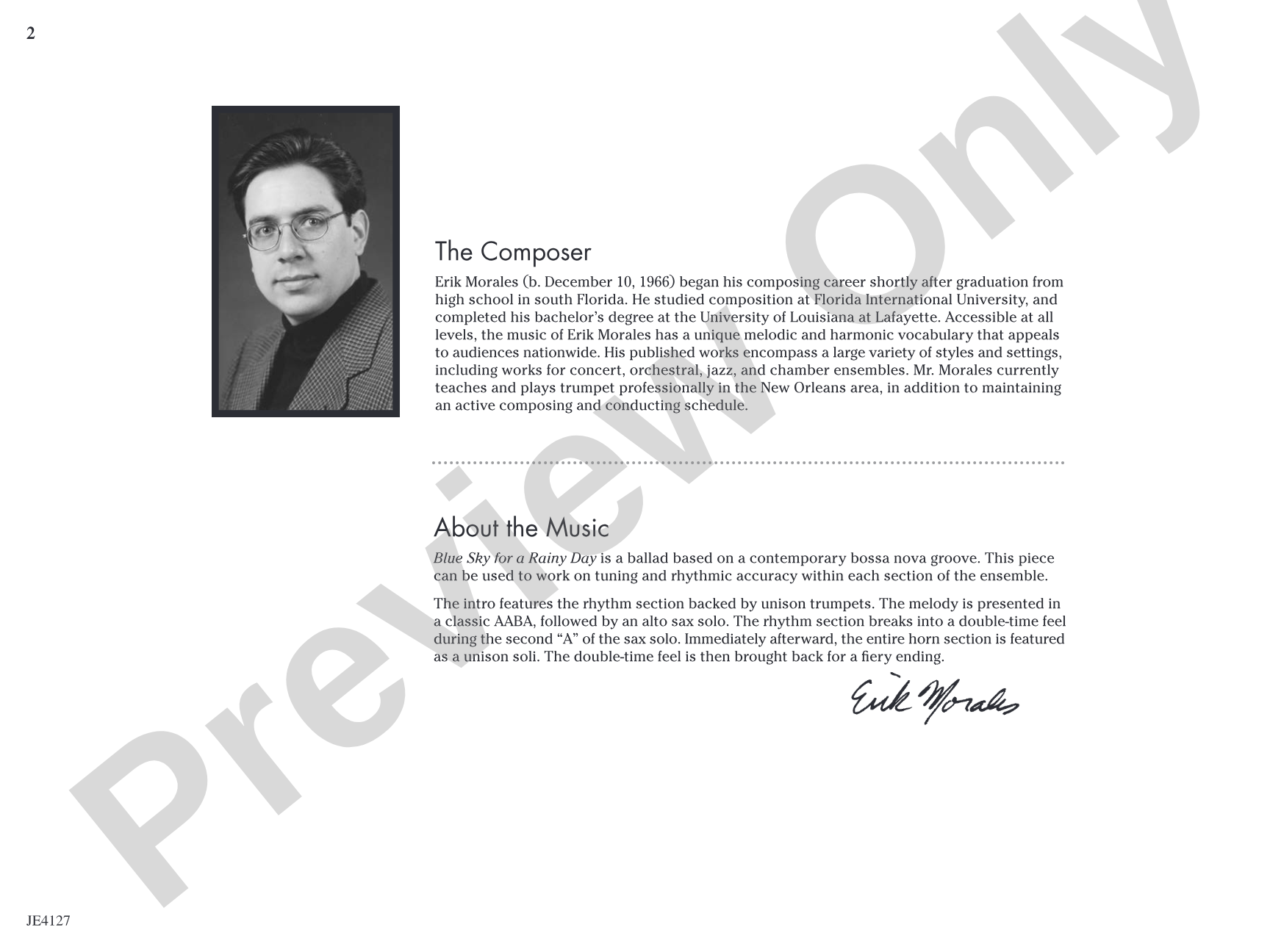
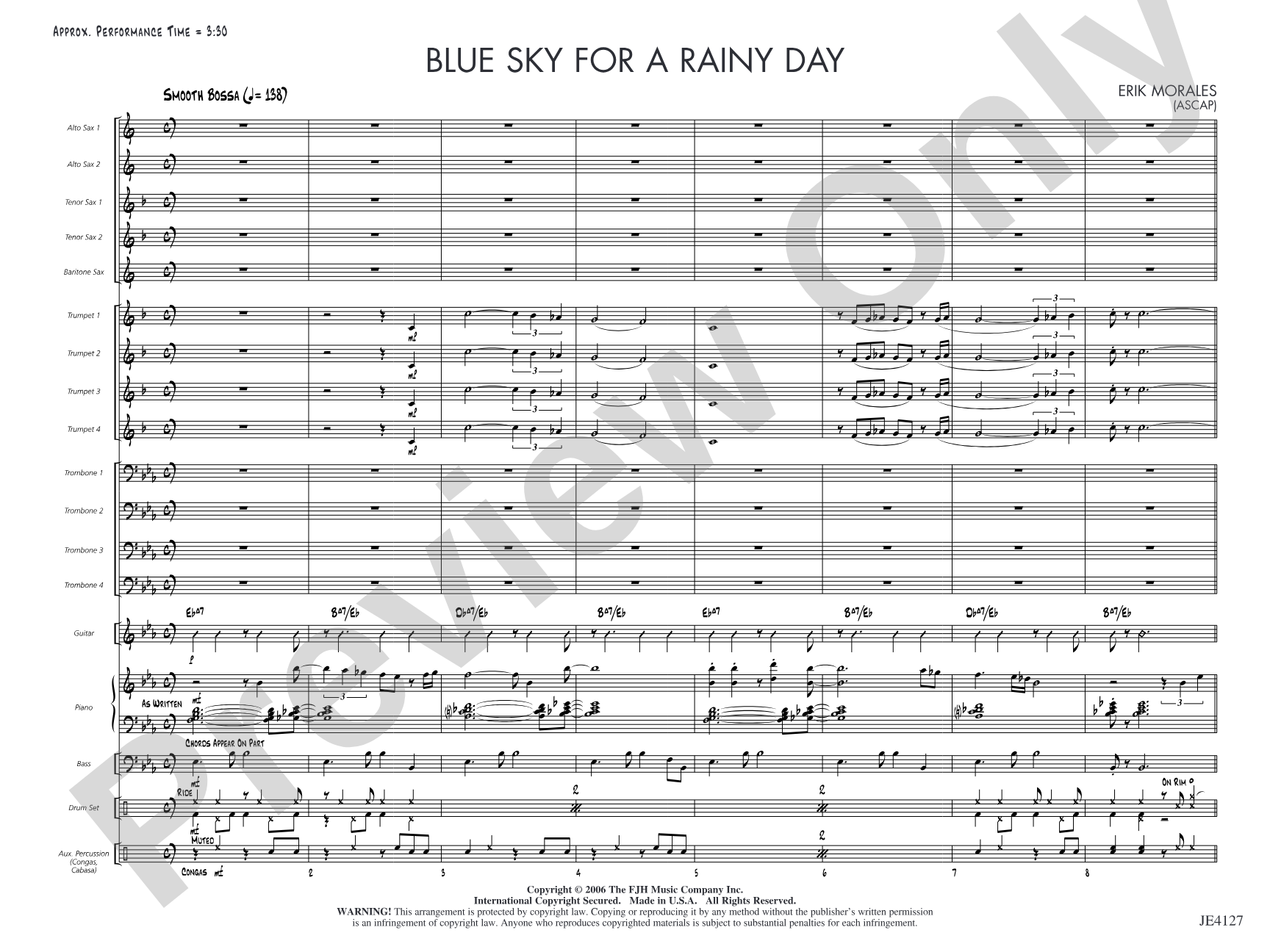
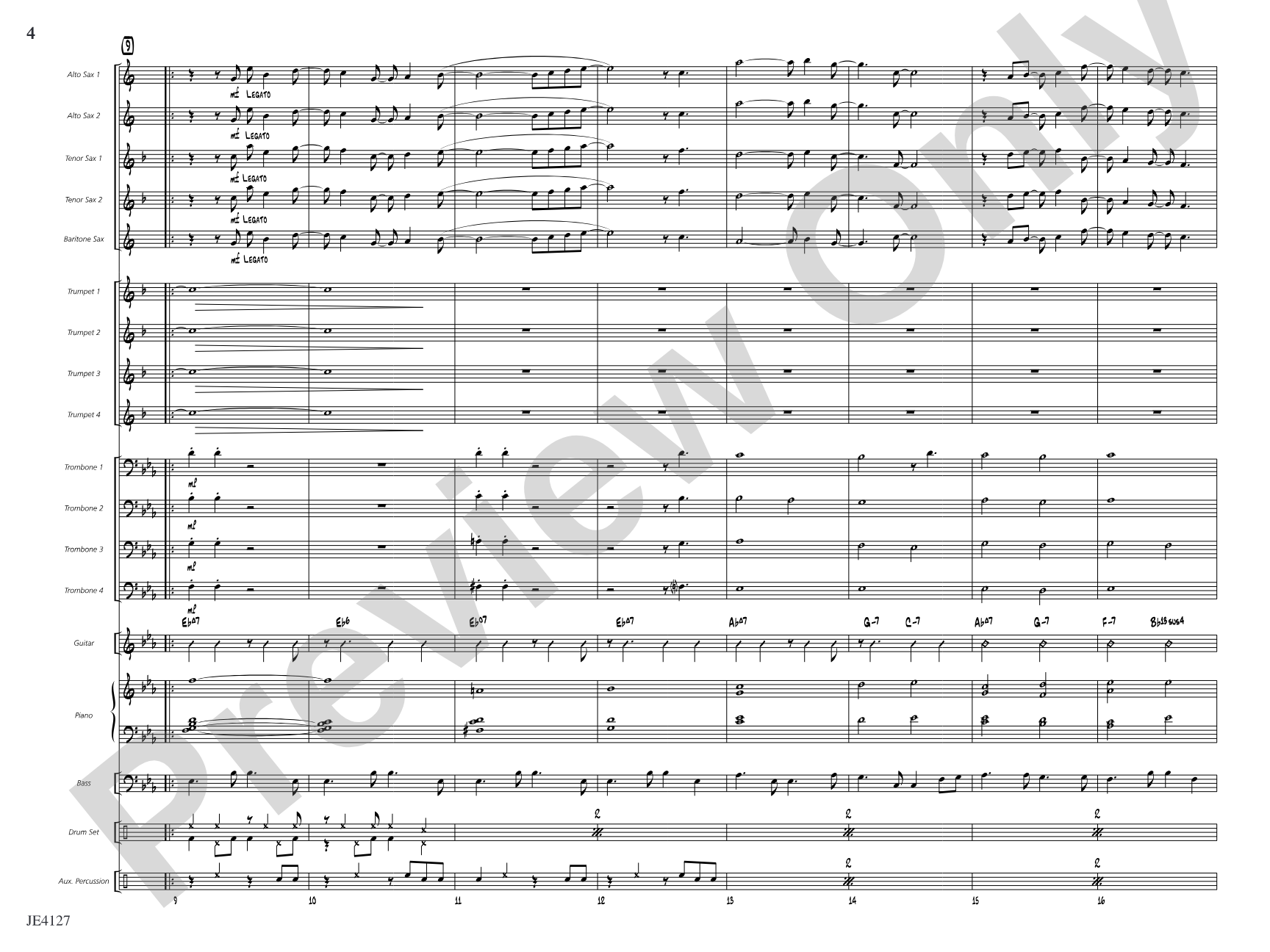
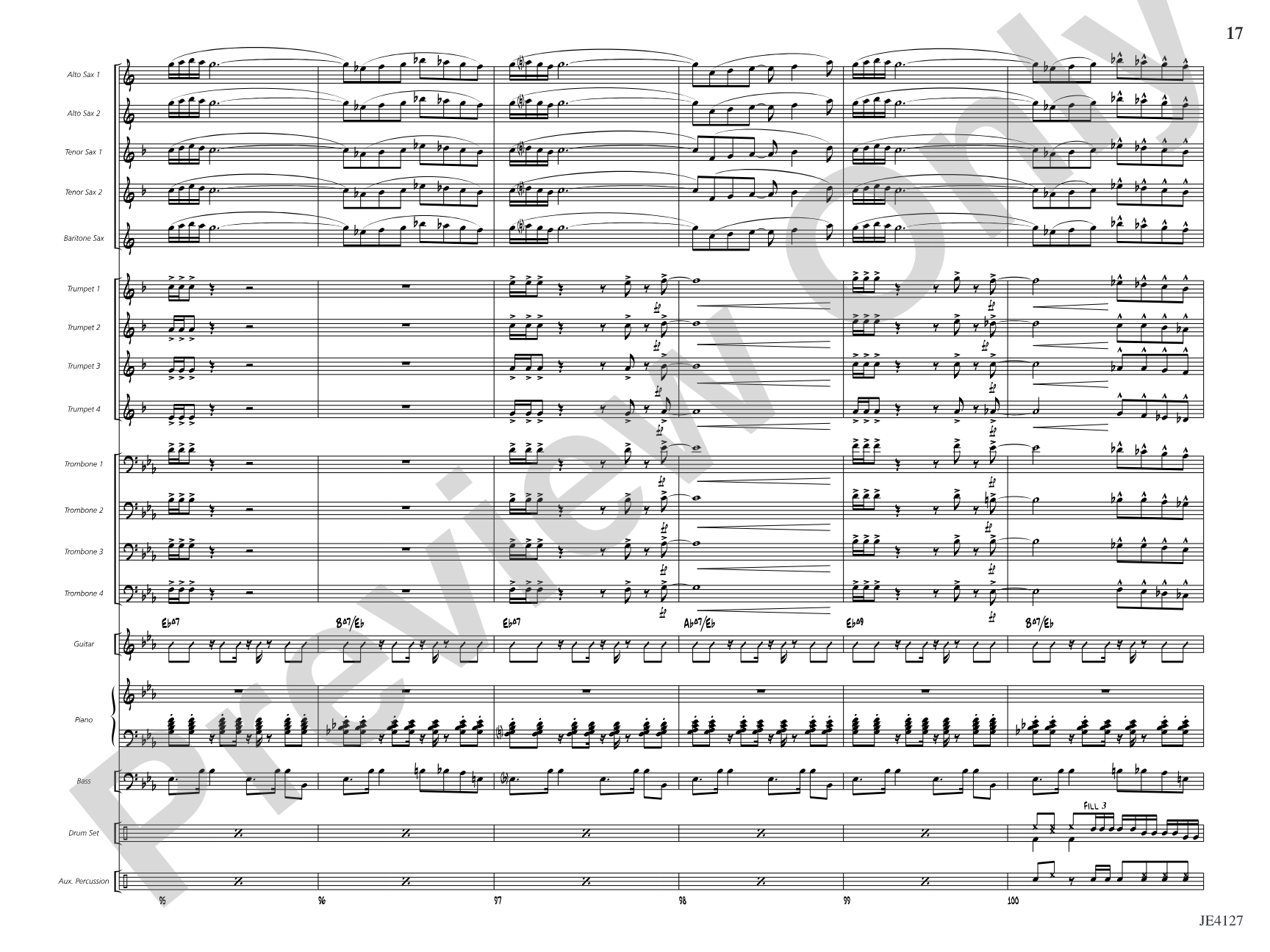
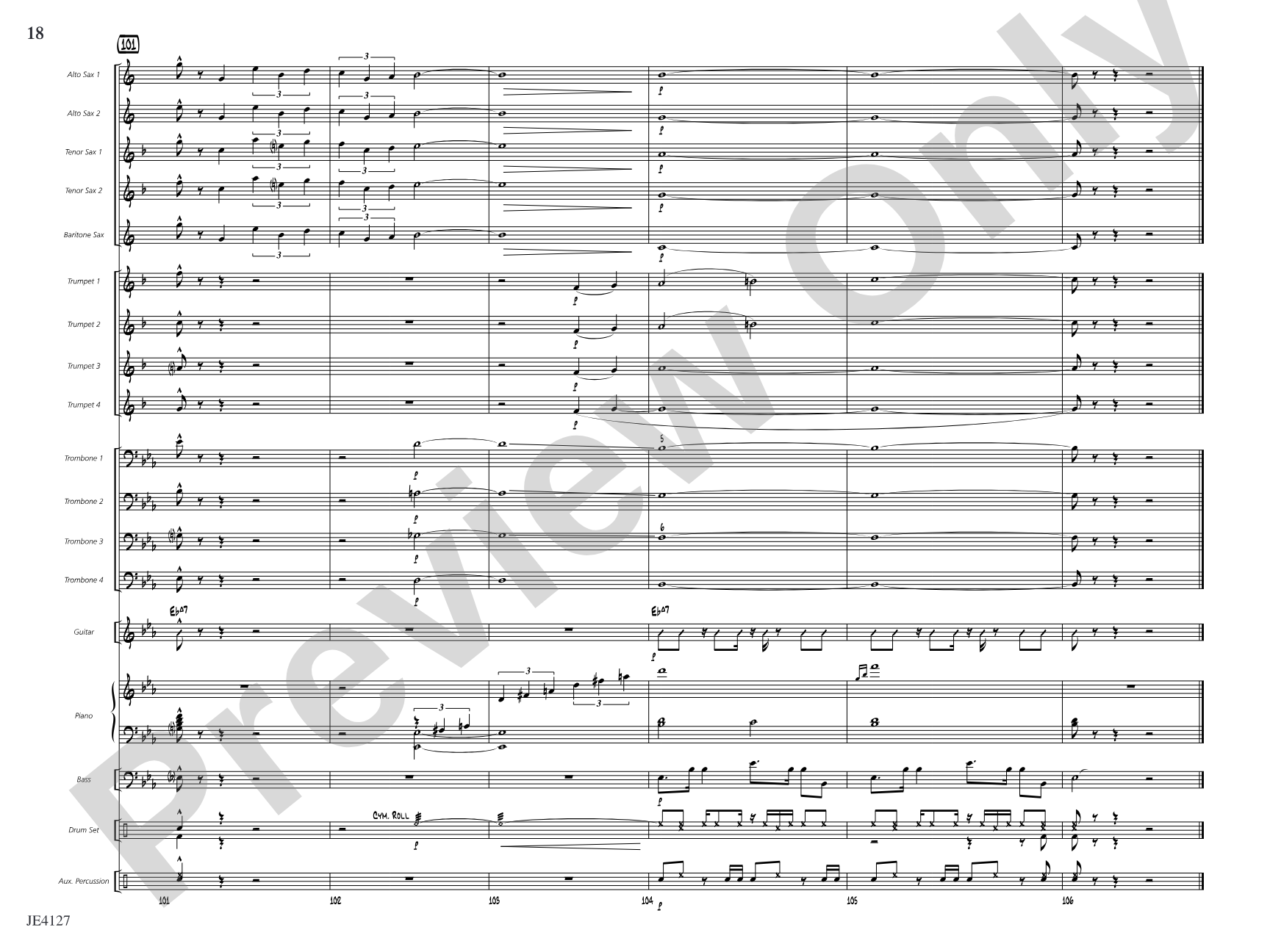
Blue Sky for a Rainy Day is a ballad based on a contemporary bossa nova groove. This piece can be used to work on tuning and rhythmic accuracy within each section of the ensemble.


Blue Sky for a Rainy Day: Jazz Ensemble Conductor Score & Parts isn't in MakeMusic Cloud just yet...but it could be. Let us know you'd like to see it, and you'll help shape what comes next. In the meantime, start a free trial and dive into thousands of interactive titles your students can play along with today.
Request This Title
Tell us you want it.
Start Your Free Trial
Explore everything that's ready to play right now.
Sample Audio
1
Audio File
--:--
0:00
0:00
Sample Video
No sample videos found.
Additional Details
Series:
FJH Intermediate Jazz Ensemble
Publisher:
The FJH Music Company, Inc.
SKU:
98-DJE4127
More about this title
About the Composer: Erik Morales

Erik Morales began composing during his high school years in south Florida, when his former band director invited him to arrange music for the marching band in 1985. This early opportunity launched a prolific career that now spans over 150 published works across classical, jazz, wind, orchestral, and chamber settings. His compositions have been performed worldwide and commissioned regularly by schools and organizations across the United States.
A graduate of Florida International University and the University of Louisiana, Lafayette (1989), Morales has made significant contributions to the trumpet repertoire. His trumpet ensembles have earned first place honors at the 2006 and 2008 National Trumpet Competitions, and his Concerto for Trumpet in C and Piano was premiered at the 2009 International Trumpet Guild conference. In 2016, he was inducted into the Louisiana Association for Jazz Education's Hall of Fame.
Why we love this
This piece balances immediate musicality with practical pedagogical value. Morales gives you a genuine jazz composition that also serves as a focused tool for addressing tuning and section rhythmic precision, so you're not sacrificing one for the other.
What to expect
Contemplative and grounded, this ballad has the relaxed sophistication of a late-night bossa nova that invites listeners in rather than demanding applause. The contemporary groove gives it warmth and presence even at modest tempos.
Who it's for
Jazz ensemble directors at the intermediate level who want accessible repertoire that also delivers genuine pedagogical objectives. This works for ensembles seeking to strengthen rhythmic cohesion and intonation without stepping down from a musically engaging piece.
How to get the most out of it
- Work the bossa nova rhythm as a full ensemble before sectional rehearsals. Once the groove locks in together, individual section tuning issues become much clearer to isolate and address.
- Have each section practice their rhythmic figures independently first, using a metronome. This builds confidence and accountability before blending with the rest of the band.
- Pay attention to how the ballad melody sits over the contemporary groove. The contrast between the two elements is what makes the piece work, so avoid letting either element overshadow the other in the mix.
- Record a rehearsal run-through and listen back as a group. Identifying tuning drift or rhythmic slippage together builds ensemble awareness and ownership of the sound.
How to use it
Pair this with an up-tempo swing chart on the same concert to showcase your ensemble's range. It also works well as a feature for a vocalist if your program includes one, or as a standalone moment that gives your audience a chance to hear the band's collective intonation and blend.
Skills your students will build
- Tuning and intonation balance within four-part jazz ensemble voicings
- Rhythmic accuracy in contemporary bossa nova grooves
- Playing ballad material with appropriate dynamics and phrasing in a jazz context
- Sectional independence while maintaining ensemble cohesion