Blue Rondo à la Turk Cover Image

Blue Rondo à la Turk: Percussion Ensemble

$17.99 USD
Sale price  $17.99 USD Regular price 
Skip to product information
Blue Rondo à la Turk Cover Image

Blue Rondo à la Turk: Percussion Ensemble

For Percussion Sextet with Optional Bass Guitar

By Dave Brubeck / arr. Jeff Moore

Level: Intermediate / Advanced

Item: 00-32644

makemusic Cloud badge

Need it now?

Buy Digital Version
$17.99
Shipped

One moment…

Description
In celebration of the 50th anniversary of the Dave Brubeck landmark jazz recording "Time Out," Alfred presents a percussion ensemble arrangement of the popular Brubeck composition from that album, Blue Rondo à la Turk, written especially for the developing intermediate and advanced percussion ensemble. This arrangement captures the essence and form of his masterpiece, including mixed meters with a 12-bar blues and the classic Joe Morello drum track.

Don't just read it, hear it, play along with it, and watch your students grow with it. In MakeMusic Cloud, Blue Rondo à la Turk: Percussion Ensemble comes alive with professional accompaniment, adjustable tempo, and built-in practice tools that turn solo practice into real progress.

Sample Pages

Sample Audio
0:00
0:00
Sample Video
Additional Details
Series: Alfred's Pop Percussion Ensemble Series
Publisher: Alfred Music
Page Count: 28
UPC: 038081354781
SKU: 00-32644

More about this title

About the Composer: Dave Brubeck
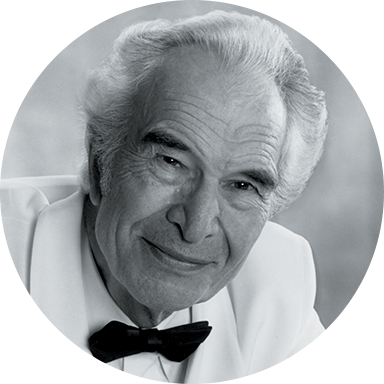
Dave Brubeck

Dave Brubeck built his reputation as a jazz pianist with an exceptional ear for improvisation, but his output extended far beyond the jazz idiom. He composed orchestral works, chamber music, choral pieces, and large-scale compositions for chorus and orchestra, all while maintaining the language of jazz that his mentor Darius Milhaud encouraged him to explore. His 1959 album "Time Out" became the first jazz recording to sell over a million copies, and the single "Take Five" remains one of jazz's most recognizable compositions.

Brubeck's influence extended beyond music into social change; he was instrumental in breaking racial barriers in mid-20th-century American music. His sacred works, including the mass "To Hope!" and the oratorios "The Voice of the Holy Spirit" and "Beloved Son," have been performed and recorded internationally by major orchestras and choral ensembles. His contributions earned him a Grammy Lifetime Achievement Award, induction into the American Classical Music Hall of Fame in 2003, and the Presidential Medal of the Arts from President Clinton.

Why we love this

Arranging a Dave Brubeck classic for percussion ensemble gives your students a direct connection to jazz history without requiring them to read complex jazz notation or navigate bebop changes. Jeff Moore's arrangement preserves the harmonic and rhythmic sophistication of "Time Out" (including that famous mixed-meter construction) while building in parts that intermediate and advanced percussionists can actually execute, making this a rare opportunity to perform a legitimate jazz standard rather than a simplified adaptation.

What to expect

Blue Rondo à la Turk swings with an unhurried confidence, the mixed meters creating a sense of exploration rather than confusion. The piece carries the warmth of Brubeck's original while letting your percussionists discover the satisfaction of creating a groove together, moment by moment.

Who it's for

Intermediate and advanced percussion ensembles ready to tackle a piece with historical significance and genuine rhythmic complexity. Directors looking for jazz repertoire that challenges students musically without requiring them to learn improvisation or read lead sheets will find this arrangement particularly valuable.

How to get the most out of it

  • Study the original recording of "Time Out" together as an ensemble before sectional rehearsals. Hearing Joe Morello's drum part and the interplay between piano, bass, and horns will anchor your students' understanding of the groove and phrasing they're recreating.
  • Lock the pulse with your lowest-pitched instruments first (bass drum, timpani, low mallets), then build the mid-range and upper parts around that foundation. The mixed meters will feel less disorienting once the rhythmic anchor is secure.
  • Give your snare/drum kit players significant rehearsal time to internalize the characteristic Brubeck feel. The touch and articulation matter as much as the pitches and rhythms.
  • Balance ensemble sound so that melodic lines emerge clearly while the 12-bar blues progression stays active underneath. Percussion ensembles can muddy quickly when too many instruments play the same rhythmic density.

How to use it

Feature this as a concert centerpiece that highlights your ensemble's musicianship and range. It works equally well in a jazz-focused program or a mixed percussion showcase, and its accessibility to audiences (most recognize the composition) makes it an excellent choice for demonstrating to parents and community members what contemporary percussion ensemble playing can achieve.

Skills your students will build

  • Reading and performing mixed meters (5/4 and 4/4) in a cohesive ensemble
  • Understanding 12-bar blues form and harmonic progression on pitched percussion
  • Developing jazz phrasing and swing feel in a non-improvised context
  • Balancing multiple concurrent rhythmic patterns to create a unified groove
  • Recognizing the relationship between jazz keyboard, drum, and horn idioms as interpreted for percussion

You May Also Like
