
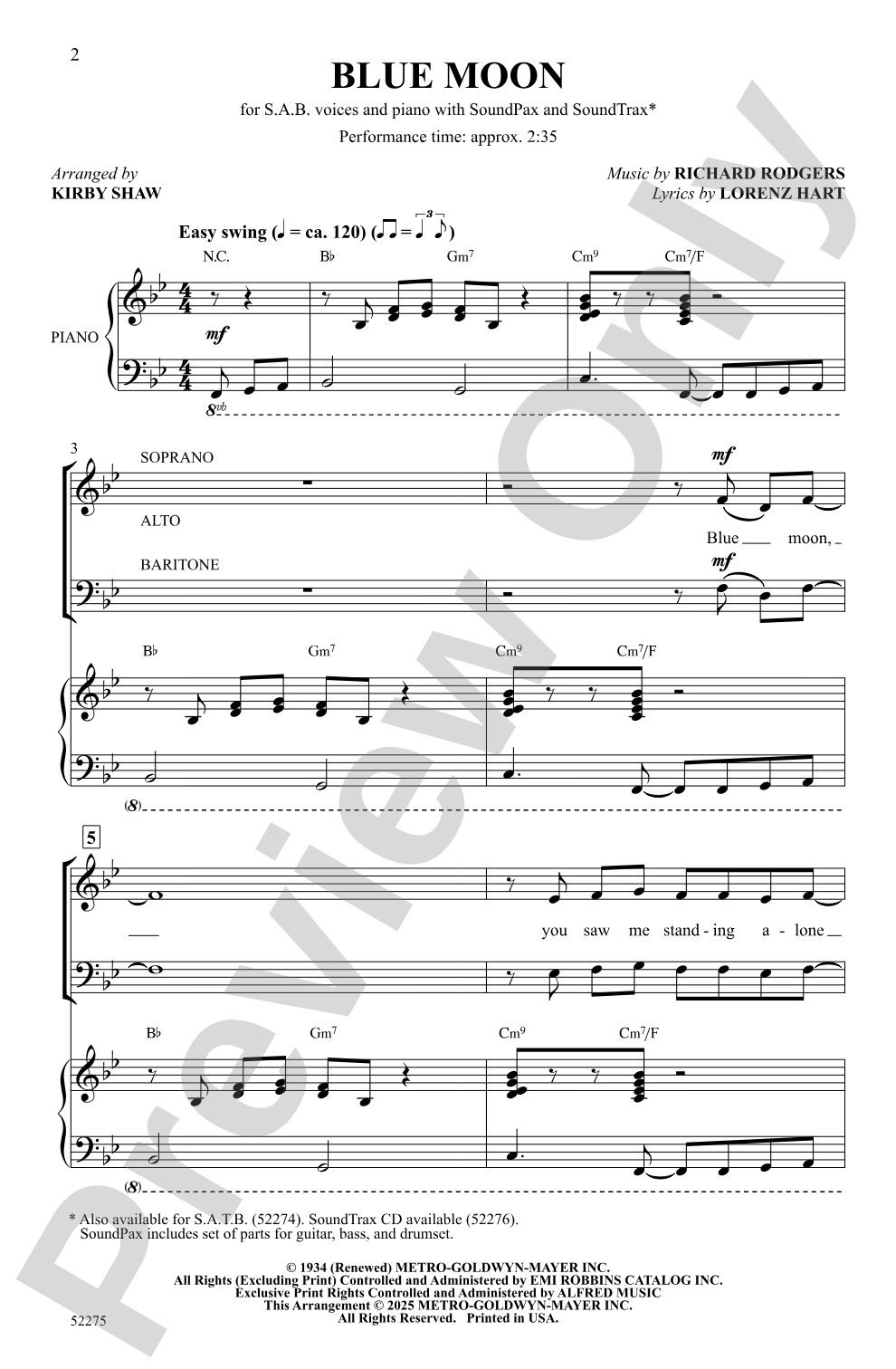
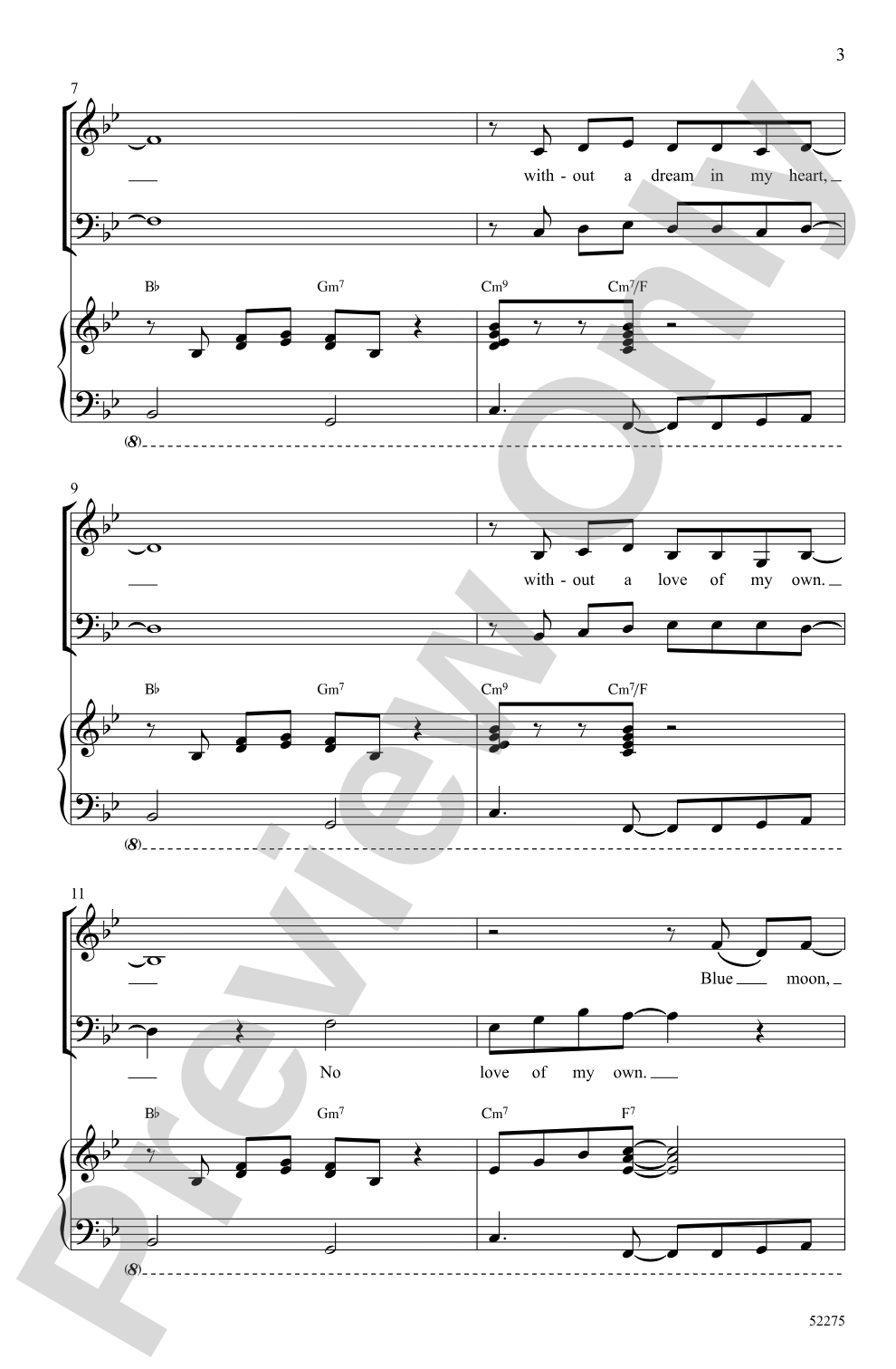

Blue Moon: SAB Choral Octavo
Music by Richard Rodgers, lyrics by Lorenz Hart / arr. Kirby Shaw
Item: 00-PO-0007618
$2.35
Minimum order quantity: 20 copies
One moment…
Description
Just in time for the movie of the same name, this Great American Songbook standard remains timeless as ever in a slick arrangement by Kirby Shaw. Tasteful vocal jazz harmonies and singable swing rhythms freshen up this beloved Rodgers and Hart classic. While neither voicing is difficult, the SAB voicing allows beginning groups to experience the style. SoundPax includes parts for guitar, bass, and drumset.


Discover MakeMusic Cloud: thousands of interactive titles your students can play along with today.
Sample Audio
1
Audio File
--:--
0:00
0:00
Sample Video
Additional Details
Series:
Alfred Pop Choral Series
Publisher:
Alfred Music
Page Count:
12
SKU:
00-PO-0007618
More about this title
About the Composer: Richard Rodgers
Richard Rodgers (1902-1979) stands as one of the most prolific and successful composers in American musical theater. His partnership with lyricist Lorenz Hart produced some of the Great American Songbook's most enduring standards, including "Bewitched, Bothered and Bewildered," "The Lady Is a Tramp," and "Blue Moon." Rodgers's gift for memorable melody and sophisticated harmonic language made him the gold standard for Broadway composers, influencing generations of music theater writers.
Beyond his commercial success, Rodgers's work has become essential repertoire in music education. His songs teach singers how to navigate complex harmonies, interpret jazz-influenced phrasing, and understand the architecture of the American songbook. Educators value his music for balancing accessibility with genuine musical substance, making it ideal for choirs developing their jazz and popular music skills.
Why we love this
Kirby Shaw's arrangement brings authentic vocal jazz language to SAB voicing without compromising singability, letting singers understand swing feel and jazz harmony at an approachable level. The inclusion of rhythm section parts transforms rehearsal and performance into a genuine jazz ensemble experience, not just a vocal exercise. Programming a Rodgers standard alongside more contemporary repertoire signals to audiences and singers alike that jazz tradition belongs on every concert stage.
What to expect
Wistful and dreamy, with that particular nostalgia of late-night jazz standards filtered through clear, singable harmonies. The arrangement preserves the yearning quality of the original while infusing it with the forward-moving energy of a working jazz combo, creating a blend of introspection and vitality.
Who it's for
Beginning to intermediate choirs seeking accessible entry into vocal jazz and Great American Songbook style. SAB voicing makes it suitable for developing mixed choirs that may not have strong soprano or bass sections, while the swing idiom and Rodgers pedigree appeal to singers who want substance alongside accessibility.
How to get the most out of it
- Shape the melody with subtle dynamic contour in the opening statement; let the swing rhythm carry you rather than fighting it with overly legit tone.
- Balance the vocal jazz harmonies by tuning the alto and soprano parts around the soprano's lead, checking intonation on the common tones that give the arrangement its warmth.
- If using the rhythm section parts, establish a clear click or drum pattern in rehearsal early on; this grounds the singers and makes phrasing feel natural rather than stiff.
- Communicate the emotional arc of the text even within the swing idiom; this piece is fundamentally about longing and romance, not just technical display.
How to use it
Pair this with other standards from the golden age of American songwriting to build a full Great American Songbook set, or use it as a bridge piece between classical and contemporary programming. The swing arrangement also works well alongside modern pop or jazz-influenced choral works, showing singers how timeless melodic writing transcends genre.
Skills your students will build
- Reading and performing swing rhythm notation and syncopation
- Singing vocal jazz harmonies with accurate intonation
- Interpreting jazz phrasing and articulation in a choral context
- Balancing blend and balance in close jazz voicings
- Understanding the harmonic language of American songbook standards