
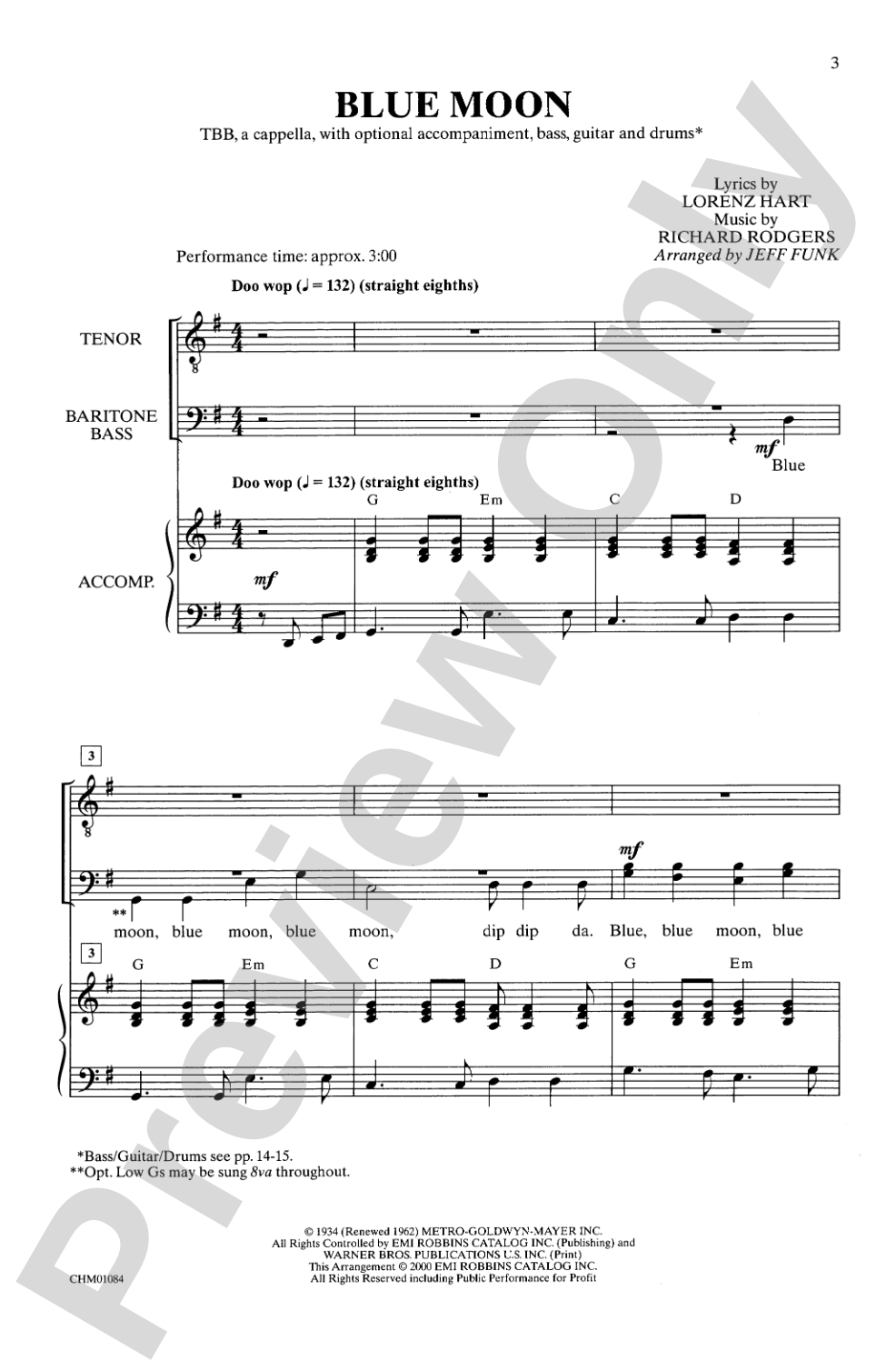
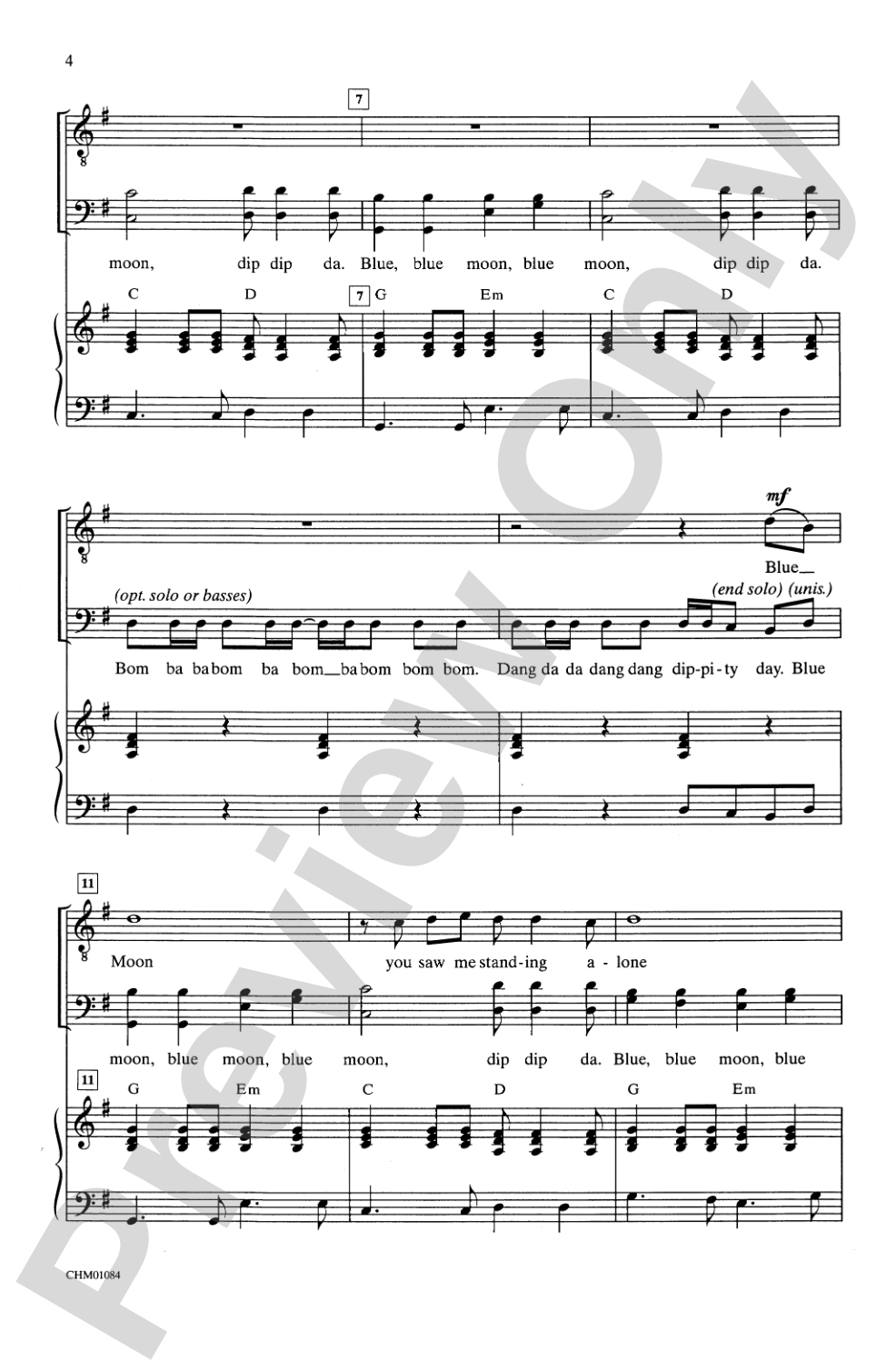
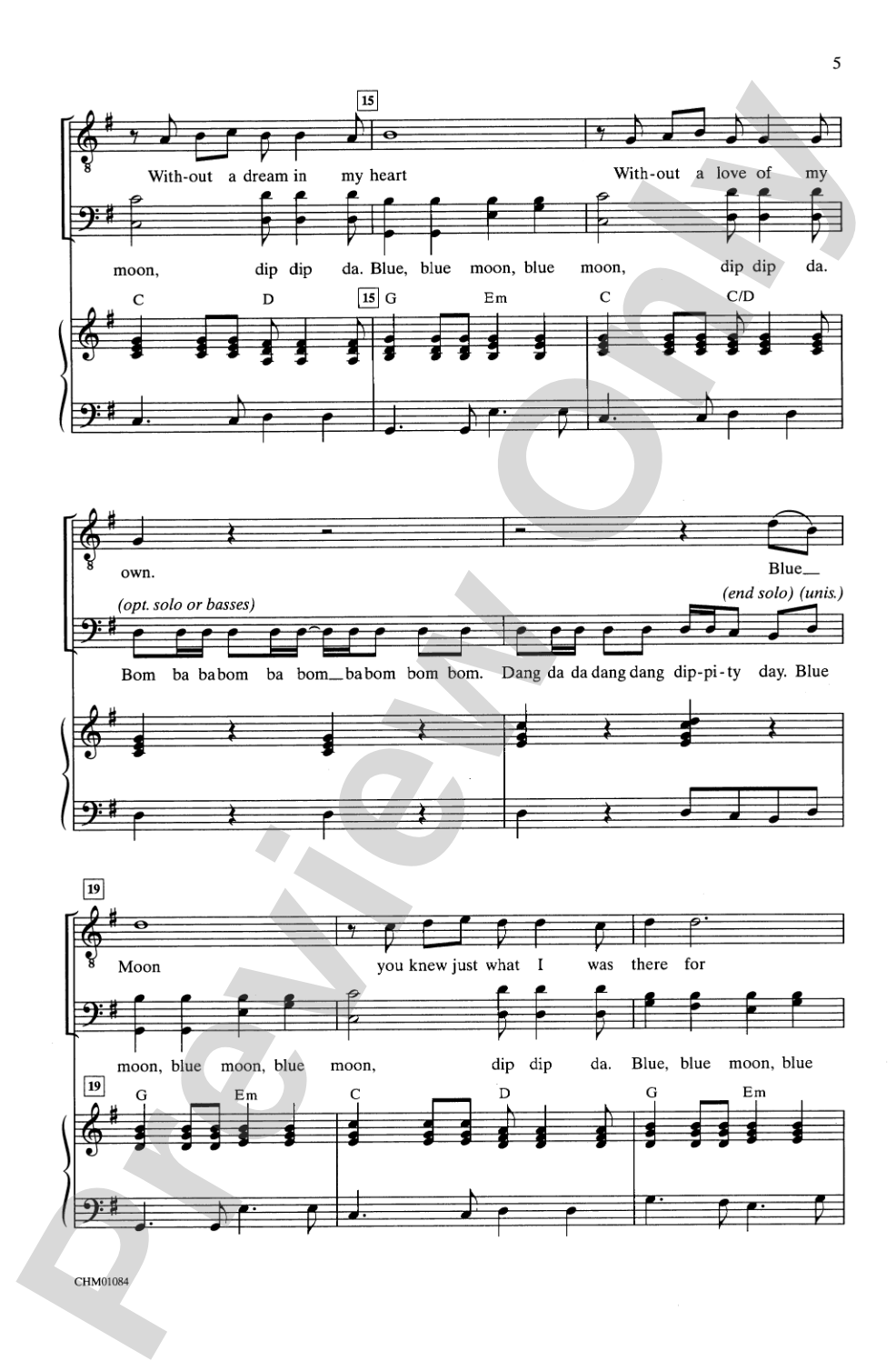

Blue Moon: TBB, a cappella Choral Octavo
Music by Richard Rodgers, lyrics by Lorenz Hart / arr. Jeff Funk
Level: Moderate
Item: 00-PO-0002547
$2.95
Minimum order quantity: 20 copies
One moment…
Related Items
Blue Moon: SATB, a cappella Choral Octavo |
$2.95
|
View | |
Blue Moon: SAB, a cappella Choral Octavo |
$2.95
|
View | |
Blue Moon: SSA, a cappella Choral Octavo |
$2.95
|
View | |
Blue Moon: SATB, a cappella Choral Octavo |
$2.95
|
View | |
Blue Moon: SAB, a cappella Choral Octavo |
$2.95
|
View | |
Blue Moon: SSA, a cappella Choral Octavo |
$2.95
|
View | |
Blue Moon: TBB, a cappella Choral Octavo |
$2.95
|
View | |
Blue Moon: Choral Octavo SoundTrax CD |
$27.99
|
View |
Description
This classic Rodgers and Hart song takes on a whole new life with its upbeat do-wop arrangement by Jeff Funk. It was featured on the Grease soundtrack.


Blue Moon: TBB, a cappella Choral Octavo isn't in MakeMusic Cloud just yet...but it could be. Let us know you'd like to see it, and you'll help shape what comes next. In the meantime, start a free trial and dive into thousands of interactive titles your students can play along with today.
Request This Title
Tell us you want it.
Start Your Free Trial
Explore everything that's ready to play right now.
Sample Audio
No sample audio found.
Sample Video
No sample videos found.
Additional Details
Series:
Alfred Archive Edition: Alfred Pop Choral Series
Publisher:
Alfred Music
Page Count:
16
SKU:
00-PO-0002547
Instrumentation:
Opt. Acc.
More about this title
About the Composer: Richard Rodgers
Richard Rodgers (1902-1979) was one of the most prolific and influential composers in American musical theater. Working primarily with lyricist Lorenz Hart and later Oscar Hammerstein II, Rodgers crafted melodies that became standards of the Great American Songbook. His gift for writing singable, memorable lines made his work accessible to performers at every level, from Broadway stages to school choirs.
Rodgers' catalog spans decades of theater music, film scores, and songs that have been recorded countless times in every style imaginable. His influence on choral arrangers is direct and deep. A song like "Blue Moon" demonstrates why his melodies endure: they sit comfortably in the voice, support harmonic sophistication, and work beautifully in arrangements from the classical to the contemporary.
Why we love this
Jeff Funk's do-wop arrangement transforms a jazz-age standard into something that speaks directly to singers and audiences in the modern choral world. The voicing sits well for TBB groups without sacrificing the charm of the original tune, and the rhythmic drive makes it genuinely fun to rehearse and perform. This is the kind of arrangement that reminds students why great melodies matter.
What to expect
Nostalgic and joyful, with the unmistakable swagger of 1950s do-wop and doo-wop grooves. The arrangement gives "Blue Moon" a playful, youthful energy while keeping Rodgers' original melody intact and singable. There's real fun here, not just technique.
Who it's for
TBB and TTB groups at the middle school through early high school level who want to perform a well-known standard in a contemporary, accessible style. This arrangement works equally well for chamber groups within a larger choir or for smaller ensembles building their repertoire.
How to get the most out of it
- Lock the rhythmic precision of the do-wop figures early in rehearsal. These rhythmic patterns are the character of the piece, so nail them before worrying about blend.
- Balance the melody line with clarity; even as the supporting voices establish the do-wop groove, the lead voice must sing through with ease and natural phrasing.
- Use the recorded accompaniment to establish the harmonic and rhythmic context, then work toward intonation independence as the singers internalize the arrangement.
- Shape the dynamic arc of the piece to avoid flatness in the middle sections. The upbeat energy should build naturally toward the final statements.
How to use it
Program this as a concert opener or a second-half crowd-pleaser. The style and accessibility make it an excellent bridge between classical repertoire and popular music, and the connection to the Grease soundtrack gives audiences an immediate entry point. It also pairs well with other standards or pop arrangements in a showcase format.
Skills your students will build
- Reading and performing a cappella parts with secure harmonic awareness
- Executing do-wop and rhythmic groove figures with precision
- Balancing individual vocal lines within an ensemble texture
- Sustaining melodic integrity while supporting ensemble sonority