
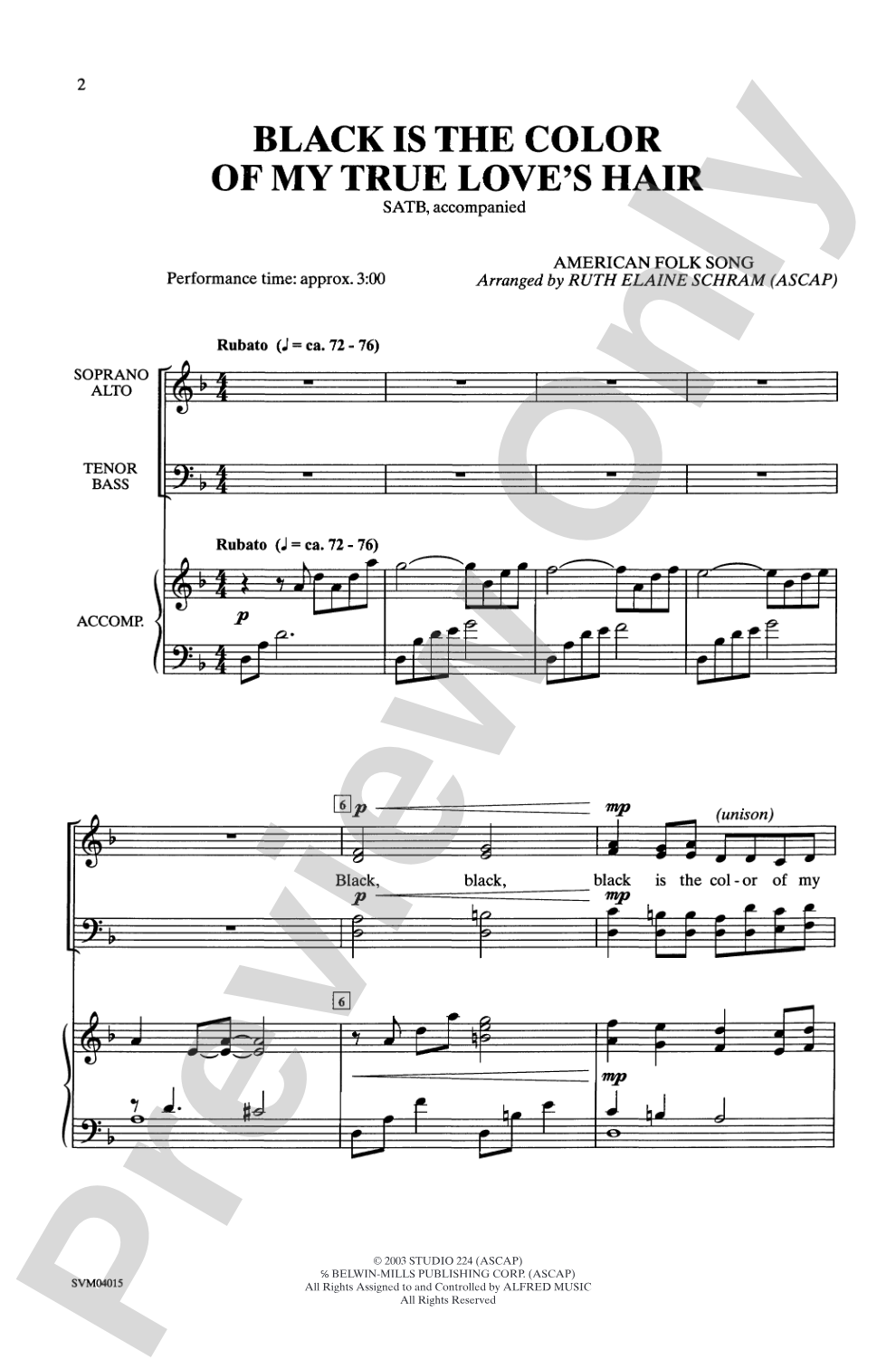
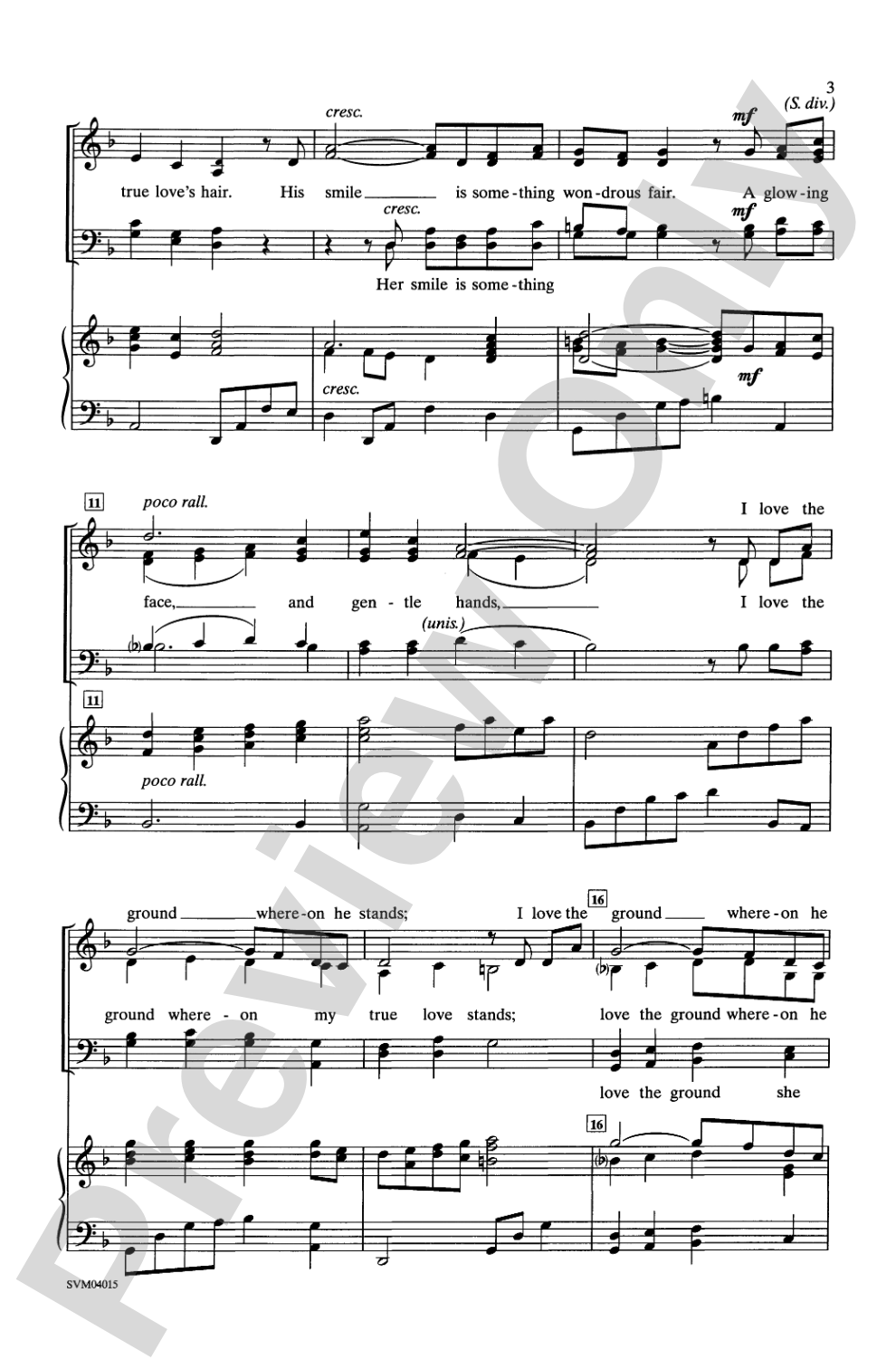

Black Is the Color of My True Love's Hair: SATB Choral Octavo
American Folk Song / arr. Ruth Elaine Schram
Level: Moderate
Item: 00-PO-0005389
$2.25
Minimum order quantity: 20 copies
Pickup currently not available
Related Items
Black Is the Color of My True Love's Hair: 3-Part Mixed Choral Octavo |
$2.25
|
View | |
Black Is the Color of My True Love's Hair: TTBB Choral Octavo |
$1.65
|
View | |
Black Is the Color of My True Love's Hair: SATB Choral Octavo |
$2.25
|
View | |
Black Is the Color of My True Love's Hair: 3-Part Mixed Choral Octavo |
$2.25
|
View | |
Black Is the Color of My True Love's Hair: TTBB Choral Octavo |
$1.65
|
View |
Description
This traditional folk melody is brought to life with sensitive and rich choral sounds by Ruth Elaine Schram. The arrangement is fresh and easy to sing. It will be a welcome addition to any concert program.


Black Is the Color of My True Love's Hair: SATB Choral Octavo isn't in MakeMusic Cloud just yet...but it could be. Let us know you'd like to see it, and you'll help shape what comes next. In the meantime, start a free trial and dive into thousands of interactive titles your students can play along with today.
Request This Title
Tell us you want it.
Start Your Free Trial
Explore everything that's ready to play right now.
Sample Audio
No sample audio found.
Sample Video
No sample videos found.
Additional Details
Series:
Alfred Archive Edition: Studio PR Catalog
Publisher:
Alfred Music
Page Count:
8
SKU:
00-PO-0005389
More about this title
About the Arranger: Ruth Elaine Schram
Ruth Elaine Schram is a composer and arranger whose work centers on making choral music accessible and deeply musical for singers of all levels. Her arrangements honor the integrity of traditional melodies while creating warm, singable parts that allow ensembles to sound polished without requiring advanced technical demands.
Why we love this
Schram's treatment of this beloved folk melody proves that accessibility and artistry are not opposites. The arrangement sits comfortably for mixed voices, builds naturally in texture, and gives your singers the immediate gratification of sounding genuinely beautiful without getting bogged down in technical hurdles.
What to expect
Intimate and tender, with the kind of quiet strength that folk traditions carry. The arrangement lets the melody shine while creating harmonic depth that feels both familiar and freshly discovered. You'll find singers connecting immediately to the emotional center of the piece.
Who it's for
Mixed choirs working at Grade 3 level who want repertoire that sounds mature and moves their audiences, without requiring soloists or extended rehearsal time. This arrangement works equally well for high school, community, and church ensembles seeking folk material with genuine warmth.
How to get the most out of it
- Explore the dynamic shape of the melody across the movement. Rather than staying at one volume, allow the piece to breathe and swell with the emotional arc of the text.
- Balance the parts so the top line emerges as the primary melodic voice while inner voices provide rich harmonic support without overwhelming the texture.
- Pay attention to vowel unity within each phrase, especially in sustained passages, to achieve that sensitive, unified sound the arrangement invites.
How to use it
This pairs naturally with other folk-based repertoire in a concert celebrating American or British musical traditions. It also works beautifully as a standalone moment of reflection in a mixed program, offering contrast to more rhythmic or elaborate works on the same concert.
Skills your students will build
- Singing sustained melodic lines with consistent phrase shape
- Blending four-part harmony with attention to balance and texture
- Responding to dynamic and emotional cues within a moderate-range arrangement
- Performing traditional folk material with stylistic sensitivity