
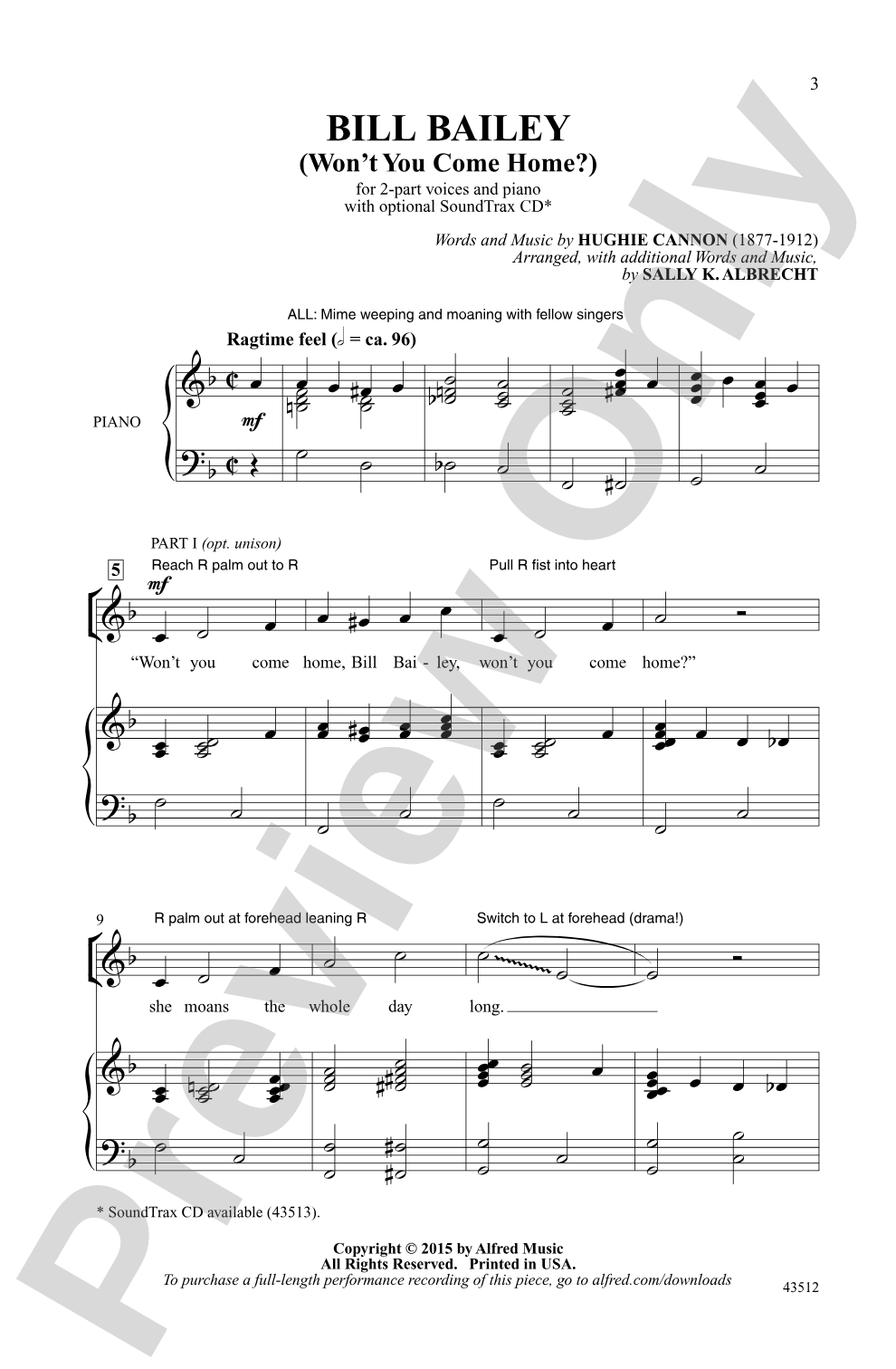

Bill Bailey: 2-Part Choral Octavo
(Won't You Come Home?)
Words and music by Hughie Cannon / arr., with additional words and music, by Sally K. Albrecht
Item: 00-PO-0003403
$1.90
Minimum order quantity: 20 copies
Pickup currently not available
Description
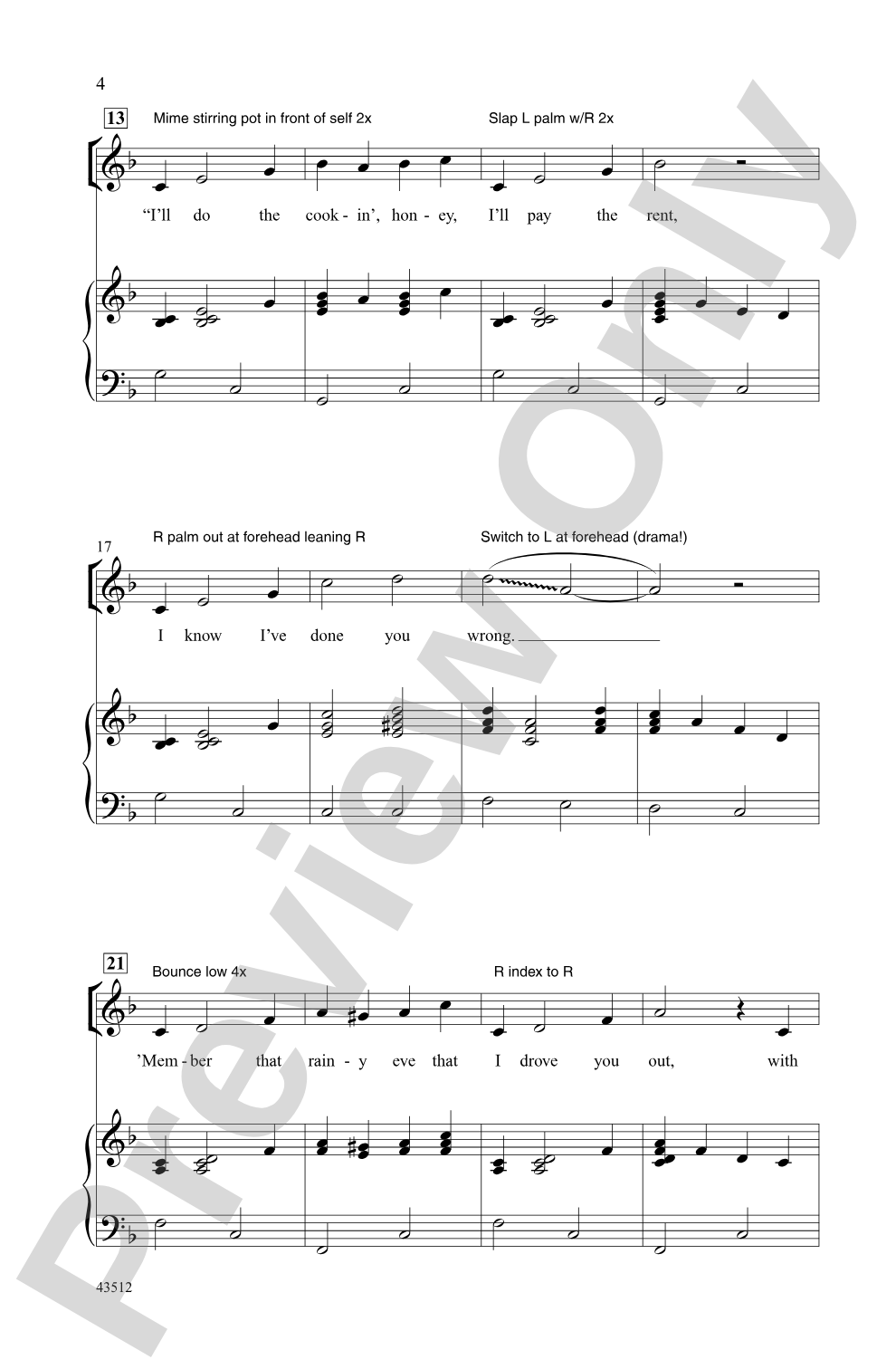
Kids will love this fun partner song arrangement of a turn-of-the-century American parlor song. After crooning through the familiar melody, singers will delight in the stylized vocal slides that shape the Ragtime-y counterline. Put it all together with Sally's choreography notes, included in the publication and demonstrated on With a Song!


Bill Bailey: 2-Part Choral Octavo isn't in MakeMusic Cloud just yet...but it could be. Let us know you'd like to see it, and you'll help shape what comes next. In the meantime, start a free trial and dive into thousands of interactive titles your students can play along with today.
Request This Title
Tell us you want it.
Start Your Free Trial
Explore everything that's ready to play right now.
Sample Audio
1
Audio File
--:--
0:00
0:00
Sample Video
No sample videos found.
Additional Details
Series:
Alfred Choral Designs
Publisher:
Alfred Music
Page Count:
12
SKU:
00-PO-0003403
More about this title
About the Composer: Hughie Cannon
Hughie Cannon (1877-1912) was an American composer and songwriter who thrived during the ragtime era, creating popular songs that defined the sound of turn-of-the-century American entertainment. His work bridged parlor song tradition and the syncopated rhythms that were reshaping popular music, making him a significant figure in the transition from Victorian vocal music to modern American songwriting.
Cannon's compositions remain valuable in music education for their accessibility and historical authenticity. Songs like "Bill Bailey, Won't You Come Home?" capture the spirit of early ragtime in a form that student singers can grasp quickly while still encountering genuine musical and stylistic challenges.
Why we love this
Sally K. Albrecht's arrangement gives this classic tune real depth by pairing the straightforward melody with a syncopated counterline that requires singers to navigate stylized vocal slides and rhythmic independence. The included choreography transforms what could be a simple vocal exercise into an engaging, staged performance that holds young singers' attention while building their understanding of how different melodic lines interact.
What to expect
Bouncy, playful, and undeniably theatrical. The melody carries the warmth of an old American parlor song while the counterline adds sass and syncopation that feels distinctly ragtime. Singing this piece creates genuine joy, the kind that comes from performing something stylistically authentic that makes an audience smile.
Who it's for
This arrangement works best for middle school and early high school choirs seeking an accessible yet musically substantial 2-part piece. It's ideal for groups ready to handle independent melodic lines and rhythmic precision without needing complex harmony, and it engages singers who respond to performance and movement.
How to get the most out of it
- Listen closely to how the recorded accompaniment interprets the ragtime rhythms, then work the syncopated counterline separately before layering it with the melody so both parts lock without rushing.
- Shape the vocal slides deliberately; they're stylistic markers of the ragtime era, not sloppy technique. Practice them on a single vowel first to nail the pitch movement before adding text.
- Use the choreography notes to stage blocking during early rehearsals rather than waiting until the final week. Movement and singing reinforce each other, and runners will gain confidence faster when they're learning together.
How to use it
Program this in a concert celebrating American musical heritage or ragtime history alongside other period pieces. It also serves as a strong opener or closer for concerts featuring choreography or staged choral selections, giving audiences an immediate sense of entertainment and energy.
Skills your students will build
- Independent melodic line singing while maintaining awareness of countermelody
- Ragtime rhythmic interpretation and syncopation
- Stylized vocal technique including controlled slides and ornamentation
- Coordination of singing with choreographed movement
- Historical context and performance practice of early 20th-century American song