Beyond the Fence Sheet Music Preview

Beyond the Fence: Piano

By Robin McLaughlin

Item: 98-DP2035

Digital Download
$3.95
Description
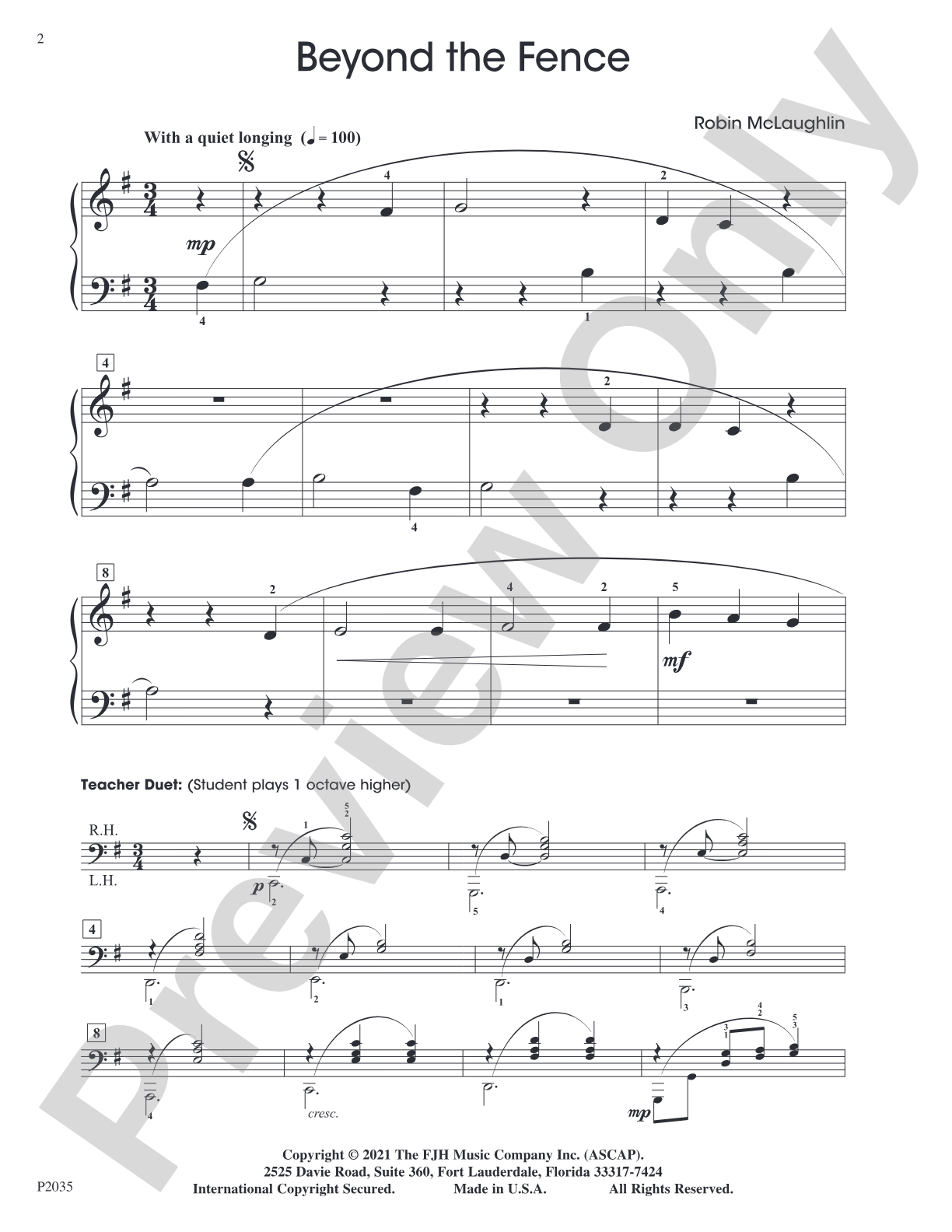
Introducing a new FJH composer, Robin McLaughlin, Beyond the Fence, is a quiet piece that weaves between the hands and is set in almost MC position (LH on B, RH on MC). The long phrases use basic rhythmic figures and dynamics. The piece introduces McLaughlin’s compositional style in a performance piece that creates a sound world beyond our own backyard. The piece includes a teacher duet that enhances the student’s solo.

Beyond the Fence: Piano isn't in MakeMusic Cloud just yet...but it could be. Let us know you'd like to see it, and you'll help shape what comes next. In the meantime, start a free trial and dive into thousands of interactive titles your students can play along with today.

Sample Audio
No sample audio found.
Sample Video
Additional Details
Series: FJH Performance Solos
Publisher: The FJH Music Company, Inc.
SKU: 98-DP2035

More about this title

Why we love this

McLaughlin's compositional voice emerges clearly in this piece, where the constraint of near-middle-C position becomes an asset rather than a limitation. The writing prioritizes long, singing phrases over technical display, giving young pianists room to think musically rather than mechanically. A teacher duet transforms what could be a solo recital piece into a genuine collaborative experience.

What to expect

Calm and exploratory, like standing at the edge of something vast. The piece dwells in a small range of the keyboard yet creates a sense of space and atmosphere, inviting listeners into a world of quiet contemplation and gentle discovery.

Who it's for

Elementary pianists ready to move beyond pieces built on technical drill. This work invites students who can sustain attention through longer musical phrases and who benefit from hearing how constraint and simplicity can create sophisticated expression.

How to get the most out of it

  • Shape the long phrases by listening for the overall arc rather than playing measure-to-measure. The basic rhythms give students freedom to focus on line and dynamics.
  • Explore how the hand-weaving creates texture. Let the interplay between right and left hands become part of the music's character, not just a technical fact.
  • Work with your teacher on the duet arrangement during rehearsals so the accompaniment supports your interpretation rather than overshadowing it.

How to use it

Position this as a moment of calm in a recital, perhaps after a more energetic piece, or use it to open a program and set an intimate tone. It pairs well with other contemporary works for young pianists that prioritize musical expression over technical complexity.

Skills your students will build

  • Sustaining long melodic phrases across hand positions
  • Dynamic shaping with limited technical vocabulary
  • Hand independence and weaving between registers
  • Collaborative listening in a teacher-student duet context

You May Also Like