

Benedictus: 2-Part Choral Octavo
By Brian Lewis
Item: 00-PO-0000573

$2.05
Minimum order quantity: 20 copies
Pickup currently not available
Related Items
Benedictus: SATB Choral Octavo |
$2.05
|
View | |
Benedictus: SAB Choral Octavo |
$2.05
|
View | |
Benedictus: SSAA Choral Octavo |
$2.25
|
View | |
Benedictus: SATB Choral Octavo |
$2.05
|
View | |
Benedictus: SAB Choral Octavo |
$2.05
|
View | |
Benedictus: SSAA Choral Octavo |
$2.25
|
View | |
Benedictus: 2-Part Choral Octavo |
$2.40
|
View |
Description
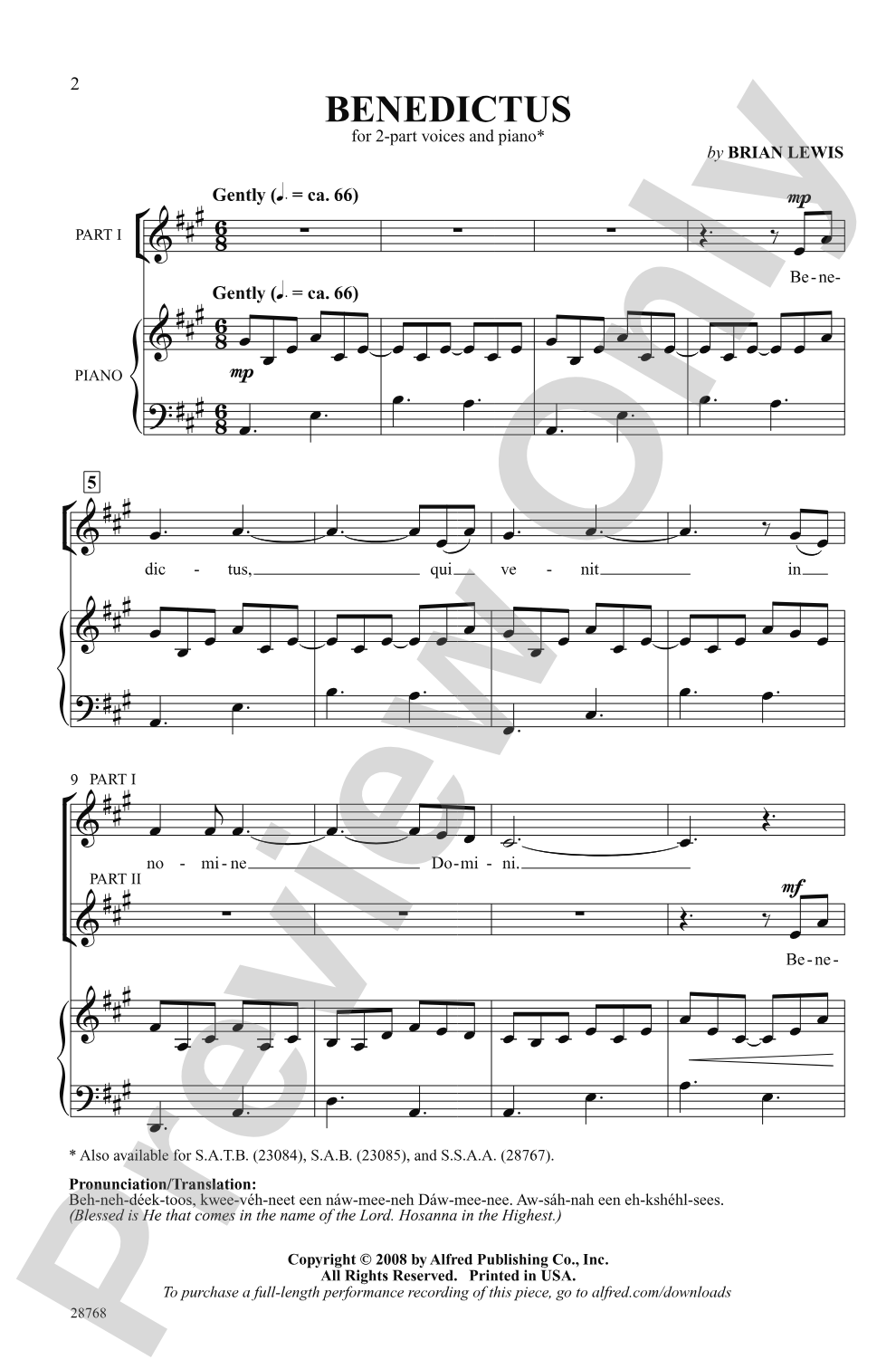
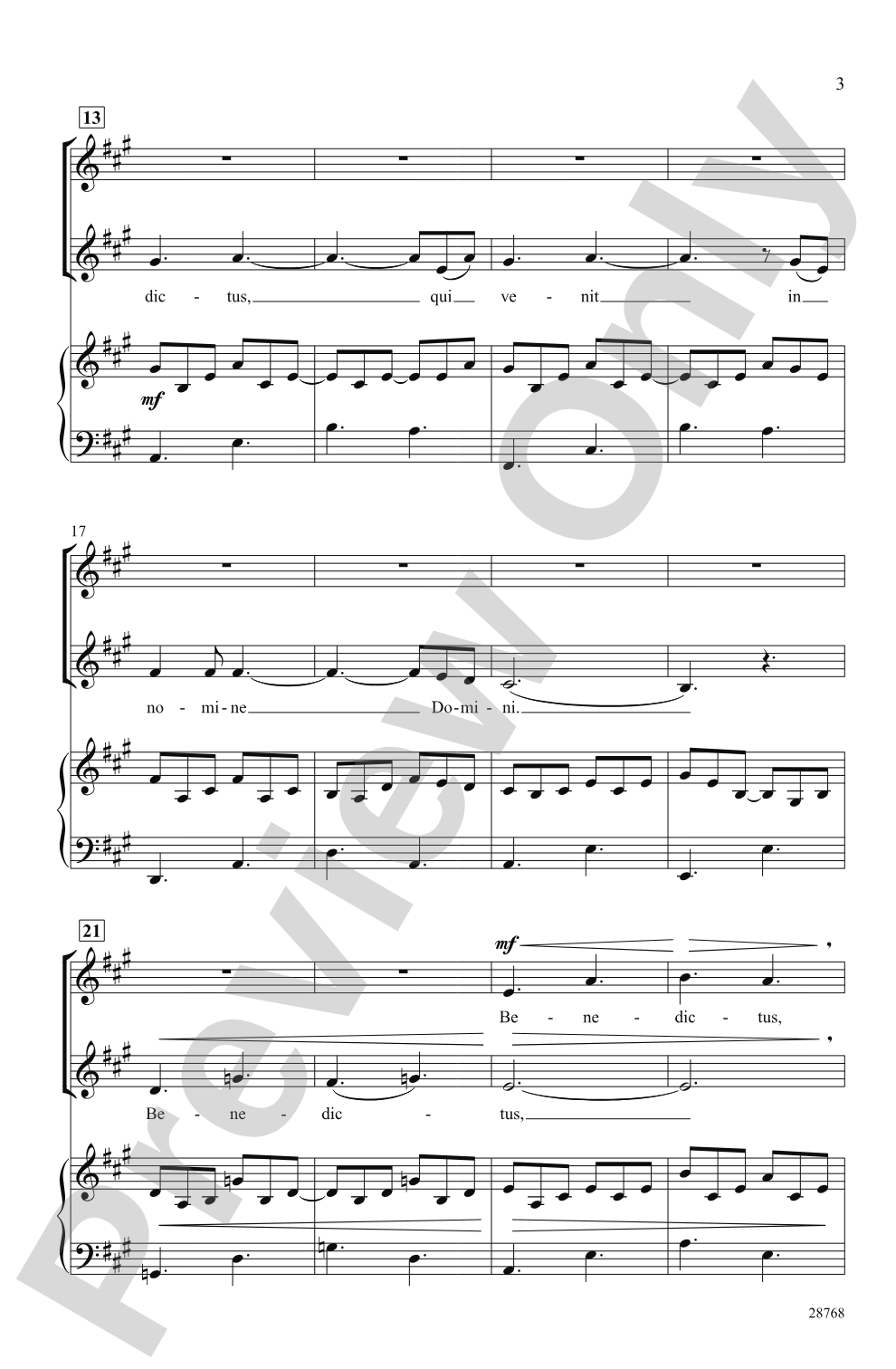
A haunting melodic motive is underscored by a gently lilting piano accompaniment in this highly expressive and sophisticated work. The hushed opening builds to a dramatic forte "Hosanna" in the middle of the piece, and then gradually fades as the opening statement returns. A top seller, newly arranged for SSAA and 2-part choirs. This title is available in MakeMusic Cloud.


Don't just read it, hear it, play along with it, and watch your students grow with it. In MakeMusic Cloud, Benedictus: 2-Part Choral Octavo comes alive with professional accompaniment, adjustable tempo, and built-in practice tools that turn solo practice into real progress.
Open in the Player
Jump straight in and assign it today.
Start Your Free Trial
Open this title and explore the full library in minutes.
Sample Audio
1
Audio File
--:--
0:00
0:00
Sample Video
No sample videos found.
Additional Details
Series:
Alfred Choral Designs
Publisher:
Alfred Music
Page Count:
8
SKU:
00-PO-0000573
More about this title
About the Composer: Brian Lewis

Brian Lewis studied composition at Baldwin-Wallace Conservatory in Berea, Ohio, then pursued conducting and music education at Western Michigan University, earning both his Master of Music and teaching certification. After several years in Michigan public schools, he relocated to California to complete the USC Scoring for Motion Pictures and Television program, blending his classical training with film music expertise. His work as composer in residence at Portage Northern High School resulted in commissioned pieces performed by the school's award-winning choirs.
Why we love this
This arrangement captures what made the original such a staple: a single, unforgettable melodic idea that sustains the entire piece without needing harmonic complexity. The architecture (hushed opening, dramatic central climax, return to stillness) teaches singers how emotional arc and dynamic contrast can carry a piece without relying on dense part-writing. For 2-part choirs, it's a rare find that feels substantial rather than simplified.
What to expect
Reverent and introspective, with a luminous quality created by the interplay between a single haunting melody and the gentle piano accompaniment. The sudden pivot to dramatic intensity in the middle breaks the contemplative spell momentarily before yielding to a graceful return, leaving singers and listeners in a state of quiet reflection.
Who it's for
2-part choirs ranging from middle school treble ensembles to community and adult choirs seeking repertoire with expressive depth and minimal technical barriers. Directors looking for sacred music that works equally well in concert and festival contexts will find this a reliable choice.
How to get the most out of it
- Shape the opening phrase with a continuous, supported line even at the softest dynamic; the piano accompaniment establishes the harmonic foundation, so the choir can focus entirely on the purity of the melodic statement.
- Build the forte "Hosanna" section with gradual layering of dynamic and intensity rather than jumping suddenly to full volume; this makes the return to the opening feel earned and reinforces the overall form.
- Maintain stillness and focus during the final fade; many singers rush the retreat back to ppp, which collapses the contemplative ending.
- Balance the two parts clearly throughout so that both lines carry equal weight and the modal coloring of the piece remains transparent.
How to use it
Program this as an opening or closing anthem in a sacred concert, where its architectural simplicity and emotional clarity will frame the event effectively. It also serves as an excellent festival piece for 2-part ensembles, as the focus on single melodic idea and choral blend showcases musicianship without requiring advanced sight-reading.
Skills your students will build
- Sustaining long phrases at soft dynamics with consistent tone quality
- Following a melodic line shaped by harmonic motion rather than part independence
- Responding to dynamic architecture and emotional intent in form
- Balancing two-part texture while maintaining treble voice independence