

Belwin Contest Winners, Book 2: 12 Original Piano Solos from the Libraries of Belwin-Mills and Summy-Birchard: Piano
12 Original Piano Solos from the Libraries of Belwin-Mills and Summy-Birchard
Level: Elementary / Late Elementary
Item: 00-PB-0000578
$8.99
Pickup currently not available
Related Items
Belwin Contest Winners, Book 2: Piano Book |
$8.99
|
View |
Description
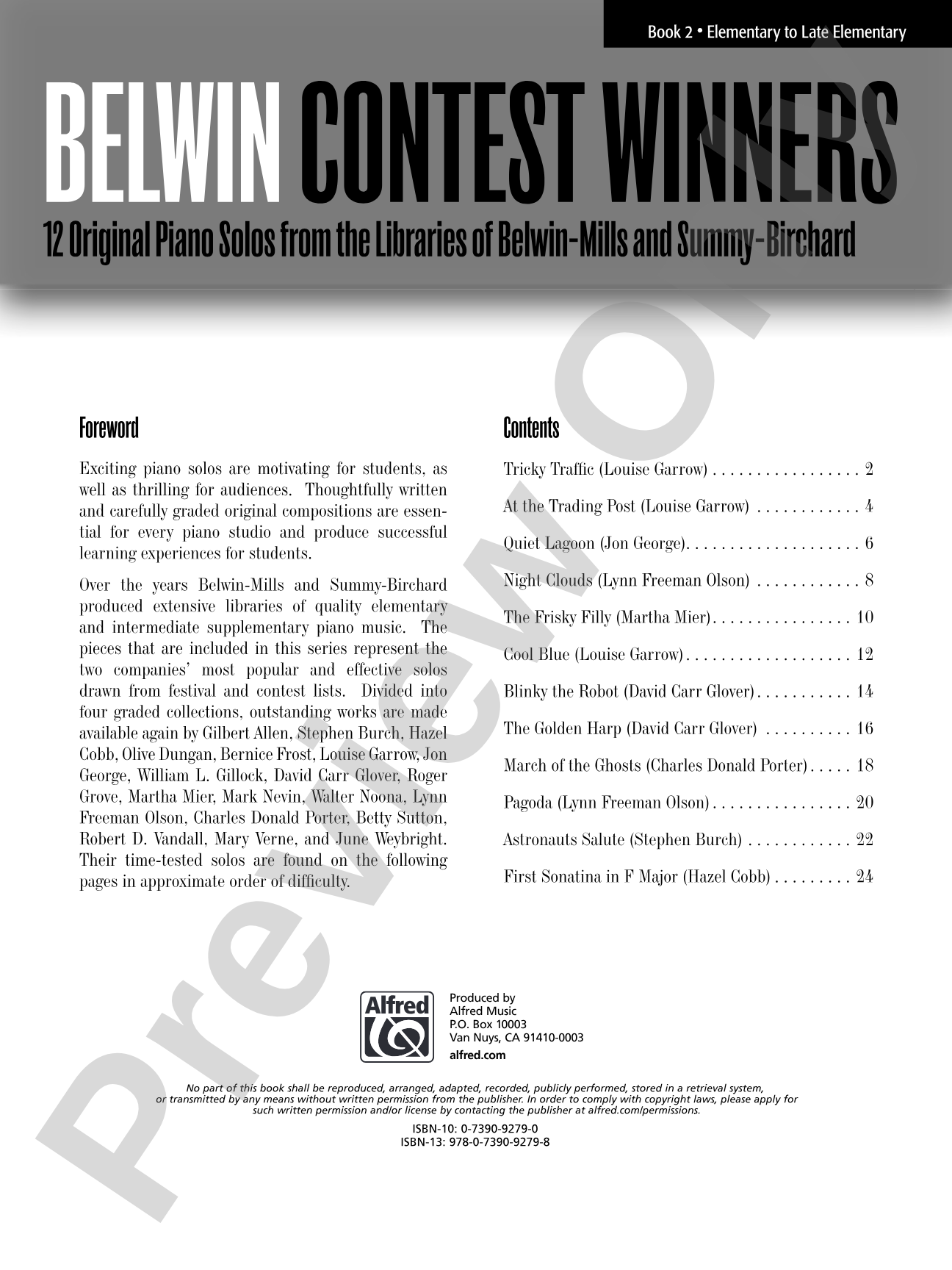
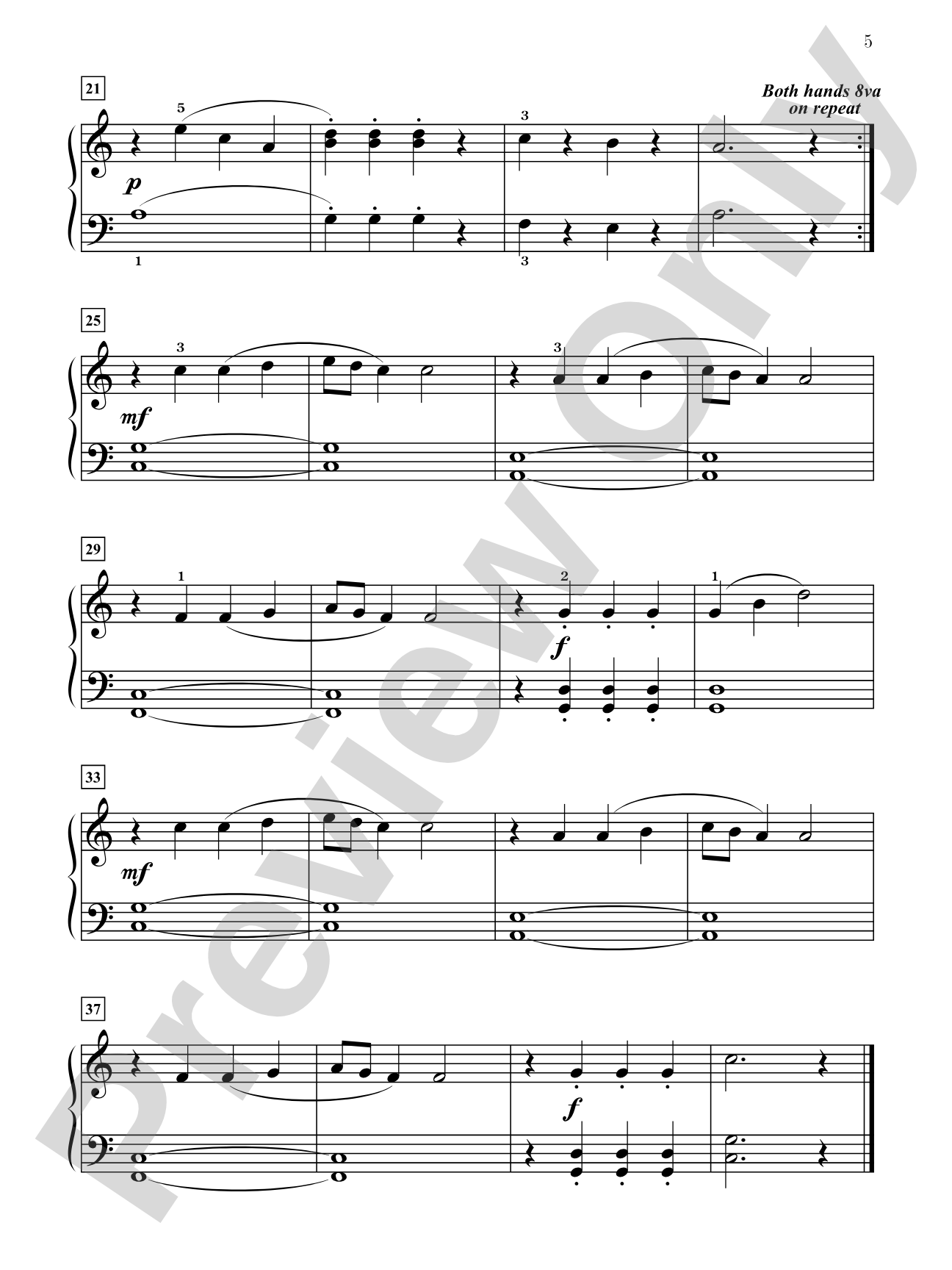
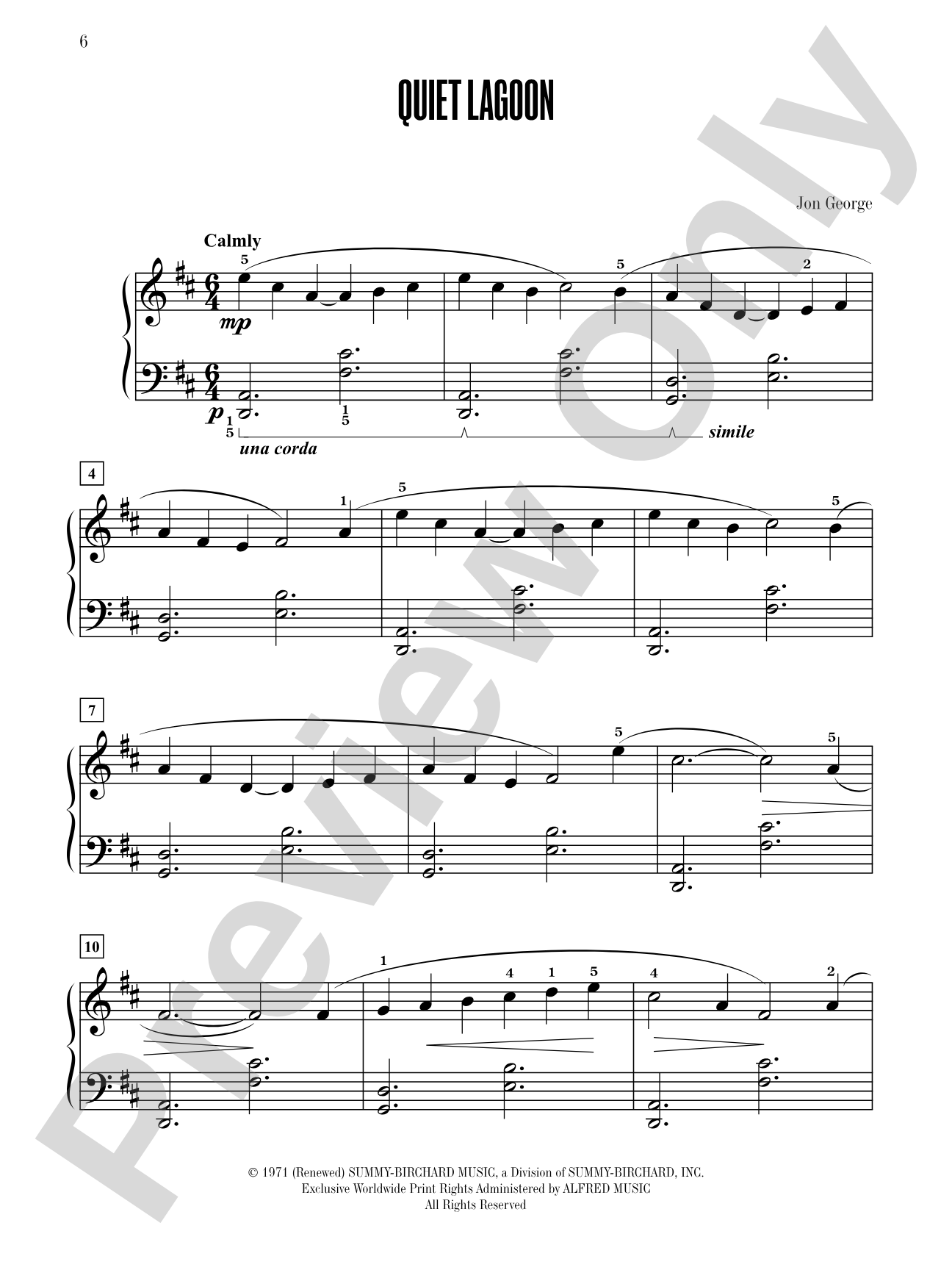
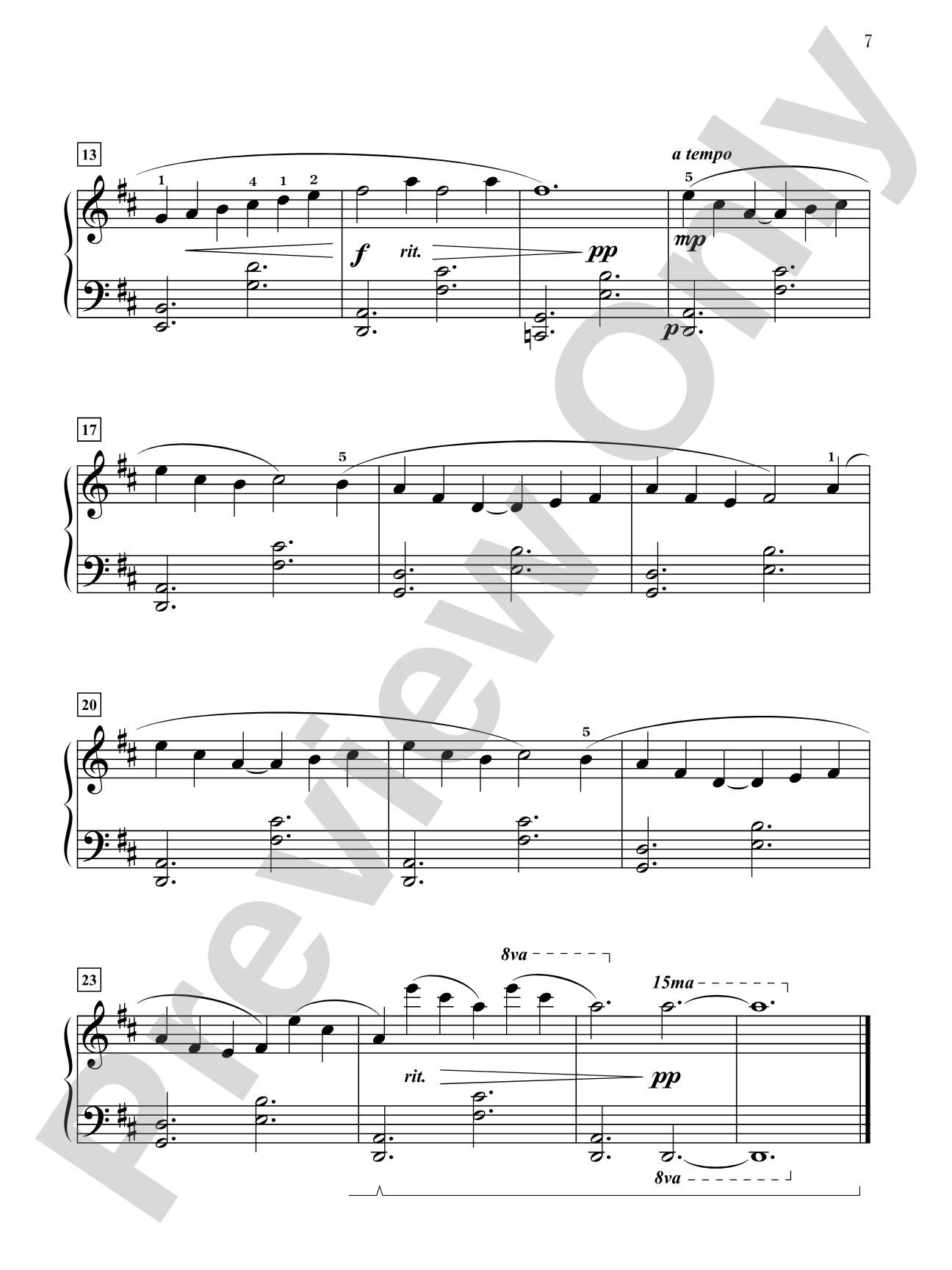
Exciting piano solos are motivating for students, as well as thrilling for audiences. Thoughtfully written and carefully graded original compositions are essential for every piano studio and produce successful learning experiences for students. Over the years, Belwin-Mills and Summy-Birchard produced extensive libraries of quality elementary and intermediate supplementary piano music. The pieces included in this series represent the two companies' most popular and effective solos drawn from festival and contest lists. Book 2 is for elementary through late elementary students and the pieces are placed in approximate order of difficulty. Titles: Astronauts Salute * At the Trading Post * Blinky the Robot * Cool Blue * First Sonatina in F Major * The Frisky Filly * The Golden Harp * March of the Ghosts * Night Clouds * Pagoda * Quiet Lagoon * Tricky Traffic. A Federation Festivals 2024-2028 selection.


Belwin Contest Winners, Book 2: 12 Original Piano Solos from the Libraries of Belwin-Mills and Summy-Birchard: Piano isn't in MakeMusic Cloud just yet...but it could be. Let us know you'd like to see it, and you'll help shape what comes next. In the meantime, start a free trial and dive into thousands of interactive titles your students can play along with today.
Request This Title
Tell us you want it.
Start Your Free Trial
Explore everything that's ready to play right now.
Sample Audio
No sample audio found.
Sample Video
No sample videos found.
Additional Details
Series:
Belwin Contest Winners
Publisher:
Alfred Music
Page Count:
32
SKU:
00-PB-0000578
More about this title
Why we love this
This collection draws from decades of proven festival repertoire, which means every piece has already earned its place in real studios and recitals. The variety here is substantial: you get character pieces, a sonatina form, and programmatic titles that spark imagination in young performers. The progression from early elementary through late elementary is genuinely thoughtful, giving you dependable material for studio recitals across multiple levels.
What to expect
This collection spans moods and textures with confidence: you move from the mechanical fascination of 'Blinky the Robot' to the dreamy suspension of 'Night Clouds,' from the structured elegance of a sonatina to the loose, rhythmic swagger of 'Tricky Traffic.' The writing balances melodic appeal with genuine musical substance.
Who it's for
Studio teachers building balanced recital programs need reliable repertoire that holds students' attention and showcases growth across levels. Elementary pianists benefit from pieces written with their hands and musicality in mind, not simplified versions of adult works.
How to get the most out of it
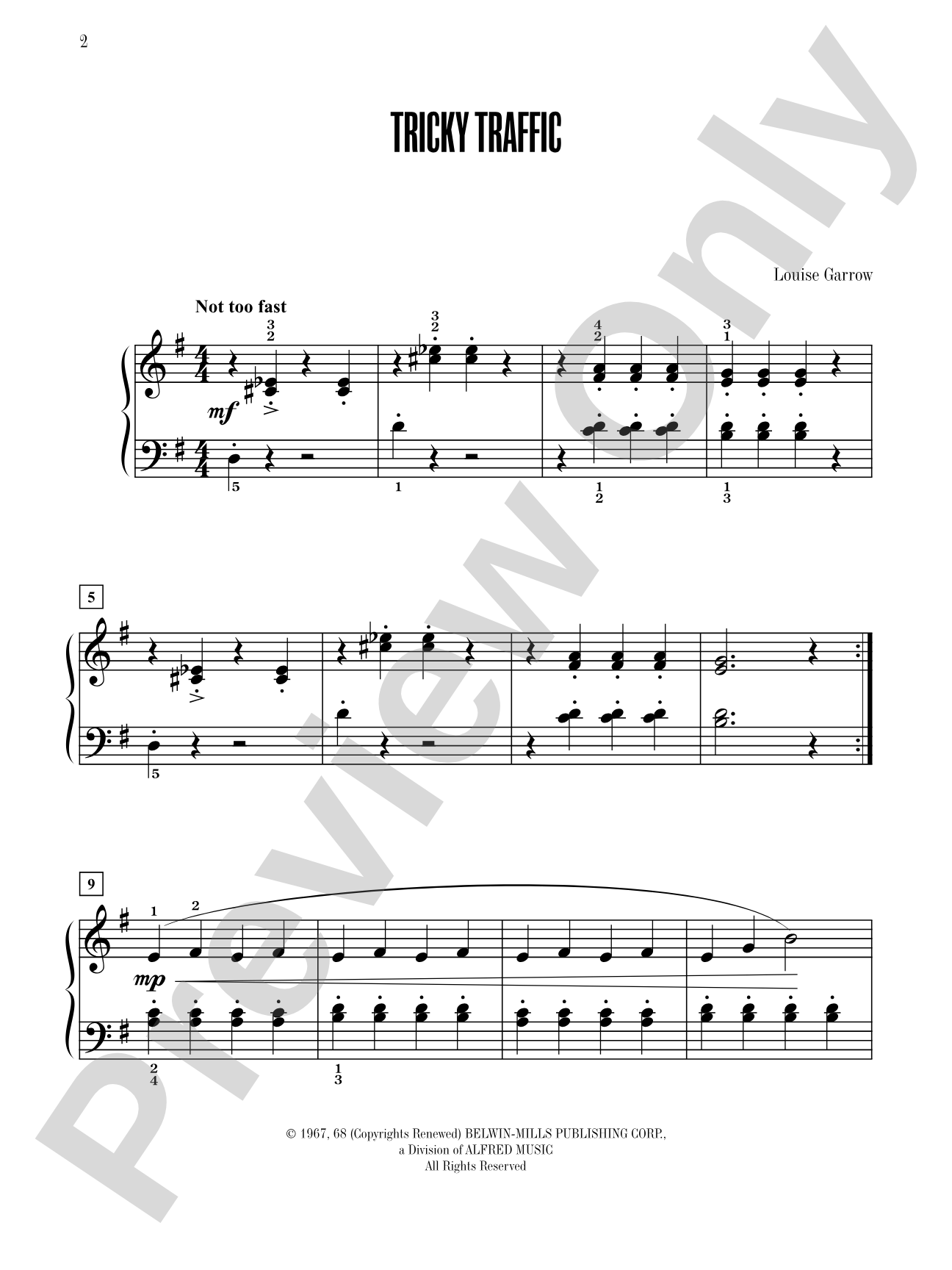
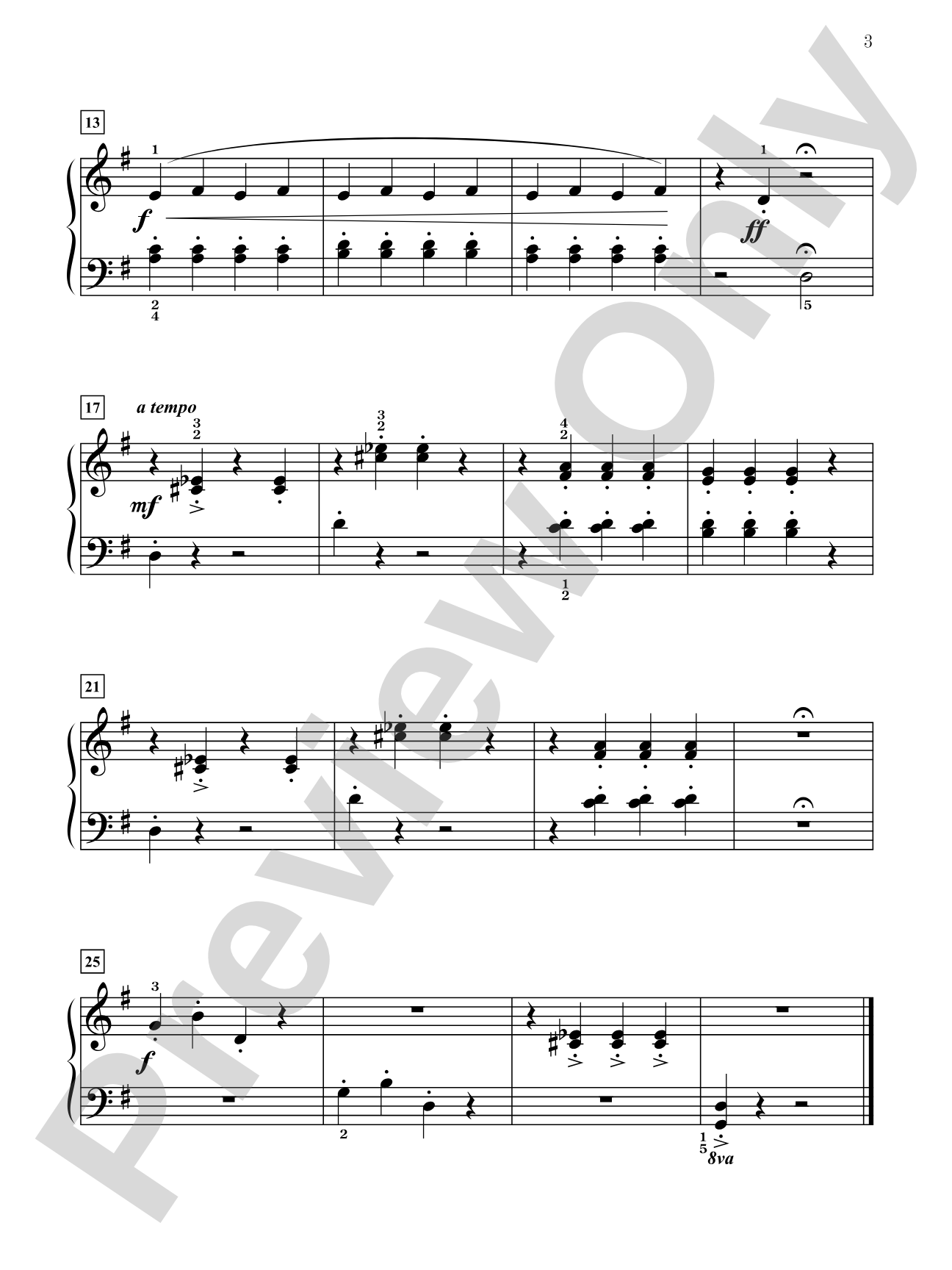
- Build tone awareness by asking students to notice which pieces call for contrasting touch. 'Quiet Lagoon' and 'Cool Blue' invite sustained, singing playing, while 'Tricky Traffic' and 'Blinky the Robot' benefit from articulation that mirrors their energetic character.
- Use the sonatina as a mini-lesson in form. 'First Sonatina in F Major' gives late elementary students a concrete experience with exposition and development without overwhelming complexity.
- Let program titles guide interpretive choices. 'The Frisky Filly' and 'March of the Ghosts' are more engaging to practice when students internalize the imagery and let it shape tempo, dynamics, and phrasing.
- Pair pieces thematically for recital programming. The nature pieces ('Quiet Lagoon,' 'Night Clouds') flow naturally together, as do the whimsical titles ('Blinky the Robot,' 'The Golden Harp').
How to use it
Build your spring or fall recital around these pieces, pairing them with contrasting classical or contemporary selections to show range. The inclusion on the Federation Festivals 2024-2028 list makes this especially useful for students preparing for festival play or looking for contest-ready material that their peers recognize.
Skills your students will build
- Reading varied key signatures and accidentals in elementary and late elementary contexts
- Interpreting character and tempo through program titles and compositional cues
- Executing articulate vs. legato playing with appropriate touch for different musical moods
- Understanding basic sonata form through the First Sonatina
- Managing hand position and finger independence across varied technical demands
- Building confidence through pieces specifically written for young performers at appropriate difficulty