
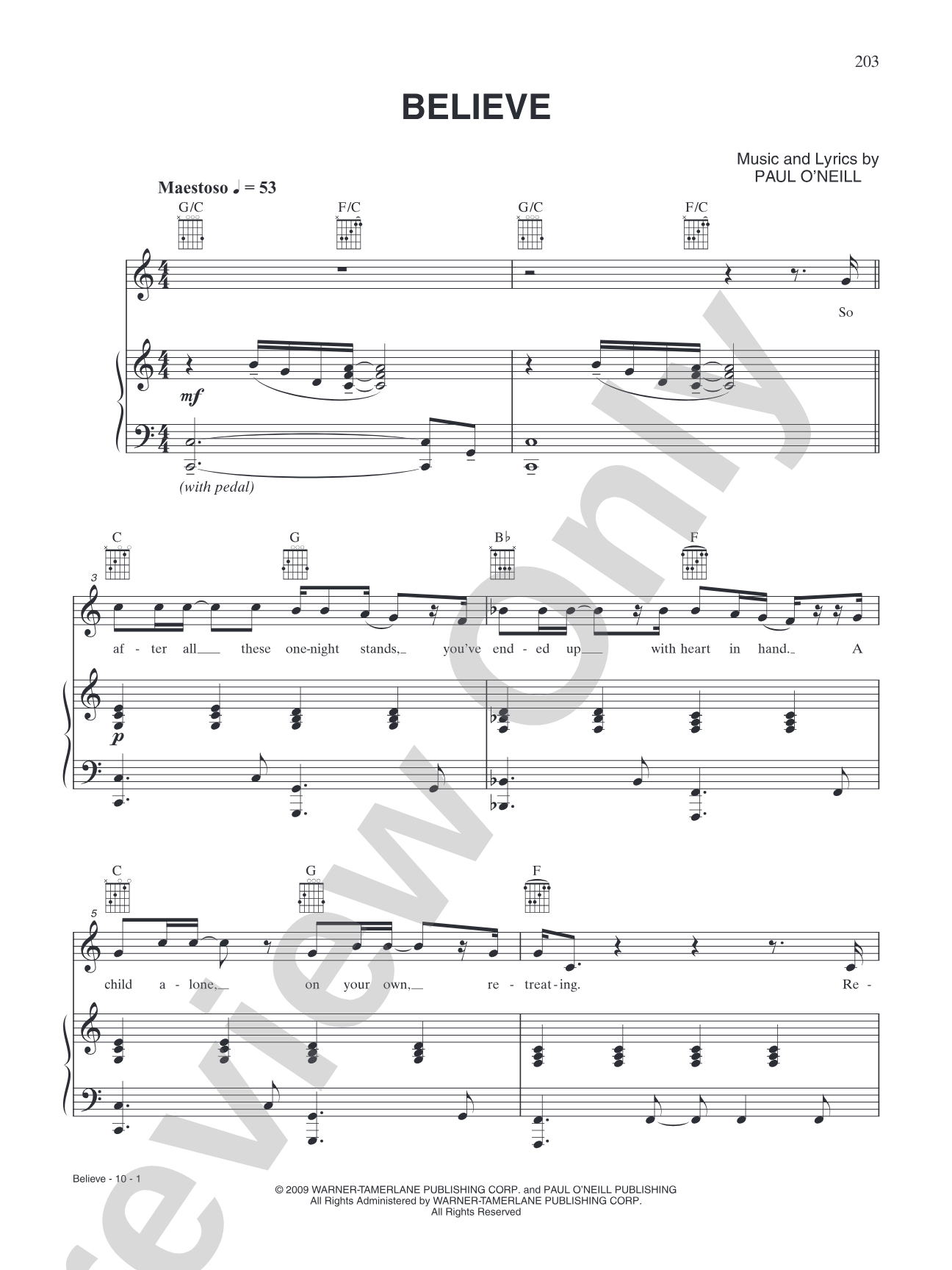
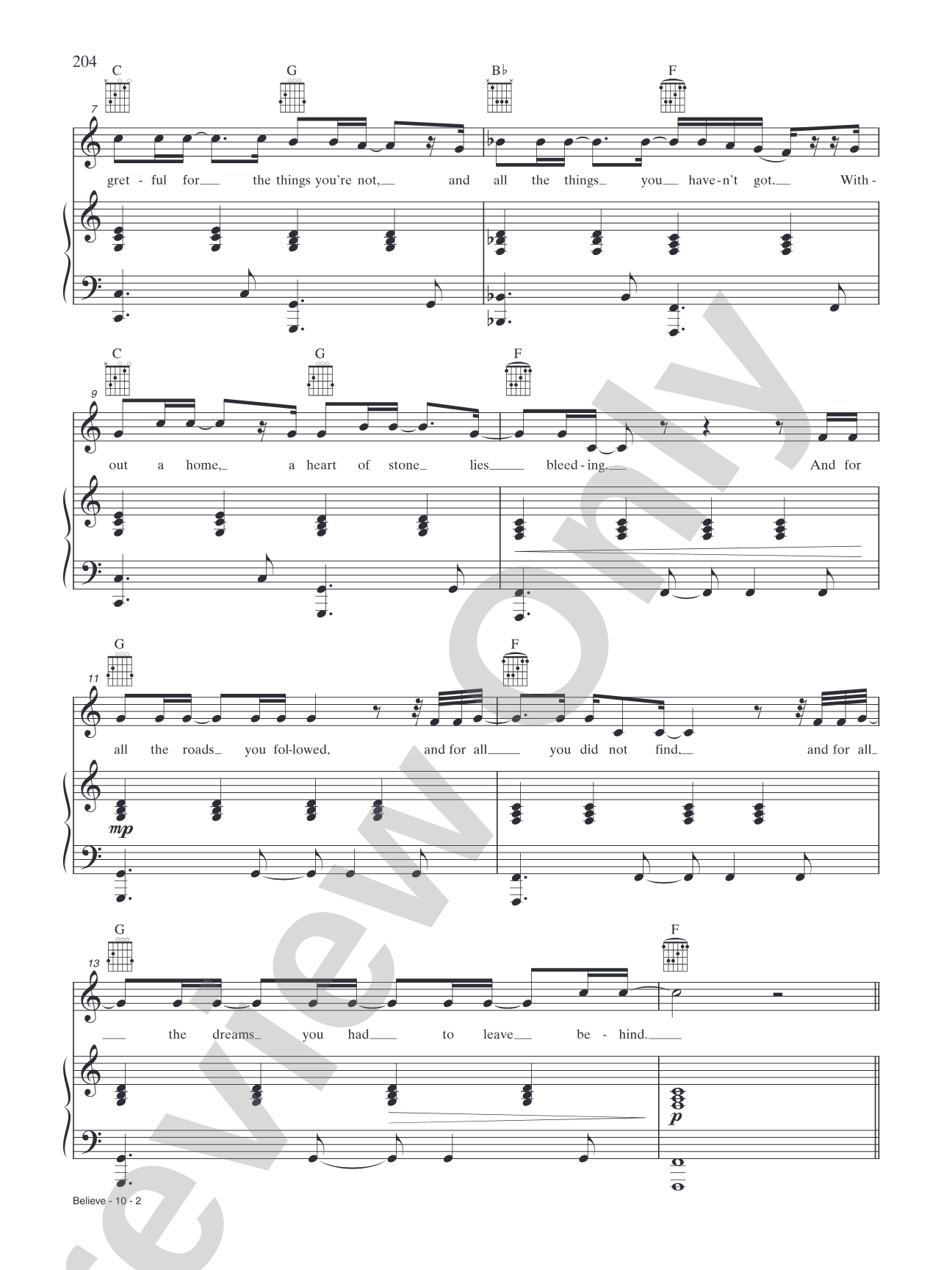

Believe: Piano/Vocal/Chords
Trans-Siberian Orchestra
Item: 00-PS-0013533
$9.99
One moment…
Related Items
Night Enchanted: Piano/Vocal/Chords |
$9.99
|
View | |
Child of the Night: Piano/Vocal/Chords |
$5.99
|
View | |
Time Floats On: Piano/Vocal/Chords |
$4.99
|
View | |
Epiphany: Piano/Vocal/Chords |
$9.99
|
View | |
Remnants of a Lullaby: Piano/Vocal/Chords |
$5.99
|
View | |
Childhood Dreams: Piano/Vocal/Chords |
$4.99
|
View | |
The Mountain: Piano/Vocal/Chords |
$9.99
|
View | |
Night Castle: Piano/Vocal/Chords |
$5.99
|
View | |
The Safest Way Into Tomorrow: Piano/Vocal/Chords |
$5.99
|
View | |
Sparks: Piano/Vocal/Chords |
$9.99
|
View | |
Toccata-Carpimus Noctem: Piano/Vocal/Chords |
$5.99
|
View | |
Bach Lullaby: Piano/Vocal/Chords |
$4.99
|
View | |
Embers: Piano/Vocal/Chords |
$5.99
|
View | |
Moonlight and Madness: Piano/Vocal/Chords |
$9.99
|
View | |
The Lion's Roary: Piano/Vocal/Chords |
$5.99
|
View | |
Father, Son and Holy Ghost: Piano/Vocal/Chords |
$9.99
|
View | |
Tracers: Piano/Vocal/Chords |
$9.99
|
View | |
Mozart and Memories: Piano/Vocal/Chords |
$9.99
|
View | |
Another Way You Can Die: Piano/Vocal/Chords |
$5.99
|
View | |
Dreams We Conceive: Piano/Vocal/Chords |
$5.99
|
View | |
There Was a Life: Piano/Vocal/Chords |
$9.99
|
View |
Description
This is a perfect gift for any music maker who loves Trans-Siberian Orchestra. Though many fans first discover them via their well-known Christmas-themed albums and concerts, these rock opera masters also produce plenty of non-seasonal works. Night Castle is one such masterpiece: an ambitious, long form epic that tells an engaging fantasy tale amid a score that features TSO's signature neo-classical art rock at its very best. Instrumental virtuosity and brilliant writing are demonstrated throughout, including plenty of pianistic music that naturally begs to be played by any fan who dabbles with the piano, even if only casually. This complete 240-page score features spiral binding that lays flat on the piano music stand, and includes the comprehensive story text and piano sheet music for every song on the album. Complete melody lines and lyrics are included, along with basic guitar chord grids.


Discover MakeMusic Cloud: thousands of interactive titles your students can play along with today.
Sample Audio
No sample audio found.
Sample Video
No sample videos found.
Additional Details
Publisher:
Alfred Music
Page Count:
240
SKU:
00-PS-0013533
More about this title
About the Composer: Paul O'Neill
Paul O'Neill founded Trans-Siberian Orchestra in 1996 and has served as the band's primary composer, lyricist, and creative director. His work blends classical music theory with progressive rock arrangements, creating layered compositions that draw from both symphonic and heavy metal traditions. O'Neill's storytelling approach to album construction has made TSO one of the few rock bands to sustain multi-year touring cycles built around full-length narrative works.
Why we love this
Night Castle showcases O'Neill's compositional range beyond the seasonal albums that first introduced many listeners to TSO's sound. The piano writing is genuinely rewarding for intermediate to advanced players who want to engage with contemporary rock opera literature without sacrificing instrumental challenge.
What to expect
An immersive blend of classical sensibility and rock energy, with sweeping melodic lines that feel as comfortable in a concert hall as they do in an arena. The music moves between moments of delicate, introspective piano work and explosive, layered textures that capture the cinematic scope of the Night Castle narrative.
Who it's for
Pianists and guitarists already familiar with TSO's work who want to explore the band's deeper catalog beyond the Christmas releases. Intermediate to advanced players seeking contemporary rock opera material that demands both technical facility and interpretive maturity.
How to get the most out of it
- Balance the orchestral density suggested by the arrangements with the intimacy of solo piano performance; lean into the neo-classical elements to avoid oversimplifying the harmonic structure.
- Use the chord grids to inform your harmonic interpretation, but treat them as a foundation rather than a limitation—the original orchestration often implies extensions and substitutions worth exploring.
- Study the lyrical phrasing and story context provided in the score to shape your rubato and dynamic choices; treating this as pure narrative rather than strict metronomic time serves the material well.
- Layer in guitar voicings mentally as you play, which will help you voice the piano part with greater density and clarity in passages where the written score suggests a fuller ensemble sound.
How to use it
Ideal for a solo recital seeking contemporary rock repertoire that bridges classical and popular genres. A guitarist and pianist could also program selections as a duet, allowing the chord grids and melody lines to inform an authentic arrangement.
Skills your students will build
- Reading layered harmonic structures with extended chords and classical voice leading in a rock context
- Interpreting narrative and dramatic arc through instrumental phrasing and dynamic shaping
- Translating written melody and chord information into vocal-piano and guitar-piano arrangements
- Managing the technical demands of neo-classical rock idioms, including quick position changes and rhythmic precision