Basie's Blues Cover Image

Basie's Blues: Jazz Ensemble Conductor Score

$17.95 USD
Sale price  $17.95 USD Regular price 
Skip to product information
Basie's Blues Cover Image

Basie's Blues: Jazz Ensemble Conductor Score

By Jim Snidero / arr. Russell Schmidt

Item: 01-ADV34011-1

$17.95
Shipped

One moment…

Description
"Basie's Blues" is a rousing medium tempo big band chart which also functions as a Basie-style piano feature. Arranger Russell Schmidt has crafted a unique three-horn harmonization (plus optional flute and clarinet) of the main theme, giving this piece a very distinctive sound. In addition to solo space for the pianist, there is a bass solo (although this solo can easily be moved to another instrument, if desired). "Basie's Blues" is based on one of the easiest etudes from Jim Snidero's Easy Jazz Conception Series.

Basie's Blues: Jazz Ensemble Conductor Score isn't in MakeMusic Cloud just yet...but it could be. Let us know you'd like to see it, and you'll help shape what comes next. In the meantime, start a free trial and dive into thousands of interactive titles your students can play along with today.

Sample Pages

No sample pages found.

Sample Audio

Basies Blues

0:00
0:00
Sample Video
Additional Details
Series: Advance Music: Big Band Plus
Publisher: Advance Music
SKU: 01-ADV34011-1

More about this title

About the Composer: Jim Snidero
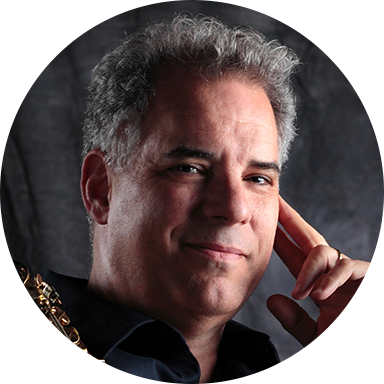
Jim Snidero

Jim Snidero has spent more than three decades establishing himself as a leading voice in contemporary jazz. An alto saxophonist of considerable technical command, he has also distinguished himself as a composer, arranger, and educator whose work appears regularly on bandstands and in rehearsal rooms worldwide. Downbeat Magazine has recognized him as both a master musician and alto saxophone virtuoso, and his placement in the 2017 Downbeat Critic's Poll underscores his sustained relevance on the international jazz scene.

Snidero's path to prominence began in Camp Springs, Maryland, where early exposure to music at home and through school programs set the foundation for his later achievements. As a teenager, he studied with Phil Woods and participated in the One O'Clock Lab Band at the University of North Texas before further study with Dave Liebman refined his voice. After relocating to New York in 1981, Snidero quickly earned sideman work with Brother Jack McDuff, the Mingus Big Band, Frank Wess, Toshiko Akiyoshi's orchestra, and others, while simultaneously launching a prolific recording career under his own name beginning with On Time (1984). His recorded output spans nearly four decades of stylistic range and musical consistency, from early releases like Mixed Bag and Blue Afternoon through numerous subsequent projects that have secured his place among jazz's most versatile and productive voices.

Why we love this

Russell Schmidt's arrangement strips away unnecessary complexity while preserving the swagger of Basie-era big band writing. The three-horn voicing of the main theme stands out immediately, and the optional flute and clarinet doublings give you flexibility based on your ensemble's instrumentation without compromising the piece's identity. Best of all, the piano feature gives your best player a genuine solo vehicle that swings hard without demanding superhuman technique.

What to expect

The piece breathes with the easy confidence of classic Basie. Medium tempo allows the ensemble to lay back into the groove without rushing, while the piano and bass solos inject spontaneity and personality that keeps the energy alive throughout.

Who it's for

This score works well for jazz ensembles at the intermediate to advanced level. Directors looking for accessible big band fare with genuine solo opportunities for both keyboard and bass players will find real value here.

How to get the most out of it

  • Balance the three-horn harmonies so the melody line reads clearly; these voices work best when they blend as one entity rather than competing for attention.
  • Lock the rhythm section's feel early in rehearsal. The medium tempo demands confident timekeeping and a solid groove for both the ensemble passages and the piano and bass solos.
  • Encourage the pianist to think orchestrally during the solo section. The arrangement is built around big band textures, so phrasing that complements the underlying groove will land better than notes-per-minute displays.
  • If you relocate the bass solo to another instrument, adjust the accompaniment voicings in the rhythm section to support the new soloist's tessitura and character.

How to use it

Program this midway through a jazz concert where you need a crowd-pleasing chart with personality. It pairs naturally with other Snidero compositions or works well alongside standards, as it occupies a comfortable middle ground between pure swing repertoire and contemporary big band writing.

Skills your students will build

  • Balance and blend within a three-part horn voicing
  • Accompanying a soloist while maintaining ensemble swing feel
  • Medium-tempo jazz articulation and phrasing
  • Rhythmic precision in a walking bass line
  • Piano solo construction over blues changes

You May Also Like