Basie's Blues Cover Image

Basie's Blues: Jazz Ensemble Conductor Score, Parts & CD

$69.00 USD
Sale price  $69.00 USD Regular price 
Skip to product information
Basie's Blues Cover Image

Basie's Blues: Jazz Ensemble Conductor Score, Parts & CD

By Jim Snidero / arr. Russell Schmidt

Item: 01-ADV34011

$69.00
Shipped

One moment…

Description
"Basie's Blues" is a rousing medium tempo big band chart which also functions as a Basie-style piano feature. Arranger Russell Schmidt has crafted a unique three-horn harmonization (plus optional flute and clarinet) of the main theme, giving this piece a very distinctive sound. In addition to solo space for the pianist, there is a bass solo (although this solo can easily be moved to another instrument, if desired). "Basie's Blues" is based on one of the easiest etudes from Jim Snidero's Easy Jazz Conception Series.

Basie's Blues: Jazz Ensemble Conductor Score, Parts & CD isn't in MakeMusic Cloud just yet...but it could be. Let us know you'd like to see it, and you'll help shape what comes next. In the meantime, start a free trial and dive into thousands of interactive titles your students can play along with today.

Sample Pages

Sample Audio

track 1

0:00
0:00
Sample Video
Additional Details
Series: Advance Music: Big Band Plus
Publisher: Advance Music
ISBN10: 3-892214-99-9
ISBN13: 978-3-892214-99-1
UPC: 805095340112
SKU: 01-ADV34011

More about this title

About the Composer: Jim Snidero
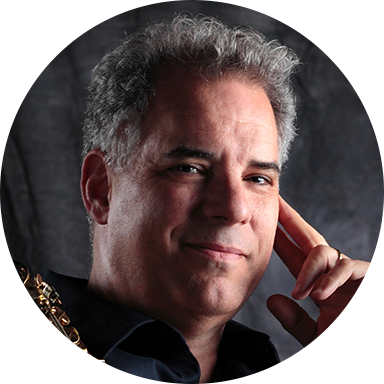
Jim Snidero

Jim Snidero has spent more than three decades establishing himself as a central figure in contemporary jazz. As an alto saxophonist, composer, arranger, and educator, he has earned recognition from DownBeat Magazine as both a "master musician" and "alto saxophone virtuoso," and placed in the 2017 DownBeat Critic's Poll. His influence extends across the international jazz landscape through recordings, compositions, and his work with ensembles ranging from the Mingus Big Band to the Toshiko Akiyoshi Jazz Orchestra.

Snidero's path to New York began in Camp Springs, Maryland, where early mentorship from Phil Woods and studies at the University of North Texas' One O'Clock Lab Band shaped his musical foundation. After arriving in the city in 1981, he quickly became a sought-after sideman, recording with jazz legends including Brother Jack McDuff, Frank Wess, Eddie Palmieri, and Frank Sinatra. His body of work as a leader, beginning with On Time (1984) and continuing through albums like Mixed Bag and Blue Afternoon, reflects both stylistic range and compositional depth.

Why we love this

Russell Schmidt's arrangement transforms one of Snidero's most accessible compositions into a vehicle that swings hard while remaining genuinely playable for intermediate ensembles. The three-horn harmonization of the main theme sounds sophisticated without demanding virtuosic precision, and the built-in solo features for piano and bass give your ensemble's strongest players room to shine while keeping rehearsal focus manageable.

What to expect

The piece settles into an easy medium-tempo stride that recalls Count Basie's relaxed but swinging style. Schmidt's three-horn writing creates a warm, unified sound that's distinctly retro in flavor yet arranged with modern clarity; the piano feature adds intimacy to what could otherwise feel like a standard big band chart.

Who it's for

This chart works well for high school jazz ensembles and college big bands seeking repertoire that balances accessibility with genuine sophistication. It rewards ensembles with strong soloists while remaining within reach of groups still developing their collective swing feel and section cohesion.

How to get the most out of it

  • Balance the three-horn section during the main theme statement; the harmonization's distinctiveness relies on hearing each line clearly without one part overwhelming the others.
  • Lock the rhythm section into a relaxed but propulsive medium-tempo groove using the provided CD as a reference; the swing feel should sit behind the beat rather than on top of it.
  • Prepare your pianist and bassist for their solo sections with multiple run-throughs against the rhythm section so they can develop confidence trading with the horns and drums.
  • Use the optional flute and clarinet parts strategically in later choruses to add textural variety and keep the arrangement fresh across multiple repetitions.

How to use it

Program this as a centerpiece on a jazz concert where you want to showcase both ensemble sound and individual soloists without demanding an extended or overly complex performance. It pairs naturally with harder-swinging charts and provides a welcome tempo contrast in a set built around medium and uptempo tunes.

Skills your students will build

  • Medium-tempo swing feel and section unity
  • Listening and responding to piano and bass solists as a section
  • Blending three-part horn harmonization
  • Trading and trading rhythms (ensemble and soloists)
  • Dynamic control in a big band context
  • Jazz articulation and phrasing at moderate tempos

You May Also Like