Baroque Fugue Cover Image

Baroque Fugue: String Orchestra Conductor Score

$9.00 USD
Sale price  $9.00 USD Regular price 
Skip to product information
Baroque Fugue Cover Image

Baroque Fugue: String Orchestra Conductor Score

By Edmund J. Siennicki

Grade: 2

Item: 00-12752S

$9.00
Shipped

One moment…

Description
This title is available in MakeMusic Cloud.

Baroque Fugue: String Orchestra Conductor Score isn't in MakeMusic Cloud just yet...but it could be. Let us know you'd like to see it, and you'll help shape what comes next. In the meantime, start a free trial and dive into thousands of interactive titles your students can play along with today.

Sample Pages

Sample Audio
No sample audio found.
Sample Video
Additional Details
Series: Highland/Etling String Orchestra
Publisher: Alfred Music
Page Count: 8
UPC: 038081101040
SKU: 00-12752S

More about this title

About the Composer: Edmund J. Siennicki
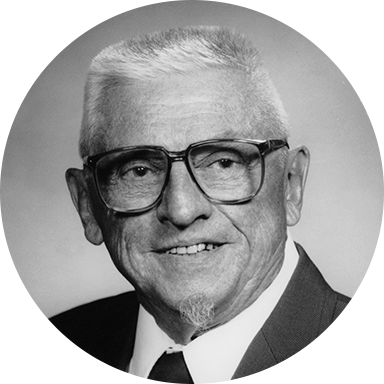
Edmund J. Siennicki

Edmund J. Siennicki was shaped by a formative encounter at age 12 with the legendary pianist Ignacy Jan Paderewski, a conversation that set the direction for his entire musical life. Born in Cleveland in 1920, he earned his Bachelor's degree at Kent State University, where he composed the fight song still performed at football games today. He later studied composition with Herbert Elwell and electronic music with Sergio Barroso at Teachers College, Columbia University, while also consulting with the modernist composer Vincent Persichetti.

As both a performer on bassoon and piano and a prolific composer, Siennicki built a career deeply rooted in music education, teaching for two decades in Cleveland's junior high schools while also serving on the faculties at Michigan and Kent State. His roughly 200 published compositions have earned recognition in national school orchestra contests, and he received residencies at the MacDowell Colony on two separate occasions. The Distinguished Alumnus Award from Kent State's School of Music (1994) acknowledged his sustained contributions to the field, and he continues composing, visiting schools, and conducting clinics.

Why we love this

Siennicki's Baroque Fugue respects the structural integrity of the form while writing idiomatically for young string players. The Grade 2 designation makes authentic Baroque counterpoint accessible without sacrificing musical substance, and the contest/festival designation signals a piece that rewards careful preparation and ensemble precision.

What to expect

Elegant and orderly, with the intellectual clarity that comes from fugal writing. The predictable returns of the subject create a satisfying sense of musical architecture, while the interplay of voices gives the piece its forward momentum.

Who it's for

Middle school and early high school string orchestras ready to tackle Baroque counterpoint with guided structure. Directors seeking a festival or contest piece that builds musicianship without requiring students to manage complex contemporary techniques.

How to get the most out of it

  • Establish clear voice independence before rehearsing the entire orchestra. Run each string section's thematic line separately so players understand their melodic responsibility, even when accompanying.
  • Balance inner voices carefully during fugal episodes. Younger orchestras tend to let violas and second violins recede; use sectional rehearsals to ensure each line projects.
  • Shape the subject with consistent phrasing across all entries. Mark breath points and legato/detached articulation in your score so no statement of the subject sounds accidental.

How to use it

Program this on a concert exploring Baroque forms in orchestral writing, or as a centerpiece for a chamber strings showcase. It also serves well as a contest entry that demonstrates your ensemble's ability to manage polyphonic texture and sustained ensemble discipline.

Skills your students will build

  • Reading and executing fugal subject entries across different instrumental sections
  • Maintaining independent melodic lines while listening to surrounding voices
  • Sustaining tone quality and intonation through longer phrases without harmonic movement
  • Understanding Baroque articulation and phrasing conventions

You May Also Like