

Bang the Drum All Day: 2-Part Choral Octavo
Words and music by Todd Rundgren / arr. Sally K. Albrecht
Item: 00-PO-0005973
$2.25
Minimum order quantity: 20 copies
One moment…
Related Items
Bang the Drum All Day: SoundTrax Digital Audio Download |
$27.99
|
View | |
Bang the Drum All Day: SAB Choral Octavo |
$2.25
|
View | |
Bang the Drum All Day: SAB Choral Octavo |
$2.25
|
View | |
Bang the Drum All Day: 2-Part Choral Octavo |
$2.25
|
View | |
Bang the Drum All Day: Choral Octavo SoundTrax CD |
$27.99
|
View |
Description
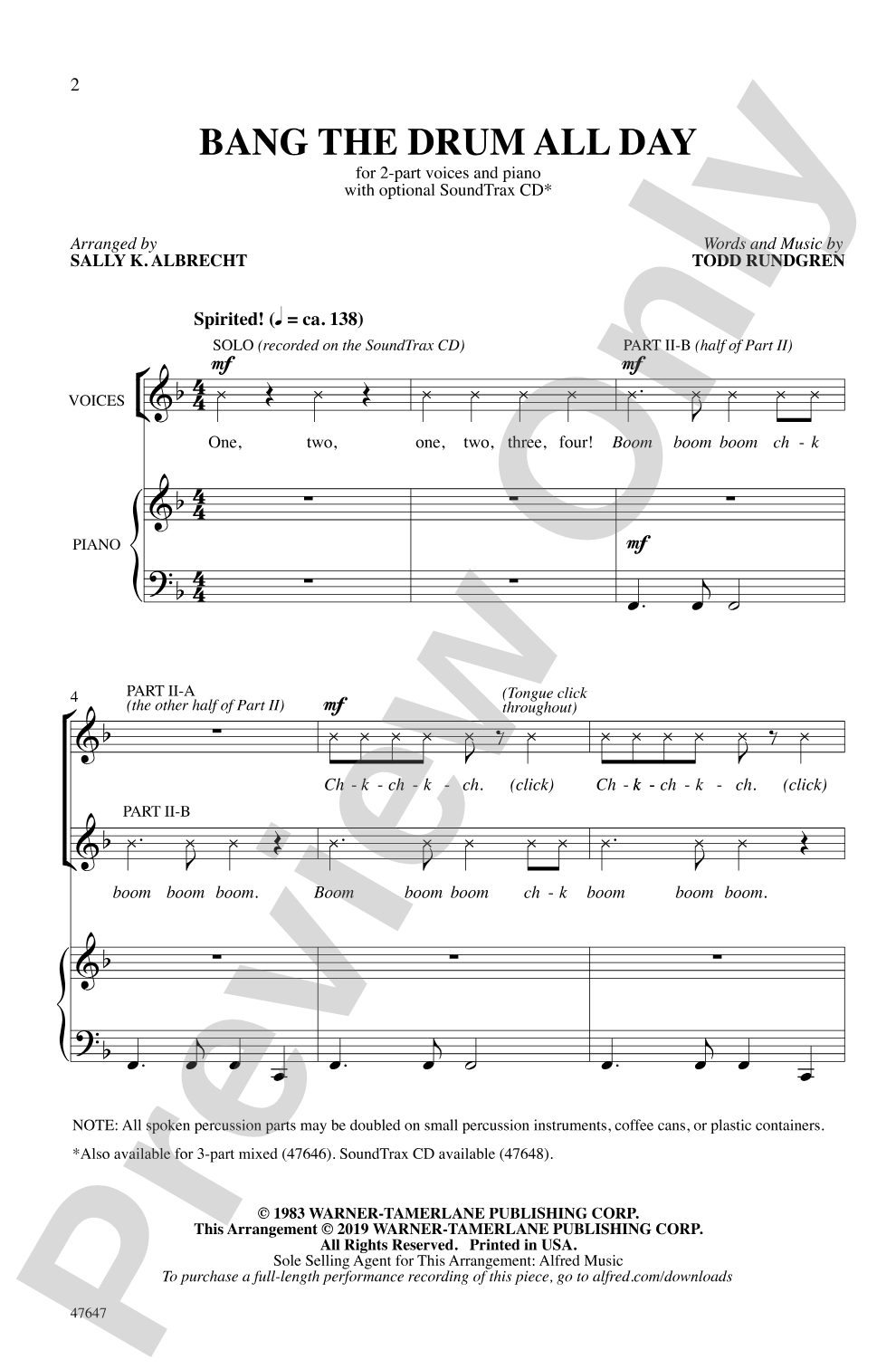
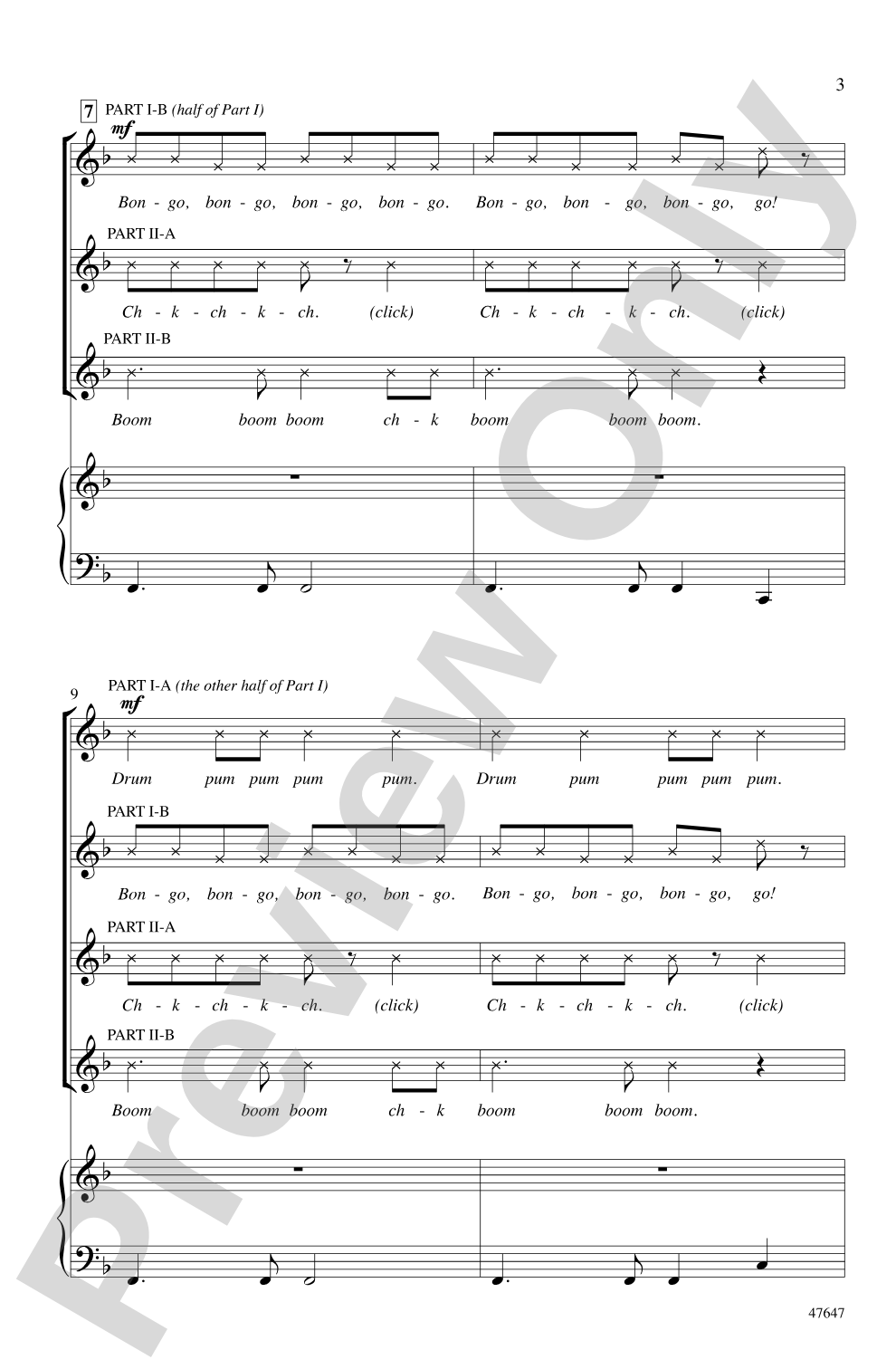
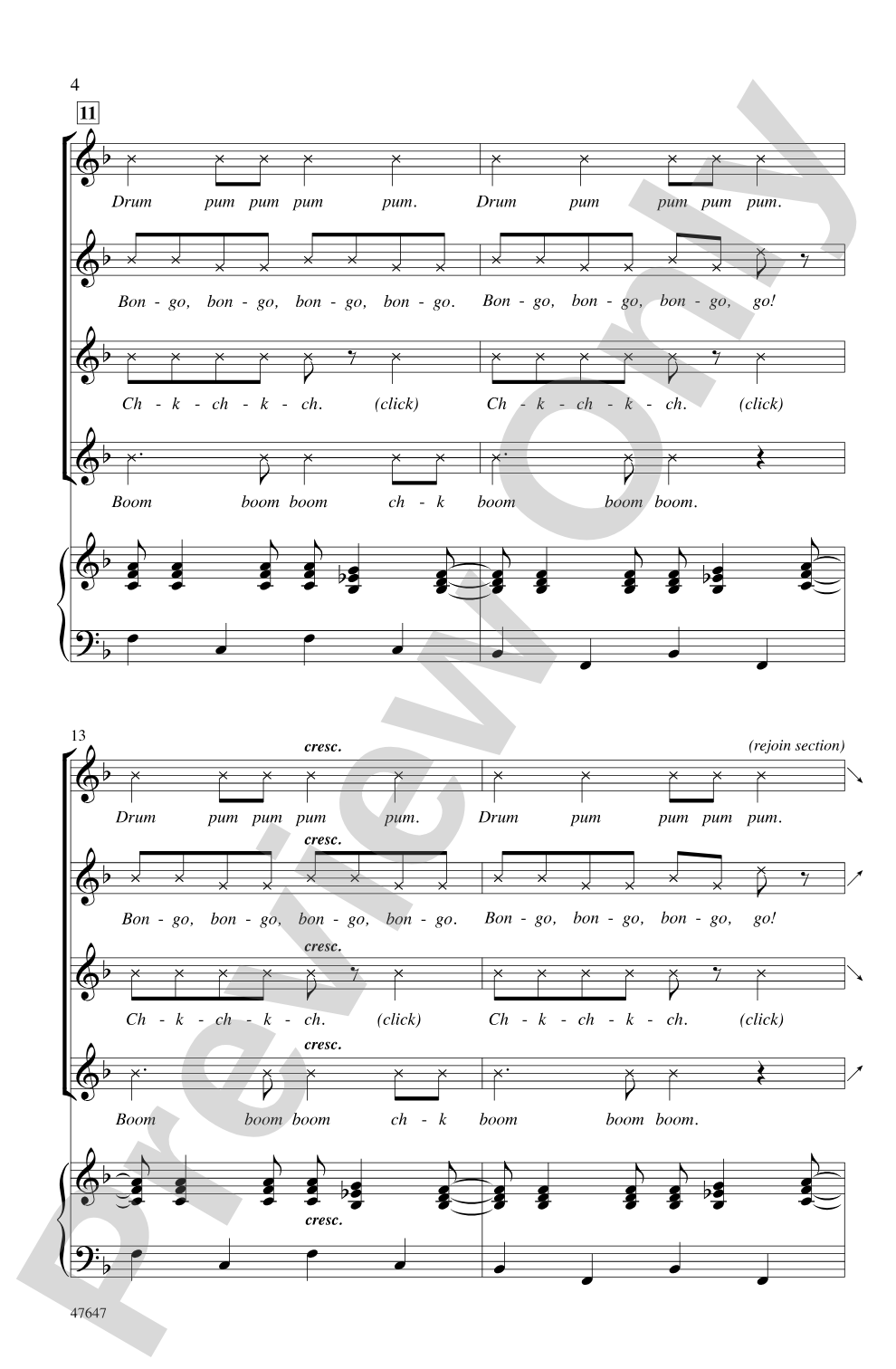
“I don't wanna work. I wanna bang on the drum all day!” Here's Todd Rundgren's 1983 well-known chorus in a super-fun arrangement for developing choirs. Sally's creative touch adds a speech chorus, where performers mimic the sounds of various drums in a rhythmic stack. For an inventive twist, double the spoken parts on percussion instruments, buckets, or even coffee cans!


Bang the Drum All Day: 2-Part Choral Octavo isn't in MakeMusic Cloud just yet...but it could be. Let us know you'd like to see it, and you'll help shape what comes next. In the meantime, start a free trial and dive into thousands of interactive titles your students can play along with today.
Request This Title
Tell us you want it.
Start Your Free Trial
Explore everything that's ready to play right now.
Sample Audio
1
Audio File
--:--
0:00
0:00
Sample Video
No sample videos found.
Additional Details
Series:
Alfred Pop Choral Series
Publisher:
Alfred Music
Page Count:
16
SKU:
00-PO-0005973
More about this title
About the Composer: Todd Rundgren
Todd Rundgren emerged from the 1970s as a virtuosic multi-instrumentalist and producer whose genre-defying catalog spans art rock, prog, pop, and experimental music. His 1983 hit "Bang the Drum All Day" became an earworm precisely because of its infectious simplicity and irresistible hook, qualities that made it an immediate cultural touchstone.
Beyond his work as a performer and songwriter, Rundgren's influence on music production and his willingness to blur stylistic boundaries have made him a figure worth studying in any music education setting. The accessibility of his songwriting, combined with his technical sophistication, offers young musicians a bridge between pop sensibility and serious musicianship.
Why we love this
Sally K. Albrecht's arrangement captures what makes the original so irresistible while transforming it into something genuinely creative for young singers. The addition of a speech chorus that imitates drum sounds turns the arrangement into a participatory event rather than a passive performance, and the invitation to swap in actual percussion or found objects gives your ensemble control over how theatrical they want to go.
What to expect
Infectious, tongue-in-cheek, and surprisingly percussive. The spoken drum sounds create a playground energy that never tips into silliness, while the melody remains genuinely singable and memorable. There's joy in the simplicity of the concept and genuine fun in pulling it off as an ensemble.
Who it's for
This works especially well with developing middle school and early high school choirs that respond to contemporary material but still need scaffolded vocal arrangements. It's also an excellent choice for mixed-age community choirs and pop ensembles looking for something playful without being condescending.
How to get the most out of it
- Define the character of each drum sound in the speech chorus before rehearsing it sung; have singers whisper and vocalize "boom," "crack," "tap" separately so they understand the timbral difference they're creating.
- Commit to the rhythmic precision of the speech parts as seriously as the sung melody. These spoken rhythms are the backbone of the arrangement's energy and need the same attention to subdivision and ensemble lock as any instrumental section.
- If you layer in percussion or buckets, place them physically away from the singers so the audience can see both the acoustic props and the singers' faces. This spatial separation amplifies the visual humor and impact.
- Let the recorded accompaniment drive early rehearsals so singers can hear how their parts fit into the grooved pocket. Once secure, rehearse a cappella to build independence and ownership of the parts.
How to use it
Use this as a concert opener or closer to shift mood and energy; it works particularly well when surrounded by more formal material because the contrast makes both stronger. It's also a natural fit for a pop concert, a school assembly, or any program where you want the audience to leave smiling and humming.
Skills your students will build
- Rhythmic precision in speech chorus contexts
- Maintaining groove and pocket in contemporary music
- Layering independent vocal lines with rhythmic spoken parts
- Coordinating vocal and percussive elements in ensemble
- Interpreting stylistic nuance in pop arrangements