

Banaha: 2-Part Choral Octavo
Congolese Folk Song / arr. Ruth Morris Gray
Item: 00-PO-0007793

$2.50
Minimum order quantity: 20 copies
Pickup currently not available
Description
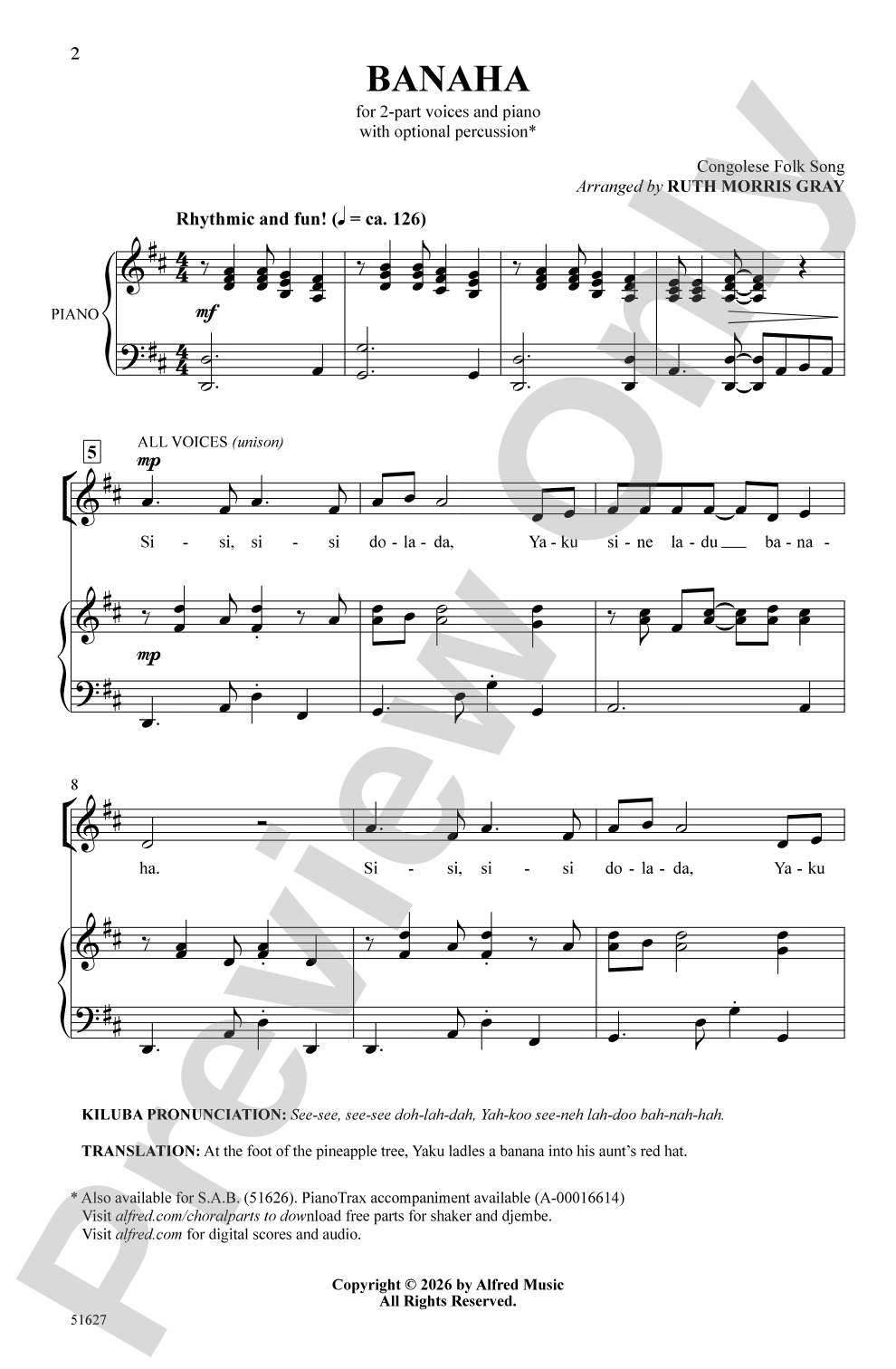
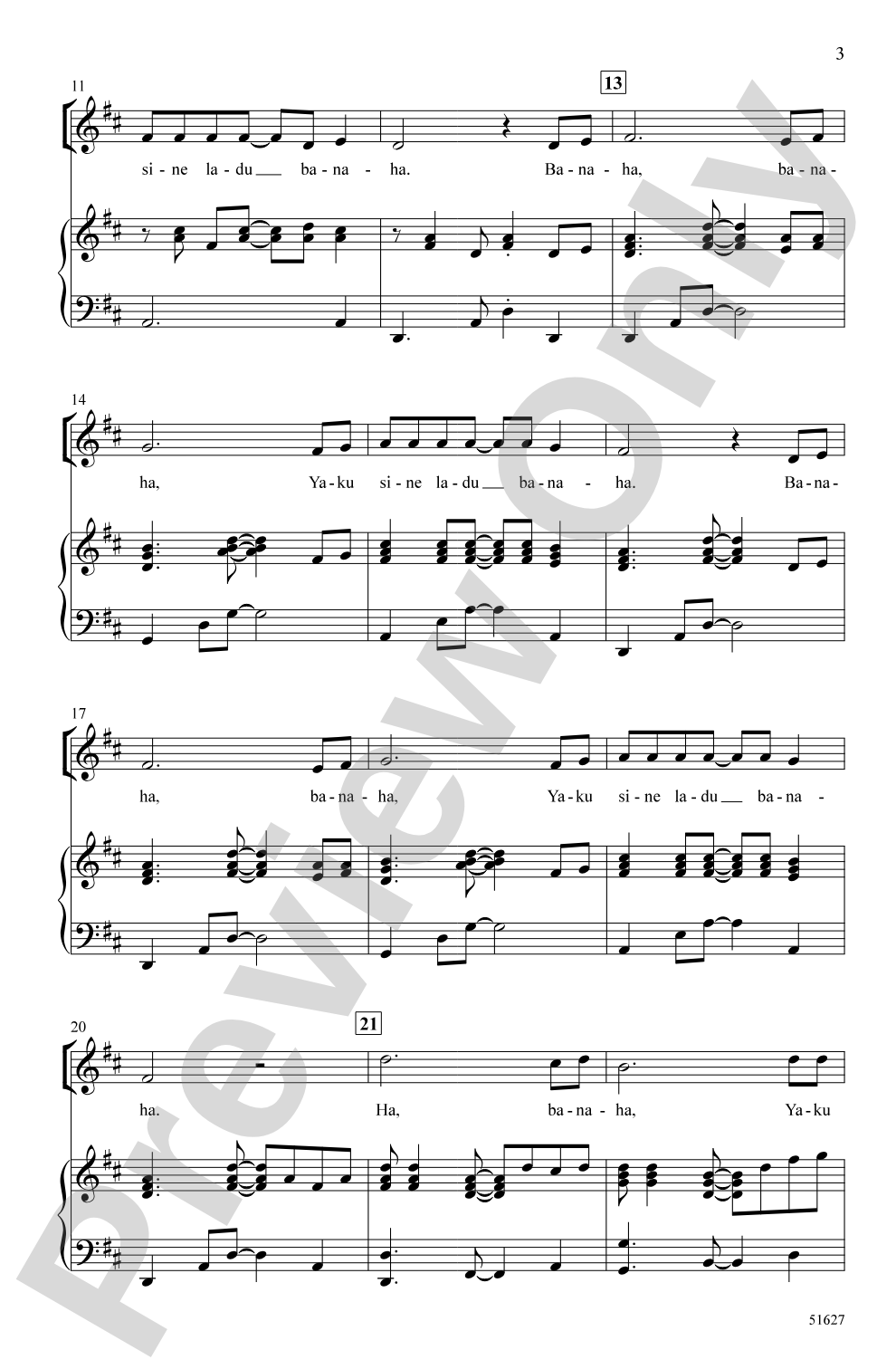
This playful setting of a traditional Congolese folk song humorously describes a banana being ladled into a red hat. This simple canon gradually grows from unison into three layers---a great way to develop part-singing skills. Download free parts for shaker and djembe to highlight the rhythmic vitality of African music traditions. There are only a handful of Kiluba-language words which are easily learned with the included pronunciation and translation.


Don't just read it, hear it, play along with it, and watch your students grow with it. In MakeMusic Cloud, Banaha: 2-Part Choral Octavo comes alive with professional accompaniment, adjustable tempo, and built-in practice tools that turn solo practice into real progress.
Open in the Player
Jump straight in and assign it today.
Start Your Free Trial
Open this title and explore the full library in minutes.
Sample Audio
1
Audio File
--:--
0:00
0:00
Sample Video
Additional Details
Series:
Alfred Choral Designs
Publisher:
Alfred Music
Page Count:
12
SKU:
00-PO-0007793
Instrumentation:
Djembe, Shaker
More about this title
About the Arranger: Ruth Morris Gray

Ruth Morris Gray serves as Director of Choirs at Rosemead High School in California, where she has led the vocal program since 2004. She also teaches piano and has composed over 100 pieces for choral ensembles. Gray holds a Bachelor of Music in Piano Performance and Composition from Biola University and a Master of Arts in Music Composition from UC Santa Barbara, with her teaching credential from California State University, Northridge.
Beyond her work in the classroom and as a composer, Gray is an active performer and educator who believes in making music accessible and joyful. She brings her diverse musical training and real-world rehearsal experience to every piece she creates, ensuring that her arrangements work for actual choirs with varying skill levels and resources.
Why we love this
Gray's arrangement transforms a whimsical folk narrative into a genuine teaching tool that builds ensemble cohesion without feeling like an exercise. The gradual expansion from unison into canon creates natural momentum, and the optional djembe and shaker parts give your rhythm section a meaningful role while honoring the song's cultural roots.
What to expect
Lighthearted and rhythmically alive, this setting captures the playful absurdity of its text while grounding singers in African musical traditions. The canon structure creates an infectious texture that feels both simple and sophisticated, with the optional percussion adding warmth and authenticity without overwhelming the voices.
Who it's for
This piece works for developing choirs at the middle school and early high school level, as well as adult community ensembles and church choirs looking for accessible multicultural repertoire. Directors seeking world music that doesn't require extensive cultural research or difficult vocal demands will find this especially practical.
How to get the most out of it
- Teach the melody in unison first and let singers feel the song's playful character before introducing the canon entry. This builds confidence and locks in the tune.
- If you're using the optional percussion parts, rehearse them separately so players understand how they anchor the rhythmic feel; then layer them in gradually with the singers.
- Work the Kiluba pronunciation carefully during early rehearsals, but don't linger on it. A few focused run-throughs with the translation guide will help singers own the language naturally.
- Keep the tempo steady and relaxed in early layers; the humor lands best when the piece doesn't rush.
How to use it
This piece shines in a concert celebrating world music or multicultural repertoire, especially when paired with other folk arrangements. It also works beautifully as a festival or contest selection because its brevity, accessibility, and cultural authenticity appeal to adjudicators while remaining engaging for audiences.
Skills your students will build
- Reading and singing in canon form
- Maintaining independent vocal lines while hearing other parts
- Pronunciation and fluency in Kiluba language text
- Understanding rhythmic patterns from African musical traditions
- Ensemble cohesion through layered part-singing