

Banaha: SAB Choral Octavo
Congolese Folk Song / arr. Ruth Morris Gray
Item: 00-PO-0007792

$2.50
Minimum order quantity: 20 copies
Pickup currently not available
Description
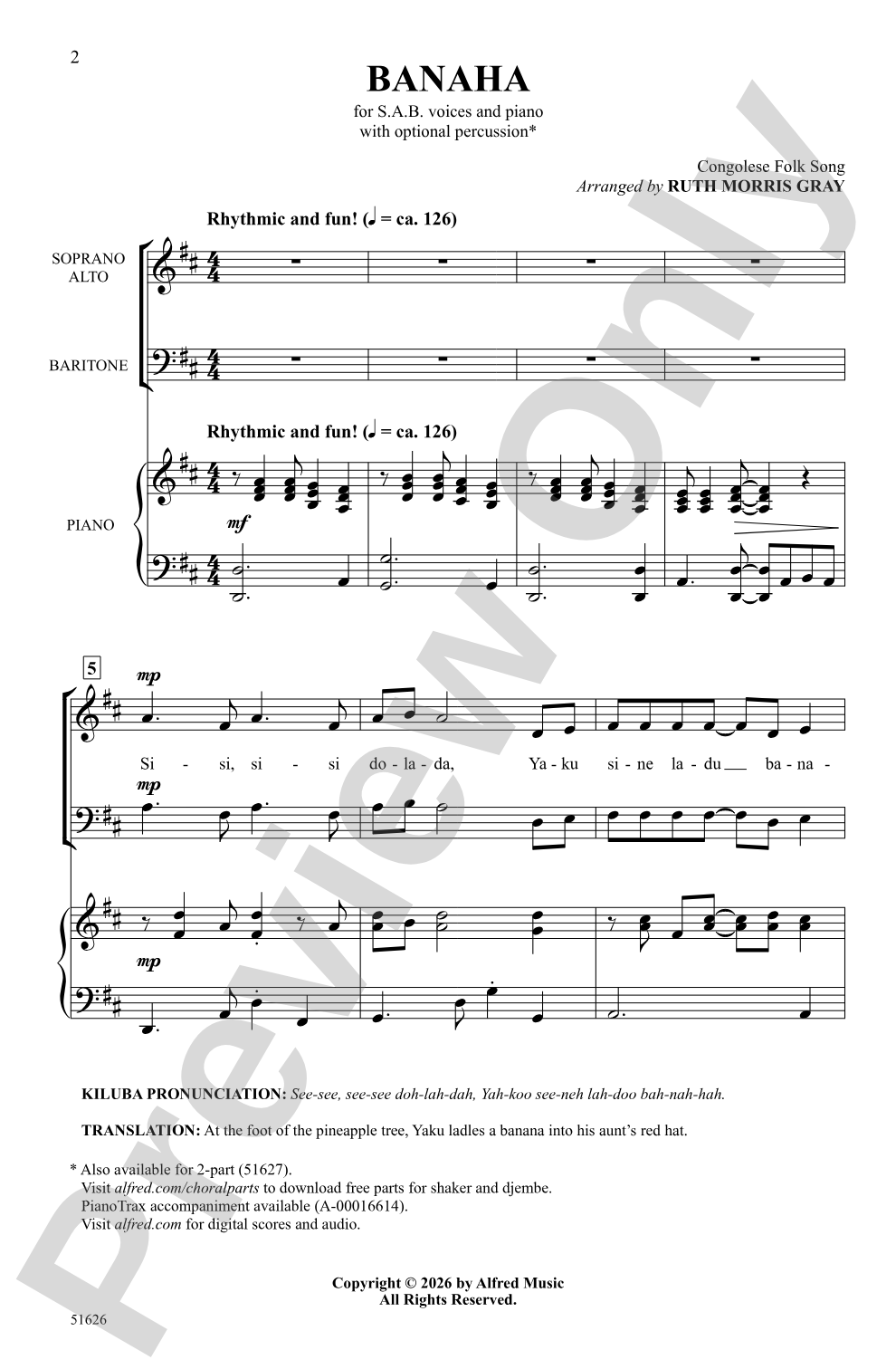
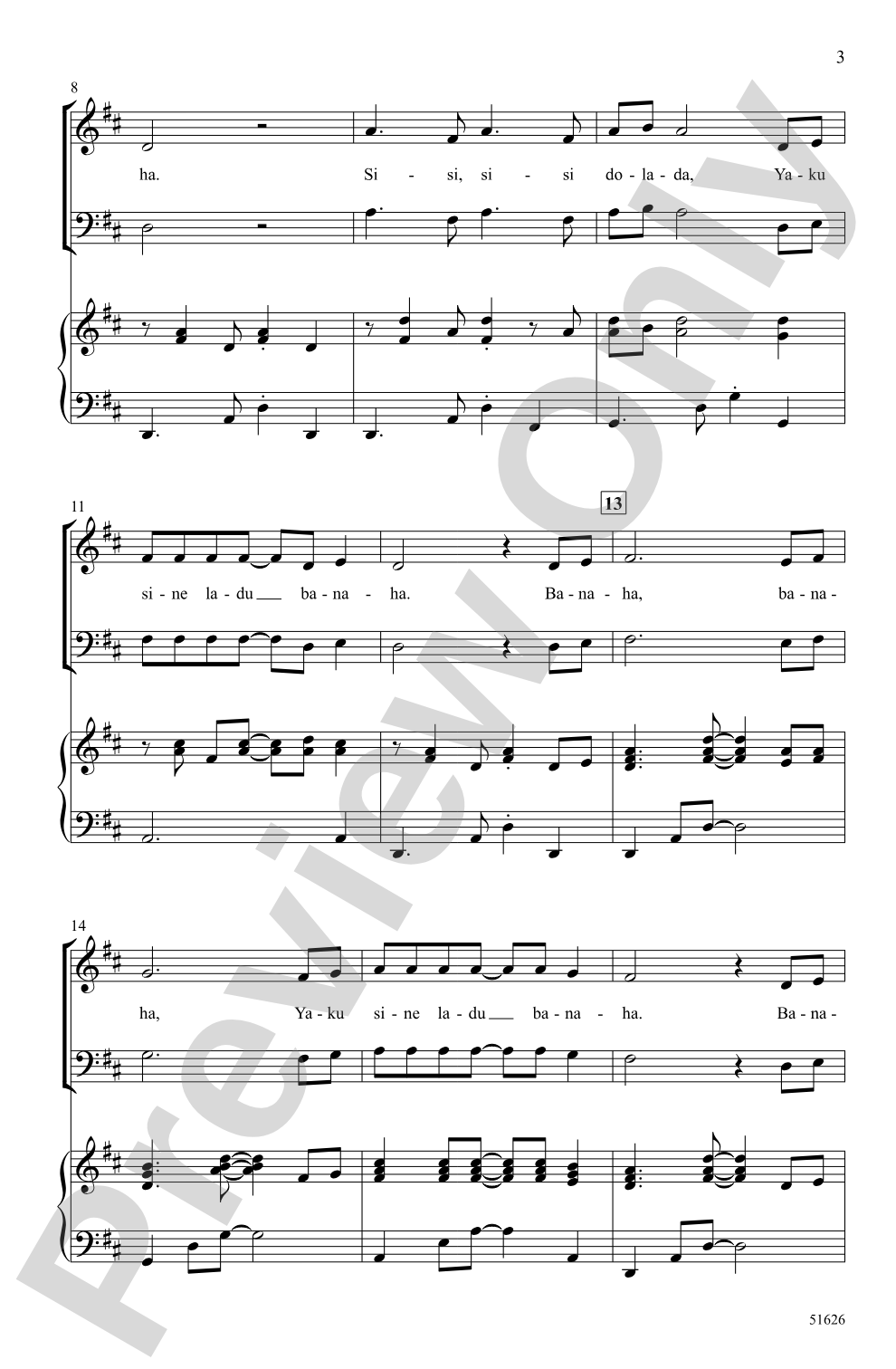
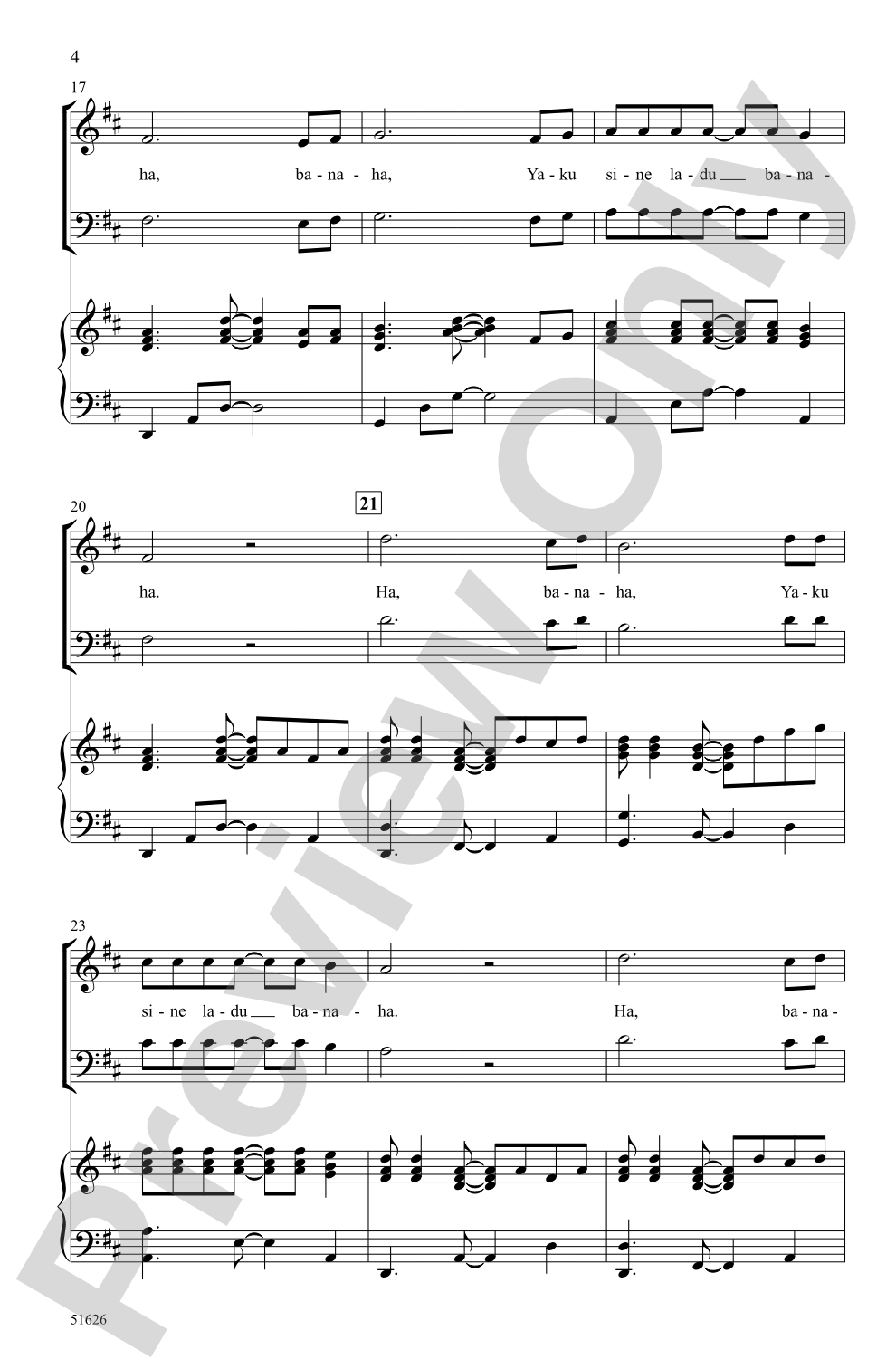
This playful setting of a traditional Congolese folk song humorously describes a banana being ladled into a red hat. This simple canon gradually grows from unison into three layers---a great way to develop part-singing skills. Download free parts for shaker and djembe to highlight the rhythmic vitality of African music traditions. There are only a handful of Kiluba-language words which are easily learned with the included pronunciation and translation.


Don't just read it, hear it, play along with it, and watch your students grow with it. In MakeMusic Cloud, Banaha: SAB Choral Octavo comes alive with professional accompaniment, adjustable tempo, and built-in practice tools that turn solo practice into real progress.
Open in the Player
Jump straight in and assign it today.
Start Your Free Trial
Open this title and explore the full library in minutes.
Sample Audio
1
Audio File
--:--
0:00
0:00
Sample Video
Additional Details
Series:
Alfred Choral Designs
Publisher:
Alfred Music
Page Count:
12
SKU:
00-PO-0007792
Instrumentation:
Djembe, Shaker
More about this title
About the Arranger: Ruth Morris Gray

Ruth Morris Gray directs choirs at Rosemead High School in California, where she has shaped the program since 2004. She holds degrees in Piano Performance and Composition from Biola University and a Master of Arts in Music Composition from UC Santa Barbara, completing her music credential at Cal State Northridge. With over 100 published choral works to her name, Gray brings both compositional depth and classroom experience to every arrangement she creates.
Beyond the rehearsal room, Gray is an active performer and composer who draws inspiration from travel and community. Her arrangements consistently balance accessibility with musical substance, making world music traditions engaging for singers at all levels.
Why we love this
Gray has engineered a canon that does real pedagogical work without feeling like an exercise. The gradual layering from unison into three parts creates natural momentum, and the Kiluba text gives singers an authentic entry point into African musical traditions rather than a surface-level representation.
What to expect
Playful, rhythmically alive, and grounded in genuine tradition. The humor in the text (a banana in a red hat) keeps things light, while the African percussion elements create an irresistible forward momentum that makes singers want to lock in and groove together.
Who it's for
This octavo works for middle and high school choirs seeking repertoire that develops part-singing fundamentals without sacrificing musical substance. It's equally valuable in general music classes where students can experience African rhythmic traditions while building ensemble skills.
How to get the most out of it
- Teach the melody in unison first, drilling the pronunciation guide until singers own the few Kiluba words confidently. Once the text feels natural, the canon architecture reveals itself more smoothly.
- Use the djembe and shaker parts to anchor the rhythmic pulse; these aren't decorative additions but essential to the piece's identity. If live percussionists aren't available, the recorded accompaniment captures this energy well.
- Balance the three canon voices by having singers listen across parts rather than locking into their own line. This develops the ear for harmonic color that keeps canons from sounding mechanical.
How to use it
Program this alongside other folk traditions to build a world music unit, or use it as a bridge piece that energizes audiences between heavier concert selections. The modest page count and straightforward learning curve make it ideal for festival programming where rehearsal time is limited.
Skills your students will build
- Reading and singing in canon form (unison to three-part layering)
- Pronunciation and musical interpretation of non-English text (Kiluba language)
- Ensemble listening and blend across independent vocal lines
- Rhythmic precision and coordination with percussion parts
- Understanding African musical traditions and their role in global choral repertoire