Bach to Rock Cover Image

Bach to Rock: String Orchestra Conductor Score

$9.00 USD
Sale price  $9.00 USD Regular price 
Skip to product information
Bach to Rock Cover Image

Bach to Rock: String Orchestra Conductor Score

By Mark Wood

Grade: 3.5

Item: 00-49053S

$9.00
Shipped

One moment…

Description
The traditional bolero is a moderately slow dance in triple meter which originated in late-18th century Spain. Since then it has spread to other countries and become transformed in the process. The Cuban bolero became a bit faster in tempo and duple in meter. In the U.S. it became a staple of competitive ballroom dancing, even faster and in 4/4 time. Maurice Ravel's Boléro for orchestra harkens back to the slower Spanish dance in three. Wood's Bolero by Mark Wood, on the other hand, focuses on the American version but maintains elements of the dance's origins and first iterations. For string orchestra with optional rock rhythm section parts. (3:10)

Download Play-Along Track

Bach to Rock: String Orchestra Conductor Score isn't in MakeMusic Cloud just yet...but it could be. Let us know you'd like to see it, and you'll help shape what comes next. In the meantime, start a free trial and dive into thousands of interactive titles your students can play along with today.

Sample Pages

Sample Audio

Bach to Rock

0:00
0:00
Sample Video
Additional Details
Series: Mark Wood Series
Publisher: Alfred Music
ISBN10: 1-4706-4787-7
ISBN13: 978-1-4706-4787-2
UPC: 038081567099
SKU: 00-49053S

More about this title

About the Composer: Mark Wood
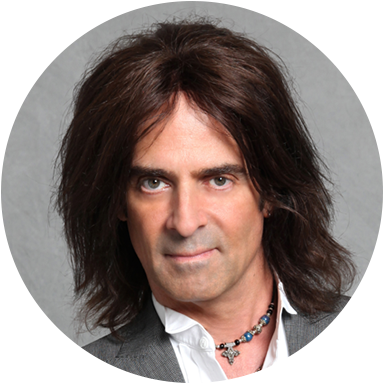
Mark Wood

Mark Wood is an electric violinist and composer who fundamentally reshaped what strings can do in contemporary music. As a founding member of Trans Siberian Orchestra and a solo recording artist, Wood has spent four decades proving that orchestral instruments belong on rock stages and in film scores alongside traditional ensembles. His work spans television (including Olympic broadcasts and a Grammy-winning score for the Tour de France), film and commercial music, and seven solo albums, establishing him as both a virtuoso performer and an innovative voice in music composition.

PBS dubbed Wood "the Eddie Van Halen and Jimi Hendrix of The Violin World" for his fearless approach to extended techniques, electric amplification, and genre-crossing arrangements. Beyond his solo career and collaborations with artists like Celine Dion, Paul McCartney, and Steven Tyler, Wood has become a passionate advocate for music education, creating scores and arrangements that bring rock energy and contemporary relevance to school ensembles.

Why we love this

Wood strips away the mythology around bolero and hands your students a piece that genuinely bridges classical and rock idioms without feeling gimmicky. The optional rhythm section parts let you scale the piece to your ensemble's instrumentation, and at Grade 3.5, the string writing is playable while the cultural and historical framing gives rehearsals intellectual weight alongside musical challenge.

What to expect

Rhythmic electricity meets lyrical grace. The piece channels the hypnotic repetition and swagger of American competitive ballroom bolero while gesturing back toward Spanish roots, creating something that feels simultaneously nostalgic and alive. Students feel the structural elegance of a bolero pattern while experiencing the visceral energy of rock instrumentation.

Who it's for

String orchestras at the Grade 3 to 4 level who want to program something that sounds contemporary and energized without abandoning musical substance. Ensembles with access to rock musicians or willing to recruit parent volunteers on bass and drums will find the optional parts rewarding, though the piece works beautifully as pure strings.

How to get the most out of it

  • Establish the rhythmic pulse clearly in early rehearsals, even before diving into the melody. This piece lives in the tension between triple meter and rock feel, so locking that foundation prevents confusion as layers build.
  • Balance the optional rock rhythm section so it complements rather than overwhelms the strings. If you have electric bass and drums, they should feel like a discovery that happens partway through the piece, not a competing force.
  • Pay attention to articulation and bow placement to create the textural contrast the piece needs. Legato sections should breathe; rhythmic, syncopated passages should snap into place with clarity.

How to use it

Program this in a concert exploring how traditional dance forms have evolved across cultures and genres, or pair it with a classical bolero arrangement (like a simplified Ravel excerpt) to show the transformations explicitly. It also works as a standalone opener or closer for a rock-themed concert, demonstrating that string orchestras can own contemporary idioms.

Skills your students will build

  • Maintaining consistent pulse in triple meter over rhythmic accompaniment patterns
  • Balancing legato and articulated phrasing within a single movement
  • Blending string sections with optional rhythm section (if parts are used)
  • Reading and executing syncopated rhythms in a bolero context
  • Understanding historical evolution of dance forms through musical analysis

You May Also Like